

5 Retro '60s Kitchen Trends That Deserve A Comeback
We may receive a commission on purchases made from links.
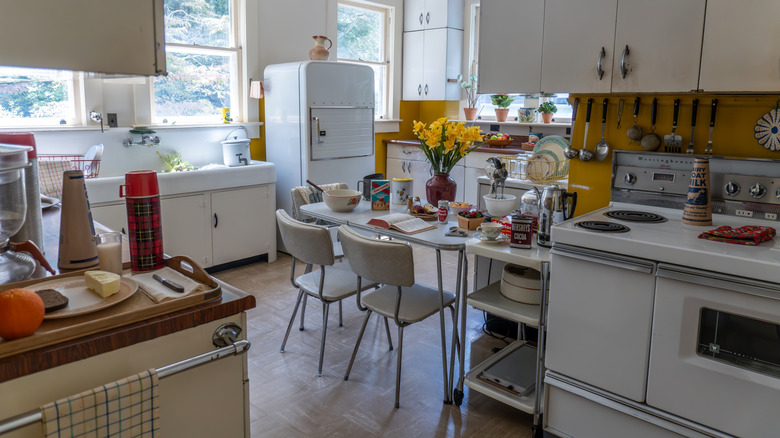
Interior design goes through recognizable patterns of change over decades, and the kitchen is a place in the home where this is very noticeable. While 1950s kitchens were highly functional, utilitarian, and minimalistic, the 1960s kitchen was about comfort, entertaining, and personality. In the '50s, the kitchen was an isolated room where preparation of meals happened and then magically those same meals appeared on the table. In the 1960s, we started seeing the first hints of open concept design in the home and creating a space for entertaining.
The kitchen became more open to the rest of the house by means of an open entryway or a passthrough window, which allowed whomever was cooking to still be a part of the party. While there are many vintage kitchen design trends we'd love to bring back, the 1960s had a few that would truly help create a cozy, functional space to make cooking and eating a meal a social event for today's home chefs. We find ourselves in a similar pattern to the transition from the '50s to the '60s — escaping the minimalism of the previous decade and embracing personality and warmth in designing our spaces, especially the kitchen.
Built-in breakfast banquettes
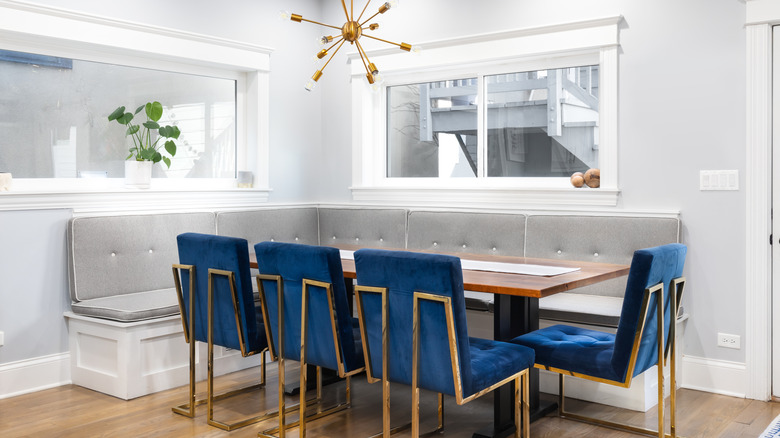
In the early '60s, the whole family often ate breakfast together in the kitchen and they sat at a banquette while they enjoyed their early morning routine. A banquette in a 1960s kitchen was a set of bench seats or a wraparound bench against a wall with a Formica topped and chrome edged table, usually, in the center. It was very similar in style to booth seating in a restaurant. The banquette was the Goldilocks of family dining as it was neither too formal, nor too informal. With the shift of the role of a kitchen in daily life, the banquette functioned as a way to bring everyone together while still keeping the kitchen functional for the home chef.
The banquette deserves a comeback for the same reason it became so popular in '60s kitchens — it anchors the kitchen as a room for gathering, not just cooking. While kitchen islands have been the center of this popular room for a long time, they can easily be repurposed into a part of a banquette seating area. Adding a banquette to your open-concept kitchen is a great way to delineate space without doing any intense remodeling. This throwback to the 1960s is the perfect way to create not only a nod to nostalgia, but also a gathering space you'll love. Besides, it's one of those retro kitchen items that is quickly becoming cool again.
Patterned wallpaper
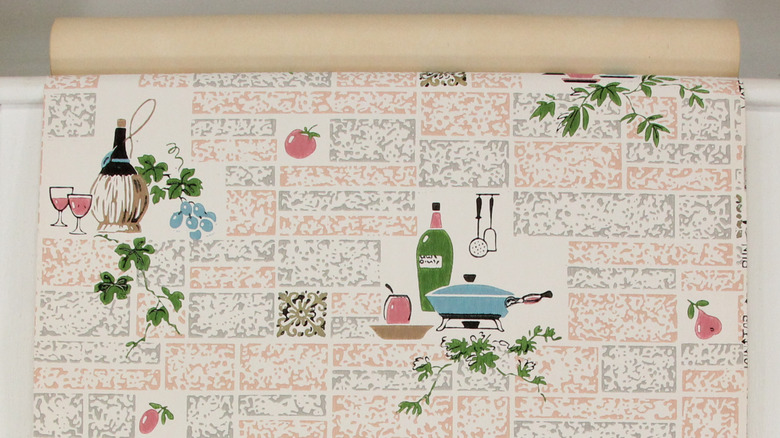
Patterned wallpaper took a hiatus for quite a while when it came to interior design, especially for the kitchen. The 1990s saw the rise of minimalism in interior design, and with it came the expulsion of wallpaper from the home. Plain white, beige, or greige painted walls dominated kitchens all the way into the 2010s. With the return of nostalgia and personal expression, wallpaper has made a serious comeback.
Wallpaper in the 1960s was bright, cheerful, colorful, and even at times psychedelic (inspired by the iconography of the era). But you do not have to make your kitchen look like a pack of highlighters exploded all over your walls to get the look. There are many options these days to get that retro kitchen wallpaper look you're going for without verging on a fever dream, and with the advent of "peel and stick" wallpaper, you can easily change your mind. If you're looking for inspiration for wallpaper that would have been in a 1960s kitchen, there are many websites that offer actual samples of retro wallpaper for purchase. These online retailers sell everything from the bright floral prints generally associated with the '60s, to the more subtle prints with kitchen-tool and food-themed designs of the earlier part of the decade.
Midcentury-inspired pendant lights
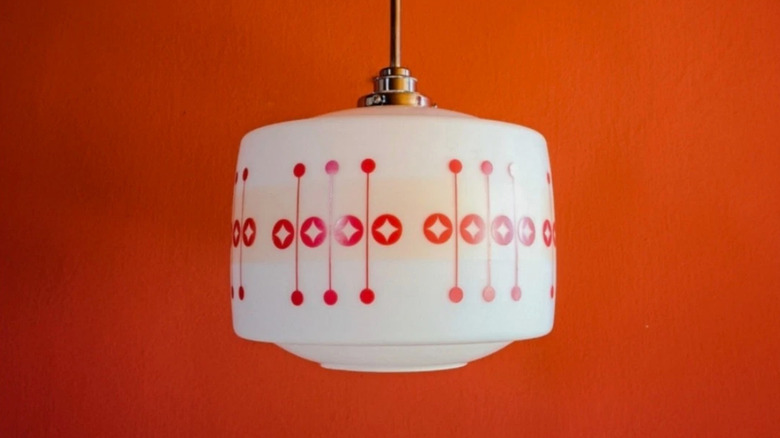
Lighting fixtures are an important, but often underrated, part of interior design. They often serve a similar purpose to what accessories do for an outfit. And 1960s lighting fixtures were sometimes almost as bold as the fashion of that decade. Much of the lighting of the early part of the decade was inspired by the space race and tended to look futuristic, whereas, toward the later part of the decade you could see the beginnings of more eco-conscious design. A great example of this is the popularity of satellite and starburst patterns of the early '60s, making way for swag-style lamps toward the late '60s. One thing that 1960s interior design did well was showcase the homeowner's self-expression, and that's why it's a perfect option for today's kitchen.
While someone like Joanna Gaines might recommend under-cabinet lighting for a kitchen, especially if it's a smaller one, when you're trying to create a retro moment in your space, midcentury-inspired pendant lighting is the way to go. A vintage 1960s pendant light with an Atomic Age-inspired pattern would work perfectly over a kitchen island. If you lean more toward earthy designs, you could use a single medium-sized green or amber glass cylinder over a breakfast nook. No matter your style, a midcentury pendant light could easily be the perfect centerpiece for your nostalgia-filled kitchen.
Bar carts
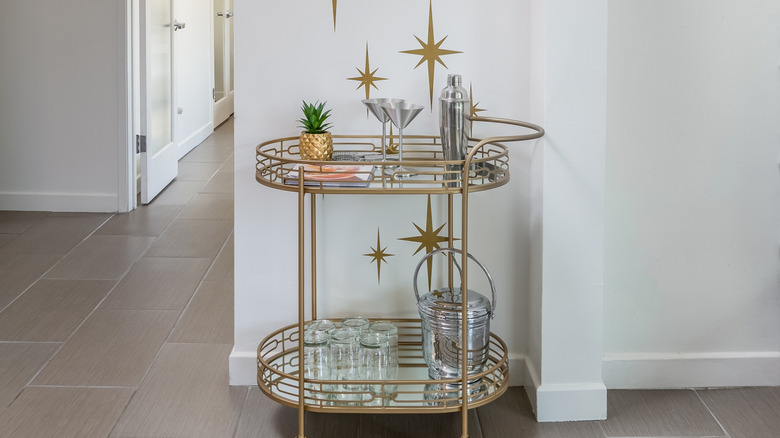
Bar carts in the 1960s were a sure sign you had sophisticated tastes and knew how to entertain. A bar cart was the perfect combination of style and function. Many carts from the 1960s were either wood or elegant metal-framed carts with glass shelves. The carts were stocked with preferred spirits, glasses, shakers, stirrers, and whatever else someone desired. These carts made it possible for the host of any gathering to be out mingling with guests instead of hanging out in the kitchen making drinks. They were extremely handy, and with a little creativity, can be again — even if you don't drink.
Bar carts don't have to just be a way to re-enact a Mad Men-themed soiree with your friends. They can actually be used in your home in a variety of creative ways. You can use a bar cart in your kitchen as a portable coffee or tea station. A bar cart can be a handy and classy way to display your collection of house plants since it's a convenient way to move plants for seasonal light adjustments. A vintage bar cart can also be a smart way to bring snacks and food items from the kitchen to an outdoor seating area for late summer get-togethers. You're really only limited by your ingenuity. A vintage bar cart is a great multi-functional piece of furniture with the advantage of portability with a little flair of retro style.
Appliances that lasted and were hyper-functional
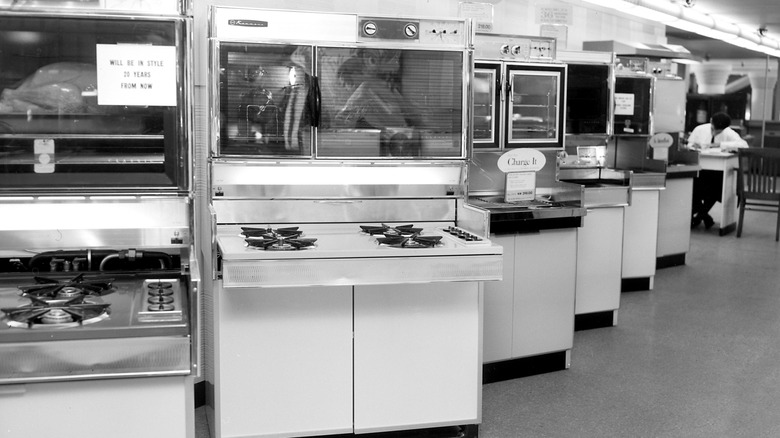
Appliances from the midcentury were on another level when it comes to durability and functionality. Many of us know someone with a refrigerator from this era that is somehow still surviving and keeping things cool to this day. Maybe it's because appliances built in the '60s were built with solid metal and mechanical parts and not a bunch of plastic or fragile computer chips. Whatever the reason, there are plenty of home chefs who would gladly trade their Samsung Bespoke fridge for a 1960s Coldspot.
Not only do appliances from the 1960s seem to last for a lifetime, but they also feel like they have more functionality and keep the needs of the home chef in mind. From metal refrigerator shelves that swivel to make it easier to store and use food, to the pull-out stovetop of the Frigidaire Flair that stores away after use, midcentury appliances really made cooking an easier and fun experience. These days, many of us are trying to find a side-by-side refrigerator that will not only last longer than five years, but also not feel like it's sacrificing refrigerator space for the freezer.