

15 Candy Bars From The '50s That Still Exist Today
We may receive a commission on purchases made from links.
Candy bars have had an interesting history of successes and failures. Some disappeared after a short time on the shelves, while other candy bars have been around for over 100 years. Two of the biggest moments in the popularity of candy bars were after World War I and World War II, in both instances due to post-war economic flourishing. People were spending more money on things that made them happy — and chocolate makes people happy. In the 1950s, the candy business thrived during this period of economic prosperity, as well as because of the rise of television advertising and the influx of children being born with the "baby boom." For the most part, the confections on our list did things that the short-lived candy didn't; they relied on simple recipes with ingredients that always seem to be popular, rather than on gimmicks or complex production.
Another big reason many of these chocolate bars have survived for so long was because of consolidation. Prior to the midcentury, there were many candy companies. But with improved manufacturing, better transportation, and refrigeration innovation, many small companies couldn't compete with larger manufacturers. Some smaller regional companies survived by consolidating with each other, while many eventually ended up becoming a part of the big three that exist today: Nestlé, Hershey, and Mars. These companies continued manufacturing the bars that were the easiest to make as well as the most profitable, and got rid of those that weren't. You can buy the long-lived winners in stores today, or online — though prices can vary based on location.
Look!
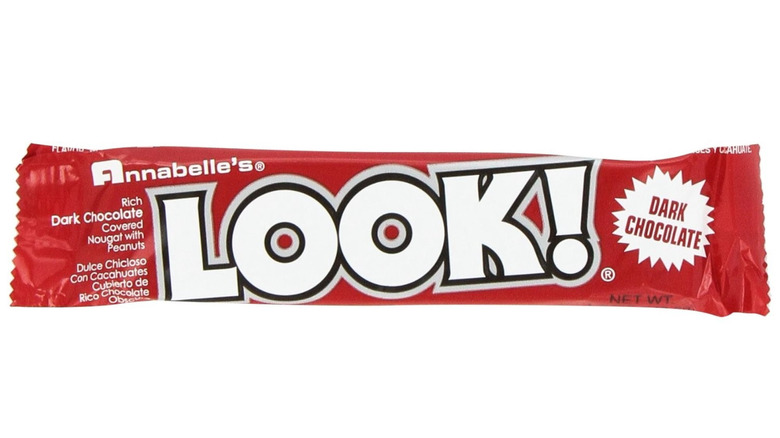
The Look! candy bar was first introduced to the market by the Golden Nugget Candy Company in 1950; it was bought by Annabelle Candy Company in 1972. The Look! bar is a peanut nougat with molasses, enrobed in dark chocolate. Because it was produced on the West Coast, that is where it found popularity and can be commonly seen today.
You can still purchase Look! bars online from Walmart at around $30 for a bulk box of 24 bars.
Big Hunk
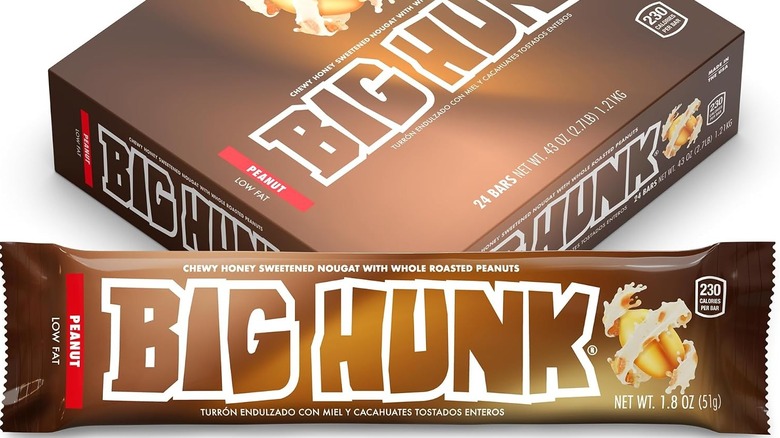
Big Hunk is another candy bar that was created in 1950 by Golden Nugget Candy Company and was transferred over to Annabelle's with the 1972 purchase. It is very similar to the Look! bar, only it is a honey-based nougat with roasted peanuts and no chocolate coating. The recipe underwent changes in the 1970s, and some customers note the difference in texture.
You can purchase a box of 24 Big Hunk bars on Amazon for $45 if you're hankering for a vintage nougat candy bar.
Hershey's Milk Chocolate Bar
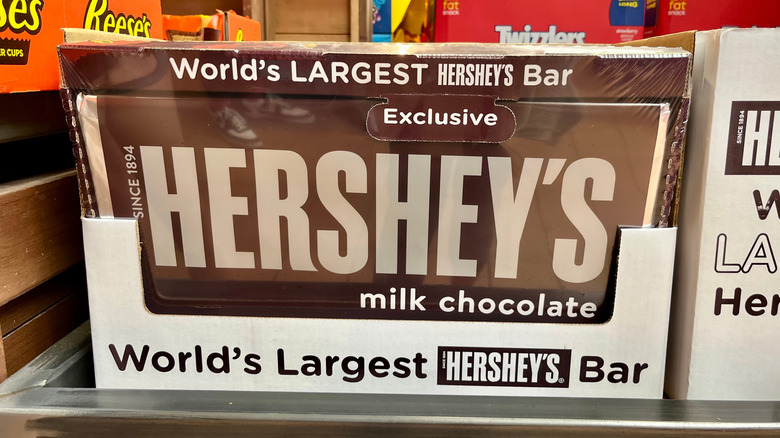
It's no surprise that the original Hershey's Milk Chocolate Bar is on this list. This famous confection was introduced by the Hershey Company in 1900. Milton Hershey created it after learning how popular milk-based chocolate was in Europe. While there are many delicious Hershey bars today, the original milk chocolate bar remains one of the most popular.
If you would like to purchase your own supply of this historical candy bar, you can find a box of 36 Hershey Milk Chocolate Bars on Amazon for about $34.
Baby Ruth
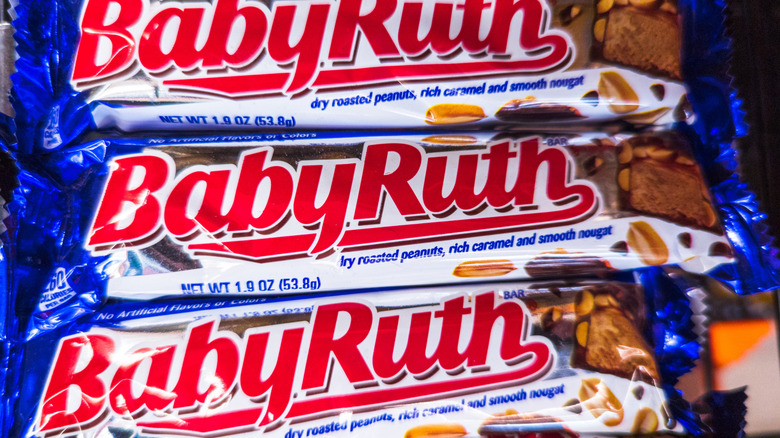
The Baby Ruth bar was introduced in 1921 by the Curtiss Candy Company. Besides a controversy about whether or not the candy was named after the famous baseball player Babe Ruth or the daughter of President Grover Cleveland, the Baby Ruth saw a resurgence of popularity in the 1980s with the movie The Goonies. This candy bar has a smooth nougat center, a layer of caramel, dry-roasted peanuts, and a milk chocolate coating. The candy is easy to find today.
Amazon has a box of 24 Baby Ruth bars for around $34.
Butterfinger
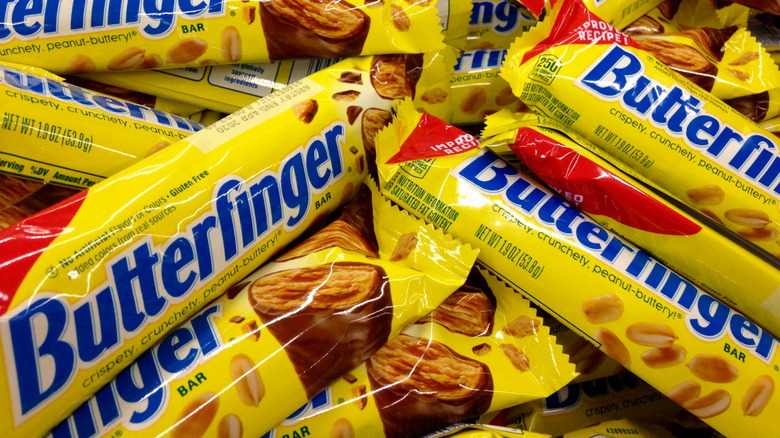
The Butterfinger is another Curtiss Candy Company invention, first released in the 1920s. A marketing campaign involved the public in a naming contest, as well as dropping Butterfingers from the sky with tiny parachutes over New York City. Like many candy companies, Curtiss went through multiple sales. During the first sale to Nabisco in 1981, the original recipe was lost, but it was reconstructed more than adequately. The beloved candy bar has a crunchy peanut butter center with a thin, chocolatey coating.
You can purchase a box of 36 Butterfingers from Amazon for about $38.
Charleston Chew
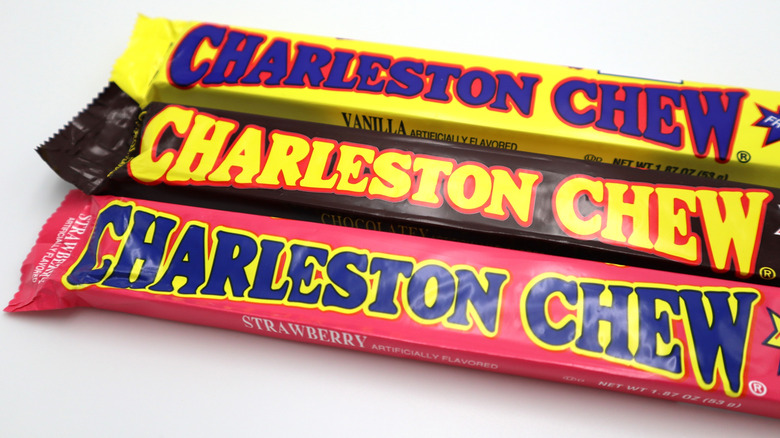
Fox-Cross Company invented the Charleston Chew candy bar in the early 1920s, naming it after the popular dance of the time. In 1957 the company was sold, and through marketing, the new owner increased the popularity of Charleston Chews. The candy bar is made of a chewy nougat center covered in a milk chocolate coating, though the new owner also introduced chocolate and strawberry flavors.
You can buy the Charleston Chew three flavor variety pack on Amazon for around $21.
Mounds
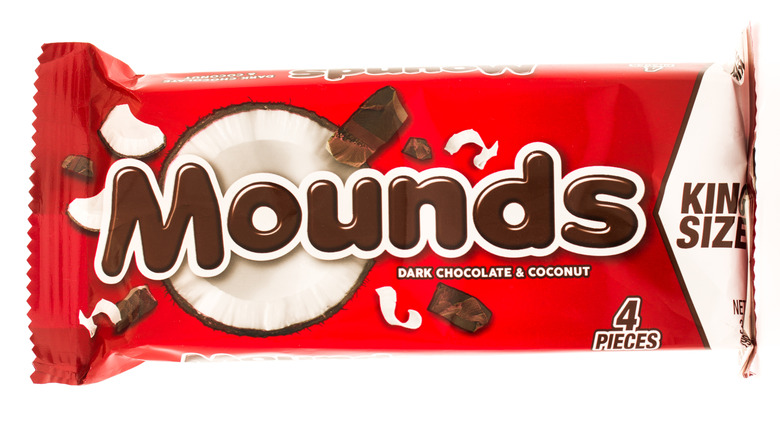
Vincent Nitido Sr. came up with the Mounds bar in 1921, but the Peter Paul Candy Manufacturing Company bought and popularized the treat in 1929. Mounds was very successful and rather novel for the time, with a coconut center covered in dark chocolate.
You can purchase a 24-Pack of Mounds bars today on Amazon for about $27.
Almond Joy
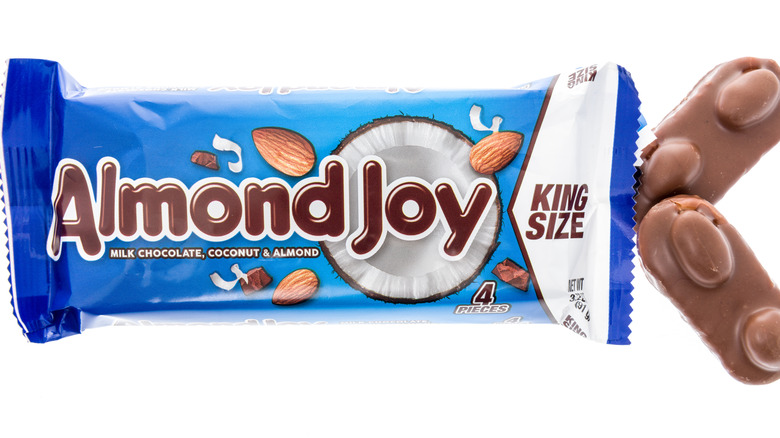
The Peter Paul Candy Manufacturing Company invented Almond Joy and released it to the public in 1946. The Almond Joy differed from its coconutty cousin, Mounds, in that it had two almonds on top, and it was coated in milk chocolate. In the 1970s, a clever marketing strategy pitted the Mounds and Almond Joy bars against each other; it has continued to be a popular candy bar to this day.
If you feel like a nut, you can order a 24-count box of Almond Joy bars from Amazon for about $27.
5th Avenue
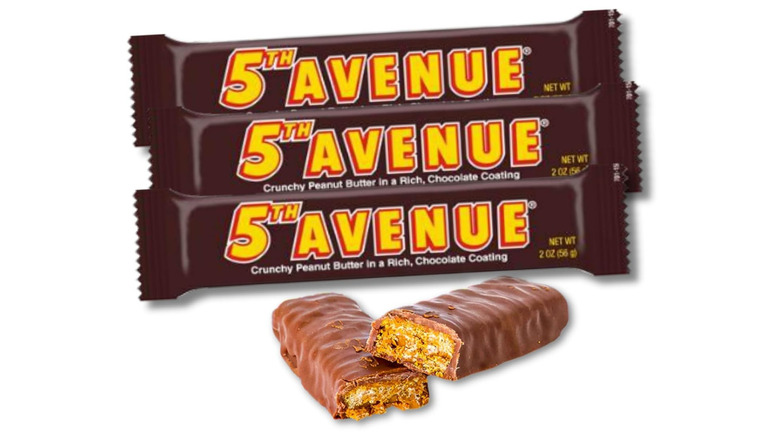
The 5th Avenue bar was introduced to the market in 1936 by William H. Luden and is currently manufactured by the Hershey Company. It has a crunchy peanut butter center wrapped in milk chocolate, similar to a Butterfinger. It originally had almonds in its recipe until at least the late 1960s. Many stores today carry the candy.
You can buy an 18-count box of 5th Avenue bars on Amazon for around $39.
Goo Goo Cluster
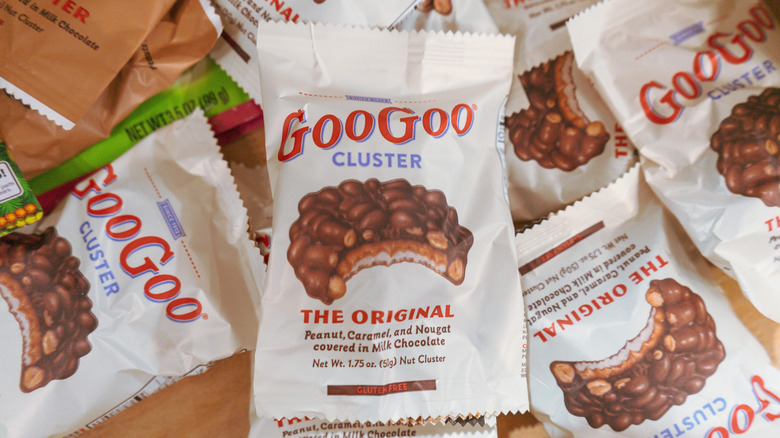
Invented in Nashville, Tennessee in 1912, Goo Goo Clusters were one of the first combination candy bars (a bar with many ingredients) in the U.S. This gooey candy bar is made with peanuts, caramel, and marshmallow nougat covered in milk chocolate. They also make a peanut butter flavor and a pecan version, but the original has been extremely popular since its invention, especially with its fans in the Nashville area. You can visit the Goo Goo Chocolate Co. in Nashville to try it.
You can also purchase a box of three original flavor Goo Goo Clusters from Amazon for about $12.
Heath
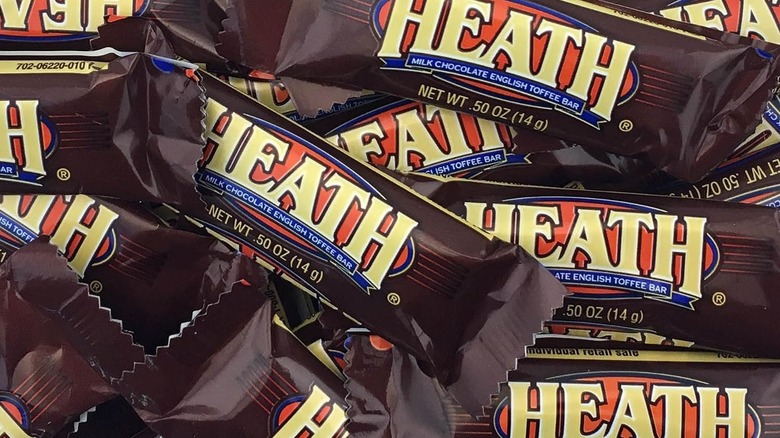
The Heath bar, a crunchy toffee coated in milk chocolate, was first sold in 1928 by its inventors, brothers Bayard and Everett Heath. Heath became so popular by the 1950s that the company developed an ice cream bar of the same name. In 1989, the company was sold to a Finnish group and eventually to Hershey in 1996.
You can still purchase the candy in stores or from Amazon, where an 18-count box of Heath bars sells for around $23.
Zagnut
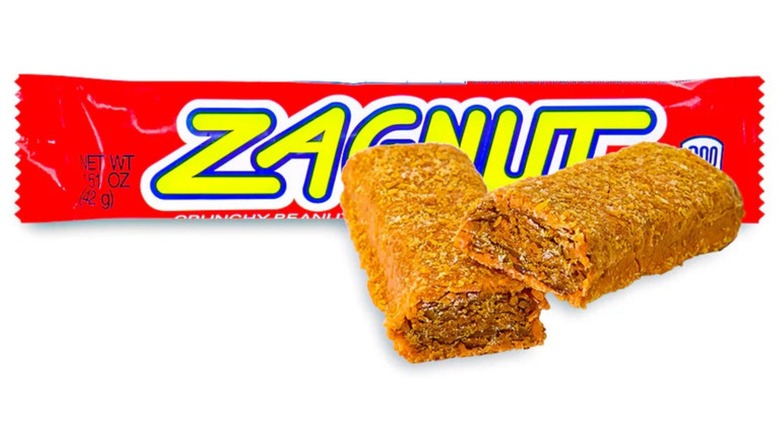
A crunchy peanut butter candy coated in toasted, shredded coconut, the Zagnut was first sold in 1930 by the D.L. Clark Company. Like many candy bars of that era, the Zagnut's ingredients were put together with the military in mind; candy bars were often added to rations for soldiers. It remained popular after the wars and continues to be sold today.
Although this candy bar can be a little more difficult to find in store, you can still purchase an 18-count box of Zagnut bars on Amazon for about $20.
3 Musketeers
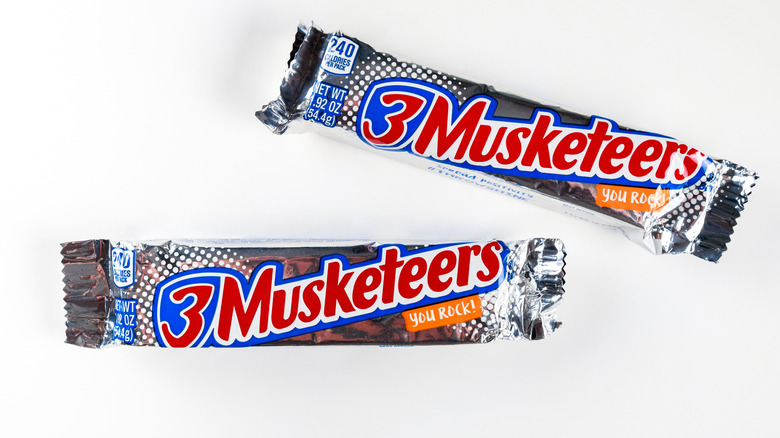
Have you ever wondered why it's called a 3 Musketeers bar? The founder, Mars, Inc., wanted to create a candy bar in 1932 that could be shared between three people at a reasonable price. The company invented a three-section bar with chocolate nougat, vanilla nougat, and strawberry nougat, all coated in chocolate, in one wrapper. The bar as we know it today happened because of sugar rationing during World War II, which left only the chocolate one.
Amazon offers a 36-count box of 3 Musketeers bars for about $40.
Snickers
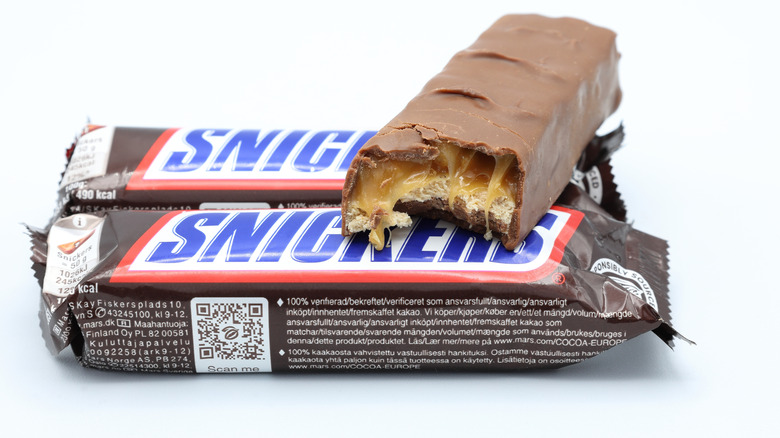
Introduced in 1930 by Mars, Inc., the Snickers bar (named for the company owner's horse) sold for 5 cents like most candy bars at the time (not 20 cents, as the internet commonly misreports). The popular candy bar is made of roasted peanuts, nougat, and caramel, all coated in milk chocolate. This candy bar is available everywhere because of its continued popularity.
If you eat it regularly, you might want to grab a box of 48 Snickers on Amazon for close to $47.
Abba-Zaba
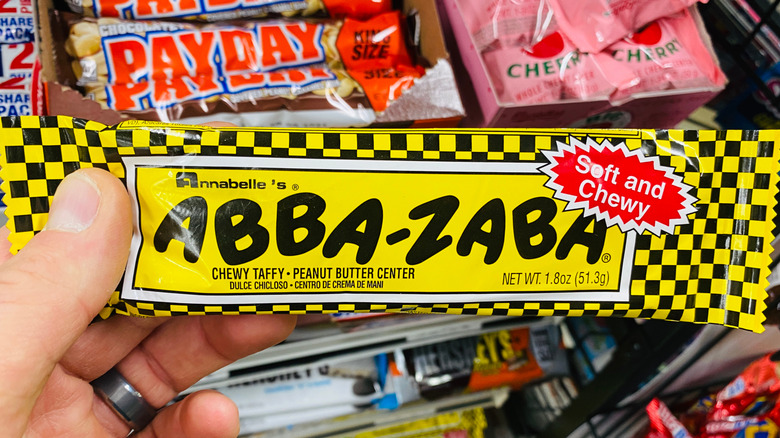
The fun-to-say Abba-Zaba bar was invented in 1922 by Colby and McDermott and later sold to Annabelle Candy Company. This vanilla taffy with peanut butter filling was very popular during the midcentury and was even beloved by John Wayne. The most widely recognized features of this candy bar are its black and yellow-checked design and its unusual flavor profile. Abba-Zaba has remained popular throughout the decades.
Today you can find it in stores, and you can buy a pack of six Abba-Zaba bars from Amazon for around $17.