

10 Foods Steelworkers Ate Back In The Day
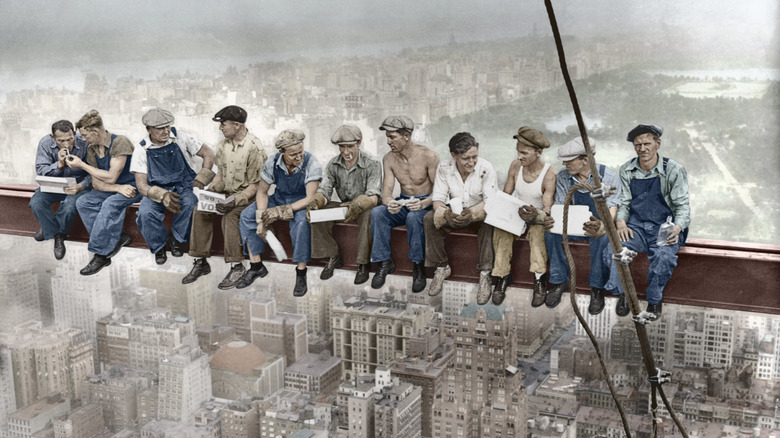
In the United States, the steel industry took off in the 19th century, spurred by the rapid growth of cities across the country. Working up to 12-hour shifts in intense heat conditions, steelworkers required a calorie-dense diet to provide them with energy for those long days. At mills from Chicago to Pittsburgh, workers were largely East European immigrants, and their meals reflected the cultures they came from, incorporating their traditional foods, like potato dumplings and cured sausages.
Steel was in high demand during this era, to create building and bridge infrastructure, and to lay down railroads that stretched all the way from coast to coast. With abundant natural resources and a historical demand for rapid industrialization, the country was uniquely positioned to dominate this industry. Iron ore deposits in the Midwest and coal in the East combined to create the Rust Belt, a region of steel-producing states stretching from Illinois to Pennsylvania. These states attracted workers from across the globe, becoming a hub for immigrant families and their culinary traditions.
To go into the details of the meals which sustained the workers who built this country's infrastructure, we asked Dr. Voula Saridakis, Head Curator at the Griffin Museum of Science and Industry in Chicago, for some insights. We got some additional information from Mike Piersa, Historian at Bethlehem, Pennsylvania's National Museum of Industrial History, to help us curate our list of foods steelworkers in the Rust Belt ate back in the day.
1. Tastykakes

When it was time for a lunch break, there wasn't always a lot of time to eat. "It all varied based on the size and location of the mill," Voula Saridakis explains, adding that "most common locations would have been in lunch or locker rooms, canteens in the mills if they had one, or even outside the building to escape the noise and heat of the mills." But not all steel mills had these facilities, necessitating that workers bring their own lunch daily.
In the early days, workers' lunches contained a smorgasbord of homemade goods, both savory and sweet. In the 20th century, as Mike Piersa explains, overtime workers who received company-provided lunches in Bethlehem also enjoyed something sweet to round out their meals. One often-enjoyed dessert was a Tastykake — a treat of pre-packaged mini cakes, pies, or pastries made in Philadelphia, similar to the more nationally recognized Hostess pies.
Tastykakes quickly became a well-loved working-class treat when they were first introduced in 1914. Reputed for being inexpensive and reliably tasty, these cakes immediately caught on with industrial workers in Pennsylvania and became a regional lunch pail cornerstone. Including sweets in steelworkers' lunches was a treat, and having something sweet to finish off a meal was a longstanding tradition in steel mills. This provided necessary extra calories for such labor-intensive work. Tastykakes were the convenient, modernized version of the homemade baked goods, such as pies or cookies, which were added to steelworkers' lunch pails in earlier days.
2. Canned fruit
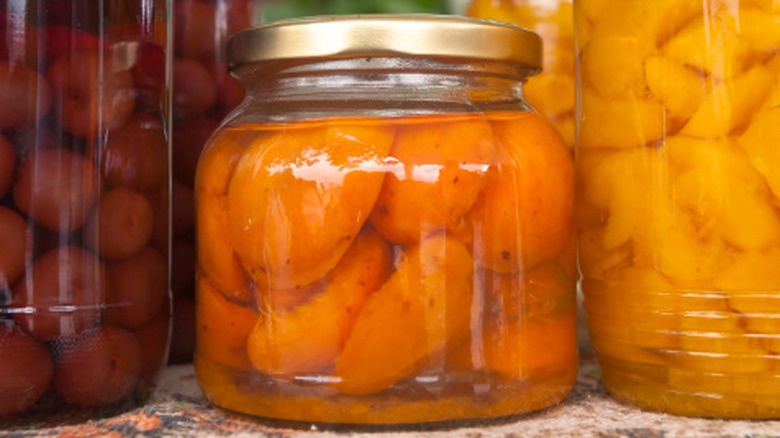
When keeping their lunch pails handy, steelworkers couldn't bring just anything to eat near steel mill furnaces, as the heat might have resulted in food spoiling. Eating food early in the day was one solution for this, but meals were also strategically prepared, containing items with a longer shelf life in a warm environment. Fruit, according to Voula Saridakis, was among the foods added to meals that did not spoil so easily.
The fruit enjoyed by steelworkers might commonly have been apples, packed in with prepared lunches, but in earlier days, workers also regularly ate canned fruit, either store-bought or homemade and packed in a jar. Canning fruit at home had become more widely popular in the U.S. since World War I, as a way to preserve local fruits and lock in their nutritional value. Along the Rust Belt, these would have included plums and apricots. Canned fruits' extra sugar and fiber would have provided a welcome energy boost to stretch a mid-shift meal a little further.
Fruits would not have been the most convenient for all steelworkers, though. Some workers in Bethlehem, PA, recalled getting no more than half an hour break — long enough at least to step away from work and eat through the contents of their lunch pails. Others, though, described lunchtime as lasting a mere 15 minutes. An apple or even ripe tomato, if in season, would have been more convenient for those with a more rushed mealtime.
3. Kielbasa sandwiches
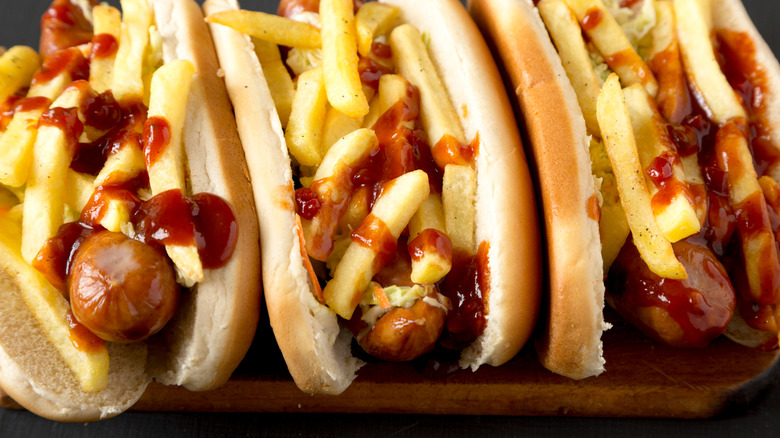
Without the flexibility to eat leisurely meals, sandwiches became a quick and simple solution for many steelworkers. These could be eaten either on the job or quickly somewhere nearby. Many regionally emblematic sandwiches got their start as steelworker meals, such as the kielbasa sandwich. An innovation from Polish families, it made a portable meal out of the kielbasa sausages enjoyed by immigrants. This traditional cured and smoked meat was reasonably shelf-stable. As Voula Saridakis explains, cured meats were commonly eaten because they could withstand the heat inside a steel mill. The kielbasa sandwich's legacy lives on today in the Cleveland Polish Boy sandwich, made with kielbasa on a hot dog bun, topped with coleslaw and fries.
Steelworkers often ate other kinds of meat-based sandwiches, with some of the simplest pulled from the bologna sandwich's working-class origins. Pittsburgh's chipped ham sandwich was also a mid-century favorite for local steelworkers passing by the deli on their lunch break or after their shift, made from thinly sliced ham that gets fried and slathered in barbecue sauce before being served on a bun. The Pittsburgh Sandwich is another entirely separate creation which has always been associated with steelworkers. Also made with fries and coleslaw stuffed right alongside the meat between two slices of bread, local lore has presumed this sandwich was intended to be portable for steelworkers who had to take their lunches to go. It's sure to have been enjoyed by many who made up Steel City's steel industry.
4. Coffee
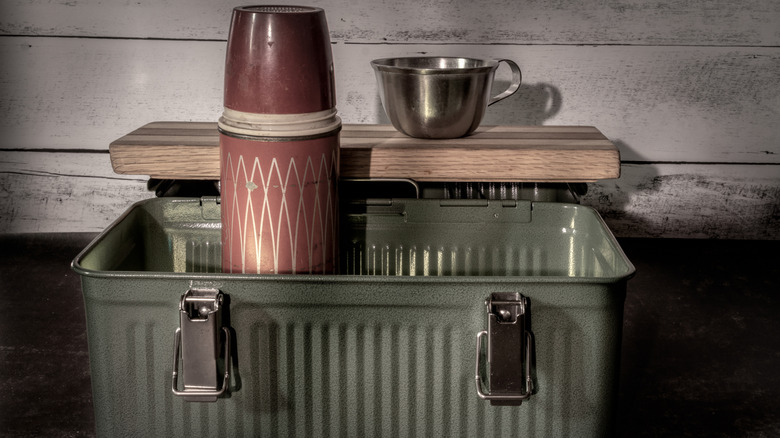
One truly essential element of steelworkers' sustenance was the thermos containing their beverage of choice — per Voula Saridakis, this was usually coffee for those working night shifts, though tea was a common alternative. With early mornings and long shifts, workers enjoyed something warm and caffeinated to keep them going
Into the early 20th century, steel manufacturing was a 24-hour process that required a constant cycle of workers, 7 days a week. Before shorter work days were first introduced in the 1920s, these were typically divided into two 12-hour shifts, with workers transitioning between day and night shifts every few weeks. Sometimes this led to the occasional 24-hour shift, which called for an even greater reliance on stimulants to provide lasting energy. These kinds of shifts would have made caffeinated drinks — coffee in particular — an essential beverage that was constantly drunk at steel mills.
5. Haluski
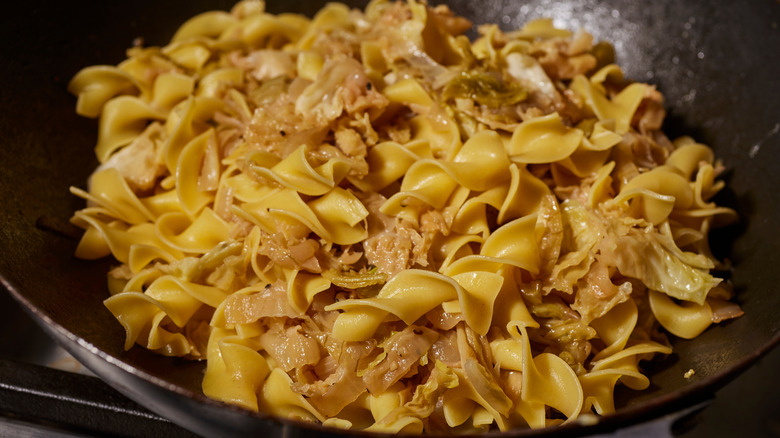
"There were many immigrant communities to the steel mills of Chicago," explains Voula Saridakis, "and in many cases, each community had its traditional foods." While these varied, depending on wages and whether immigrants were first-generation, haluski was one traditional dish that sustained steel mill families from a variety of East European backgrounds.
There are many variations on haluski, but all of them are a comforting combination of similar ingredients. Typically prepared with noodles and cabbage mixed together with butter, this recipe also has versions that include meat, such as chopped kielbasa. Others switch out the base, like using gnocchi or potato dumplings in place of noodles. Prepared by home cooks who immigrated from countries such as Poland, Slovakia, the Czech Republic, and Hungary, this was an easy, hearty meal that wives prepared for steelworkers, and became a staple in immigrant communities that settled in the Rust Belt. This dish was especially popular in industrial cities such as Pittsburgh and Philadelphia, a culinary staple with heritage that runs tangential to the long list of classic Pennsylvania foods.
While it may often have been prepared at home for steelworkers to take for lunch, haluski was also popularly served in some eateries that catered to steelworkers between shifts, as well as in steel mill cafeterias that sold meals on the premises. When made with kielbasa sausage, it was an even more sustaining, protein-rich meal that could power steelworkers through another long shift and help them make it to the end of the day.
6. Nut and poppyseed pastries
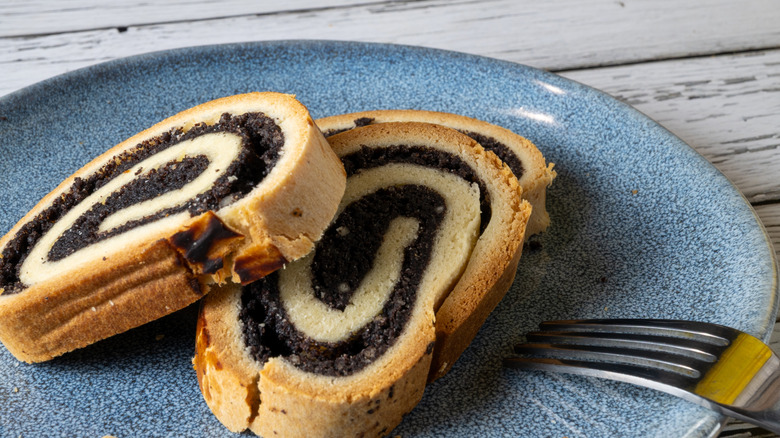
While many kinds of baked goods made up that something sweet to round out steelworkers' meals during their shifts, there are a few which became enduring regional staples thanks to steelworkers' meals promoting their popularity. The most iconic example also hails from Eastern European baking traditions and comes in two main forms. Colloquially referred to as nut rolls, these pastries have other names as numerous as the cultures that prepared their own variations, such as makowiec in Polish and povitica in Slovakian. The recipes consist of a yeasted pastry dough rolled out and spread with walnuts or poppy seeds. This then gets rolled into a log shape, which can be sliced into pieces with a delectable swirled pattern.
These nut or seed rolls were sweet but not overly so, making for a perfect treat to complete a meal and give workers that extra kick to get through the rest of the day. They remain a staple of local cuisine in regions once home to bustling steel mills, especially around Pennsylvania, and today are still often prepared around the holidays.
7. A-Treat sodas
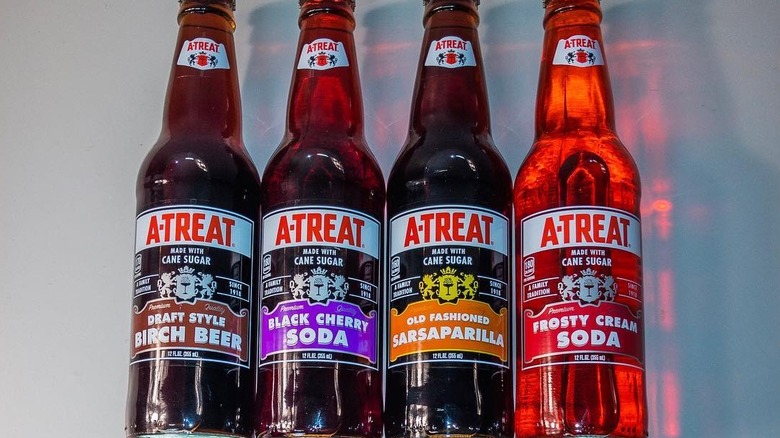
In the mid 20th century, post-WWII, Voula Saridakis explains that steelworkers enjoyed a new kind of beverage during their shifts. Soft drinks became another drink of choice, more modern than the milk or lemonade that might previously have been steelworkers' go-to refreshment beyond water and coffee. Speaking on this point, Mike Piersa mentions that overtime workers at the Bethlehem steel mill received an A-Treat soda as part of their company lunches.
A-Treat was a local brand of soft drink which came in popular regional flavors of the time, such as birch beer, one of many versions of cream soda, and sarsaparilla. Hydration was essential for steelworkers, and soft drinks worked to complement the water that workers would drink regularly. Some mills, as Piersa explains of the one in Bethlehem, PA, had a network of drinking fountains powered by a local spring. This would keep steelworkers going until the end of their shifts, when they could head to a local drinking establishment to quench their thirst with a cold beer.
8. City chicken
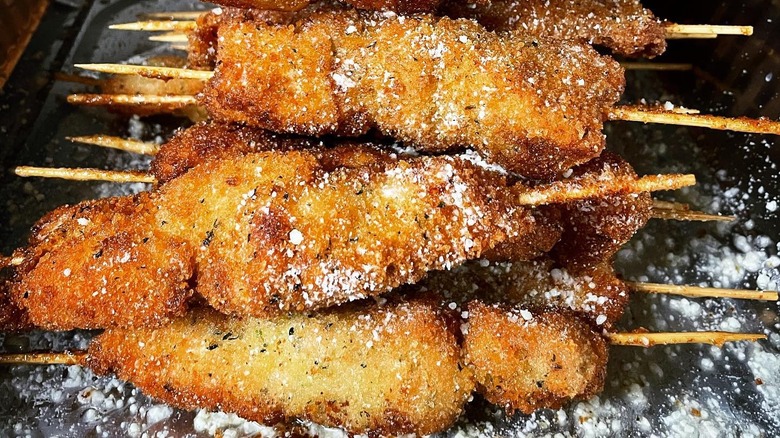
A dish popularized in the States during the Depression, city chicken was a creation that made use of less expensive cuts of meat. Typically a mix of chopped pork and veal, it was made to resemble chicken, which was considered more of a luxury at the time. Often breaded or battered and then fried, this meal really could resemble chicken and tasted just as good. While it came in handy as a hard-times dish, the recipe originated from East European cooking traditions, and found popularity in areas where families from this region settled in the U.S., notably the Rust Belt.
City chicken enjoyed some renown in cities like Pittsburgh, as well as in the Midwest, from Cleveland to Detroit. It was a meal often made at home, and could easily be prepared as a portable lunchbox staple by cooking the meat on skewers, which is still common practice today. But city chicken was also commonly served in restaurants and boarding houses of the Rust Belt region, many of which catered to steelworking communities.
According to Voula Saridakis, "Boarding houses would have fed unmarried men who did not have their own homes and kitchens." City chicken was one dish whose popularity dwindled as the steel industry tapered off, which meant less demand for eateries catering to steelworkers. As Saridakis adds, "Eating locations and venues would have changed. Boarding houses disappeared, as well as any food vendors near the steel mills."
9. Pierogi
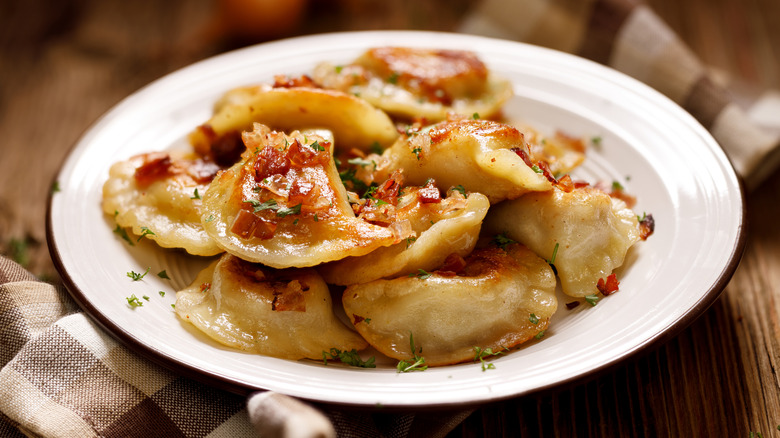
Pierogi were another food adopted from immigrant populations who settled in the Rust Belt and formed much of the steel industry's worker population in the late 19th and early 20th centuries. A staple food among Polish families, they were also popularized by Slovak and Ukrainian families, under the names of pirohy and vareniki. Pierogi even have their own patron saint.
These hearty dumplings were a staple for many steelworkers, and were ubiquitous in cities reputed for their steel industries, such as Pittsburgh and Cleveland. A form of dumpling shaped like a half circle with a crimped edge, pierogi can have a variety of fillings, among the most common being potato and cheese, or meat. The prepared dumplings are first boiled to cook the insides, and then pan-fried to give their signature crisp but chewy texture.
Because they could be eaten at any temperature, pierogi made for an ideal packed lunch. While perfectly tasty at room temperature, the extreme heat from the furnaces in steel mills often meant that the contents of lunch pails kept nearby would warm up meals, too. If not taken on the go as a sustaining food to eat for lunch, they also made for a hearty, wholesome meal to come home to that provided much-needed comfort and energy after a long workday. Pierogi were also a staple in many eateries located near steel mills, where workers could also find a hearty meal and a taste of home after their shift.
10. Pickles
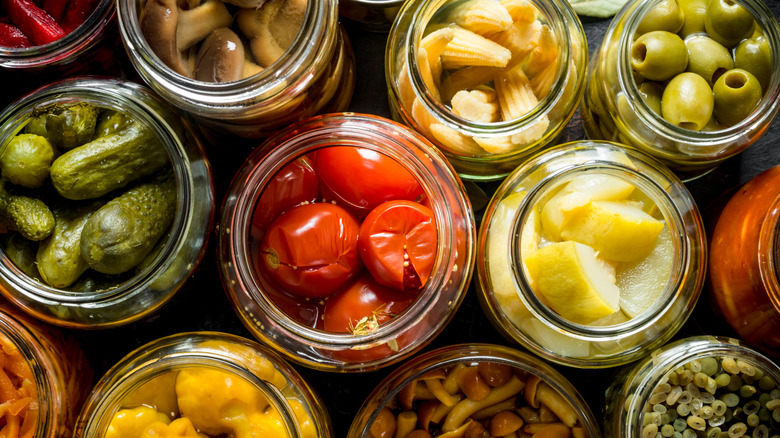
When working in the steel mills' often-extreme heat conditions, workers spent up to 12-hour shifts sweating, so salt became an invaluable way to replenish electrolytes. In the early days of the steel industry, steelworkers who brought homemade lunches had meals that often included pickled vegetables, such as the cabbage and carrots that they had available. These provided a pleasant contrast to a hearty meal, but also had the added nutritional value of providing a necessary source of salt.
While some would get their salt from bar snacks after their shifts, salt tablets, or even putting salt in a glass of beer (as many steelworkers in Bethlehem, PA, were known to do), home-prepared pickled foods served as a way of ingeniously providing steelworkers with necessary nutrients to prevent dehydration or heat exhaustion. As Voula Saridakis explains, this was largely due to higher union wages allowing families to purchase convenience foods rather than make everything from scratch. As a result, steelworker meals slowly evolved to include more packaged, portable foods.