

Avoid This Mistake When Cleaning Ceramic Pyrex Dishes
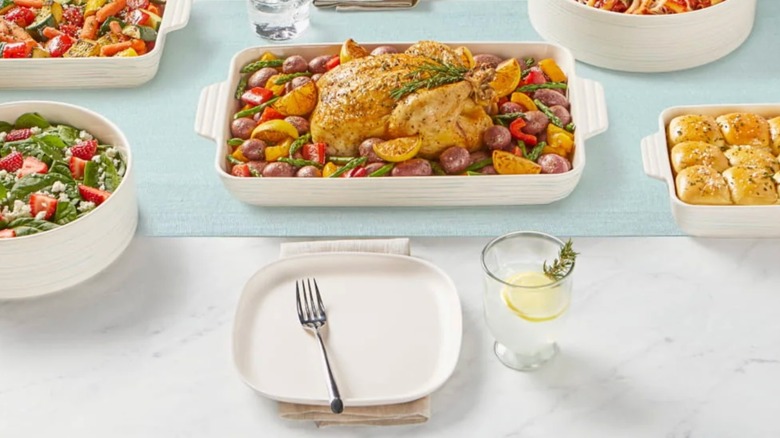
Pyrex is a well-known brand of assorted kitchenware, built on the strength of its pioneering borosilicate glass cookware. The product line has expanded significantly since it was first born thanks to a frustrated home cook in the early 20th century, and as of 2004 includes non-glass materials like ceramics. The different materials have stricter care instructions than Pyrex's legendarily tough glass. Otherwise, it won't last.
There are a few reasons why you shouldn't soak ceramic Pyrex dishes before washing them. Soaking increases the chances that water will seep into the porous ceramic, especially if an unglazed bottom is also in liquid. Trapping any amount of moisture in the ceramic itself means it will expand into steam the next time the dish is heated, increasing the chances of crazing — hairline cracks that ruin enamel.
If you think you're in the clear by only soaking the inside of the dish, think again. Soaking itself is known to weaken glass cookware and dishware made by other companies, and Pyrex warns that applying heat after soaking a dish — for instance, hot water while scrubbing or using a dishwasher — increases the risk of crazing.
How to care for ceramic Pyrex dishes
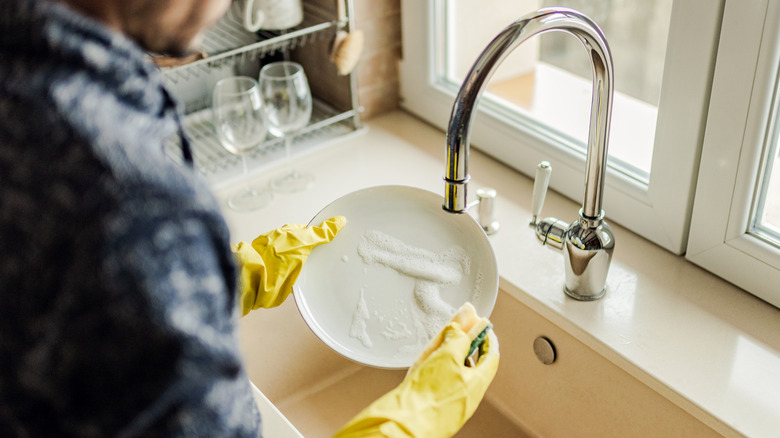
Caring for these less-vintage Pyrex pieces is actually similar to the care guide for vintage Pyrex. Although the borosilicate glass is much tougher and more durable than modern ceramics, both lines of dishware wash best with warm water, mild dish soap, and baking soda if necessary. Because of ceramics' porous nature, they should be immediately hand-dried and, if it has an unglazed bottom and are going to be put away in a stuffy cabinet, perhaps left to dry on a rack a little longer.
Another helpful tip for Pyrex pieces like these is to avoid using metal utensils with ceramic cookware, and this too is all about protecting the enamel glaze. Metal utensils are sharp enough to scratch these surfaces; this damage is typically cosmetic but can accumulate over time and become serious, especially with the use of sharp knives. Wood or cooking-safe silicone utensils are best.
It's also good to take stock of your ceramic cookware from time to time, Pyrex or not. Anything that's cracked, chipped, or worn down is a kitchen item worth throwing out ASAP. In the case of ceramic cookware, cracks, chips, or deep gouges in the pan mean tiny pieces of coating that could end up in your food, plus exposure to harmful materials underneath the coating.