

Stop Wrecking Your Ceramic Cookware And Follow This Tip
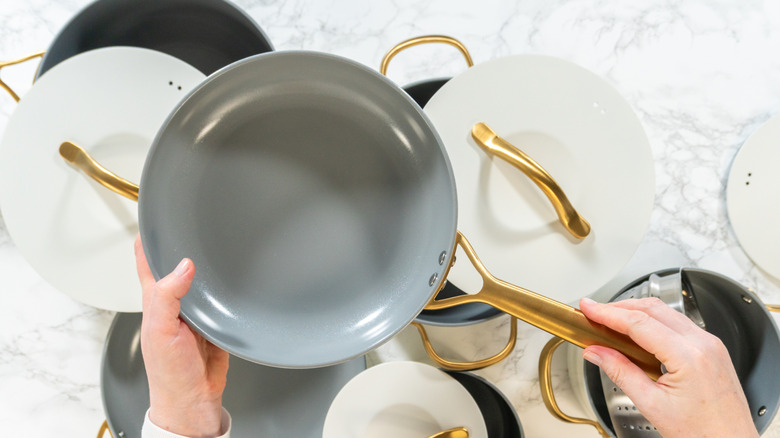
Some ceramic cookware brands can cost a pretty penny, so taking care of them is essential if you want to make the most of your investment. One tip you should always keep in mind to maintain their non-stick capabilities is to avoid using abrasive metal utensils to flip your burgers and stir your soups; opt for wooden, silicone, or nylon options instead.
Ceramic cookware features a metal base (usually aluminum or steel) that's coated in a type of silicon. This layer of silicon is what makes it non-stick and gives it a glossy finish. Expensive ceramic pans tend to have more layers of silicon, which makes them more durable. That said, using metal utensils on even the costliest ceramic cookware (or the best nonstick pans) can create small scratches on that smooth surface, which gives them an unsightly appearance over time and hampers their performance. These abrasions might not look too bad to begin with, but they will accelerate the decline of your cookware and diminish its lifespan.
Silicone utensils are hard-wearing and heat-resistant, which means they can withstand very high temperatures without falling apart or becoming damaged. As they're also stain-resistant, you can easily use them to stir curries containing turmeric or tomato-based pasta sauce without worrying about them becoming discolored. Wooden spoons are more prone to staining. However, they are made of a sustainable material and are a classic, durable alternative. Moreover, their harder edges make them ideal for scraping the bottom of ceramic cookware without causing any nicks.
Nylon utensils are more rigid than silicone
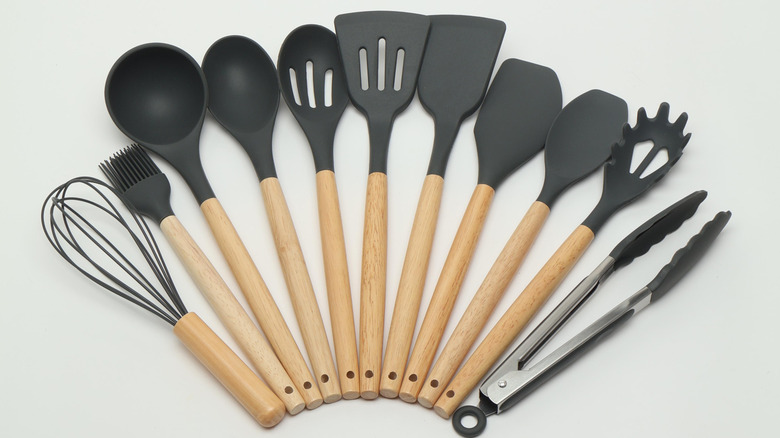
Using a pair of metal tongs to flip your steak over in a ceramic pan once in a while isn't the worst thing. However, sometimes small scratches can appear that aren't visible to the naked eye, so don't make it a habit. It's a better idea to keep a separate range of wooden, nylon, or silicone utensils available, rather than risking making a scratch by flipping a filet of salmon over with your favorite metal fish spatula.
Nylon utensils are more rigid than silicone, but they can't withstand the same high temperatures, so they may be unsuitable if you use your ceramic cookware for a lot of deep frying. Neither are they biodegradable, like wooden spoons and spatulas, which may be off-putting if you're wary of curbing your carbon footprint. On the other hand, you shouldn't put wooden utensils in the dishwasher because they can warp in the heat, so you'll need to be prepared to handwash them.
When it comes to cleaning a ceramic pan, never wash it while it's still hot or there's a risk it could warp. Secondly, once it's cooled, use a non-abrasive sponge to wash it with dish soap and water to avoid damaging the surface. For stubborn stains, sprinkle in a dash of baking soda (the texture of the soda will encourage any food residues to lift away without scratching the ceramic coating).