

10 Classic Foods Soldiers Ate Back In The Day That Still Hold Up
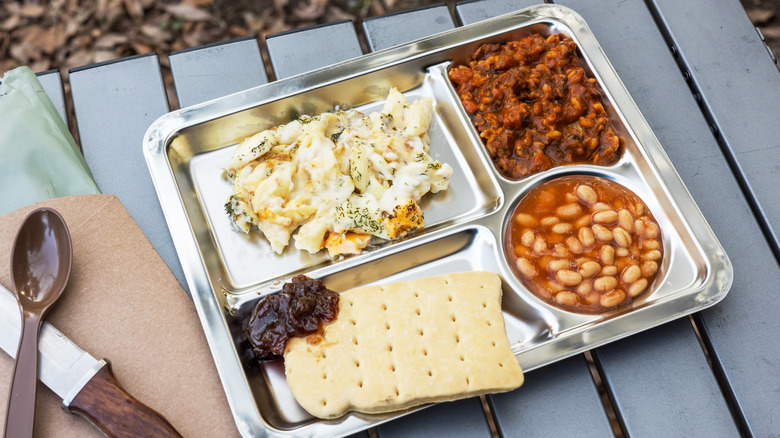
Napoleon Bonaparte is credited with the expression "An army marches on its stomach." No evidence exists that he actually said this, and if he did, it would have been cold comfort to his troops, who came close to starving at several points during his campaigns. Napoleon and his troops learned the hard way that staying fed on the battlefield can be a challenge, and sometimes what little food was available was pretty miserable.
Not all of it was, however. The constraints of the battlefield inspired cooks and food scientists to get creative. Troops needed food that was portable, durable, nutritious, and if at all possible, tasty. Some of these foods already existed in the civilian world, and sharp-eyed procurement officers recognized their suitability for the battlefield. Others, however, were created specifically for military use. And many battlefield staples proved practical and popular enough with hungry soldiers to become regular grocery list items and weekday menu picks for civilian home cooks. Here are some modern favorites that first gained popularity on the battlefield.
Crackers
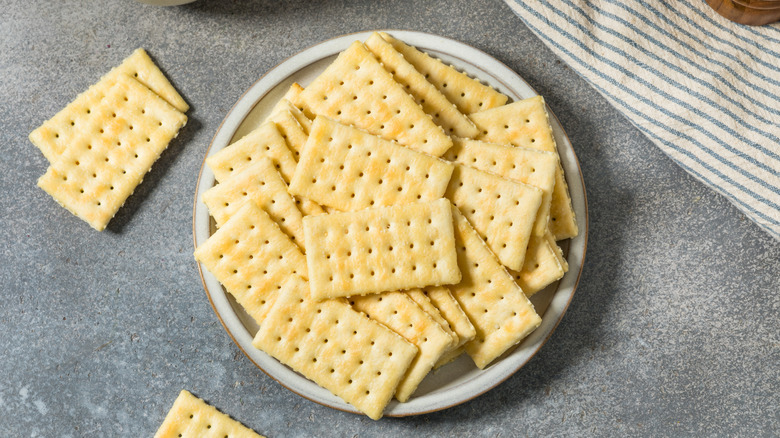
Armed units around the world have historically been big on carbs, and today's crackers emerged from military carbo loading. Among the most notorious sources of carbs was hardtack, a tasteless but durable cracker. In fact, it was so durable that leftover hardtack from the War of 1812 was taken from storage and fed to Civil War troops. Hardtack was true to its name — it was so hard that some soldiers soaked it in coffee or water just so they could bite through it. No one loved it, but it did what it was supposed to do: withstand battlefield conditions undamaged and keep troops alive and fed.
When conditions allowed, some camps' cooks attempted to make hardtack palatable by turning it into a hot meal appropriately called hell-fire stew. It involved crushing hardtack, soaking it in water to soften it, then frying it in bacon grease. This dish never caught on off the battlefield, but enterprising civilian bakers figured out how to make basic hardtack into palatable crackers (with the addition of salt, yeast, and other ingredients) while maintaining much of their keeping qualities — and today, no well-designed charcuterie board is complete without them.
Instant coffee
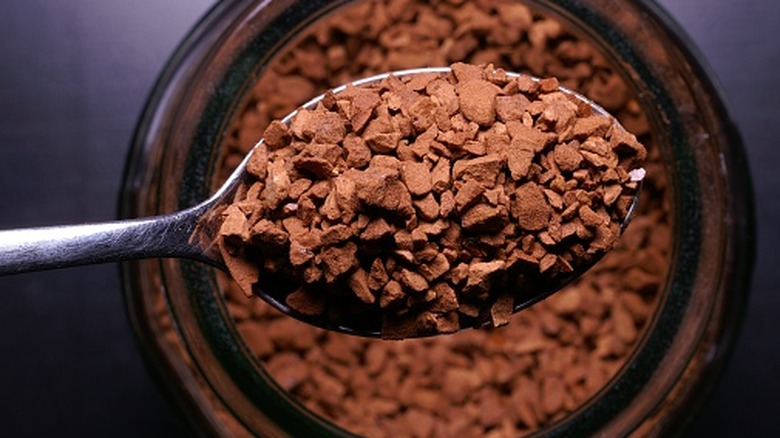
Burdened with unpredictable schedules and grueling workdays, American troops relied on coffee to stay alert. As early as 1832, coffee beans and sugar were part of daily rations for U.S. soldiers, replacing a daily allotment of spirits. The catch, however, was that beans and sugar were cumbersome to carry around, and grinding and brewing coffee was time consuming.
The solution was an early form of commercial instant coffee – a liquid concentrate made by boiling coffee until it thickened. But as anyone who's every drunk the last cup from an office coffee maker can guess, it tasted terrible. By the end of the 19th century, New Zealand spice merchant David Strang developed the first powdered instant coffee, made by blowing hot air over coffee to evaporate the liquid. This was a game-changer for the U.S. military, which commandeered the entire supply of powdered instant coffee for its troops during World War I.
It was a lot tastier than the old liquid concentrate, and grateful soldiers brought their appreciation of the handy little crystals back to the home front with them. Of course, it's never going to be a direct match for a cup brewed from freshly ground beans, but fluffy dalgona coffee – made with instant coffee – is still a treat on a hot afternoon.
Tootsie rolls
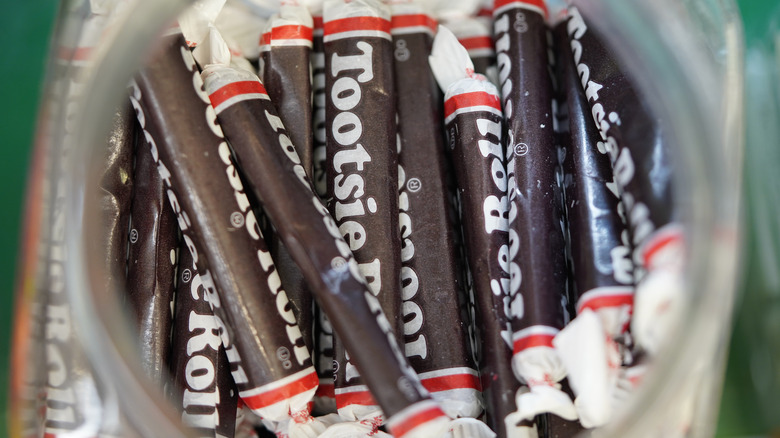
Invented by an Austrian immigrant in the late 1800s, Tootsie Rolls became a commercial success because of their flavor, affordability, and durability. Unlike other chocolate candies, Tootsie Rolls didn't melt in hot weather, and because they were individually wrapped, they were portable and neat to eat. Their low cost and keeping qualities made them a favorite during the Great Depression, when affordable, comforting treats were in high demand.
These traits also made Tootsie Rolls an ideal addition to military rations — and the troops got a lot of them. "You can bet there were literally thousands of Tootsie Roll wrappers scattered over North Korea," 1st Marine Division veteran Edward M. Szymciak recalled in an interview. Indeed, some Korean War veterans got so sick of them they swore they'd never eat them again after the war, and decades later, they reported they'd kept that promise. Whether the troops loved or hated them, however, they discovered another useful purpose for the candies: When softened, they became a durable putty for plugging bullet holes in fuel tanks. They refroze in North Korea's frigid winter weather, forming a solid seal.
Canned foods
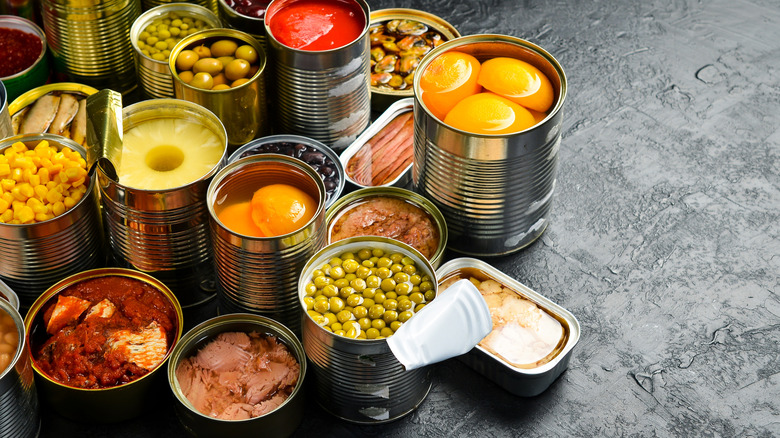
Napoleon Bonaparte is best known for his military exploits, but perhaps his most impactful contribution was inspiring the invention of canned food. Toward the end of the 18th century, his government offered a cash prize to whatever European inventor could devise an efficient way to preserve food for traveling armies. In 1809, French inventor Nicholas Appert won the prize with his discovery that heat-sealed containers could keep normally perishable foods — such as meat and vegetables — safe for prolonged periods. Over the years and to this day, soldiers subsist on canned items, from meat, soups, condensed milk, vegetables, and even canned bread.
This proved to be a godsend for hungry soldiers, as well as for time-pressed home cooks. Military service even launched some commercial canned products — such as the simultaneously beloved and reviled pork loaf Spam – to global fame. Long before it became a synonym for junk email, Spam was a popular budget lunch meat in American kitchens. In World War II, the durable slabs of canned pork became staples of the U.S. military diet. Not all the troops loved it, but locals they encountered in the Pacific Theater took an instant liking to it. While they likely appreciated it at the time because it was the only meat available, it continues to be a revered treat in much of the Pacific Rim. In South Korea, cans of Spam are popular gifts for Lunar New Year celebrations, and in Hawaii, Spam is so popular that locals host a two-week Waikiki Spam Jam Festival every April to celebrate the beloved canned meat.
Wild game
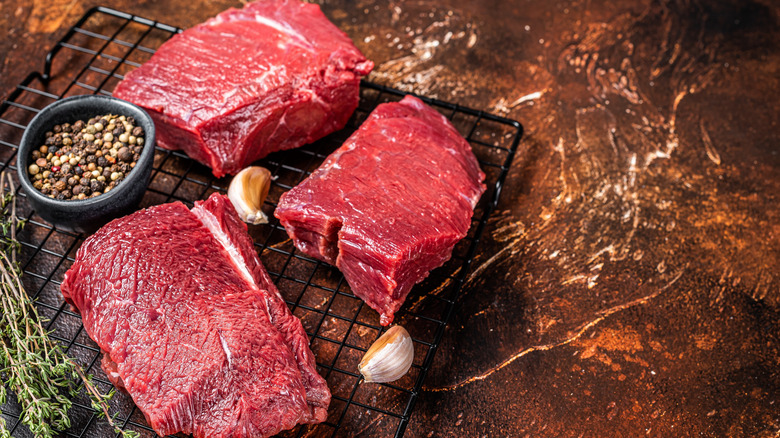
During the Civil War, soldiers learned the hard way they couldn't depend on their allotted rations to fill them up. Long days of slogging through hostile territory burned a lot of calories, and the rations that could be carried, such as salted meat and hardtack, were barely palatable and not very filling.
To overcome this problem, soldiers sometimes supplemented their diets by hunting — after all, they were armed and likely had plenty of shooting practice. This meant that, on good days, they could enjoy meals of fresh wild game, some of which earned them serious bragging rights. A Civil War veteran relished sharing the story of the feast that resulted when he unloaded a howitzer on a flock of water birds. "I have often told this story at dinners of naval veterans, etc., but always prefaced it with the statement that 'I once killed 43 geese and ducks with one shot'," he wrote. Today's U.S. soldiers don't need to hunt for their meals, and in modern battlefield conditions, this may not even be possible. But some military bases offer recreational hunting opportunities for troops for both wildlife management and morale building. And wild game is no longer desperation food, but a special treat for meat-loving epicures — or a reward for a successful day of recreational hunting.
Donuts
By World War I, the U.S. military had learned the lessons of the Civil War: Hauling rations to the front lines wasn't workable. Instead, the military organized field kitchens, staffed in part by civilian volunteers from the Salvation Army and other organizations, who cooked hot meals and baked bread for the troops. Besides cooking, these mostly female volunteers organized morale-boosting activities such as religious services and listening to music on a Victrola. While their responsibilities were traditionally feminine, their working conditions were anything but. The women were issued the same gas masks and .45 caliber revolvers as the soldiers they served.
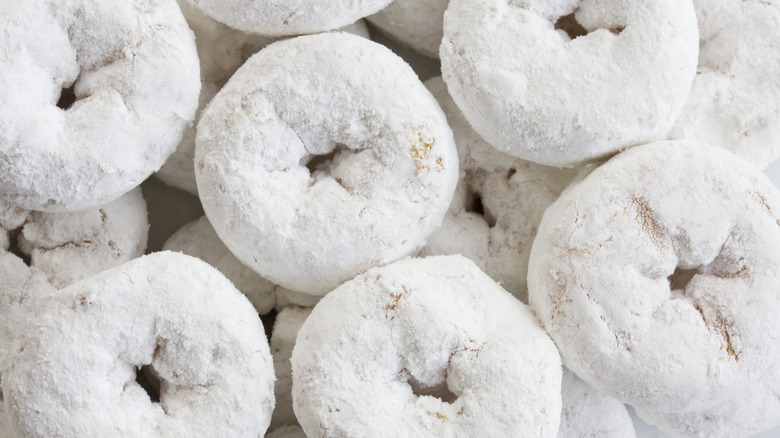
And it was the volunteers themselves who came up with the idea of making donuts from extra rations of flour and fat to offer the troops a comforting reminder of home. Using spent shell casings as rolling pins and empty condensed milk cans as cutters, the volunteers made simple cake donuts dusted with powdered sugar, sometimes dodging bullets and shrapnel in the process. A recipe from the time shows their creations were smaller than today's commercial donuts, but even more valued by those who ate them.
Salisbury steak
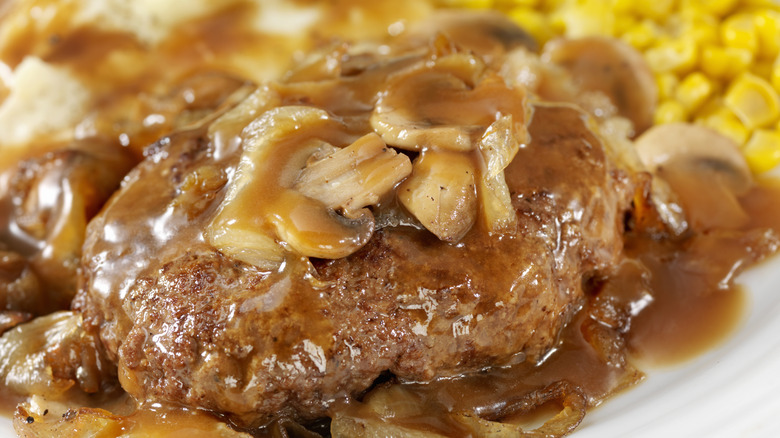
Believe it or not, this retro school cafeteria and old-school frozen TV dinner – seasoned ground beef patties served with brown gravy — started its life as a military health food. Its inventor, 19th-century physician James Henry Salisbury, had determined that finely ground meat, with all connective tissue removed, was the healthiest and most digestible food for soldiers, who were prone to diarrhea and other digestive ailments. Salisbury reached this conclusion after testing a series of 30-day single-ingredient diets on himself and a handful of intrepid (or masochistic) volunteers.
He had the opportunity to test his theories on a large scale during the Civil War, feeding a group of Union troops a steady diet of ground meat patties and nothing else besides the occasional broiled mutton swap when ground meat wasn't accessible. It's unclear what the soldiers thought of this diet or how much their health improved – but it's clear that gravy and a side of mashed potatoes weren't yet part of the equation. Neither was the dish's name; Salisbury was too mission-driven to name it after himself. His original name for the creation, now thankfully abandoned, was "muscle pulp of beef."
M&Ms
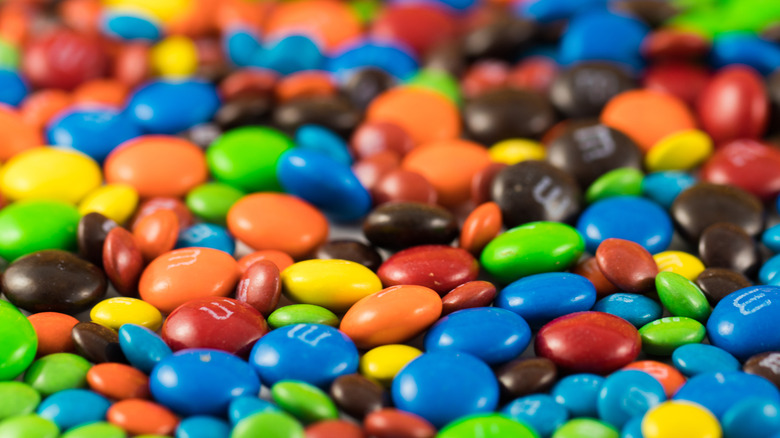
War is messy on any number of levels, and sometimes mitigating just one of the messes can make the burden feel lighter. For instance, sticky fingers from meals and snacks may seem like a minor inconvenience, but we've all seen how minor problems can suck morale and bog down performance.
So when candymaker Forest Mars, Sr. traveled to Spain in the 1930s and found chocolate candies with a hard sugar coating that kept them from melting in hand, he was determined to reproduce them in the U.S. He named his creation M&Ms (the first M representing his last name, the second, that of his business partner). His first (and for a while, only) customer was the U.S. military, which identified the candies as a neat, portable treat that soldiers could enjoy in tropical climates without getting sticky fingers. It was only after the end of World War II that M&Ms became available to civilians, and since then, they've appeared everywhere from Halloween candy hauls to space, where NASA serves them as snacks for astronauts.
Minute Maid frozen orange juice
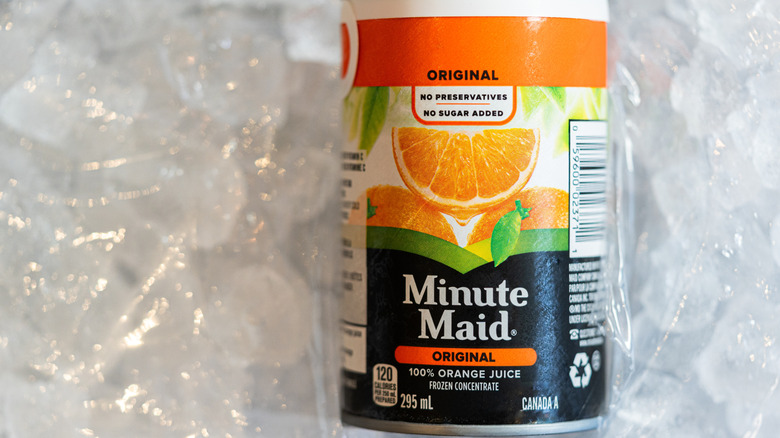
Getting enough calories wasn't the only dietary challenge for soldiers. Just as important was getting the right nutrients, and all too often, this proved to be difficult or impossible. Scurvy, a disease caused by a lack of vitamin C, was often more deadly to soldiers than the armed conflict itself. In his 1941 book Scurvy, The Soldier's Calamity, Major Victor E. Levine noted, "This nutritional scourge destroyed more sailors than all other causes incidental to sea life including deaths due to naval warfare." The solution was to get troops to eat more fruits and vegetables, but in battlefield settings where fresh produce was unavailable and dried meat and hardtack were often the only available options, this was easier said than done.
A promising solution emerged when American scientist Robert Morse introduced frozen orange juice concentrate in 1945. The U.S. Army took notice, ordering 500,000 pounds of the concentrate for troops fighting World War II. While the war ended before production could begin, Morse continued to promote the concentrate, marketing it under the brand name Minute Maid. It became a household staple as well as a popular cooking ingredient, since it was an easy way to add orange flavor to drinks, sauces, cookies, and more. Alas, this era is coming to an end. Citing changing consumer tastes, Coca-Cola, Minute Maid's parent company, announced that its frozen juice line would be discontinued in the first quarter of 2026.
Foraged produce
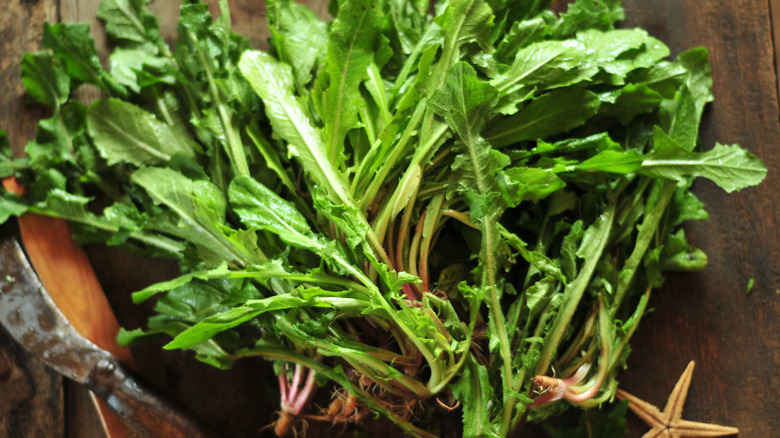
A challenge to feeding military troops was that it wasn't always possible to carry all the food that was needed, and this was a serious problem. During the Revolutionary War, soldiers were sometimes so malnourished they had to cut short winnable battles. Later, during the Civil War, soldiers took every opportunity to supplement their rations with whatever they could find nearby. If they were lucky, this meant fresh wild fruits and vegetables, which could include berries and dandelions.
Much of the time, however, foraging meant acquiring food from whatever farms or homesteads the troops encountered, so troops sometimes enjoyed fresh farmed produce such as apples, corn, or sweet potatoes. If protein sources such as hams or chickens were available, they sometimes took these, too. While some Revolutionary War troops issued receipts to farmers so they could later be reimbursed for requisitioned food, in many cases, foraging became a military euphemism for outright theft, especially for soldiers passing through enemy territory. Today, farm-to-table eating is a more respectable practice, with consumers paying farmers their asking price for the food they grow.