

14 Best Japanese Candies You Need To Try
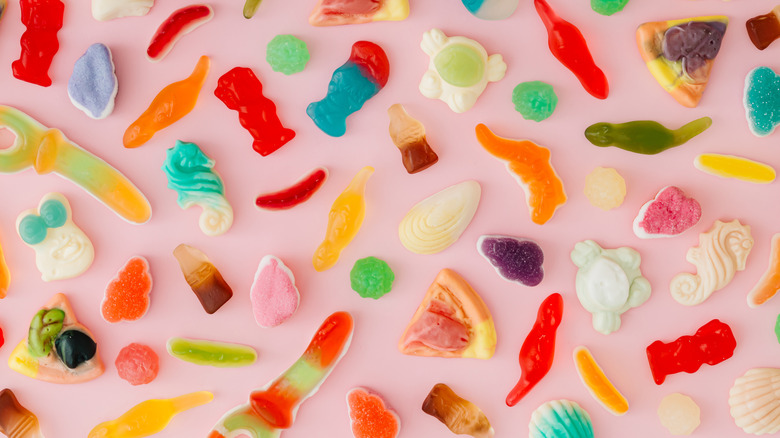
Japan is renowned for its unique, exciting food culture. From must-try street foods to Michelin-star dining, there's something interesting at every price point, and many menu items and products feel completely distinct from those you'd find elsewhere in the world. The same goes for the candy. Japanese candy sometimes feels a law unto itself: A collision of innovation (in terms of flavor, texture, and form) and familiarity, the country's confections often combine strands of what's familiar to Western consumers with a particular sensibility when it comes to taste and aesthetics.
A lot of Japanese candies can push the boat out, and it's not uncommon to find treats that almost feel like toys. Gummies shaped like sushi kits (which you put together yourself) or foaming sweets that you place in a little plastic toilet and suck out with a straw are just two of the particularly wild options you might find on a visit. In other cases, the sweets feel rooted in a more traditional food culture, such as sour, umeboshi-flavored hard candies.
For this article, we decided to showcase some of the most popular and interesting candies sold in Japan. We looked at Japanese retailers' websites, blog posts, and social media to find options that stood out for their cultural appeal, individuality, and one-of-a-kind flavor. In addition, we narrowed it down to those that felt unique to the country and were highlighted by customers as must-buys. Hope your taste buds are ready.
Coris Awa Soda Bubble Candy
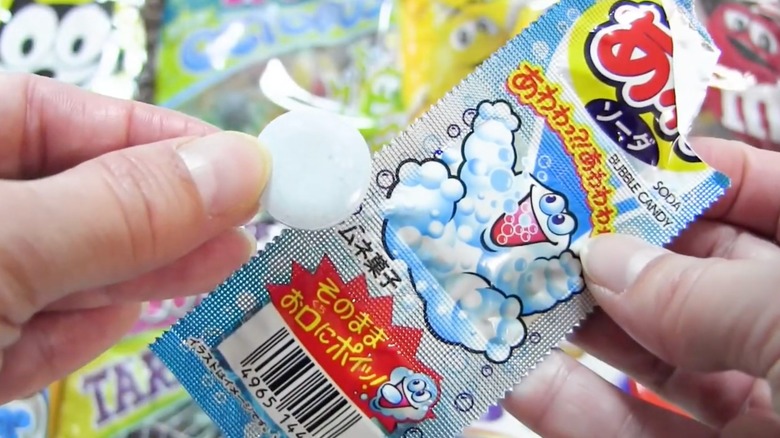
Japan has its own version of penny candy: dagashi. These candies tend to be cheaper, more widely available, and more specifically engineered to appeal to a younger audience with colorful packaging, collectible toys, accessible flavors, and fun textures. Coris Awa Soda Bubble Candy incorporates several of these features. Made by Coris, a confectioner that's been at it since 1948, the soda bubble candy is a product many people grew up with, and now their kids get to enjoy it too.
With Coris Awa Soda Bubble Candy, the clue's in the name: The candy inside produces a fizzy, bubbly mouthfeel, similar to drinking soda. In each pack you find a bunch of tablet-shaped, sugary morsels that you place on your tongue, and they fizz up and dissolve. The baking soda in the recipe helps with this; good old chemistry, right? Coris Awa Soda Bubble Candy comes in three different flavors (cola, grape, and soda), and you can find them in some stores in Japan for around 30 yen (20 cents).
Shimobashira
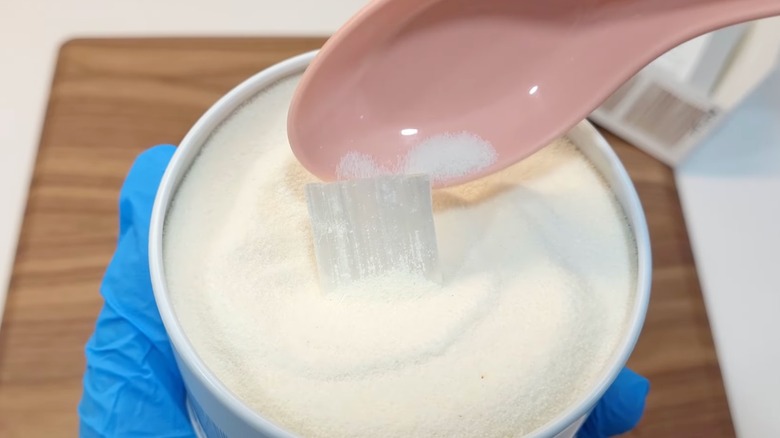
Two huge parts of enjoying candy are its appearance and the experience of eating it — and perhaps no Japanese candy understands that better than shimobashira. This stunning candy is known for being incredibly rare, to the point where some people refer to it as a "phantom sweet." Given the care that clearly goes into making each tin, you can see why.
Produced by Kokonoe Honpo Tamazawa, a confectionery shop in Sendai, shimobashira (which roughly translates to "ice needles") is a handmade candy, with each package consisting of two parts. The first is rakugan powder, a combination of sugar and rice flour, which comes together to create a snowy texture (shimobashira is only available in winter, which adds to its mystique even more). Inside the rakugan powder is the shimobashira itself, delicate, translucent shards of sugar with a pleasing snap and a lightly crunchy texture, but one which dissolves on your tongue. They're sweet, fleeting, and each one feels like a work of art. It's probably no surprise to hear that they're pretty expensive, but what you pay for here is the rarity, the craftsmanship, and the one-of-a-kind experience.
Moko Moko Mokoletto Toilet Foam Candy
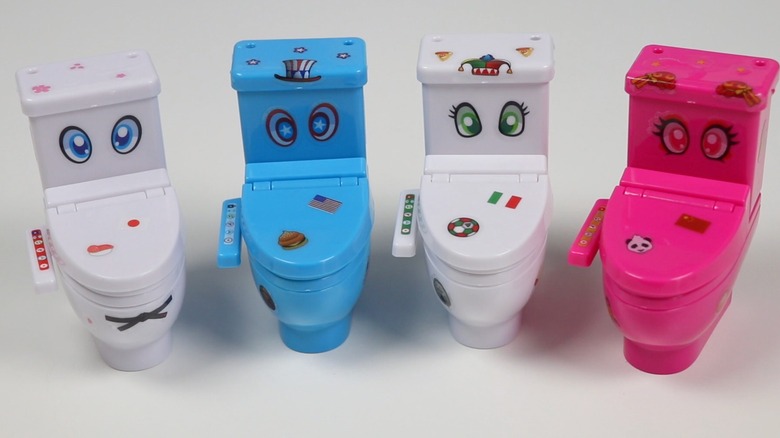
What Japan has achieved with toilets is pretty amazing. Arguably, the country has done more for this plumbing fixture's image than any other country on earth, with its talking, singing toilets, often jazzed up with cute designs. We're willing to bet, though, that even if you've seen one of its high-tech toilets, you probably don't expect Japan to have turned them into candy.
Well, that's exactly what it's done. Moko Moko Mokoletto Toilet Foam Candy is a truly bizarre and strangely satisfying candy: In each package, you get several plastic pieces, which come together to make a mini toilet. Each candy even comes with a sticker pack so you can place eyes on your toilet and decorate it to your choosing; an American edition comes with a flag and an Uncle Sam stars and stripes hat.
Once you've put the toilet together, only then can you get to the candy part. You pour a powder sachet into the tank, followed by water ... and then it foams out of the toilet bowl. Each package comes with a straw, which you can use to suck up the foam. Now, is that one-of-a-kind, or what? After you've finished, you can then reuse the toilet to store toothpicks or place it on a shelf as a kooky ornament.
Bontan Ame
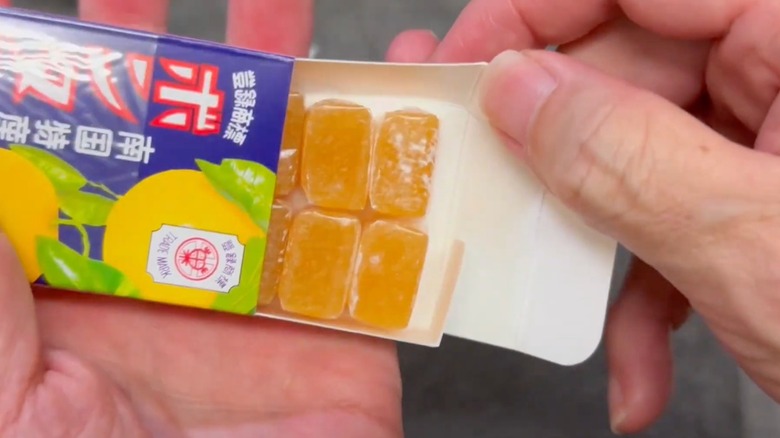
Many countries boast well-known candies that people from other parts of the world may have never heard of. In Japan, one of those is Bontan Ame. This candy has been in production since 1924, and over the century-plus it's been available, it's become a beloved treat for people of all ages. Bontan Ame has a pomelo fruit flavor, and as such, each candy has a gentle citrus note with an undercurrent of sourness (but not as much as you'd get in something like grapefruit). They're also made with mandarin orange juice from fruits grown in Kyushu, which gives them a touch more sweetness.
Bontan Ame really stands out, though, because of its texture. Each candy comes in an edible wrapper made from potato and sweet potato flour, and when you bite into the sweet, it has a soft, chewy consistency that's been compared to a mochi rice cake. Although Bontan Ame is well over 100 years old, more recently it's received a surge in popularity in other countries, largely thanks to social media along with alleged claims that it helps suppress the urge to urinate. These two factors might be a slightly strange combo, but they've certainly woken more people up to interesting, unique candies.
Black Thunder
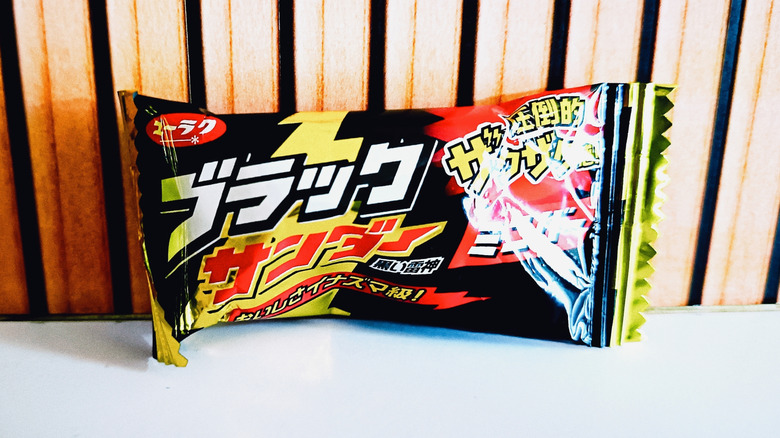
Black Thunder is one of those Japanese candies that's gained a big fanbase elsewhere in the world — and that's precisely thanks to how good it is. The range of chocolate bars has more than 50 flavors, but its original version still stands as one of the best. First debuting in Japan in 1994, the original Black Thunder is a blend of dark and milk chocolate with crushed cocoa cookies and rice puffs. It's got a bittersweet flavor, a varied texture, and an overall feel of being large and hearty, making it a winner for those who live in or travel to Japan.
Although Black Thunder's original flavor is widely available and pretty accessible to Western sensibilities, its other versions feel a little more Japanese. Roasted soybean, matcha, manju, and monaka (traditional confections filled with sweet red bean paste) are a few of the more interesting options for tourists seeking out candy they wouldn't be able to get elsewhere. Black Thunder is such a staple in the country that McDonald's Japan has even collaborated with Yuraku, the company that makes it, to create a Black Thunder McFlurry.
Genghis Khan Caramel
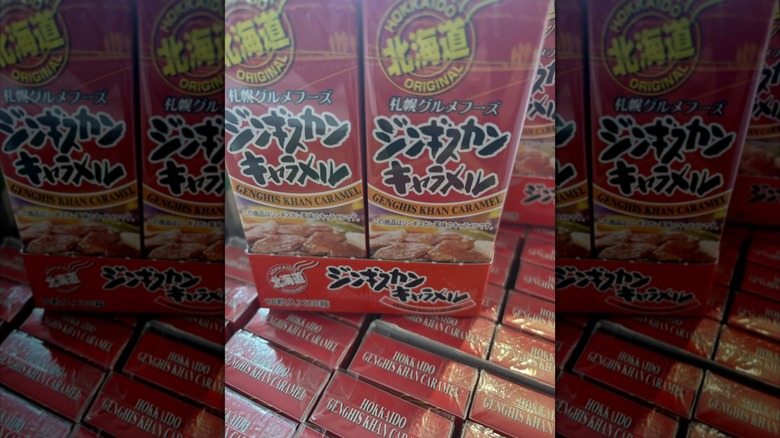
You've probably had caramel before, but we're willing to bet you haven't had caramel that tastes like meat. Well, that's what Genghis Khan Caramel is, and it's one of the strangest candies you'll find in Japan or anywhere else in the world. Made in Hokkaido, the northernmost island in Japan known for its unique food culture, Genghis Khan Caramels are individually wrapped candies that combine sweet caramel with the taste of grilled, spiced mutton. They're named after the infamous founder of the Mongol Empire and after Jingisukan, a grilled lamb dish famous in Hokkaido (which translates to, you guessed it, "Genghis Khan").
So ... Do these candies really taste like meat? Not aggressively, no. Genghis Khan Caramels have a hint of meaty flavor, but it's not especially overpowering; instead, one taste tester on Japanese Snack Reviews compared their flavor to a milder version of the caramelized pieces of meat you get on the edges when cooking it particularly thoroughly. They're probably not something you'd eat every day, but they aren't actively gross either. Talk about unique.
Tough Gummy
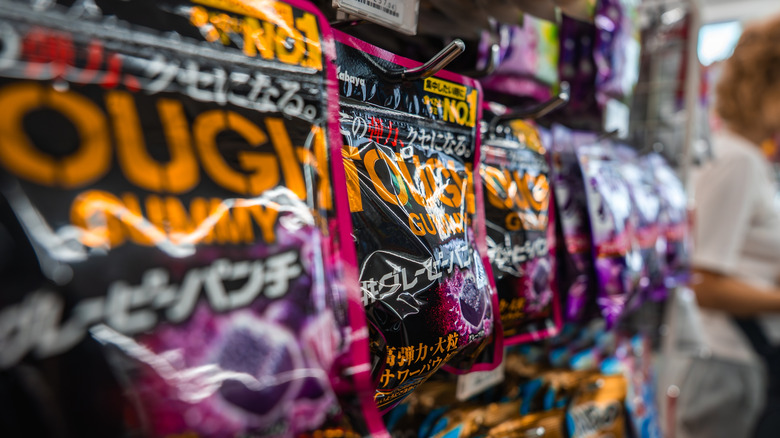
The problem with some of the worst and best gummy candies is they're just not chewy enough. If you ever encounter a pack of Tough Gummy, though, prepare for that feeling to change. Tough Gummy is a popular Japanese candy (its packaging states that it's the best-selling gummy in the country) and the whole point is that it's seriously hard to chew, with a high-elasticity texture that makes each piece last longer. The texture can be an acquired taste: Some people don't love how difficult they are to eat while others appreciate their resistance and that they last longer than other candies.
This divisive quality, though, only makes more people talk about and try the confection. Tough Gummy comes in several flavors, including a variety pack containing soda, energy drink, and cola flavors and an Energy Zone pack, which tastes reminiscent of Red Bull or Monster. Their sourness is a real selling point for some, too, with these candies packing a punch in terms of acidity. If you don't fancy giving your jaw a workout, though, you might want to skip them.
Mintia
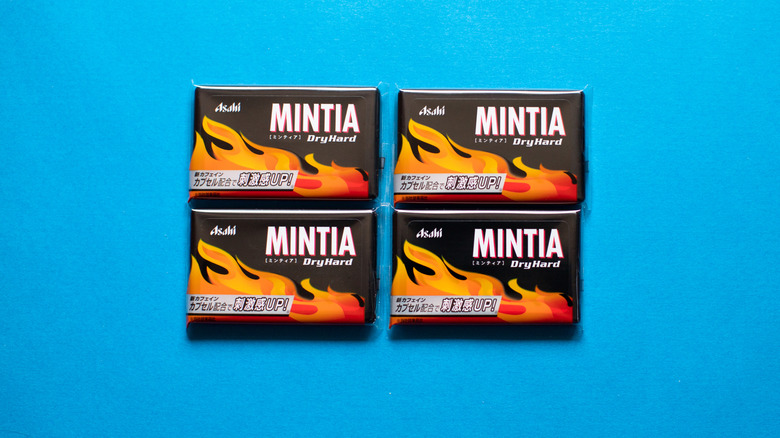
The U.S. has Tic Tac; Japan has Mintia. Both products are small mints that provide a quick breath freshener and can be slipped into your pocket, but they've also got so much more going on. Among the best sugar-free candies, Mintia comes in a small, slim, rectangular package, and each tiny lozenge is dispensed by a small opening on the side, one at a time. Some variations even dispense lozenges with emoji faces, which are said to be a nice surprise or lucky charm.
That's all before you get to the flavors on offer, though. This popular candy comes in dozens of varieties, including grape, chocolate mint, jasmine tea, orange, lemon-lime, and umeboshi (dried Japanese apricots). See what we mean about being similar to Tic Tac? Although many Asian markets sell Mintia in the U.S., it's hard to find the full range of flavors that you would in Japan. As a result, if you're lucky enough to be in the country any time soon, you might want to stock up. After all, you can fit plenty of the little packs in your suitcase.
Meiji Nigi-Nigi Sushi Gummy Candy
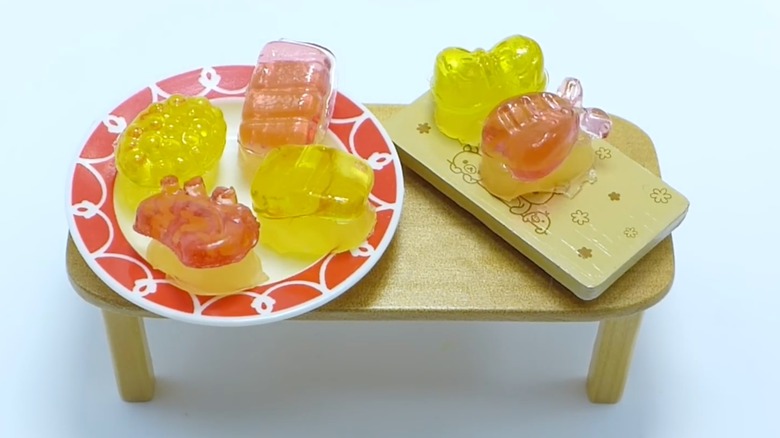
If you're not a sucker for candy that's shaped like other food — and can be put together to make fake, very cute meals — then we think you've lost your sense of whimsy. That's maybe a good thing for us, then, as there'll be more Meiji Nigi-Nigi Sushi Gummy Candy to go around. You can probably figure out what this candy is by its name: Each pack contains a thin sleeve with various pieces of gummy candy in sushi shapes sealed inside. You have a bunch of rice bases and toppings shaped like shrimp, tuna, squid, and tamagoyaki.
This dagashi candy is a favorite with kids, who get to play with their food before eating it, but it's just as fun and satisfying for adults too. What's especially cool is that the gummy pieces have different flavors: The candy comes in lemon, banana, and Japanese plum flavors and depending on how you combine them, you can get a completely different experience. You don't even have to build your sushi if you don't want to: You can just pop the gummies into your mouth one at a time and enjoy it like standard candy. The choice is yours.
Ohajiki candy
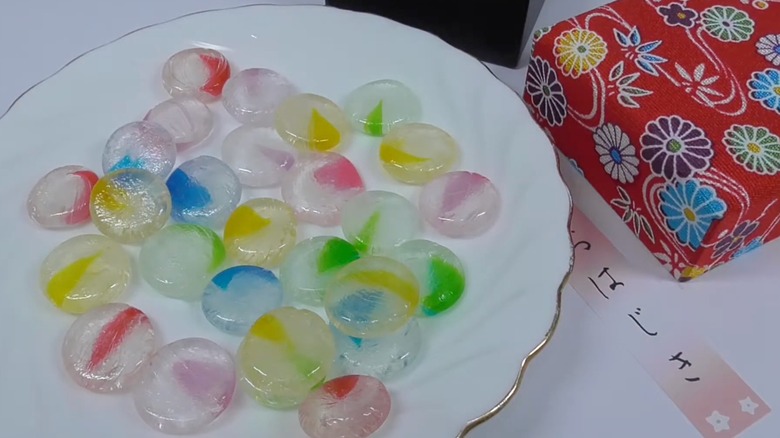
Japan definitely knows how to make aesthetically pleasing candy. If you don't believe us, look no further than ohajiki candy. These nostalgic hard candies are designed to look like ohajiki pieces, small chunks of coin-shaped glass that Japanese children use to play a traditional game similar to marbles. The idea is that you flick the pieces toward each other, hoping to strike and collect your opponents' pieces.
Ohajiki candy isn't designed to be played with in this way (although we guess you could), but it's definitely easy on the eye. These two-tone candies have a clear body with a streak of color, which indicates their flavor: strawberry, lemon, orange, and apple are common. Popular in tourist areas, ohajiki candy often comes presented in ornamental boxes, adding to its sense of specialness. It's the ideal candy to pick up on a trip to Japan and give to friends as a beautiful souvenir, but you'll have to resist opening them up before you get home.
Gummy Tsureta
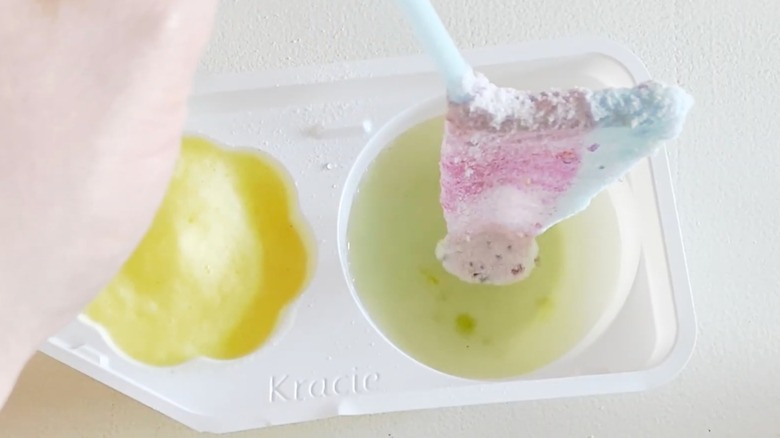
If you've ever wanted to try a candy that makes you feel like a mad scientist, then Gummy Tsureta might be the one for you. This bizarre sweet comes in several different parts: You get a tray with two sections, several packages of powder, a fork, and a straw. You mix the various powders as per the package instructions, and then — the final touch — you dip the straw in one of the solutions, add one more powder on top, and carefully lift up. As you do, the powder turns into grape-flavored gummy candy in front of your eyes, and you withdraw a long, thin piece of confectionery, which you can then chew down.
Sounds fun, right? So, why is it so weird? Well, Gummy Tsureta is meant to be a "fishing candy" — but the treat you produce ends up looking like a long tongue. It's fair to say it's not the most attractive sweet in the world, but it's also kind of a marvel of chemistry, and for that, we have to give it credit. As for how it tastes, people who have tried it say it has a light sweetness and good chewiness. You'll just have to make peace with its strange appearance.
Kanro Kiraspika gummies
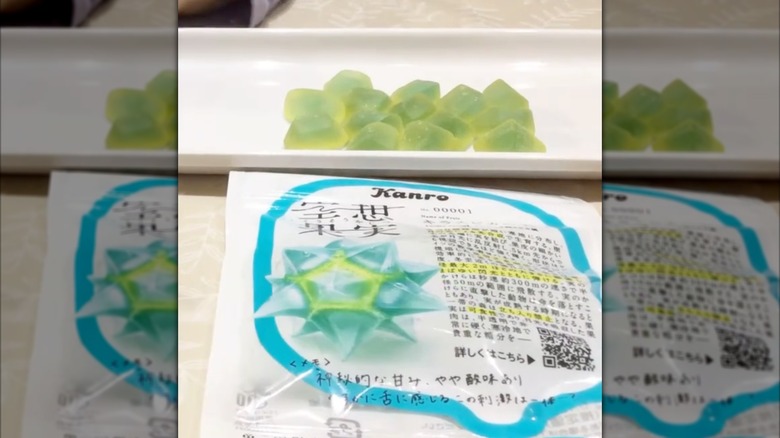
Most of us are well aware that the fruit flavors in candy don't really taste much like real fruit at all. One candy producer in Japan, though, has pushed this to its absolute limit. Japanese confectioner Kanro makes a gummy candy based on the Kiraspika fruit ... but the catch is that this fruit doesn't actually exist. How's that for innovation?
Kanro has created an impressive lore to go along with Kiraspika and, subsequently, the candy that bears its flavor. The company says this star-shaped fruit grows only in the Blue Knife region and ripens with such sharp edges that it can be fatal when it explodes to spread its seeds. Talk about out there, huh? As for the candy itself, it has a sweet, sour, and spicy flavor that has been compared to cherry, apple, and energy drinks. We guess that's one solution to running out of ideas for candy flavors: Just develop your own and create an elaborate backstory to go along with it. Hey, it was enough to pique our interest.
Kohakutou
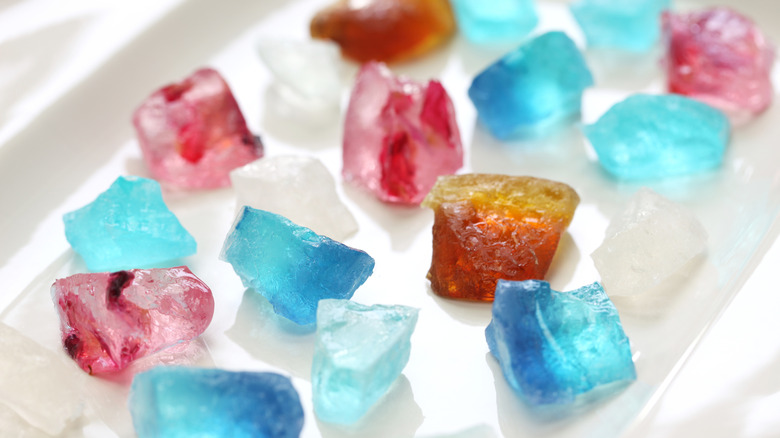
There are many interesting strands of candy in Japan that feel almost ornamental, and kohakutou is one of them. This jelly candy has been somewhat of a social media sensation in the last few years, not just because you can make it at home, but also because of its appearance. Kohakutou (which translates to "amber sugar" in Japanese) is made with agar and sugar. The combination of these two ingredients, along with its cooking method, gives the candy a crystalline appearance and a crunchy-soft texture. You'd be forgiven for thinking these things were jewels instead of edible candy.
This traditional confection is sold throughout Japan, often in tourist destinations in clear boxes to show off its appearance. It may be served during tea ceremonies and is available in various fruit, sake, and green tea flavors. If you wish, though, it's relatively easy to create yourself with a few simple ingredients, some food coloring, and a bit of patience. If you've ever wanted to show off your candy mastery to your buddies, now's the time.
Nobel Otoko Ume Sour Plum hard candy
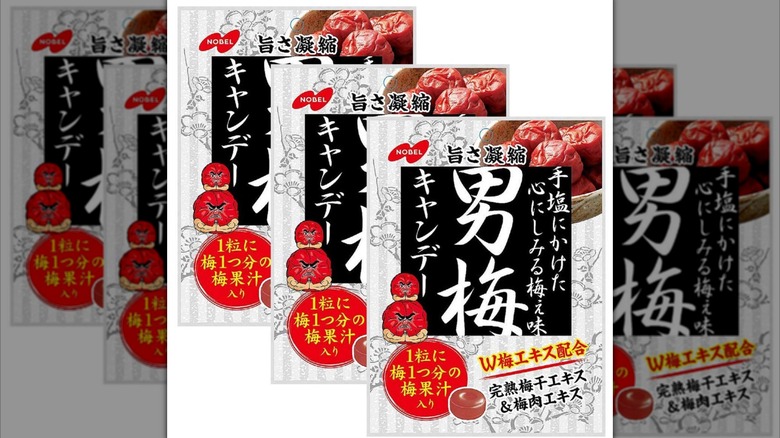
Anyone who's ever tried umeboshi will know that it can take a moment to get accustomed to. These traditional pickled ume fruits (more commonly known in the West as plums) can be served multiple ways in Japan, tucked into bento boxes or onigiri, with udon, as an especially punchy snack, or along with other Japanese breakfast foods. Their lip-puckeringly sour, highly salty flavor, though, is distinctive, and lends itself to use in other foods — especially candy.
Otoko Ume hard candy is one such type, and it's pretty bracing. These super-sour hard candies come individually packaged, and each one is an experience of its own. Their unassuming appearance doesn't give their incredibly strong flavor away, but once you get a taste for them, you might not be able to stop. Nobel Otoko also makes a gummy version of the candy for those who might prefer a softer texture but still want that bold umeboshi note. If you're not used to the intense flavor, you might want to start with some of these other best sour candies; Otoko Ume are as sour as they come.