

The Loaded Salad Pirates Used To Eat On The High Seas

We may receive a commission on purchases made from links.
Salad isn't necessarily the first thing that comes to mind when you imagine pirates wining and dining on the high seas. According to the romanticized depictions that Hollywood has given us, these savvy swashbucklers guzzled down roasted meats, thick stews, the occasional tropical fruit, and a whole lot of rum. While there is some truth to this, it turns out that pirates did occasionally indulge in salad, but not the lettuce-tomato-cucumber salad you might envision. The salad of choice for buccaneers was called salmagundi, a dish with 17th century English roots, and a food that sailors ate back in the day.
In his 1997 book, "Pirates and Piracy," David Reinhardt described this hodge-podge dish as an assortment of meats such as turtle meat, fish, pork, chicken, corned beef, ham, duck, and pigeon, which were roasted and marinated, then "mixed with cabbage, anchovies, pickled herring, mangoes, hard-boiled eggs, palm hearts, onions, olives, grapes and any other pickled vegetable available." It was further seasoned with aromatics, mustard seed, oil, and vinegar. What's described here closely resembles a recipe from 1712 noted by National Geographic. While the average American isn't accustomed to eating turtle meat and pigeon on a regular basis, it's worth noting that salmagundi resembles the charcuterie or grazing boards that are so popular today. With this in mind, this pirate salad is a perfectly suitable dish, when made with modern ingredients.
Salmagundi today
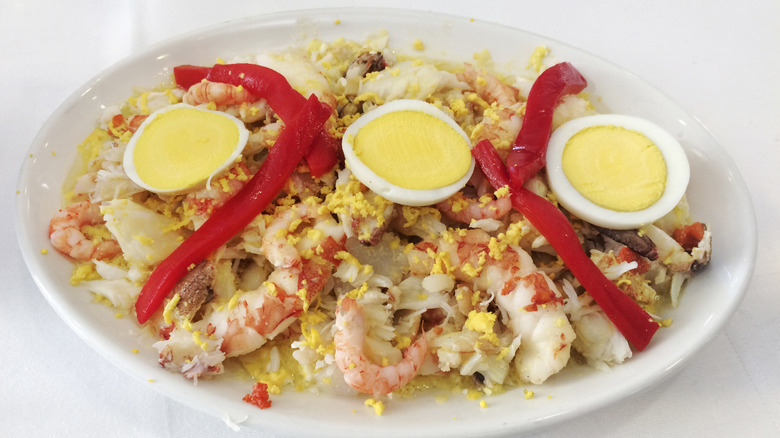
It's plausible that salmagundi was popular amongst pirates because the dish was a collection of whatever ingredients these seafarers had lying around or had easy access to. And when assembled, it would have looked inviting because it was an early version of a composed salad. Even if something was beginning to turn rancid, they would sometimes still include it, masked by a plethora of marinades and spices. The same philosophy can be used today: just gather what you have in your fridge, garden, or pantry, and make it look pretty.
Gather cold, leftover meats and cut them into bite sized pieces or slices; lamb, roast beef, chicken, ham, or pork are all good choices. Seafood additions can be anything from salmon, shrimp, and shellfish, to canned sardines, mackerel, and tuna. Arrange these on a platter with any other ingredients you want to include. Veggies can be carrots, cucumbers, asparagus, green beans, or anything else that's in season. Tiny steamed or roasted potatoes are also good. Olives, pickled veggies, cured meat, cheese, cherry tomatoes, radishes, capers, and hard boiled eggs are excellent accompaniments. You can either dress the entire platter in a tangy vinaigrette, or place a dressing on the side. For seafood, consider a Louie dressing. Eyepatches and rum are optional, but highly encouraged.