

9 Popular Hydration Drink Brands, Ranked From Worst To Best
We may receive a commission on purchases made from links.
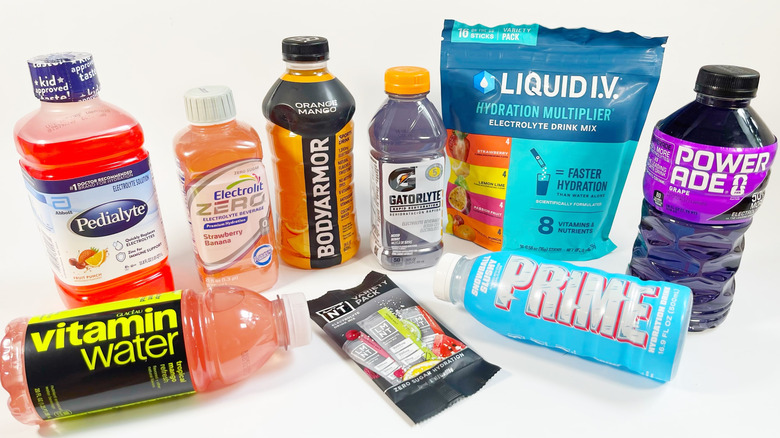
Grocery stores these days are packed with options for sports and hydration drinks. Sifting through the different products and knowing which ones are actually good for you, how they're helping you stay hydrated, and when you should be reaching for them can be a bit overwhelming — so I'm breaking down each brand's line of products to find the best one.
For a person who doesn't exercise very often, supplementing electrolytes with a hydration drink isn't usually necessary — your body will naturally replenish its supply from the foods you eat. But for times when you're outside in the sun for long hours, dancing the night away while drinking more alcohol than water, or exercising for more than an hour at a time, supplementing the electrolytes you lose will be critical for your recovery and health. For the active individual, this means more than just drinking water. You may need to consume a hydration drink or electrolyte powder every day — a process that can feel like a chore if the drink doesn't taste good.
From colorful Gatorade bottles you can find just about anywhere to more niche brands, like sparkling, salty LMNT flavors, I've broken down the pros and cons of nine different hydration drink brands. I am not a nutritionist or dietician, but I will be using scientific backing to determine the quality of these drinks, and ranking them according to how good they are at keeping you hydrated, how healthy the ingredients are, how much they cost, and the taste of the different flavors available.
Some recommendations are based on firsthand impressions of promotional materials and products provided by the manufacturer.
9. Vitaminwater
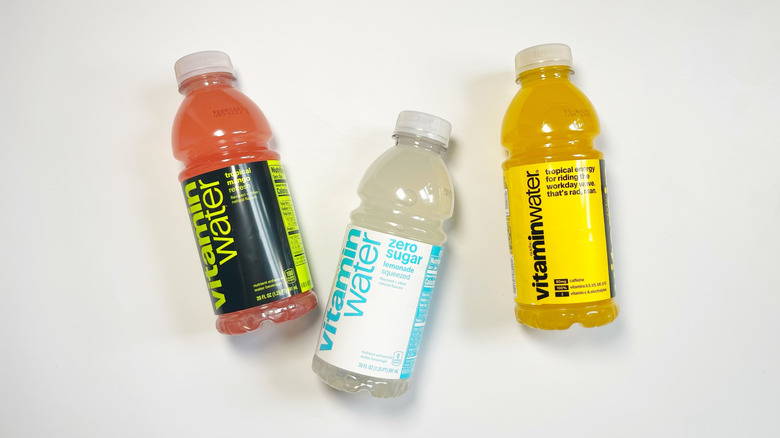
The success of Coca-Cola's Vitaminwater brand is truly a testament to clever marketing. This dye-filled sugar water poses as a healthier alternative drink, but has enough unhealthy ingredients to completely negate any actual benefit.
Among the ingredients, many Vitaminwater flavors (except for the zero sugar options) use crystalline fructose as a sweetener, an ingredient that's been linked to metabolic syndromes like weight gain and type-2 diabetes in rats (although these findings have not been replicated in humans). Additionally, most of the options available contain a few added vitamins but do not have added electrolytes, which makes the price tag, close to $3 a bottle, seem a bit high. There is one flavor — re-hydrate zero sugar pineapple passion fruit — that doesn't contain synthetic colors or artificial sweeteners and uses electrolytes, but this singular flavor is quite hard to find.
As far as the taste, the brand has a lot of different flavors that range from bad to good. Some of my favorites include the zero sugar pineapple passion fruit, tropical mango refresh, and the tropical citrus energy option, which has 60 mg of caffeine. The appeal of Vitaminwater is its wide variety of unique and tasty flavors (a category that many hydration drink brands are lacking in), but if it tastes good and does nothing to hydrate you, it's not really a hydration drink. Because of its general lack of electrolytes, Vitaminwater was an easy choice for last place.
8. PRIME
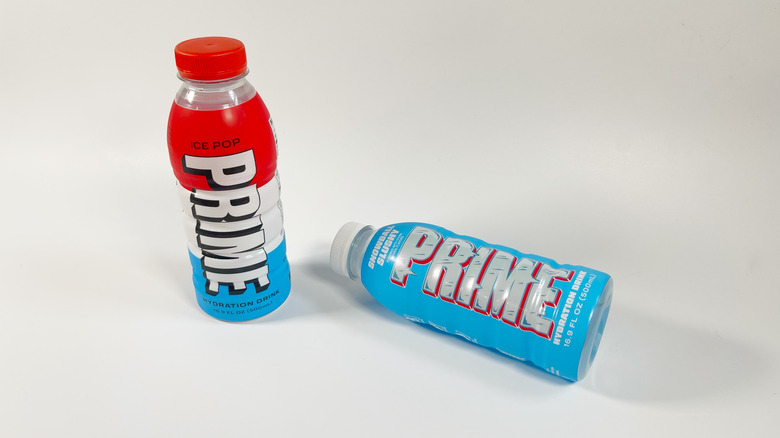
PRIME is one of the newer hydration brands on the market, started by YouTubers KSI and Logan Paul in 2022. There isn't much variation to the products it has available — it's a hydration drink made without artificial dyes that's "electrolyte enhanced" and uses 10% coconut water, which has also been discussed as a natural option for rehydrating.
All of the flavors are one-note sweet. The main flavor, ice pop, tastes exactly like a melted popsicle in a bottle, which I find to be off-putting in a drink I'm reaching for after a workout. The sucralose sweetener lingers on the tongue and in your throat after you drink it, and there's no saltiness to balance it out. This lack of saltiness is also the main issue with PRIME — in the ice pop flavor there's only 15 mg of sodium and 700 mg of potassium, a ratio that's quite unhelpful for rehydration when you consider the large amounts of sodium we lose through sweat, and how important this electrolyte is for our cells to absorb nutrients and regulate nerve signals.
A 16.9-fluid-ounce bottle costs around $2.50, which for me is an unreasonable price considering that I would still need to take something else to supplement the sodium. The fact that PRIME products don't use artificial dyes is a plus, but not enough to outweigh the electrolyte imbalance and overly sweet, artificial flavor. Best to look for other brands that taste and hydrate better.
7. Powerade
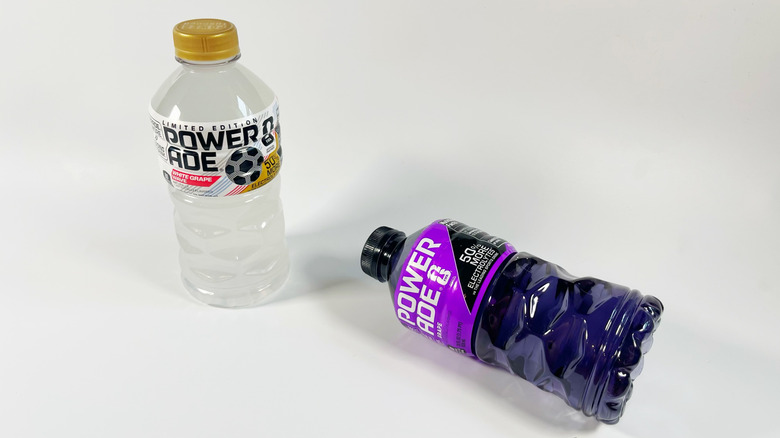
Powerade is one of the most common hydration drinks around. The official sports drink of Team USA and MLS, the brand is easy to find and very recognizable. It has two main products available, Powerade and Powerade Zero, which are priced reasonably at $2-$3 per 28-fluid-ounce bottle.
My reason for ranking it third-to-last place all boils down to one ingredient: High-fructose corn syrup. It's the reason why Mexican Coca-Cola (which uses cane sugar as a sweetener) is lauded as being tastier than American Coke (which uses high-fructose corn syrup as a sweetener). I think the use of HFCS makes Powerade one of the more boring-tasting hydration drinks, and the flavors available just aren't as interesting as other brands. The easiest-to-find options are mountain berry blast, fruit punch, and grape, all common flavors for sports drinks but don't taste as fresh or juicy in Powerade.
High-fructose corn syrup also arguably makes this drink more unhealthy, given that it has a bit more fructose than cane sugar, which the body doesn't convert to energy and instead turns directly to fat. Powerade Zero is a good alternative option, but I found that in most stores, these were harder to find. It's also worth noting that Powerade (along with many other brands in this list) uses artificial food dyes like Red 40, Blue 1, and Yellow 6, which have been linked in some cases to hypersensitivity reactions as well as contamination by carcinogens. All in all, it may have more electrolytes than Vitaminwater and PRIME, but Powerade still isn't very healthy, nor does it taste as good as other brands.
6. BodyArmor
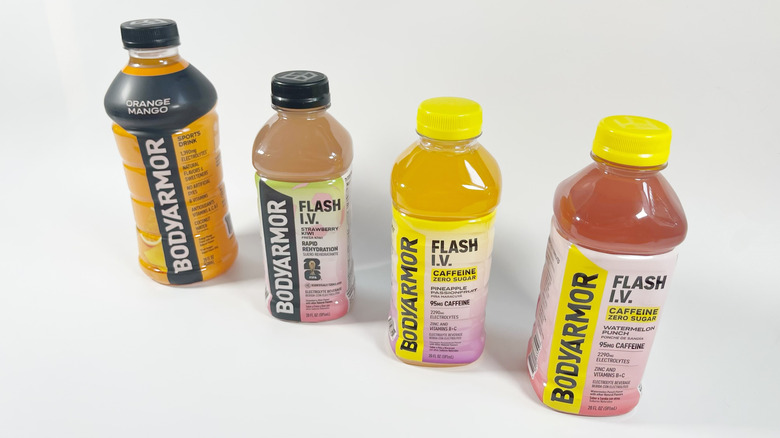
BodyArmor is a long-standing brand in the sports-drink world. Its standard, round-bottled BodyArmor or zero-sugar BodyArmor drinks are the most recognizable, but it also caters to a more electrolyte-minded crowd with its Flash I.V. products. Some BodyArmor Electrolyte Drink Mix powder sticks are also available online, in certain areas.
On the pros list, BodyArmor does a few things well — namely using good old-fashioned cane sugar as a sweetener (which just tastes better than corn syrup or sucralose), stevia leaf extracts as sweeteners in the zero sugar options (one of many alternative sweeteners), and avoiding artificial dyes. Plus, there's a nice variety to the flavors, with more tropical or fruit-forward options than PRIME or Powerade. The strawberry kiwi is one of my favorites, but I enjoy how all of the flavors I tried tasted juicy and natural as opposed to candy-like and artificial.
As far as hydration value and cost, the original BodyArmor brand doesn't perform very well — for $3.60 per 28 oz bottle, there's 20 mg of sodium and 510 mg of potassium in the orange mango flavor, which does very little for an active individual. The BodyArmor Flash I.V. products are the ones you'll want to look for, although most of the flavors have about 16 g of sugar, and there's only one zero-sugar option available that does not have caffeine. The Flash I.V. products cost around $3.60 per 20 oz bottle, which, if you factor in the 95 mg of caffeine, doesn't seem like a bad deal. Overall, I found the brand to be tasty and much better than the lower-ranked options, but still less-than-ideal for daily exercise recovery.
5. Gatorade/Gatorlyte
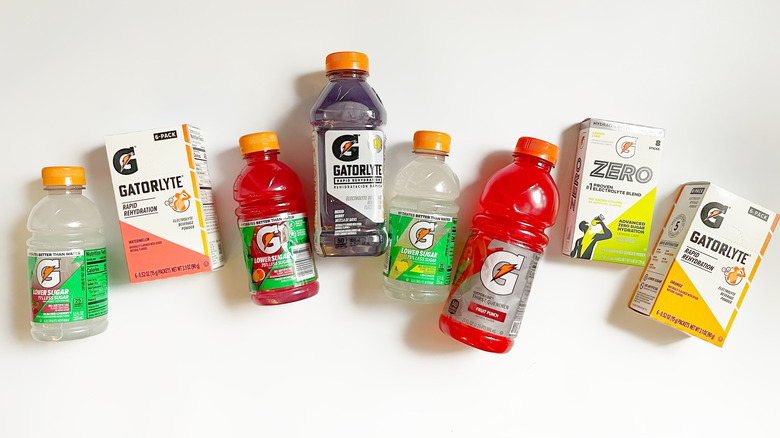
While Gatorade has long had a chokehold on the sports-drink market after getting its start in college football, at a certain point, consumers began reading ingredients lists and realized that what they thought was healthy was actually just artificially dyed sugar water with negligible levels of electrolytes. The vast quantity of products the brand has available makes things a bit difficult to judge, which is why I've ranked Gatorade at fifth place — a solid middle ground for rehydration, depending on what product you're actually buying.
Gatorade has a lot of flavors on the market, but I was most interested in the Gatorlyte products, which are more geared toward real hydration and have some great options available. My favorite is the Gatorlyte cherry-lime flavored powder sticks, which have no artificial dyes, 420 mg of sodium, and good quantities of calcium, potassium, magnesium, and chloride. The cherry lime flavor also tastes fantastic — it's bright and citrusy with mouth-watering saltiness, and the powder dissolves easily into a smooth-textured drink. I actually think the sticks taste better than most of the bottled Gatorlyte products (although I do love the refreshing flavor of the tropical coconut). The price for the powder is also very reasonable at just under $1.50 a stick.
Between Gatorade and Gatorade Zero, Lower Sugar, Gatorlyte, and the various versions of electrolyte powder sticks, there's a lot of variety under the Gatorade umbrella. The classic Gatorades aren't a good option for rehydration, and I don't enjoy the basic fruit punch or orange flavors, but the brand balances out with its tasty and electrolyte-rich products in the Gatorlyte line. If you know what to look for, you'll find some good stuff.
4. Electrolit
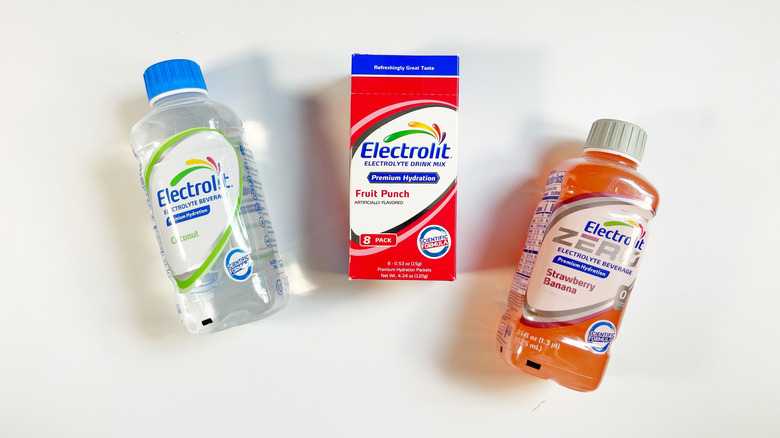
Electrolit is a Mexican brand of rehydration drinks that expanded into the United States market in 2014. The Electrolit drinks are now widely available in the U.S. for around $3.60 a bottle, and offer several different flavors and zero-sugar options. In terms of best bang for your buck, the Electrolit powder sticks are the best option, having more sodium and potassium than the bottles for less than half the price (just under $1.50 a stick).
Flavor-wise, the clear coconut bottle (which also doesn't have any dye) is one of my favorite flavors of any brand of sports drink. It may have 18 g of sugar, but it tastes just as refreshing and tropical as fresh coconut water with an enjoyably thick mouthfeel. I also like the strawberry kiwi flavor, but most of the others (fruit punch, orange, and grape) are pretty standard, although I do think they taste more refreshing and less artificial than Gatorade or Powerade.
Overall, Electrolit is quite similar to Gatorlyte — something that was actually done intentionally, as PepsiCo (the owners of Gatorade) settled a lawsuit for copying Electrolit's whole design from the shape of the bottle down to the style of box. But, as an overall brand, Electrolit is much more consistent with the health benefits of its products than Gatorade, and in that category, it has a leg up. There are still a few more brands, however, that do it even better when it comes to the perfectly balanced formula and delicious flavor.
3. Pedialyte
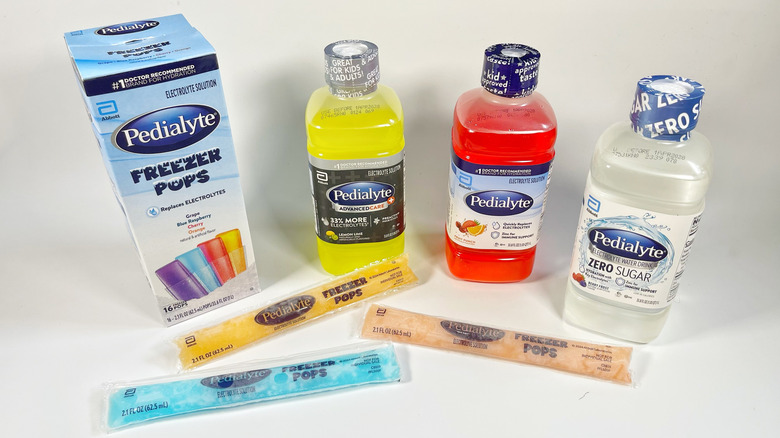
Pedialyte is lauded as the most scientifically trusted of all the rehydration drinks available. They've been the same thing — low sugar, high electrolyte — for years, and it's worked. Initially formulated for hospitals to help sick children with dehydration, the fact that Pedialyte is still sold in medicinal aisles of pharmacies and grocery stores rather than in a fridge with the other drinks does a lot to bolster its reputation as tried and true (although it's too bad it doesn't come cold).
There are several different Pedialyte products available, including the classic, advanced care, sport, advanced care plus, powder packs, and freezer pops. The freezer pops are a personal favorite of mine — they taste salty but sweet, remind one of an Otter Pop, and are an exciting way to stay hydrated in the summer months. Besides the freezer pops, Pedialyte does lose some points for me in terms of taste. The flavors (cherry punch, grape, and strawberry) are average and taste very simple, like something that's designed for children (as they are).
Ingredients-wise, there aren't many cons to Pedialyte. There are zero-sugar and dye-free options readily available, and even the sugar levels of the classic version are quite low, at 5 g per serving. The price of Pedialyte can seem jarring at first; a 33.8-fluid-ounce bottle cost me $7.59, with advanced care options being even more expensive. The bottle is labeled as containing three servings, though, and once you divide the price by three, it's comparable to other brands and still offers high levels of electrolytes. All in all, Pedialyte is a fantastic formula for rehydration, but there are a few brands that offer more convenience, more interesting flavors, and a better price.
2. LMNT
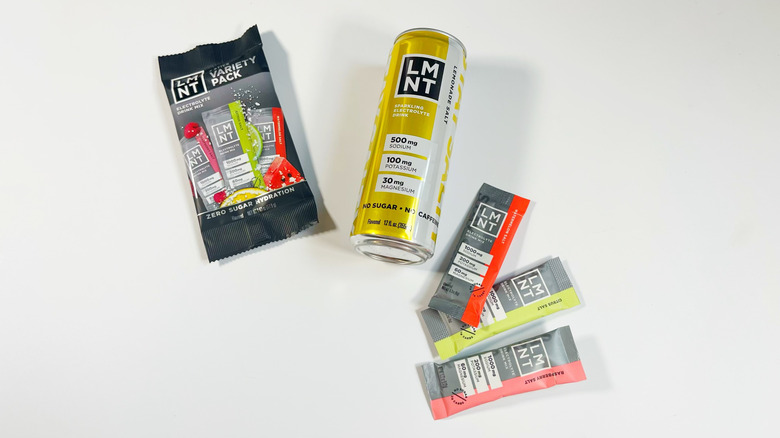
Where PRIME and BodyArmor slacked off on the sodium levels, LMNT caters directly to an active consumer who needs salt to replenish their electrolyte levels. The brand's flavoring leans into the high levels of sodium by calling it exactly what it is — lemonade salt, mango chili, and my personal favorite, watermelon salt, which reminds me of a salt-rimmed watermelon margarita (minus the tequila).
Probably the brand's most popular product is the powder sticks, which cost $1.50 a serving and deliver a whopping 1000 mg of sodium, 200 mg of potassium, and 60 mg of magnesium. LMNT also offers canned, sparkling water drinks that contain half the dose of electrolytes. Both the sticks and the sparkling water cans, I thought, were the best tasting out of all of these hydration drink brands. They have bright, fruity flavors, with a natural sweetness (that comes from stevia), and the salt levels make your mouth water in the best way.
These drinks are certainly not what someone with a sedentary lifestyle should be casually sipping on. The sodium levels are designed to compensate for an active lifestyle, and the brand has done an incredible job of making the chore of rehydrating taste delicious. Given the level of electrolytes in these products, which come with the same price tag as other brands, it's a great deal. A reasonable price, great taste, and healthy ingredients make LMNT one of my top choices. There was just one brand that brought even more nutritional value into the equation.
1. Liquid I.V.
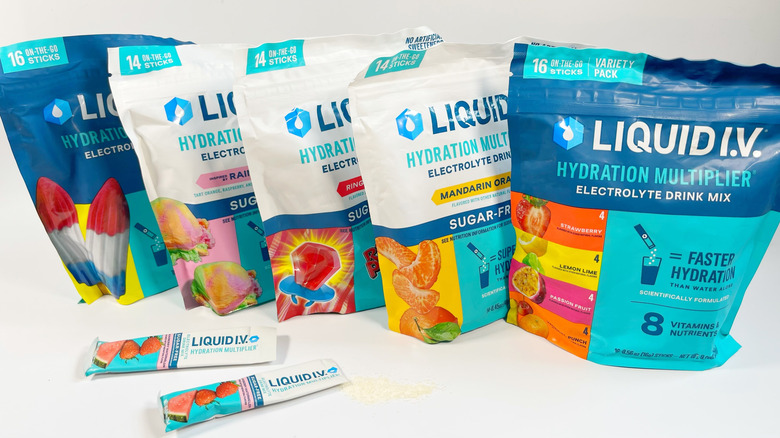
Liquid I.V. knew the gap that needed to be filled when the brand came onto the market in 2012. It checks all the boxes: Unique flavors, healthy, natural ingredients, a reasonable price, and convenient, with its easily transportable powder sticks. It's a brand that's consistent across its products, in terms of quality and taste, and is my favorite way to hydrate after workouts.
None of Liquid I.V.'s products have artificial sweeteners or dyes, and the flavors are all creative and fun. Tropical punch and passionfruit are my favorites of the sugar-sweetened options (11 g per serving), and taste a lot like a glass of juice. The sugar-free stevia-sweetened flavors also taste fantastic and dissipate into a glass of water without grittiness. The rainbow sherbet flavor is acidic and fruity, and while you may think the ring pop flavor would be quite sweet, it's actually balanced and refreshing.
Aside from the convenience, reasonable price (about $1.50 a stick), and quality of flavors, the key difference that puts Liquid I.V. in first place for me is the quantity of vitamins. In addition to 500 mg of sodium and 370 mg of potassium in the tropical punch flavor, there's also over 100% of the recommended daily amount of vitamins B6 and B12, plus 370 mg of vitamin C. The ingredients are trustworthy, the price is reasonable, the packaging is convenient, and there are fun flavors that all taste great. It's an easy choice for the perfect workout-recovery rehydration drink.
Methodology
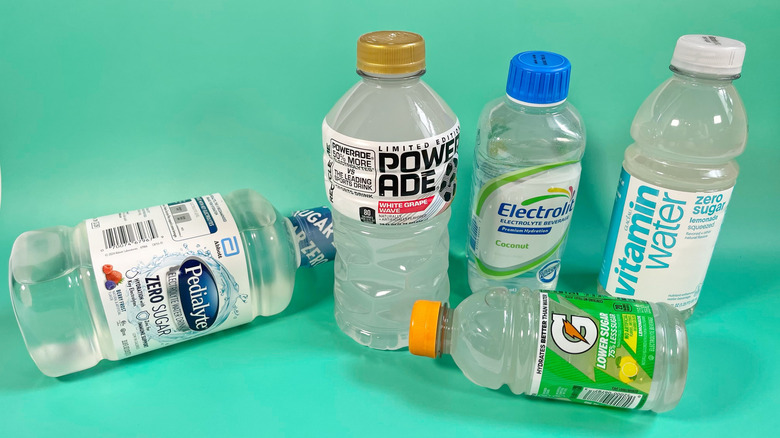
To rank these hydration drink brands, I took into account all of the products offered by each brand and found the best overall pick. Gatorade, LMNT, and Liquid I.V. provided samples free of charge for this article, although I did my best to not let this affect my overall opinion. All of the brands were judged based on my tasting of a variety of the products they have available, and cost absolutely played a role in my ranking, which I weighed according to how many electrolytes and serving sizes were in the product.
The nutritional value was the main aspect I considered when ranking these brands. There are plenty of drinks designed to be enjoyed just for flavor (like juice, soda, and sparkling water), but electrolyte and hydration drinks are designed to serve a purpose. Thus, the quantity of electrolytes, how they're balanced, what kind of sweetener is used, and what other ingredients, like food dyes or vitamins, make an appearance were all important aspects in the ranking.
Flavor was also an important consideration. A drink that's overly sweet or leaves an odd taste in the mouth won't be fun to consume while you're working out, so it was important to find a brand that served its purpose while tasting good and providing a variety of flavors. After all, it's not fun to drink the same thing every day, and being able to switch it up makes the process more enjoyable.