

Stop Preheating Your Cast-Iron Pan So Fast — Here's Why
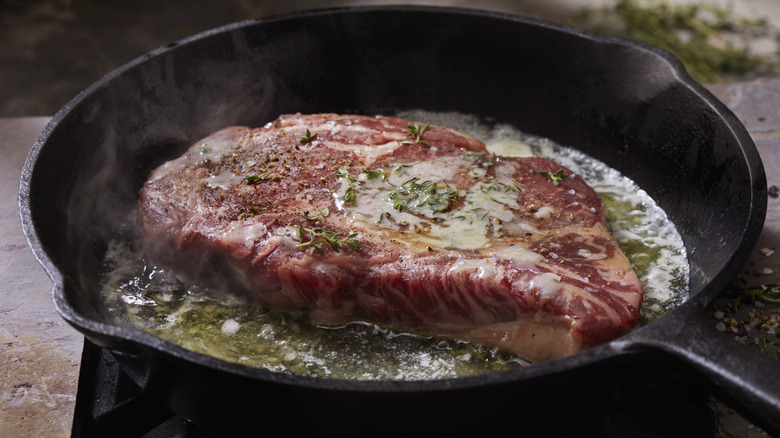
Cast-iron pans are the workhorse of any kitchen. A skilled cook can make a meatloaf in a cast-iron pan just as easily as he or she can make homemade cornbread in one. Known for its ability to retain heat, some cooks like to crank up the temperature and get the pan hot before an ingredient touches the bottom; however, this habit can actually be a detriment. Cast-iron pans, and whatever you plan to cook in them, benefit from allowing the cookware to heat slowly. Why? While these essential kitchen tools hold heat, there's one cast-iron myth you need to stop believing: They don't heat evenly.
In case you haven't noticed, a cast-iron pan tends to be pretty hefty with its thick, dense walls and bottom. It needs a little time to get hot all over. If you try to heat it quickly, you will end up with hot spots. This leads to some of your food cooking quicker than the rest. This is why you want to allow your skillet or pan to warm up over medium heat for 3 to 5 minutes before using it. Larger cookware pieces are going to take a little longer.
Use the right burner
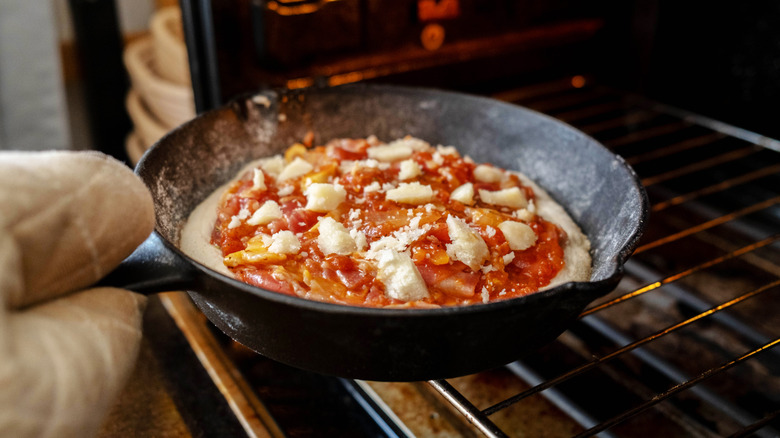
If you are preheating cast iron in the oven, you want to set your oven to 500 degrees Fahrenheit and place the pan in the oven. As the oven warms, so will the pan. Once it hits the set temperature, using potholders or mitts, you can remove the pan and place it on a hot burner, ready to use.
As the saying goes, the proof is in the pudding. When you give yourself time to heat cast-iron pots and pans low and slow, you're going to wind up with food items that don't stick to the bottom of the pan, better browning, perfect crusts on steaks, and, in general, a more even cook.
Of course, in addition to having patience when you preheat your cast iron, choosing the right burner for this cookware is equally important. Not doing so is a definite way to ruin a cast-iron dinner. You want to match the size of your skillet, pot, or pan with the size of the burner. If you place a large cast-iron skillet on a smaller burner, you are also going to end up with hot spots. It might not seem like a big deal, but uneven heating can damage your cast iron. It can cause it to warp or, worse, experience thermal shock and crack.