

The Old-School Aluminum Cookware Brand To Look For At Thrift Stores
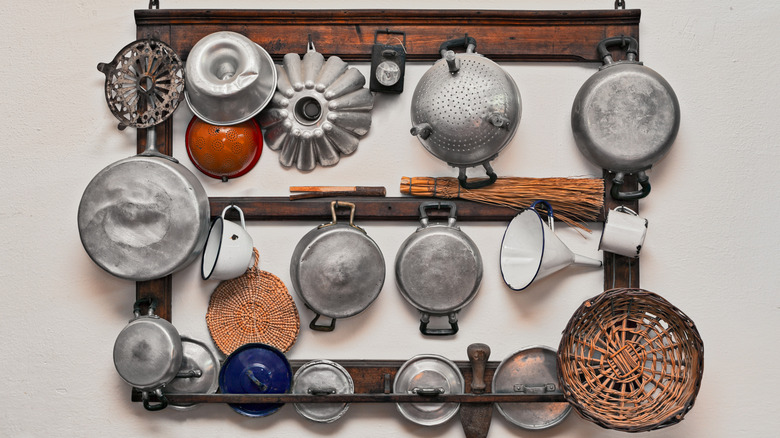
Club pots and pans were icons of the American home kitchen for decades. First founded in 1923 as Club Aluminum, the Great Depression forced a reorganization into Club Products Standard International. Under this banner, it manufactured the aluminum cookware of yesteryear that today's thrift store shoppers crave.
Because aluminum conducts heat 15 times better than stainless steel, Club cookware is renowned for its evenness of heating, reducing the incidence of hot spots. Club lids also fit their pots unusually well for cookware of the era, which was an early and consistent selling point. Their cast aluminum construction made them thicker and heavier than most aluminum pans, but still lightweight — and strong enough to last for more than 50 years.
Club cookware reached its peak popularity between the 1930s and '60s, and many pieces on the resale market reflect midcentury styling trends. Expect black or wooden handles, silvery aluminum accents, and warm pastels or earthy tones like turquoise, pink, brown, or green — or sometimes just the aluminum's natural color. The company closed sometime in the 1980s, but vintage examples can commonly be found for less than $10 per pan. Rarer examples climb closer to $50, and sellers can sometimes ask several hundred for large, complete sets.
Comparing Club pans to other vintage cookware
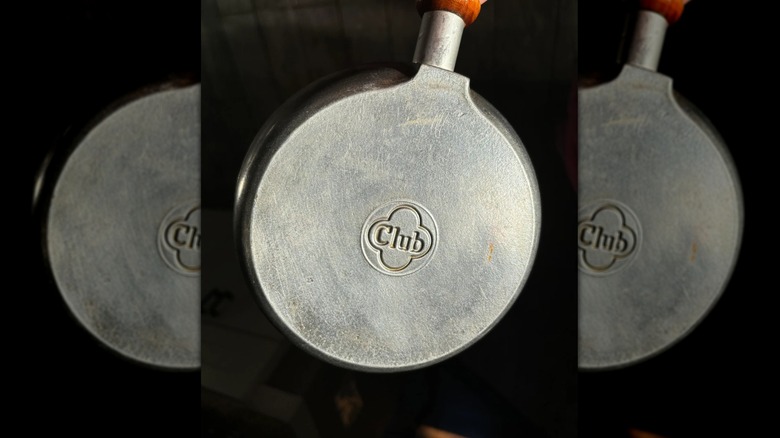
Even though Club cookware remains sought-after, it doesn't command as high of prices as some contemporaries. For example, vintage Griswold cast iron is both high-quality and highly expensive. But Griswolds made after 1957, when the company was bought out and quality dropped, are generally not collectible. Club, however, stayed in business well into the post-war mass production era.
In terms of thrifting, Club pans are somewhat similar to another once-common cookware brand. Vintage CorningWare pieces can be worth more than you think, some of them hundreds of dollars. But, much like Club cookware, CorningWare was a common kitchen item for several decades. And because it was exceptionally durable, many pieces remain and can often be found for low prices.
Club pans may be a great thrifting find that's also affordable, but they are not without their shortfalls. Celebrity chef Andrew Zimmern has a hard rule against tomatoes in aluminum pans like these because the metal reacts with acidic ingredients, potentially ruining both the food and the pan. Club cookware used an aluminum alloy with extra corrosion resistance, and pans in good shape are capable of briefly cooking acidic ingredients. But longer acidic jobs like a Sunday sauce are best left to other pots.