

8 Old-School Wine Brands That Were Popular In The '70s
The 1970s were a decade that marked a massive, earth-shattering shift in the world of wine. At the time, American wine, notably from California, which produced (and still produces) the majority, was not considered a serious contender among the Euro-centric wine elites. A period of prosperity in the United States led to Americans traveling and broadening their horizons; icons like Julia Child brought wine knowledge into people's homes, and interest in wine among all strata of people began to grow. Then, in 1976, the legendary blind tasting known as the "Judgment of Paris" saw California wines beat out their French counterparts, to the shock of the entire world.
Those high-end, award-winning wines from the likes of Stag's Leap and Chateau Montelena were newsworthy, but not what regular folks were drinking every day. Innovations in viticulture and vinification led to more juice being produced, making wine accessible and cheap. Most people clamored for easy-drinking, sweet, often fizzy bottles that were priced affordably and tasted consistent. Today, we call these industrial wines, or "plonk," and sommeliers dismiss them as the wine equivalent of fast food: mass-produced and made to taste the same every vintage, no matter where or when you drink them. In the 1970s, though, these were the wines that captured the palates of American drinkers, perhaps to accompany the bright, funky dishes that defined the disco era. Here are some of the notable brands that exemplified this decade, some of which are still produced today.
Mateus
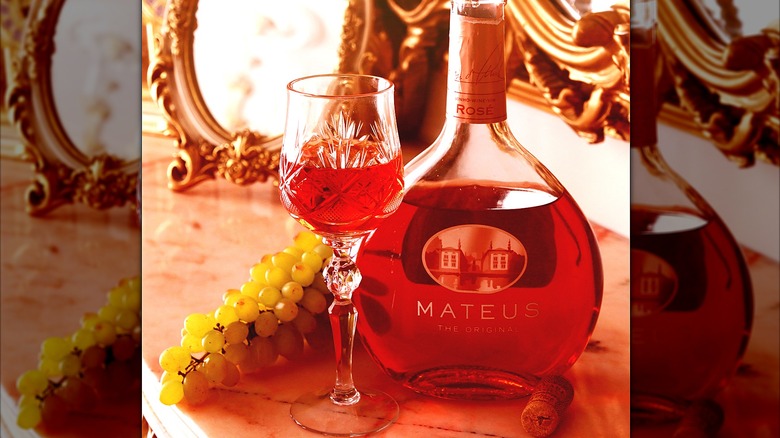
The world's most popular wine in the 1970s, Mateus rosé may just be the reason we all drink pink today. Rosé wasn't really on most wine drinkers' radars when this brand splashed onto the scene in the 1940s — in fact, Mateus was Portugal's very first commercial rosé. As it spread from its home in Portugal into the rest of Europe and across the Atlantic, people began to warm up to the style, and over the decades it garnered fans of all stripes, from Jimi Hendrix to Queen Elizabeth and even a young Steve Jobs.
Like many of the wines people enjoyed in this era, Mateus was sweet and slightly effervescent. Newer versions of the wine, which is still in production today (though at about half of the volume it was in the '70s), are drier, following modern drinking trends. One of the things that likely contributed to Mateus' massive appeal was its unique, eye-catching bottle. It was reportedly inspired by the shape of soldiers' flasks in the First World War, although a similarly shaped bottle called a bocksbeutel has been used for wines from Franken, Germany for several centuries. Today's Mateus bottles have been redesigned to be narrower, but still maintain a slightly rounded shape. While Mateus is certainly not the household name it was in the 1970s, with the modern rosé renaissance in full bloom — even Post Malone is in on the action — it wouldn't be surprising to see a resurgence of this once-dominant brand.
Blue Nun
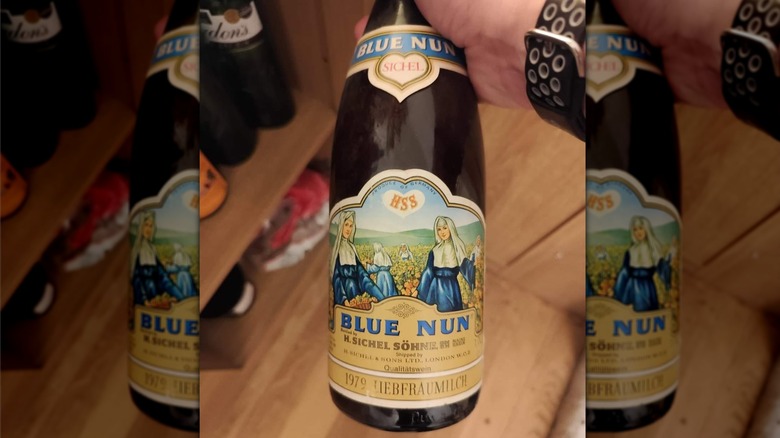
Today, the Blue Nun label produces an array of wines. In its heyday in the 1970s, though, it was known for just one: Blue Nun Liebfraumilch. The German term Liebfraumilch originally, thousands of years ago, referred to any wines made in the vicinity of a church called Liebfrauenkirche, meaning Church of Our Dear Lady, in the city of Worms. Over the centuries, the definition has evolved, and in 1971 the name officially referred to wines made from specific grapes grown in the regions of Rheinland-Pfalz with a particular ratio of sugar to alcohol. In essence, Liebfraumilch was low-octane and quite sweet, and if the grapes didn't naturally reach the necessary sweetness level, there was no rule against adding sugar to get it there.
Blue Nun's Liebfraumilch became a global phenomenon when it reached its peak in the 1970s, selling millions of bottles annually in the U.K., America, and beyond. Iconic celebrities on both sides of the pond like David Bowie and Elvis Presley were fans of the wine, giving it major cool factor. As wine palates began to change in the following decade and people started to crave different styles, moving to drier whites and reds, Blue Nun faded from the spotlight. The brand is still around, though, so don't count the Nun out just yet.
André
Sparkling wine lovers have long worshiped at the altar of Champagne, France's strictly regulated and highly lauded bubbly that hails from the region of the same name. For centuries, prohibitively expensive and hard to purchase, Champagne developed a reputation as a drink for the regal and wealthy high classes, or a rare splurge for the rest of us to celebrate special life events and milestones.
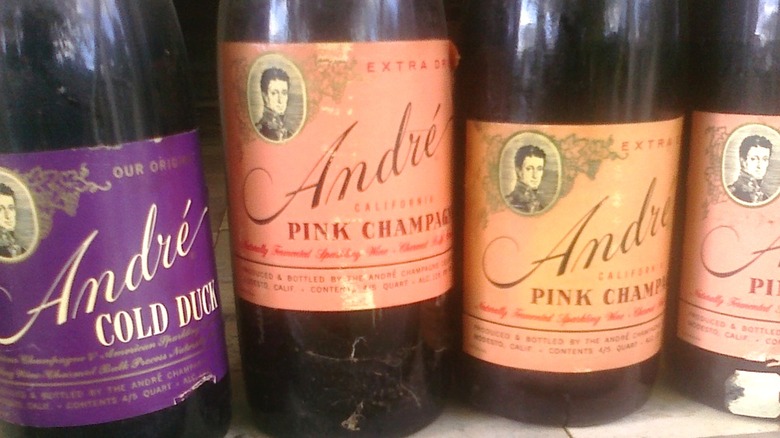
As easier, cheaper methods for making sparkling wine were invented, it wasn't just pricey Champagne that could satisfy one's urge for a glass of effervescent wine, and suddenly this formerly out-of-reach luxury became accessible and affordable. Leading the way in this endeavor was California, and in 1966, wine juggernaut E. & J. Gallo introduced André, a lineup of wines meant to feel as luxurious as Champagne while being cheap enough to drink every day.
It didn't take long for André to become a household name. Its bottles are still ubiquitous in just about every liquor store and grocery store with a wine section, and it offers styles from the traditional Champagne-esque brut to fruity moscato. The style that became synonymous with the 1970s, though, was known as Cold Duck. This infamous tipple is a mixture of still red and sparkling white wine. The use of Concord grapes rather than traditional wine grapes in Cold Duck gives it a grape soda-like quality and a rather cloying sweetness — it even inspired a Baskin-Robbins ice cream flavor.
Lancers
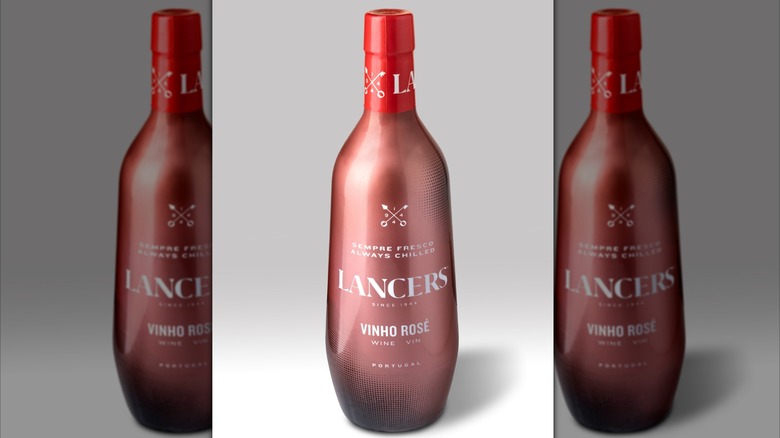
Just a few years after Mateus took the title of the first commercially produced rosé in Portugal, Lancers followed suit. This wine came out of a joint partnership between a Portuguese winemaker and an American businessman who was looking for a wine to import back home. Just like Mateus, the rosé they crafted was sweet and fizzy and came in a distinctive ceramic jug (this was later replaced by opaque glass after the brand realized the wine oxidized in the porous material).
Lancers and Mateus both peaked in popularity in the '70s as their wines crossed the globe, and their particular style of rosé vibed with the culture. By the start of the decade, Lancers was selling 12 million bottles annually in the United States alone. While the immense popularity of wines like Lancers introduced many people to rosé wines, it also tarnished the reputation of the category for successive generations, who conflated any pink wine with this sweet, low-alcohol, fizzy, and unserious style. For wine drinkers in the '70s, though, Lancers hit the spot.
Riunite
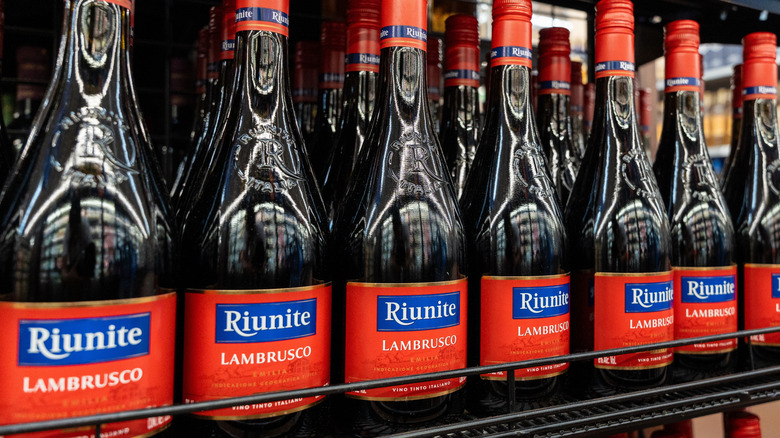
Continuing the trend of fizzy wines that people loved to drink in the 1970s, we have Riunite (pronounced ree-you-NEE-teh — look up the brand's old TV ads — I dare you to get the jingle out of your head). Unlike Cold Duck, which is a bizarre combination of wines that have no business being mixed together, Riunite is actually based on a respected and classic Italian style of wine known as Lambrusco.
This type of wine from the Emilia-Romagna region, which is famed for its culinary gems like Prosciutto di Parma and Parmigiano Reggiano, is made from a family of grapes that's distinct from the typical Vitis vinifera varieties that go into most quality wines. Italians know what's up with wine and food pairing, though, and lightly sparkling Lambrusco pairs beautifully with the cured meats and aged cheeses of the region.
Riunite was launched in the US in 1967, and it took less than a decade for the brand to reach a million cases in annual sales. In Italy, Lambrusco is made in a wide spectrum of styles, from sweet to bone-dry. Thanks to the global popularity of wines like Riunite in the '70s and into the '80s, however, most people even today believe Lambrusco to refer exclusively to simple, fizzy, light in alcohol, and overwhelmingly sweet wines — and, as the ads say, best poured over ice.
Sutter Home
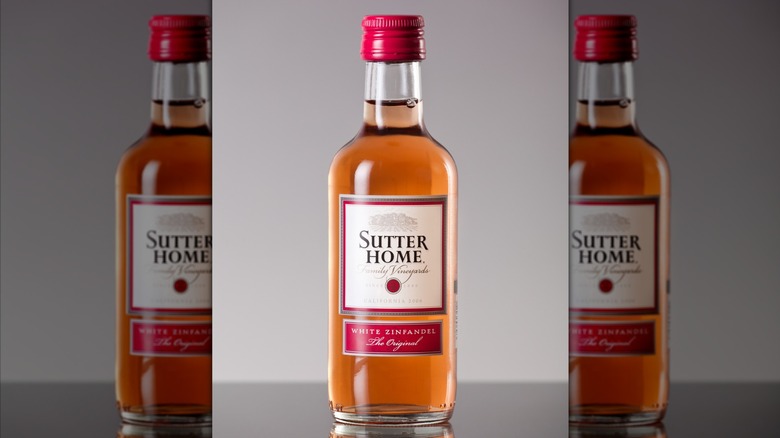
Sutter Home has been around since the late 19th century, but it wasn't until the 1970s that the California winery achieved worldwide fame. That was due to what was reportedly an accidental invention: a style of wine that goes by the name of white zinfandel. As legend has it, reluctant family winemaker Bob Trinchero began making dry white wine on a whim using the leftovers from the brand's red zinfandel. Then, in 1974, nature intervened, resulting in something known as a "stuck fermentation" — this is when the yeasts that are fermenting sugars stop their work, leaving a partially alcoholic, partially sweet wine.
This resulted in a product that drinkers in the '70s ended up absolutely loving, and Sutter Home capitalized on it. White zinfandel became a sensation and a massive success that put Sutter Home on the map. While the style's appeal has waned in subsequent decades, it still has its fans, and you'll see Sutter Home wines everywhere on store shelves today. If you're new to exploring wine and looking for a good entry point, white zin is a great option.
Boone's Farm
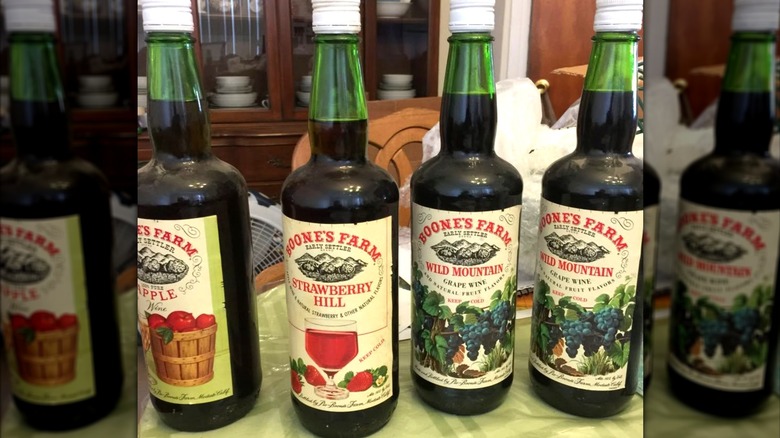
If you grew up in a certain era, you may remember Boone's Farm as your first sip of alcohol. The brand's fruity concoctions have long skirted the line between wine and a category of indeterminate other alcoholic beverages, but in the 1970s, the definition of wine was loose enough to include them. For decades, since the brand's launch in 1961, the base of Boone's Farm was fermented apple juice — technically, that's wine, since it's made from fermented fruit.
Legal changes in categorizations eventually led to Boone's Farm altering its formula into a malt beverage, but that wasn't until 1991. If you remember seeing Terminator 2 in the movie theaters or listening to Nirvana's album Nevermind when it came out, you may recall the Boone's Farm shift, but this likely happened under most people's radar. Before the brand changed its makeup to comply with new tax and commerce laws, it was indeed a wine, despite the fact that it wasn't made from grapes.
Italian Swiss Colony
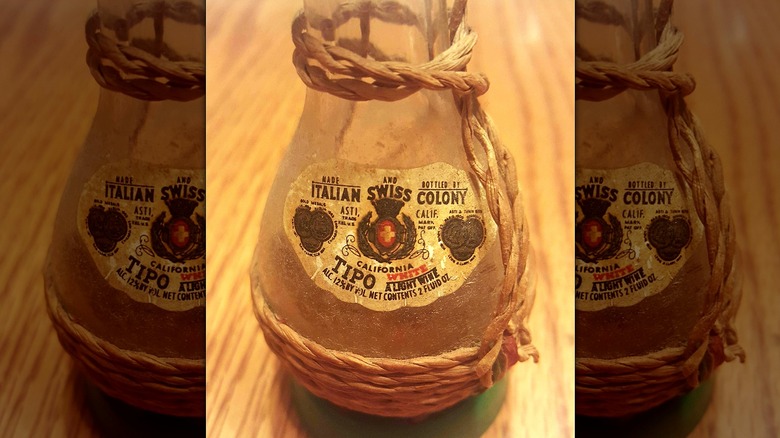
One of the wildest stories in California wine history regards the Italian Swiss Colony winery. Located in the Russian River Valley within Sonoma County, this outpost of European culture was created by an Italian immigrant who wanted to make a new home for his fellow expats at the turn of the century. It was named Asti, after the famed winemaking village in Piedmont, and it became not just a winemaking area, but a tourist mecca.
Post-prohibition, the brand took on new life. The combination of the wines and the amusement park-like location, complete with costumed workers, made Italian Swiss Colony a well-known brand — Rat Pack crooner Dean Martin even recorded a song based on the company's catchphrase, turning the lyric "little ole winemaker" into "little ole wine drinker." Such magic couldn't last forever, sadly, and Italian Swiss Colony is no longer producing wine, but its place in California winemaking history is not forgotten.