

10 Ways You're Ruining Chicken Thighs (And How To Save Them)
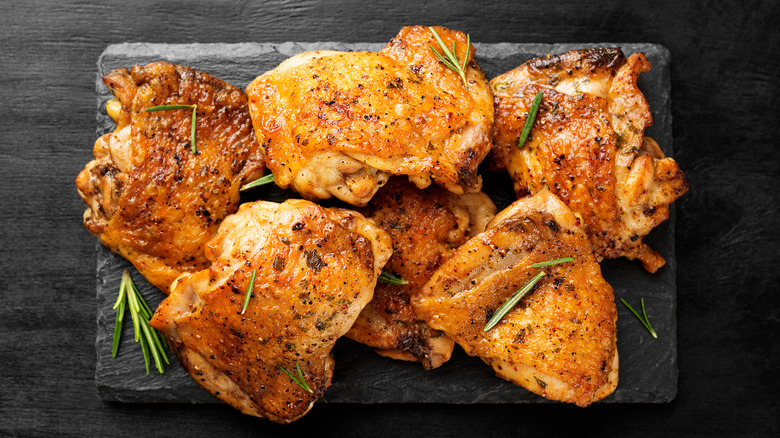
We may receive a commission on purchases made from links.
There are few pieces of meat as versatile as chicken thighs. Make roasted chicken thighs for something simple and quick that pairs well with nearly any side you can imagine, from buttery mashed potatoes to Spanish rice. Or, jazz up your meat by making savory, earthy Tahini chicken thighs. You can also use this meat in your favorite soups, stews, casseroles, or stir-fry. Even better, thighs tend to be cheaper than breast meat, so you could also save a few bucks on your grocery bill.
Unfortunately, many people pass over chicken thighs because there are a few nuances to cooking them — and not knowing these basic rules can lead to meat that's dry, rubbery, or just plain gross. After a few negative experiences like this, any person would steer clear of the offending food.
I've cooked more chicken thighs than I care to count, between over 15 years spent in the food industry and decades of cooking at home for my family. During this time, I've noticed there are a few common ways people ruin chicken thighs. If you think you're making these same mistakes, well, I'm here to tell you what you're doing wrong, and also how to fix it — so you can start making perfect chicken thighs every time. Let's get into it.
1. You aren't paying attention to the type of chicken thighs you buy
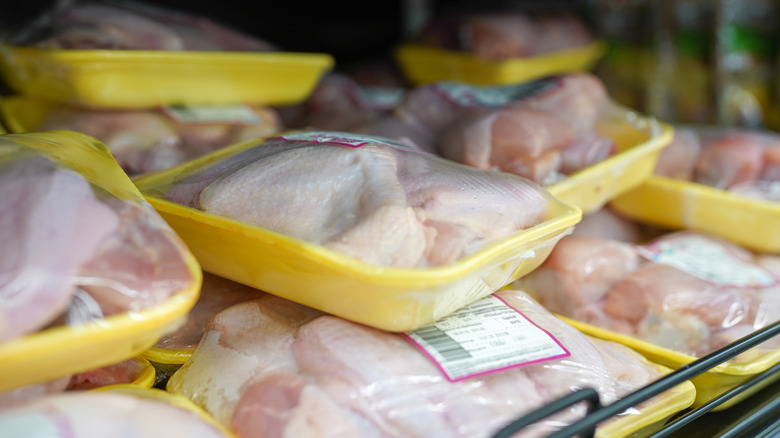
Chicken thighs generally taste better than breast meat because they're juicier and more tender. Not only do they have a higher fat content, but thighs also contain more connective tissue. Higher fat leads to more flavorful meat that doesn't dry out as fast — while that connective tissue breaks down during the cooking process and melts into the surrounding meat. In turn, this leads to a more tender melt-in-your-mouth consistency.
However, you could be ruining your efforts before you even get started. This happens when choosing the wrong types of thighs. There are several variations you might run into as you peruse the meat section at your local grocery store. Most importantly, you'll want to opt for air-chilled meat over cooled in water because it leads to crisper skin. In most instances, bone-in and skin-on is the best option for your recipes, with one exception: If you're making soup or stew, choosing boneless, skinless chicken thighs makes for easier prep. The extra liquid you'll cook them in makes up for the reduction in overall moisture compared to the alternative cut options.
2. You're forgetting to brine them
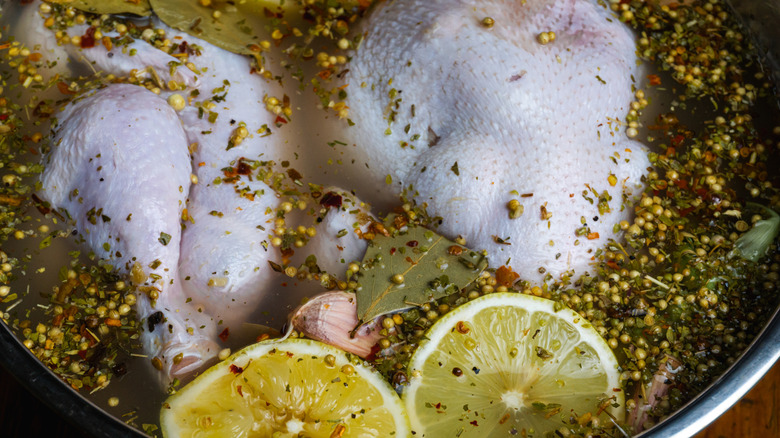
Brining is basically introducing salt to the meat before cooking, and there are two ways to do this. I strongly prefer using a wet brine in most instances. The primary exception is if you're planning to marinade the chicken after your brine, in which case I find a dry brine works best. Brining will lead to a more robust flavor profile, increased tenderness, improved juiciness, and better browning. It's a simple technique with huge results that too many people forget to implement.
A wet brine includes water and salt, but can also have various herbs. I like to soak my chicken thighs in cold water with kosher salt, sugar, and garlic powder. Chicken thighs should be left in a wet brine for no longer than two hours, and I don't recommend following this with a marinade. I find that doubling down on these moisture-enhancers can lead to chicken that's more mushy than juicy. After your wet brine, it's best to pat the thighs down and season them based on your preference or recipe.
A dry brine uses only salt, which is generously sprinkled on both sides of your chicken thighs. Once salted, you can pop your meat into the refrigerator overnight or for the rest of the day — just as long as it's in there for at least an hour. Gently pat dry when you pull the thighs out, followed by your preferred seasonings or (even better) your favorite marinade.
3. You're not marinating
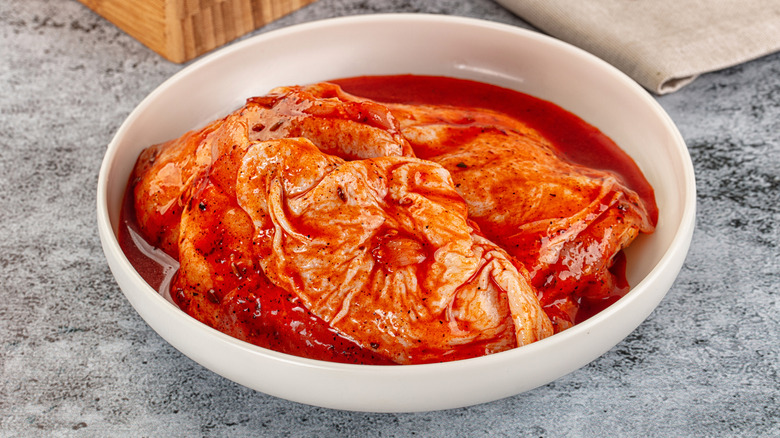
Although I don't recommend it after a wet brine, marinating is a great way to enhance the flavor of most meats — and it's an excellent follow up to an overnight dry brine. Where marinades really shine is on meat with skin. All too often, it's only seasoned on that skin itself, and everything beneath is left very plain. A marinade seeps beneath the skin to evenly disperse the flavor everywhere.
Be aware that chicken thighs readily absorb juices due to their physical composition. This means that, while marinades are fantastic for seasoning, you don't want to leave your thighs in one overnight. This is different from chicken breast, which doesn't absorb juices as readily and is naturally drier. Due to this difference, chicken thighs should only be left in marinade for two to three hours — anything longer and you'll end up ruining them.
There are plenty of tasty store-bought chicken marinades you can use, if you prefer. But, you could also opt to create one of several easy chicken marinades that grillers swear by. Just remember that the best marinades have a three to one oil to acid ratio. One of my own favorite homemade marinades is three parts olive oil to one part lemon juice, generously seasoned with black pepper, parsley, fresh minced garlic, and a pinch of salt.
4. You're failing to pat the skin dry
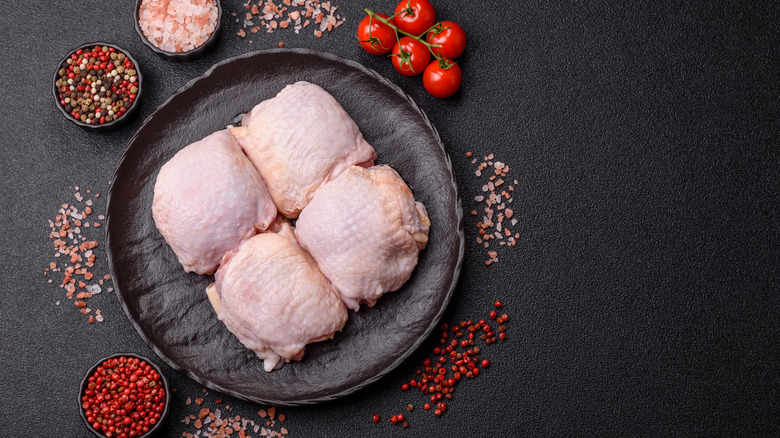
Chicken skin not coming out the way you want it to, and you can't figure out why? If you're failing to pat the skin dry before cooking, this is the likely culprit. Not patting it dry can lead to skin that's shriveled, pale, rubbery, limp, or even slimy, depending on the cooking method you're using. This is especially true if you're pan frying, where moist skin will never crisp up to create that beautifully golden, crispy texture you're looking for.
Thankfully, saving imperfect chicken skin is easy. Lay your chicken thighs on your chosen pan (if baking) or any tray (for other cooking methods). You can even use a glass cutting board or large ceramic plates. Once the chicken thighs are laid out single file, take a clean paper towel and gently pat them dry until there's no more moisture transfer. Remember to be gentle so you don't damage the skin. This step should be done between brining or marinating and dry seasoning. As an added bonus, seasoning sticks to your chicken better when it's dry — all that extra moisture can cause some of your spices to slide right off by the end of cooking.
5. You're leaving chicken thighs unseasoned
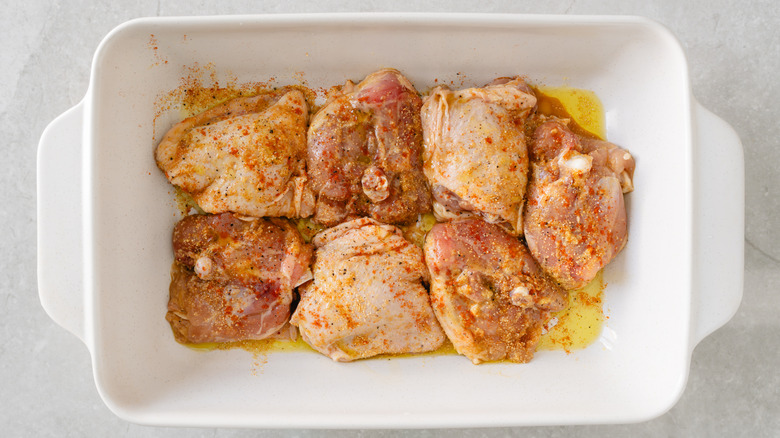
Not seasoning or under-seasoning is one of the biggest ways people ruin all types of food, from simple dishes like baked mac and cheese, to more complex creations such as the best barbecue ribs. Yes, this includes chicken thighs. Spices and herbs are your best friend in the kitchen, and I highly recommend getting comfortable with using as wide an assortment as possible because they quickly and affordably elevate all kinds of recipes.
It doesn't matter what spices and herbs you use, so long as your chicken thighs are seasoned in a way that you like. For me, everything starts with a small sprinkle of salt and varying amounts of ground black pepper. From there, you can add any combination of garlic, onion powder, oregano, parsley, chicken powder, smoked paprika, cayenne pepper, red pepper flakes, or lemon pepper seasoning. Alternatively, you can choose a pre-made seasoning mix. A few excellent options include Cajun, Greek, Italian, or Taco seasoning, as well as Adobo or seasoned salt.
One word of warning: Hold or cut back on the salt if you've used a brine, as this has already introduced it into the chicken. So, if you add as much of this integral seasoning as you normally would, you'll end up with chicken thighs that are too salty.
6. You cook at too high a temperature
Chicken breasts are largely uniform in thickness, although they may contain some small variations. Chicken drumsticks and wings contain roughly the same amount of meat atop the bone — again, with small variations. The thickness differences here are minute enough that they won't drastically affect cooking time. But, the same can't be said for most (if not all) chicken thighs.
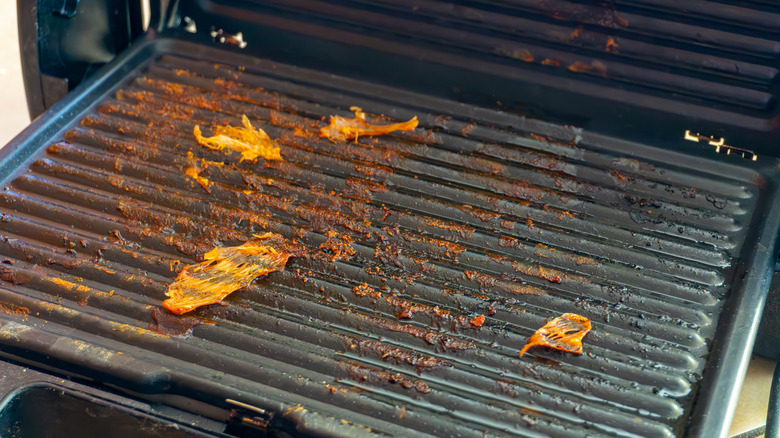
Chicken thighs are much thicker in the middle, and taper out to be significantly thinner along the edges, which requires differences in cooking time. Plus, they have a higher fat content, which can be burned before it has a chance to render. If you're cooking at too high a temperature, you'll end up with burnt fat, dry thighs, and an undercooked center.
The solution is to cook low and slow. Although many sources will tell you to set your oven to between 400 and 425 F, my experience says this is too high. Instead, cook at 350 F or 375 F for a longer period of time, until the thickest part of the thighs reach an internal temperature of 185 F.
7. You overcrowd the baking sheet or frying pan
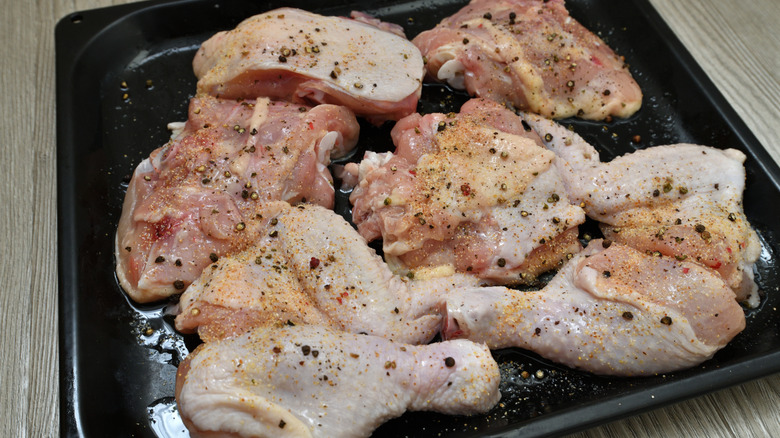
A conventional oven like most people have in their home relies on two heating sources, one on each the top and bottom of the cavity. If you're lucky enough to have a convectional oven in your home, forced air circulation helps maintain even temperatures throughout. In either situation, heat needs to move around inside the oven, both for even cooking and proper moisture release. When your baking sheet is overcrowded, heat can't move as freely — this leads to uneven cooking and longer times to reach the required internal temp. Plus, moisture is trapped inside or beneath the thighs, leading to mushy dark meat and soggy chicken skin.
Frying pans cook your food through a process called conduction. Basically, the heat from your burner will transfer directly to the pan, which then transfers to your food. Overloading the pan with meat cools down your pan's surface, leading to longer cooking times. Moisture can get trapped here, too, resulting in ruined chicken thighs every time.
The solution? Always ensure you have at least a finger's distance between each chicken thigh on every side of your baking sheet. If necessary, use two baking sheets instead of one, and place them on the bottom and middle racks. Avoid placing them on the top, as they'll cook too quickly. If you're using a frying pan, ensure at least two fingers length at minimum between each thigh for easy handling and proper heat transfer.
8. You start cooking with the skin side up
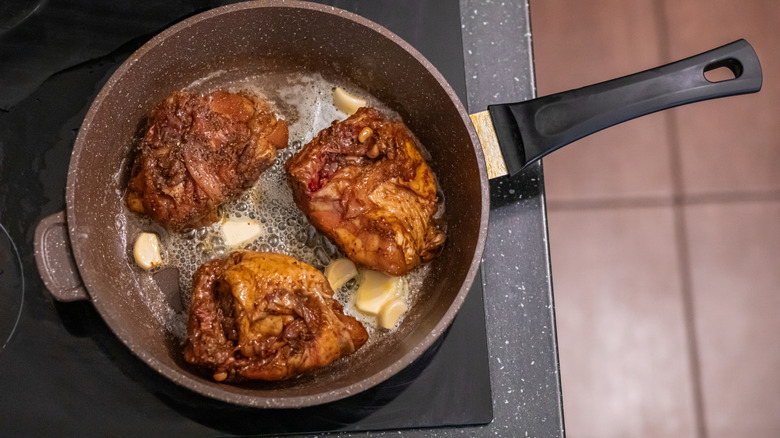
I understand the thinking of placing your chicken thighs in a frying pan with the skin side up. You're probably thinking the skin will stick to the pan, or maybe your mind rationalizes this option because that's how you'll serve them later. And, I understand because this was one of the biggest mistakes I made when I first started cooking with thighs. But, there's a much better technique that will ensure you never ruin the skin on your chicken again.
Start by placing your chicken thighs skin down in a cold frying pan over medium-low heat after they've been seasoned. It's very important that the pan is cold and not pre-heated, or else your skin may stick to the bottom. It's equally crucial you use medium-low heat, which is about three or four on most standard home stovetops — if it's any higher than this, the chicken will stick to the bottom of the pan, and your meat may burn. Allow to cook about halfway through before turning the thighs over, and you'll have perfectly crisp skin every time.
9. You aren't cooking them long enough
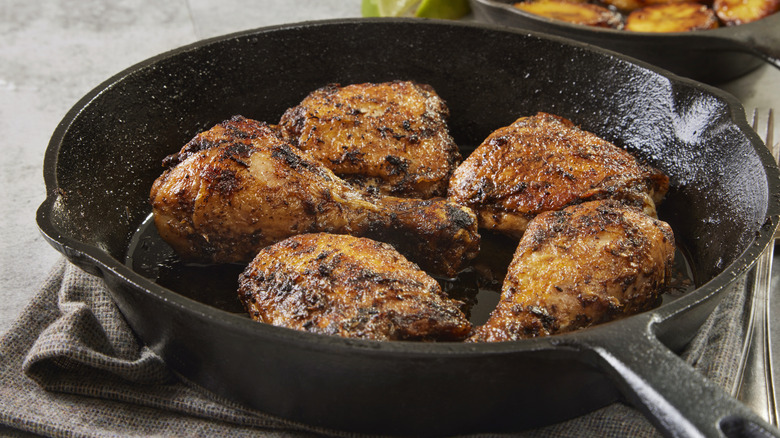
If you're used to chicken breasts, you'll know they're nicely done around 165 F. Thighs are also technically fully cooked at this temperature, but this isn't where you should stop for optimal results. At a standard 165 F, chicken thighs will still be tough and chewy because the connective tissues haven't yet melted. That juicy, flavor-packed taste you're looking for isn't there yet, but practicing a little patience can remedy this mistake.
Continue cooking your chicken thighs until you get a temp of about 185 F at the thickest part of the meat. When considering temps, it's okay to be within two or three degrees, but it's always better to go slightly above rather than below for food safety purposes.
If you don't already have a food thermometer, I highly recommend grabbing one, as they're crucial for ensuring food safety. This one from TempPro is highly rated and costs less than $10 on Amazon. Plus, I like that it has a digital interface so you don't have to read analog results.
10. You aren't allowing the thighs to rest before serving
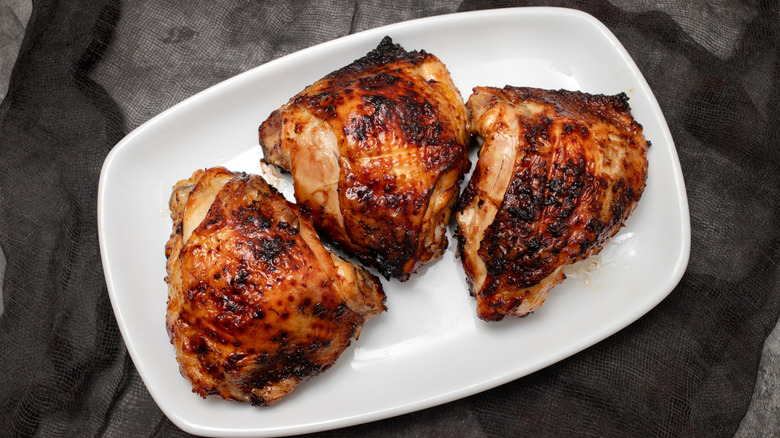
If you've ever read a recipe or article that discusses the best ways to cook meat of any kind, you've probably heard the term "resting." Of course, this doesn't mean you should tuck your meat in for a nap before you eat it. Instead, set your meat aside on the countertop after cooking — doing so allows the juices to incorporate back into the meat and ensures it isn't dried out when you consume the meal.
I allow my chicken thighs to rest five to 10 minutes before serving, depending on whether I'm in a rush to get food on the table or not. If you're impatient (like me), find other things to do while the meat rests. This is the perfect time to toss your roasted veggies in butter, or make chicken gravy to top your meat and creamy mashed potatoes with. By the time you finish the last touches on your meal, your chicken thighs will be perfect and ready to serve.