

11 Common Mistakes Ruining Your Cheesesteak
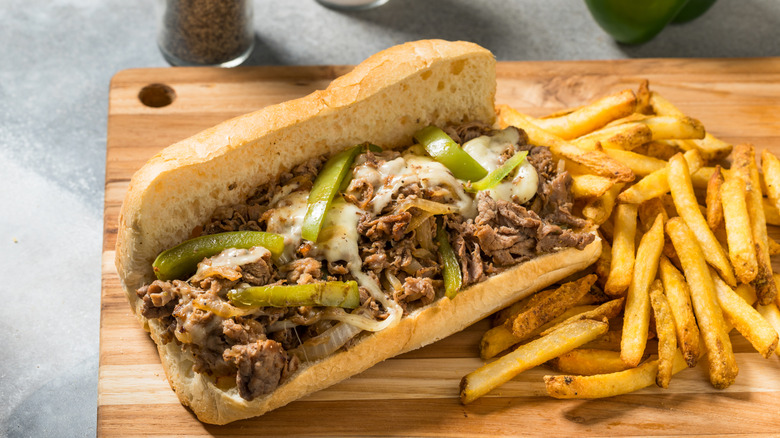
The cheesesteak is an iconic sandwich made with only a few simple ingredients. Sometimes called a "Philadelphia cheesesteak," the sandwich's origins are heavily rooted in the city of brotherly love, so it's no wonder that you'll find the best cheesesteaks in Philly. While the most authentic variation of this sandwich requires only bread, meat, cheese, and onions, there are various regional ways of making them — there are even popular offshoots of the original, like the pizza steak, chicken cheesesteak, or buffalo chick cheesesteak. While the original is simple, though, some people struggle to craft the perfect at-home Philly cheesesteak.
Living in the Greater Philadelphia Region for nearly two decades, I've ordered more than my fair share of these sandwiches. Having worked in hot food restaurants throughout the region for well over half of that time, I've also crafted even more than I've eaten. One thing I've come to realize is that the main reason people struggle is that they see the cheesesteak as so simple. True, once you get the basics down, it's as easy as breathing. But those basics? You have to really nail every one of them, or else the entire dish will be off.
Thankfully, I'm here to share my hard-earned wisdom so you can perfect your cheesesteak much faster than I did. Without further ado, here are 11 common mistakes ruining your cheesesteak, and how to fix them.
Starting with the wrong roll
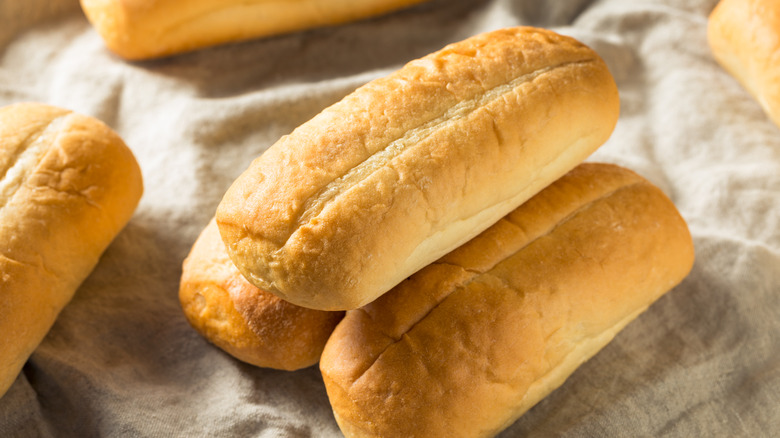
Every ingredient in your cheesesteak has to be of the best possible quality if you want to achieve optimal results, and too many people don't spend enough time thinking about the roll. You don't want to skimp out on cheap rolls, nor do you want to choose an incorrect option. Ciabatta? Wrong. Kaiser roll? Wrong. Brioche roll? Wrong. The correct option is a high-quality Italian roll or "hoagie roll," preferably in a standard 12 inches. Of course, if you're feeding children or someone (including yourself) who has a smaller appetite, the next acceptable option is a 6-inch Italian roll.
Personally, I like to bake my own Italian rolls at home if I have the time. That said, if you don't have an extensive baking background like I do, there are a few excellent store-bought options available. Top priority, for me, would be a fresh Italian roll from my local bakery, but Amoroso Rolls are widely considered the best bread to use for a classic Philly cheesesteak. These have an appropriate density, optimal squeezability, and they hold up well overall to this usage. In a bind, I've found that Maier's steak rolls or hoagie rolls will work well, too.
Not toasting your roll
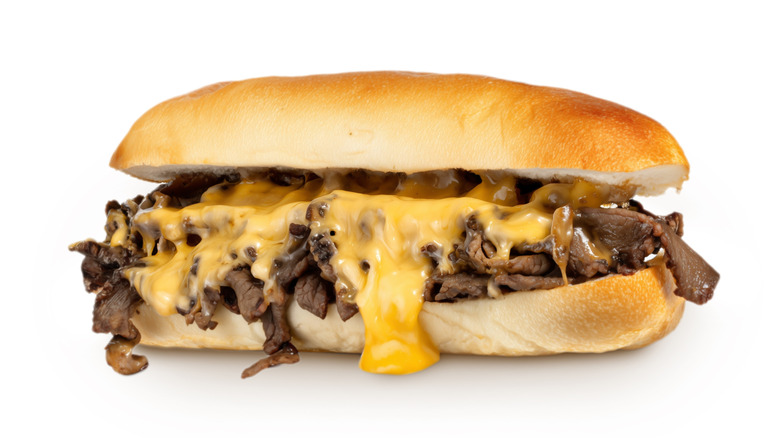
If you aren't toasting your roll before loading it up with your meat, cheese, and desired toppings, you aren't unlocking your cheesesteak's maximum potential. My opinion is that this sandwich doesn't taste or feel right if it isn't toasted. Untoasted, even the best Italian roll will lack in performance, more readily absorbing the meat's juices, and becoming soggy relatively fast. When toasted, however, the bread can hold more juicy meat without getting soggy. Plus, toasted rolls offer a beautiful crunch to contrast the tender meat and gooey cheese.
Although you can put your roll in a toaster or toaster oven, my preference is to use a pan or a grill. I find that the pan creates more even toasting, while the grill adds a nice smokiness that elevates the cheesesteak's overall flavor profile. Remember to cut the roll before toasting it so the interior side also gets crispy.
To make the most traditional cheesesteak, you'd toast the roll dry, although some places add a small amount of butter on the interior side. If you like the sound of the latter option, you can further upgrade the flavor by using a little bit of garlic butter on your roll for a bite of tanginess, or spreading a thin layer of mayonnaise on the interior side before grilling for a richer flavor and browner coloring.
Cutting the roll wrong
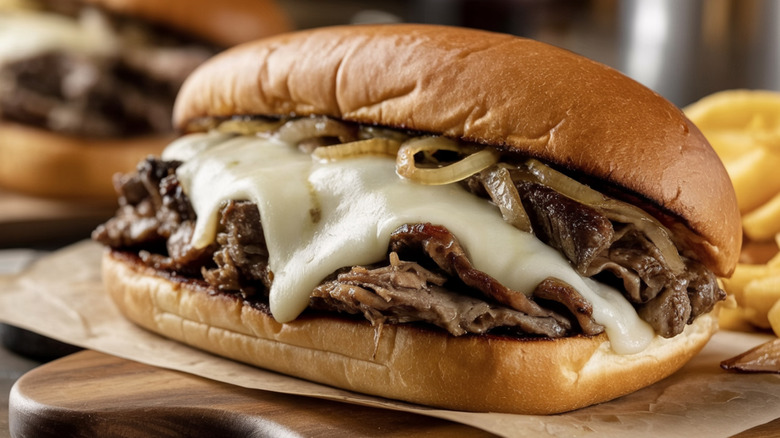
All the best burger recipes have you cut the bun completely in half, so you can layer your meat and toppings inside without worrying about having enough room. Cheesesteaks are different, requiring the rolls to be more like hot dogs — you should only cut the roll about three-quarters of the way through, lengthwise. This allows the meat, cheese, and toppings to stay inside the roll without spilling out too much, while also ensuring the juices stay within the bun. It's easier to hold and makes less of a mess overall.
Start with a sharp serrated knife (the kind with many small "teeth," and usually the preferred knife for working with bread). If you're more comfortable with cutting downwards, carefully position your bread with the side you wish to cut facing upwards, and use a gentle sawing motion at a 45-degree angle. Be cautious not to use any more downward pressure than necessary, or you may squish the bread and cut too deep. Stop when you're about three-quarters of the way through.
My preference is to cut the roll sideways. To do this, you'll use the same type of knife and gentle sawing motion as with the other technique. However, you'll lay your roll with the top facing upwards instead of the side. Then, gently lay your hand on top without squishing the bread, and cut through the side at a flat 90-degree angle until you reach three-quarters of the way through.
Using the wrong meat
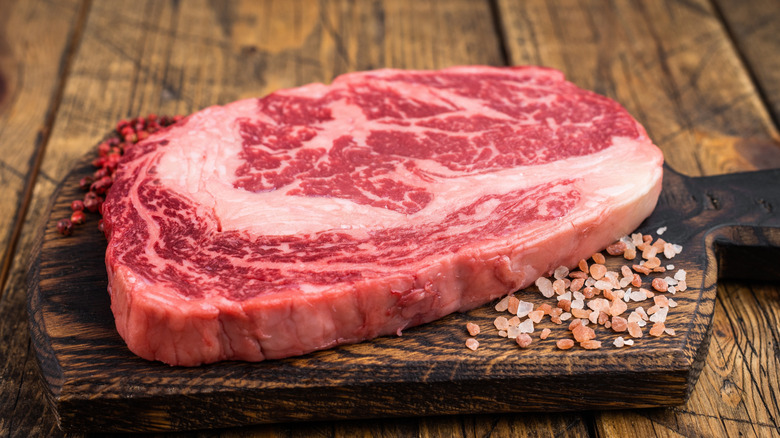
The best meat for your Philly cheesesteak is high-quality ribeye. Ribeye is a cut of meat with a robust, savory flavor profile that's amplified by heavy marbling — in other words, there's a lot of fat spread throughout the meat. This is different from the heavy fat you might find along the edges of certain cuts, although some ribeye steaks will also include this. This beautiful marbling ensures the meat is rich and almost buttery, remaining moist and tender throughout the cooking process (as long as you don't overcook it).
Since it's such a high-quality cut, ribeye can be expensive. While I highly recommend splurging on this meat if you can, I understand that some people may be on a stricter budget. If that's the case, your best budget option is to use top sirloin. Or, if you're in a time bind and need a quick cheesesteak fix, you can opt for pre-shaved beef found at the grocery store. Just keep in mind that sacrificing meat quality or time will affect the final dish to some degree.
No matter what type of meat you use, the slicing matters, too. For starters, you'll want to slice the meat as thin as you possibly can because the "shaved" cut is one of those things that make a cheesesteak, well, a cheesesteak. You'll also need to slice the meat before cooking it, or it won't render the same results.
Not seasoning your meat properly
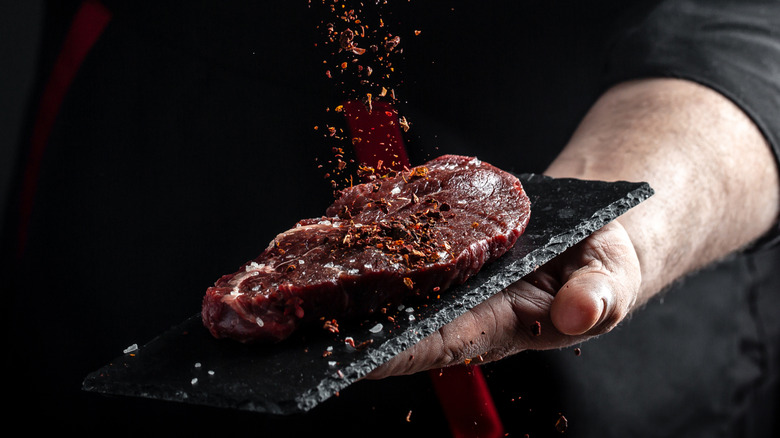
I strongly believe learning to use seasonings properly is the single most important cooking skill anyone can learn. It's vital to every single dish you'll ever cook, and the cheesesteak is no exception. If you aren't seasoning your meat properly and thoroughly, you're effectively ruining your cheesesteak and guaranteeing the dish won't live up to its full potential.
My personal standard, which I've used both at home and in restaurants, is salt, pepper, onion, and garlic. Salt enhances the natural savory meat flavor, while black pepper adds a tiny kick of spice and woody flavor notes. Onion powder brings a subtle caramelized flavor, while garlic powder offers pungent, earthy tones. These four spices combine to level up the meat in a way that speaks to its natural flavors. Of course, some people choose to use only salt and pepper — this option isn't wrong, and can work just fine if you're looking for a simpler flavor.
Beyond knowing which seasonings to use, it's important to know how to use them. When cooking meat, you want to add the seasonings near the end. This is especially true for the salt, which can pull the juices out of your meat if added too soon, leaving it dehydrated and tough.
Overcooking your steak
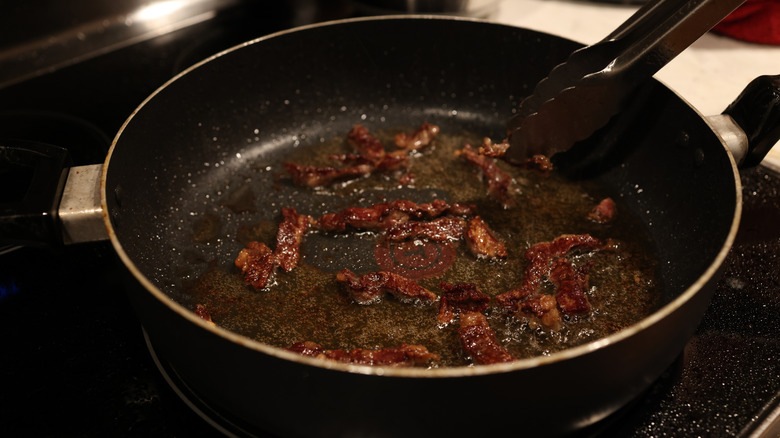
At best, overcooking your steak will leave it dry and a bit tough. At worst, your steak will end up burnt and entirely inedible because it's so tough it can't be chewed at all. This is because cooking will cause your meat to lose its natural juices over time. While this is a normal and expected process, it's important to know when to stop it to prevent issues.
Overcooking can occur in two ways. First, and most commonly, you could simply cook it for too long. Second, you could use a heat that's too high, which can even lead it to overcook quickly, or remain undercooked inside while burnt on the outside.
To solve this issue, make sure you're cooking your steak "low and slow." This simple phrase is a great way to remember how to cook any meat if you want the juiciest, most tender result. Whether cooking in a frying pan or on a flat top, choose medium low heat — about a four or maybe a five on modern numbered stove dials. As soon as the meat has changed from red to brown, season it, cook it for about one minute longer, and pull it from the heat.
Getting the ratio of meat to roll wrong
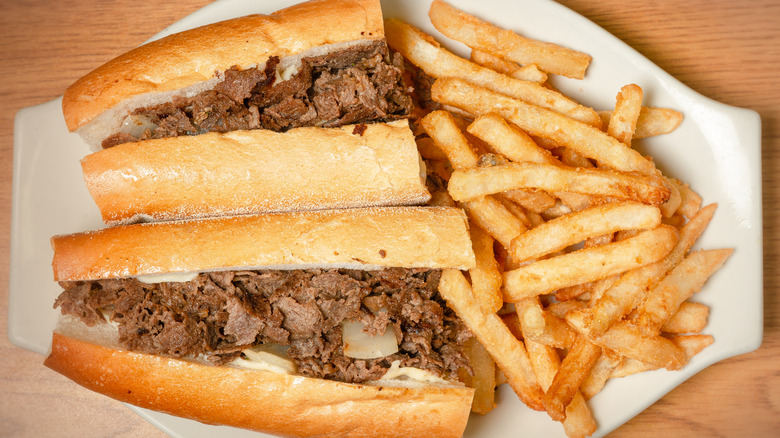
Some sandwiches require a balanced ratio of meat to bread. A club sandwich is a perfect example of this, with nearly as much bread as toppings. If you're making a classic grilled cheese, there's often more bread than there is cheese, but with a cheesesteak, you want the opposite. After all, steak is literally in the name, and this really sets the scene for the ideal ratio of meat and roll you need.
You want your cheesesteak to be very meat-heavy. It's meant to be a filling savory sandwich that sits heavy on the stomach. Depending on your personal preferences, anything between 8 and 12 ounces of meat per standard 12-inch Italian roll is ideal. If you're using a 6-inch roll, simply cut the amount of meat in half, opting for something between 4 and 6 ounces of meat.
Topping with the wrong cheese
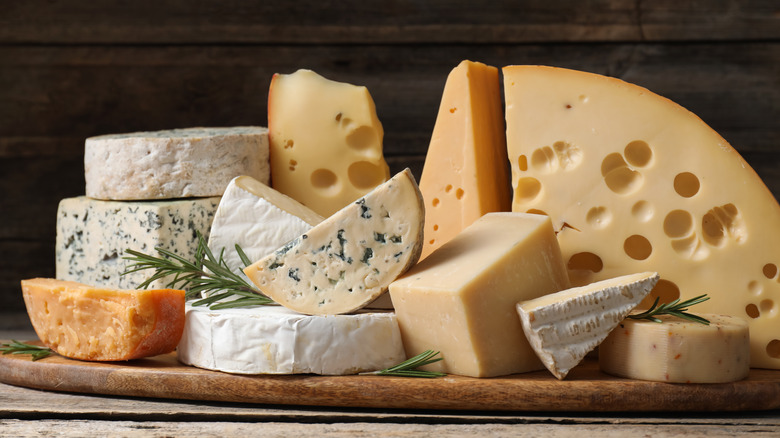
What cheese goes on a Philly cheesesteak? Cheesesteak purists from Philadelphia will tell you the only appropriate answer is Cheez Whiz. While this may sound like an odd choice to people living anywhere outside Philly, it's how the sandwich was originally intended to be made. I may get some hate for saying this, but I've never enjoyed this variation — largely because I don't like Cheez Whiz. Thankfully, most people outside of Philadelphia (including those in the Greater Philly Region like myself) agree that there are two other acceptable choices.
My acceptable preference is provolone, which is a very mild cheese that adds a light layer of milky, buttery tones with faint hints of sweetness. The other widely accepted correct cheese for a cheesesteak is American, which offers a smooth, mellow finish with distinct salty notes.
What all of these cheese options have in common is that they're relatively mild. Thanks to this, they nicely balance the meat and roll rather than overwhelm them. Cheeses with stronger flavors, like Swiss, Gruyère, Gouda, or Cheddar, will overwhelm the other flavors in your cheesesteak, causing it to feel unbalanced. The only exception to this rule is when crafting some unique but popular variations of this well-known sandwich, such as the pizza steak.
Not making it cheesy enough
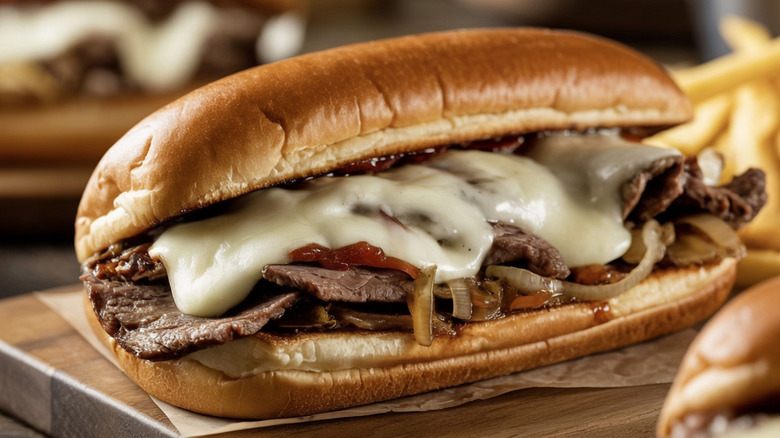
As with the steak portion of this sandwich, cheese is also in the name, so it should go without saying that not having enough of it means your cheesesteak won't live up to its fullest potential. Aim for three to four slices of your chosen cheese, overlapping each slice slightly as you layer from one end to the next for complete coverage. You know you have enough cheese when you can't see through it to the meat below.
Of course, forgetting to ensure the cheese is thoroughly melted is another common mistake I've seen people make when crafting cheesesteaks at home. The perfect cheesesteak will have a thick layer of gooey, stretchy melted cheese along the top. To ensure this, you should place the cheese on top of the meat while it's still in the pan (or on the flat top, if you're lucky enough to have one of those at home). Add a drop of water to the cookware's surface near, but not on, the steak. Cover tightly with a lid and wait about thirty seconds. The steam from the water will create a beautifully smooth melt. Only once this has been accomplished should you transfer it to your Italian roll.
Skipping the sautéed peppers and onions
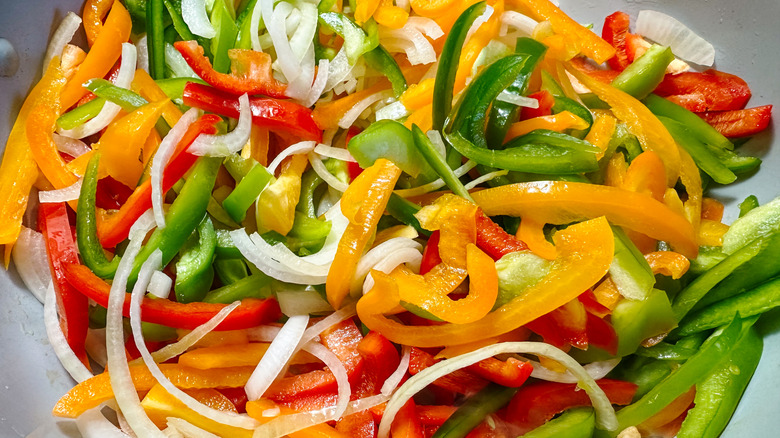
Some people say that including only onions on a cheesesteak is the most traditional option, and they aren't necessarily wrong. But the combination of sautéed peppers and onions is the most common option you'll find in areas like Southern New Jersey, where the sandwich is nearly as popular as it is in Philadelphia proper. This combo is beloved for good reason — both the peppers and onions caramelize, soften, and turn slightly sweet when they're sautéed. Together, they bring a faint bite, moderate savoriness, and a robust earthiness to your cheesesteak. Personally? I wouldn't eat a cheesesteak made any other way.
Once you nail the technique, sautéeing peppers and onions is simple and takes less than 20 minutes. Start by slicing both into thin strips, with roughly the same size. This ensures they'll all take around the same time to cook. Preheat your pan over medium-high heat before adding your oil, peppers, and onions. Top with a good sprinkle of salt, and allow the vegetables to sit undisturbed for about two minutes, to develop a nice char. Toss or stir them occasionally as you continue to cook them for about ten more minutes, or until the peppers and onions are as soft as you like them.
Skipping out on the upgrades
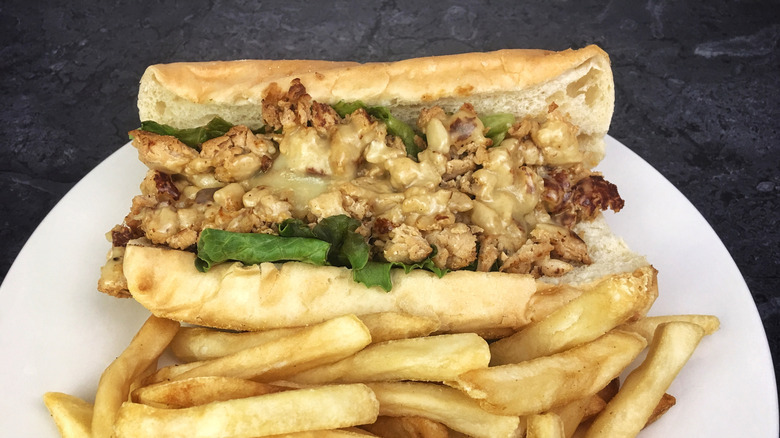
Philly cheesesteak purists may strongly disagree with me, but I think there's something beautiful about taking something delicious and making it even more suited to your own personal tastes. Now, I will agree with the purists and say that incorporating these upgrades means you're no longer making a traditional cheesesteak — but if you're making something you really enjoy, and nailing the basics of a cheesesteak, does that really matter?
Some upgrades can entirely change the cheesesteak into its own thing. For example, adding pepperoni and marinara while swapping the cheese for mozzarella will create a pizza steak. Alternatively, swapping out the beef for shaved chicken turns your dish into a chicken steak.
Other ways to upgrade a Philly cheesesteak involve adding toppings beyond the standard sautéed peppers and onions, without altering the base sandwich. Adding buffalo sauce will add a level of heat to your cheesesteak, while adding mushrooms or bacon will increase the dish's savoriness. Looking to balance the savoriness instead of enhancing it? You can add standard sandwich toppings like lettuce, tomato, and onion to mellow the meat's flavor slightly.