
10 Best Budget Grocery Store Chains You Can Shop At In 2026
Grocery prices have climbed steadily over the past few years, leaving many shoppers looking for the best ways to stretch their budgets and find savings without sacrificing quality. Shopping at the right grocery store can have a tremendous impact on your monthly food bill, and fortunately, several chains offer impressive value. Through everyday low prices, private-label products, bulk-purchasing opportunities, and creative cost-cutting measures, these stores pass along the savings to customers in a meaningful way, making it easy to craft classic budget-friendly meals at home.
That being said, the best budget grocery store is not necessarily the same for every shopper. The right store depends on the products you buy most often, whether you prefer specific brands, the quantity of food you need for your household, and even which stores are closest to you. To identify the stores that will help stretch your grocery budget in 2026, we rounded up the most affordable stores based on pricing comparisons, shopping strategies, and customer feedback.
1. Aldi
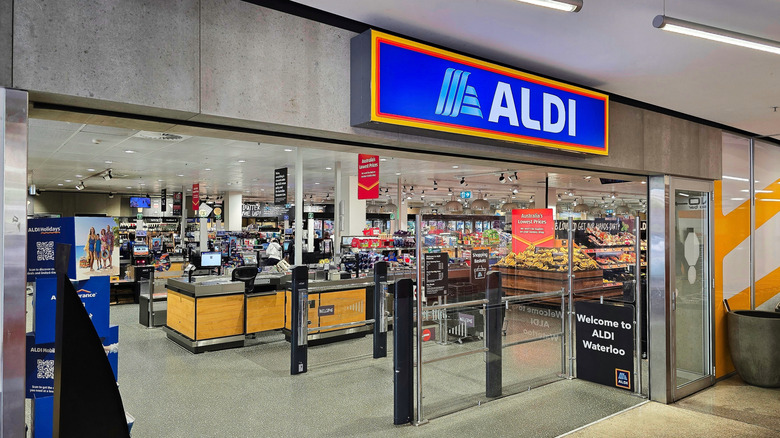
Aldi is widely considered one of the most affordable grocery stores in the country. The German-born store keeps its prices low by selling 90% private-label products with minimal name brands, limiting expensive marketing, and managing a no-frills store design. These, among other cost-cutting measures, allow the store to pass on the savings to its customers. Plus, customers appreciate the store-brand dupes and even consider some of them to be better than the OG versions.
One Redditor wrote, "Aldi ... that place is amazing. Quite a few of their 'generic' products are better than the brand name." And shopping the store brand is just one of many simple and helpful tricks for shopping at Aldi on a budget.
In several comparisons where shoppers bought the same grocery list from various stores, Aldi beat out the competition on price. Against Walmart and Kroger, Cheapism reported that Aldi saved shoppers up to 25% on their total grocery bill when shopping store-brand items across every grocery category, from pantry staples and condiments to produce, meat, and dairy. In another price comparison of eight different stores (via AllRecipes), Aldi won in every category other than name-brand products. Because the everyday prices are so low, the store does not offer coupons or loyalty programs.
2. WinCo
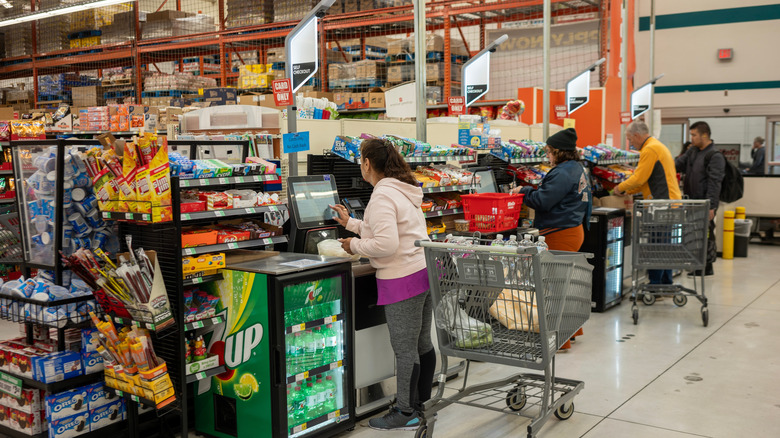
WinCo has over 140 stores across the country, with a heavy concentration in the Midwest, and it employs several cost-cutting measures to keep groceries cheap for customers. It does not accept credit cards (in order to avoid expensive merchant fees) and requires shoppers to bag their own groceries to save on labor. Most importantly, it has an expansive bulk section with more than 800 products priced by the pound, including dry goods, candies, and grain.
By avoiding expensive packaging on the products in the bulk bins, WinCo is able to pass those savings along to customers. Shoppers claim the bulk bins save them almost 50% of what they would likely pay at traditional grocery stores for the same products.
In a comparison of grocery store prices across major metropolitan areas, Consumer Reports found WinCo was even cheaper than Walmart and many others. Some customers even find the quality of the products to be preferable to that of traditional grocery stores. One shopper on Reddit wrote, "Winco has better produce and 1/2 the price of my local Vons/Safeway/Albertsons on most stuff. It's often better than Costco for commodities." As an added bonus, you are not charged a membership fee to shop, unlike other bulk warehouses like Costco or Sam's Club.
3. Costco
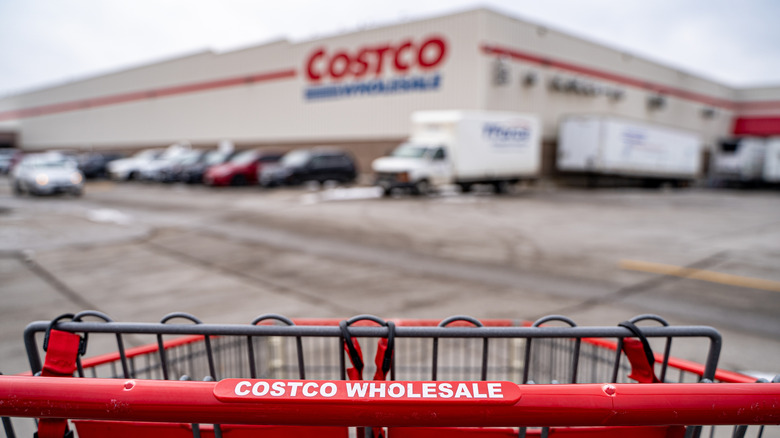
It's difficult to compare bulk warehouse stores like Costco to traditional grocery stores, but if you shop for several people or like to host parties, Costco has some of the best value products on the market. In fact, Consumer Reports found Costco to be the most affordable grocery store across six major cities, with lower prices than Walmart by up to 37%. It's no secret that buying in bulk saves you money.
Products that tend to be spendier at the traditional grocery store — like red meat and seafood — are often more affordable at Costco when you buy in bulk. Its own Kirkland Signature brand offers incredible products for far less than name brands in all grocery categories, including pantry and freezer staples, snacks, meats, and, of course, the prepared meals section. With more than 600 stores across the U.S., Costco tends to be a convenient and budget-friendly place to shop for both staple ingredients and undiscovered tasty new treats for many shoppers — as long as you have the kitchen space to store them.
4. Grocery Outlet
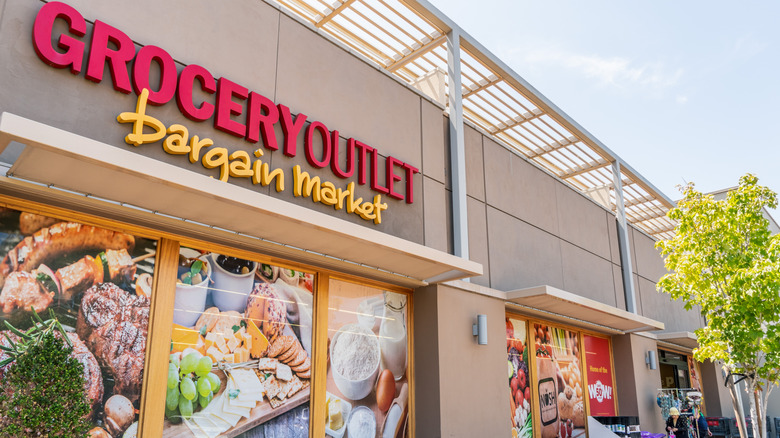
Grocery Outlet operates more than 500 stores across 11 states, with a large presence in California. Like your typical retail outlet, the store keeps prices low by sourcing surplus inventory and product overflow from other retailers. This opportunistic sourcing model allows the store to discount products by 40% (or more), making it one of the most affordable grocery stores in 2026. And shoppers find themselves impressed with the selection of products available.
One customer on Reddit wrote, "Grocery Outlet saved my life man ... No crowds and a surprisingly large selection with great prices." Shoppers also appreciate that the store discounts products as the "best by" date approaches, claiming to have found several items for less than $1. Customers find incredible deals on products like avocados and are impressed by the vast cheese selection as well. Plus, you can often find excellent deals on liquor and wines, since Grocery Outlet purchases from wine merchants at highly discounted rates.
5. Walmart
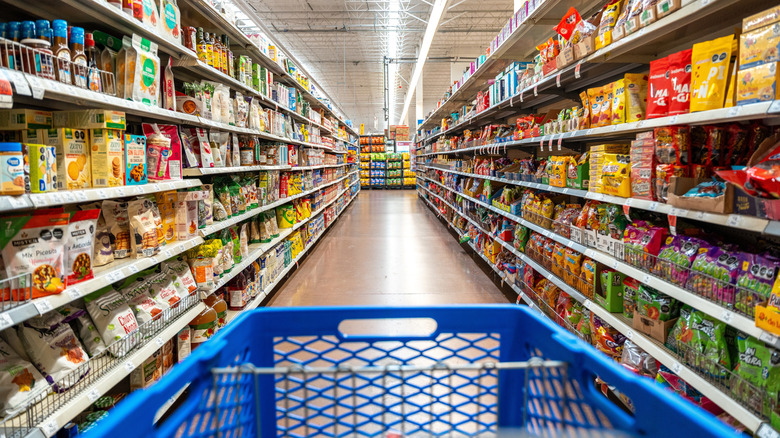
Walmart is the undisputed top grocer in the U.S. based on sales volume, and has long been credited as one of the most inexpensive. The store has great negotiating leverage and an extensive supplier network due to its sheer size and reach, allowing it to provide impressively low prices. Despite being surpassed by stores like Aldi for affordability, the retail giant still provides some of the best savings in the game, especially through its Great Value brand.
In comparison to Aldi, which has a very limited selection of name-brand products, Walmart actually carries tons of name brands at everyday low prices. Plus, customers find the Great Value brand to have excellent dupes for the name brands they love, and many of these must-have foods are less than $5.
One shopper on Reddit claimed, "Walmart is pretty cheap if you stick to Walmart brand as much as possible. Most of the Walmart brand is pretty good." Products like produce, dairy, and meats are all close in price to Aldi, and Walmart provides a much larger selection of options for pantry staples and nonperishables. As an added bonus, the store offers grocery delivery, which is convenient for many busy customers.
6. Trader Joe's
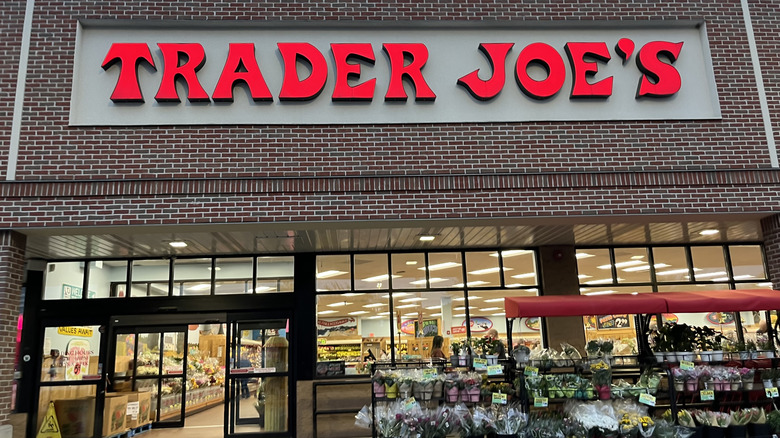
You can make Trader Joe's an extremely affordable grocery trip if you know the best way to shop the store. Like many other discount grocers, it keeps costs low by stocking mostly private-label products. Its heat-and-eat food section is legendary for those who need quick, convenient, and tasty grab-and-go meals. Shoppers often find impressive savings on fresh produce and unique snacks, and the freezer section is a must-shop for many customers.
The freezer aisle is full of unique cult favorites that are easy to assemble into vibrant and delicious meals. The Kung Pao chicken, Mandarin orange chicken, pork fried rice, and infamous potstickers are all priced between $4 and $7, so these frozen foods are always worth stocking up on. These delicious options offer a more affordable alternative to takeout and taste impressively high-quality, considering they come frozen. Other products like dry pasta, canned goods, wines, spices, and even gourmet cheese tend to be cheaper than at traditional grocery stores as well.
7. Food 4 Less
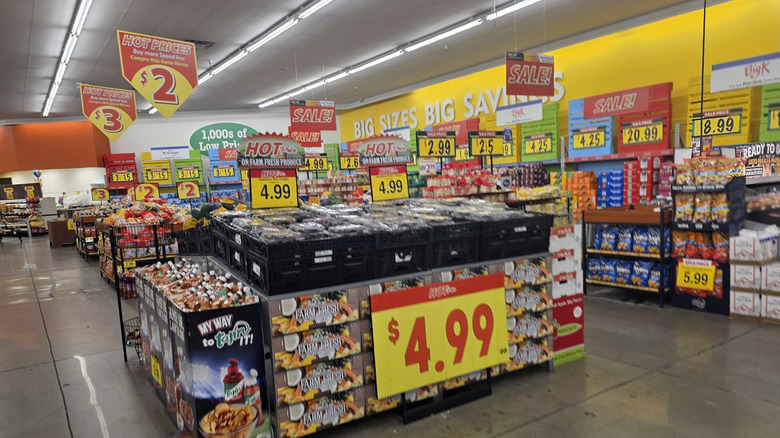
Food 4 Less is a subsidiary of Kroger that operates around 100 stores across California, Illinois, and Indiana. The store offers everyday low prices, as well as constant coupons and deals through its weekly ad and Hot Buys. In addition to digital deals, it passes on savings to customers by having them bag their own groceries and maintaining a "no-frills" warehouse-style store. It also helps shoppers save with its fuel points program, where you earn one fuel point for every dollar you spend at the store, which is redeemable at participating gas stations.
Shoppers who have both WinCo and Food 4 Less near them like to alternate between the two, as they have competitive prices. Food 4 Less customers like to shop the produce, deli, and meat section for fresh products at excellent prices. As a subsidiary of Kroger, you can often find Kroger brand products at even further discounted prices as well.
8. Sam's Club
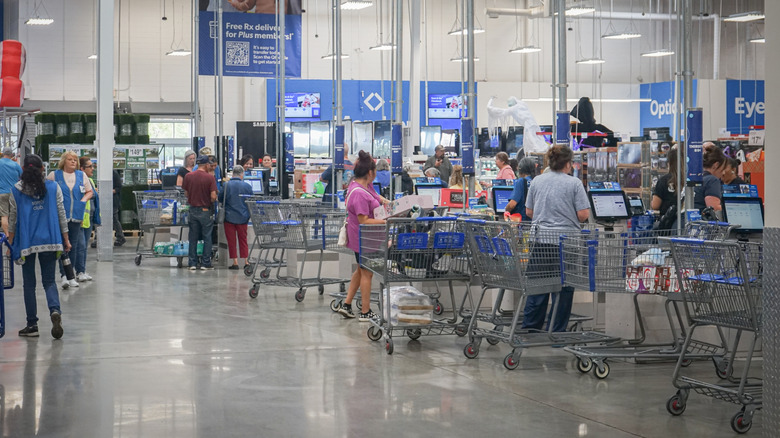
Sam's Club operates similarly to Costco as a bulk warehouse-style store. It employs many of the same cost-cutting measures, including buying in bulk directly from suppliers, relying on membership revenue to keep product prices low, and offering a variety of affordable products through its Member's Mark brand. Sam's tends to be cheaper than Costco because it prices Member's Mark products just below Costco's Kirkland brand, and the standard membership fee is $60 compared to Costco's $65. To limit your grocery spending as much as possible, there are several helpful tips for shopping at Sam's Club on a budget.
In a comparison of the warehouses across six grocery categories, Sam's beat or matched Costco's prices in every category (via AllRecipes). Like Costco, the store offers excellent deals on products through bulk purchasing, so it's a budget-friendly way to stock up on household staples like condiments, meats and cheeses, snacks, and pantry items. The wide selection of products and generally highly-rated quality make this the go-to for shoppers with busy schedules, families to feed, or parties to host.
9. Lidl
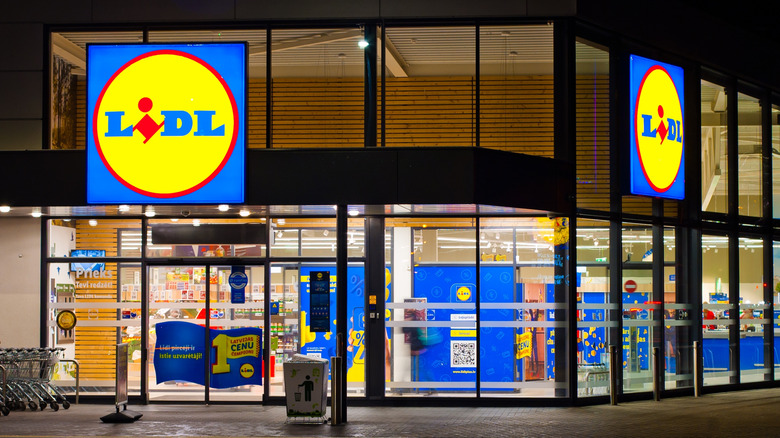
Lidl originated in Germany, but since moving to the U.S. in 2015, the discount grocer has opened nearly 200 stores across the East Coast. Like Trader Joe's and Aldi, Lidl relies mainly on store-brand products, as 80% of its inventory is private label. Per one analyst on Instagram, the business model employed by these stores is "the best [way] to stretch your grocery dollar," and that includes the Costco and Sam's Club warehouses.
Pricing tends to be comparable at both German-born grocery stores, but some customers find that many of their staples are even cheaper at Lidl than at Aldi or Trader Joe's. One customer wrote on Reddit, "I was surprised to see that Lidl prices beat Trader Joe's by a lot. And [their] bread is amazing! Their $4 [loaves] are the best." Other shoppers have good luck with their produce and find great deals on meat as well. Plus, the small selection of name brands that they do carry tends to be far less expensive than the same items sold at traditional grocery stores.
10. H-E-B
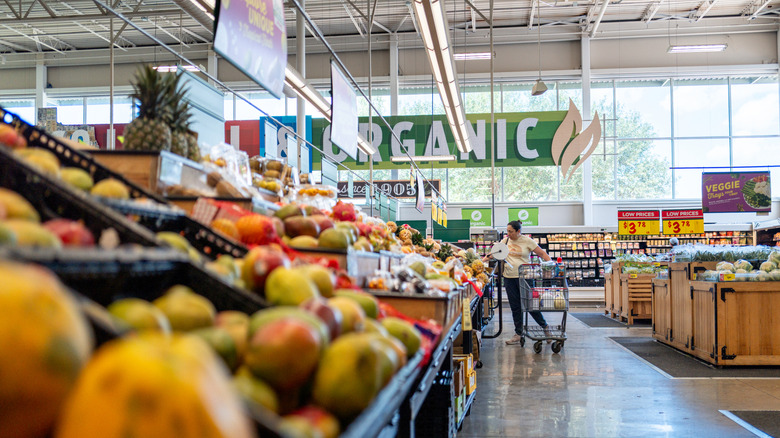
This Texas grocery store chain has several store brands that offer significant savings compared to name brands and weekly specials through the app that help shoppers save even more. Consumer Reports found the regional chain was very close to Walmart in price, and shoppers tend to agree. One customer on Facebook compared the prices at both stores and found they were nearly the same, though they prefer the produce selection at H-E-B.
Houston news outlet Click2Houston compared prices at H-E-B, Walmart, and Kroger in Sugar Land, Texas, and found that H-E-B was the winner on price, boasting the most savings. Additionally, some shoppers feel that the quality is much better at H-E-B compared to Walmart, and that, in combination with a more pleasant shopping experience, makes the regional chain a winner for many frugal Texans. The store also has unique offerings that you won't find at the other major chains, like in-house fresh tortillas, guacamole, and chips.