

14 Store-Bought Pizza Sauces, Ranked Worst To Best
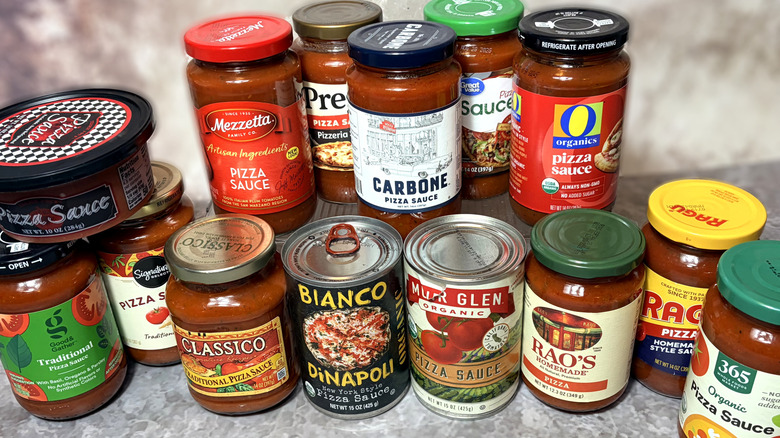
As an avid lover of all things pizza, nothing makes me happier than putting together a delicious homemade pie. When time allows, crafting the pixxa dough by hand and simmering my own sauce can be incredibly satisfying. In the real world, though, that kind of time rarely presents itself, so I often reach for store-bought ingredients instead. When it comes to pizza sauce, there's a dizzying variety gracing grocery store shelves, and choosing a subpar sauce can throw a real wrench into your pizza night.
There is only one way to truly discover which pizza sauce reigns supreme, and that's to taste them all. Gathering as many different jars and cans of pizza sauce as I could, I put them to the ultimate test. Yes, this required me to craft and eat over a dozen pizzas, and what's running through my veins now is probably mostly tomato sauce. In the end, it was all worth it, because I now know definitively which sauce I'm grabbing the next time I have a homemade pizza craving. Hopefully, this ranking helps you, too.
14. Good & Gather Traditional
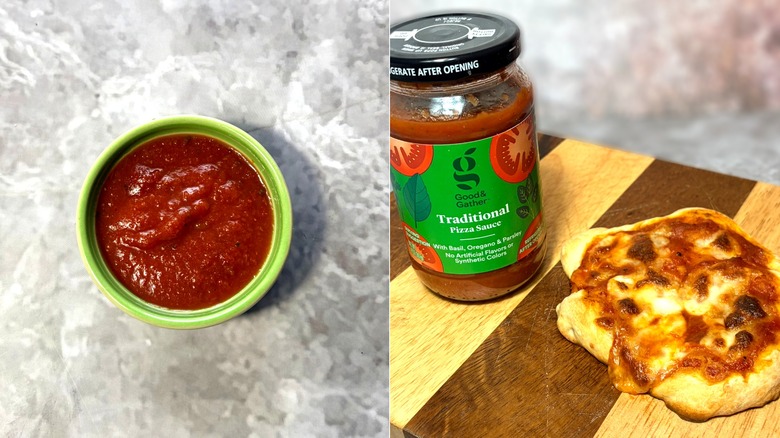
The one thing Target's in-store brand, Good & Gather, has going for it is that it's among the cheapest pizza sauce options. Unfortunately, there are others in the same price range that are much better, so even if you're basing your judgment purely on value, it doesn't hold up. This sauce has the consistency of ketchup and a similar sweet flavor — not a natural tomato sweetness, but a sugary sweetness that makes it hard to detect any other elements.
I don't need a pizza sauce to be super complex, but I do expect it to be balanced, and I didn't find that to be the case here. If you can push past the sweetness, there's some herbaceousness in there somewhere, but I found that little tinge of garlicky goodness faded even more when cooked on the pizza. I'm famously not a fan of ketchup, and this sauce skewed way too close to the condiment for my liking.
13. Ragu Homemade Style
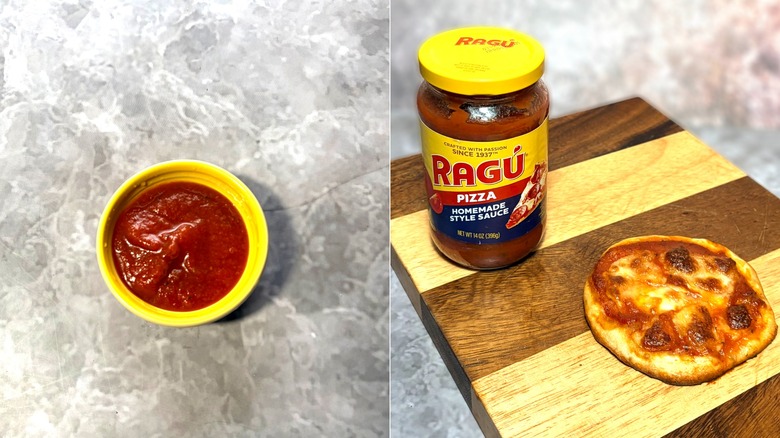
Tasted on its own, at first, I appreciated the simplicity of Ragu's Homemade Style Sauce. A combination of fresh and concentrated tomato flavor gave it a touch of depth, and it was well-seasoned, with salt brightening up its mellow flavor. It was also one of the cheapest options, so I had high hopes for its success. Something happened in the oven, though, that stripped the sauce of nearly all of its character.
I really can't explain why heat killed this sauce, but it barely tasted like anything on the cooked pizza, despite how much I slathered on the crust. You could use this sauce on the side as a dip, I suppose, but in any heated application, I'd reach for a different brand. A pizza sauce that can't take the heat is not really a pizza sauce, after all. Unless you're going for blandness, for some unfathomable reason.
12. Classico Traditional
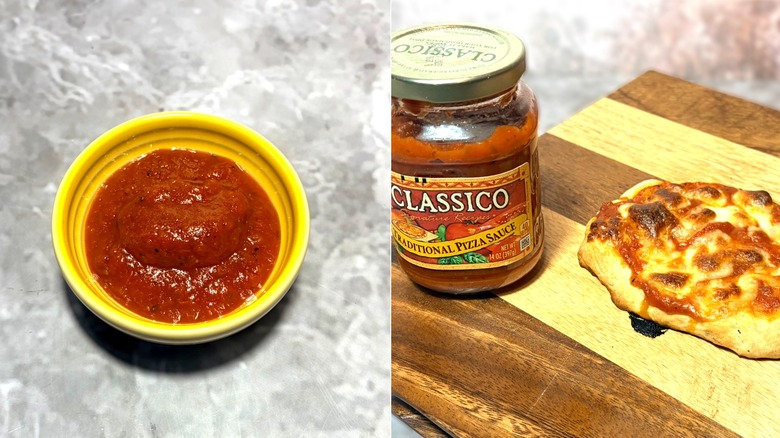
From the ingredients list, I expected Classico's Traditional Pizza Sauce to be simple and tomato-forward, as tomato purée and diced tomatoes in juice are the first two ingredients. To my unpleasant surprise, the first thing I tasted was an overwhelming sweetness, like caramelized sugar. Turns out, sugar is the third listed ingredient, and combined with the tomato paste element of the purée, it takes over the entire flavor profile.
When cooked on the pizza, that sweetness became even more concentrated. With the crust and cheese to complement it, the sauce was less offensive, but the fact that it needed those other ingredients to make it palatable was not a mark in its favor. Though basil leaves are prominently displayed on the label, I really didn't pick up much in the way of that or any other herb or spice. If you've got a sweet tooth, this might be okay for you, but I found it to be incredibly unbalanced. It's also in the middle of the pack price-wise, so you're not saving any money with this one.
11. Prego Pizzeria Style
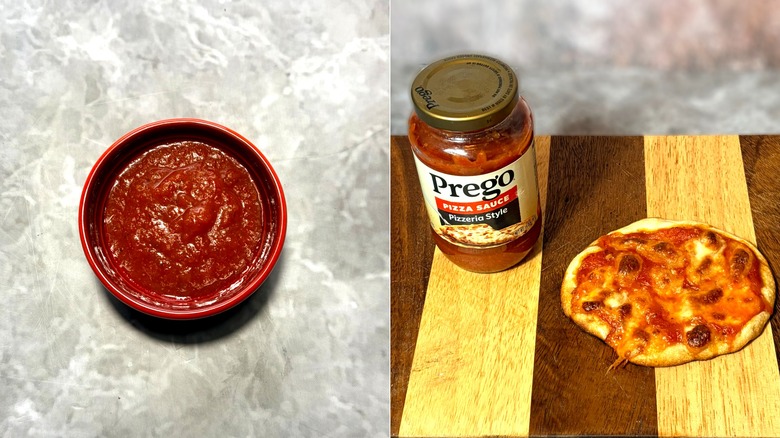
Prego's Pizzeria Style sauce fared slightly better than Classico, but just by a hair. Both of these sauces were similarly sweet, with that combo of tomato paste and sugar taking center stage. The one advantage Prego had in this head-to-head battle was the fact that you could actually taste some herbs and spices, namely garlic and black pepper. Those flavors weren't particularly balanced with the sweet sauce base, but at least they made things a little bit more interesting.
Cooked on the pizza, Prego had the same issue as Classico, with the concentration deepening the sweet flavors to the point that the peppery, garlicky dimension faded into the background. Each bite of pizza was sweet and salty, and that's about it — I didn't get much in the way of fresh, juicy tomato flavor or any kind of herbaceous or spicy kick. About the same price as the Classico sauce, this is a slightly better option, but still not one I'd reach for again.
10. 365 Whole Foods Market Organic
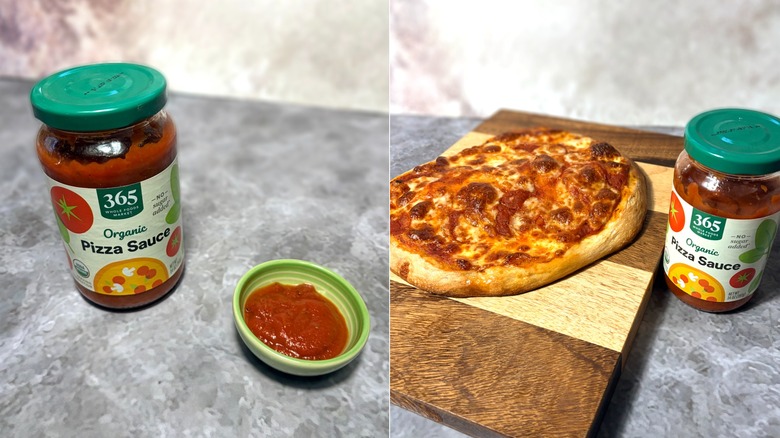
For smoothness and subtlety, Whole Foods Market's 365 Organic Pizza Sauce gets high marks. The balance between sweet, juicy, and herbaceous is quite good, and it has a fresh tomato flavor that's enhanced by a bright basil note. The texture is very smooth, with a richness thanks to extra virgin olive oil. The ingredients are organic as well, and considering that fact, it's very well priced, right in the middle of the range.
With all that going for it, you're probably wondering why it's all the way back here in 10th place. This is where the going gets tough, as the sauces from here on out are all more good than bad. What holds Whole Foods' pizza sauce back is its muted flavor compared to many of the others. It's a perfectly fine, serviceable pizza sauce that I'd happily use, but there's nothing exciting about it. This may be because it's slightly under-seasoned, so none of the flavors get a chance to sing. If you prefer a mellow, mild pizza sauce, though, this is going to be right up your alley.
9. Great Value
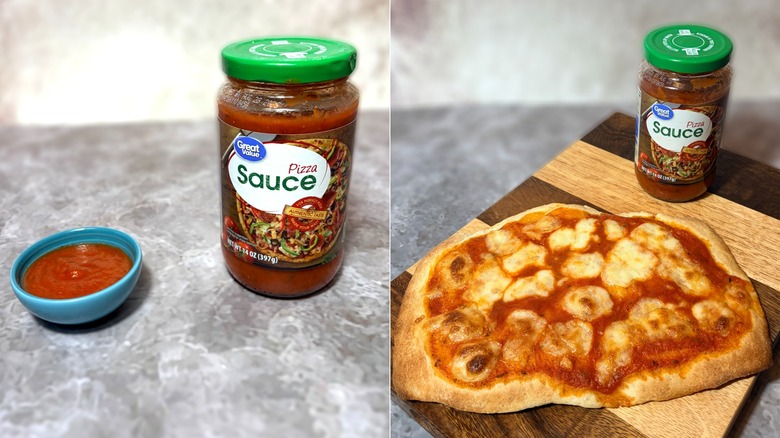
Walmart's Great Value Pizza Sauce is the least expensive option on this list, and it definitely over-delivers for its price. Its smooth, homogenous texture is a bit on the thin side, but it boasts a well-balanced, old-school pizzeria flavor. The tomato character is bright and juicy, and there's a mélange of herbs and spices that come together nicely, finishing with a peppery punch of basil.
If this sauce were slightly less watery, it would really shine, but the texture's not quite there. Soybean oil is used here. Of course, olive oil would be preferable, but that would also likely result in a much higher price. For the bargain that this sauce offers, I can put up with less than perfection. However, if I'm going for the best pizza possible, I'll shell out bigger bucks for a sauce with more to it. Still, if you're on a budget or just looking for a good deal, Great Value lives up to its name.
8. O Organics
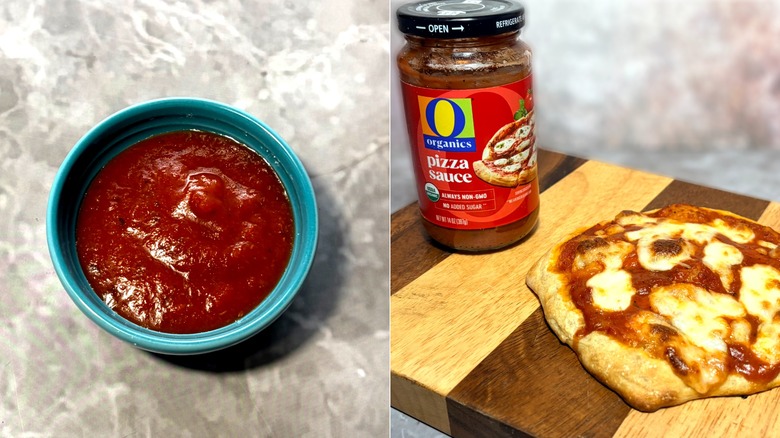
O Organics Pizza Sauce costs about a buck more than Whole Foods' organic sauce, but for that extra dollar, you get a lot more flavor. This sauce is robust and brimming with punchy brightness. Both tomato purée and diced tomatoes give it a spectrum of tomato depth, and a robust combination of herbs and spices crank those flavors up even more. Garlic and onion add a wonderful savory dimension, and a fresh peppery bite finishes things off.
The only thing that kept this sauce from rising to greater heights was its texture. While the flavor was spot-on, it was a little on the oily side, which made the other toppings slip around and slide off. It didn't quite meld with the crust the way that some of the other sauces did, which made the pizza difficult to eat. Combined with the relatively high price, that makes only a couple of issues with this otherwise successful pizza sauce.
7. Signature Select Traditional Style
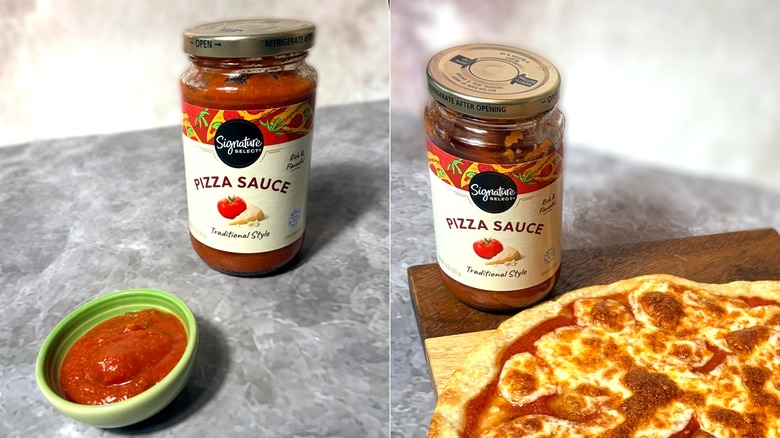
This Pizza Sauce from Signature Select came out of the gate swinging. Tomato purée and diced tomatoes give it a sweet, deep, and juicy tomato character, but what really sets this sauce's flavor apart is the addition of Parmesan cheese, an ingredient that can really take pizza sauce to the next level. There's Romano cheese in this sauce, too. You get all the brightness and acidity of the tomatoes, but they're tempered by the cheeses' creaminess, and each element boosts the sauce's umami depth.
The flavor of this sauce is so good I could (and did) eat it with a spoon. Unfortunately, it also had some quality and textural issues that kept it from rising higher in the ranking. There were hard bits in the sauce that were unpleasant, as if the ends of the diced tomatoes weren't properly pared, or the spices weren't fully ground, or perhaps a bit of both. These issues really bummed me out, because the flavor of this sauce is such a home run, but I couldn't ignore them. Even so, I'd still go for Signature Select, compared with most of the other sauces in this mid-priced range.
6. Trader Joe's
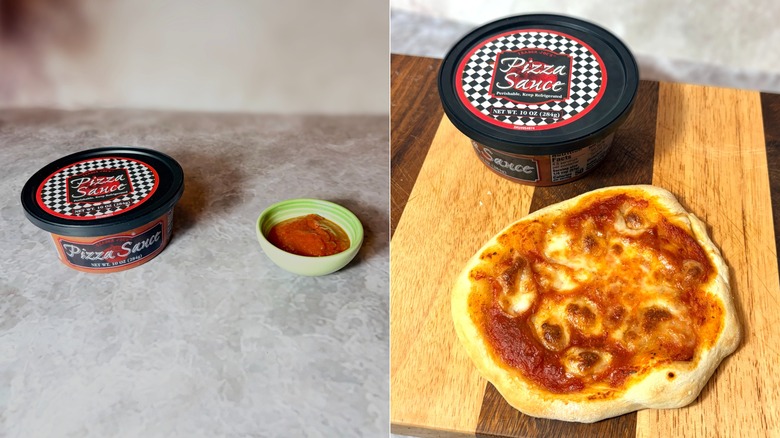
Trader Joe's Pizza Sauce is the only offering on this ranking that's refrigerated, not canned or jarred (though the store does sell jarred sauce as well). That definitely gives this sauce the advantage of freshness and makes it feel the closest to homemade. The vibrancy of the tomato purée was strikingly bright and tangy, and the mix of herbs added extra zip, especially the aromatic pop of oregano. Visible chunks of onion and garlic, along with tomatoes, gave the sauce a rustic texture and satisfying pops of fresh, zesty flavor.
This is a solid, delicious pizza sauce, and one that I've purchased and used many times over the years. It's priced in the middle tier, compared to the rest of the sauces, but it's also the smallest container, so it does cost more per ounce than many of the others. On the cooked pizza, it gets significantly sweeter, though it still maintains enough tang and freshness to stay balanced.
5. Rao's Homemade
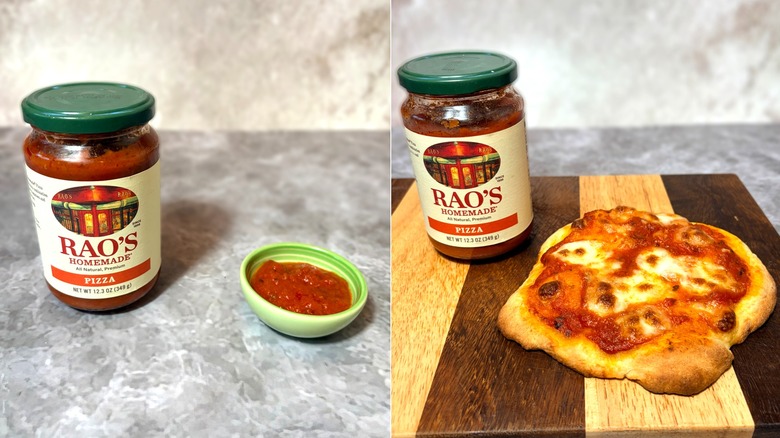
Now we get to the elite tier of pizza sauces, starting with Rao's, the historic Italian-American company known for its high-quality sauces. The ingredients list for Rao's Homemade is short and simple: Two types of Italian tomatoes are used, whole peeled and cherry. Olive oil adds richness, while carrots, onions, and garlic add aroma and deepen the flavor. Salt, oregano, and basil provide seasoning. That's it — no sugar, no preservatives, no additives.
The purity of Rao's recipe showed through in its clear, vibrant flavor. It was very tomato-forward, fresh, and tangy, with a lifted profile thanks to the herbs. The texture was slightly rustic and chunky, so I got some juicy bites of fresh tomato, which added a nice acidic pop. As with all of Rao's products that I've tried, this was an obviously well-crafted and great quality sauce. It's in the premium tier price-wise, which is really the main drawback. The sauces ahead are either comparable in price or cheaper, and have a little more to offer.
4. Mezzetta
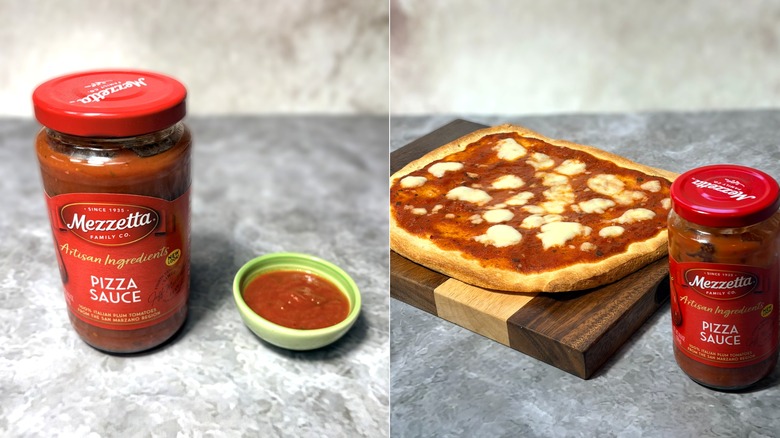
The Pizza Sauce from Mezzetta is the only one in this ranking that says it's made with tomatoes from San Marzano, an area near Naples, Italy, which is the birthplace of pizza. That said, unlike legally protected San Marzano tomatoes, this sauce does not carry the official government DOP seal (Denominazione d'Origine Protetta, or Protected Designation of Origin in English). This doesn't necessarily mean much — the seal can only be applied to canned whole or sliced tomatoes from this specific region, so no pizza sauce will ever bear that symbol. All we know is that Mezzetta is proud enough to specify on the jar that it uses genuine San Marzano tomatoes.
Whatever that means, I will say that I tasted this sauce before I read that part of the label, and was immediately struck by the intensity of the tomato flavor. Bright and fruity, but also layered and savory, this sauce straddled the line beautifully between complexity and simplicity. Just the right amount of salt enhanced and brightened its flavors, with a spark of peppery basil finishing it up. The texture was good but not great, which was really the only flaw here, if you can even call it that — it was just a little bit soupy, and didn't sink into the other elements of the pizza. This is also on the higher end of the price spectrum, which is something to keep in mind.
3. Muir Glen
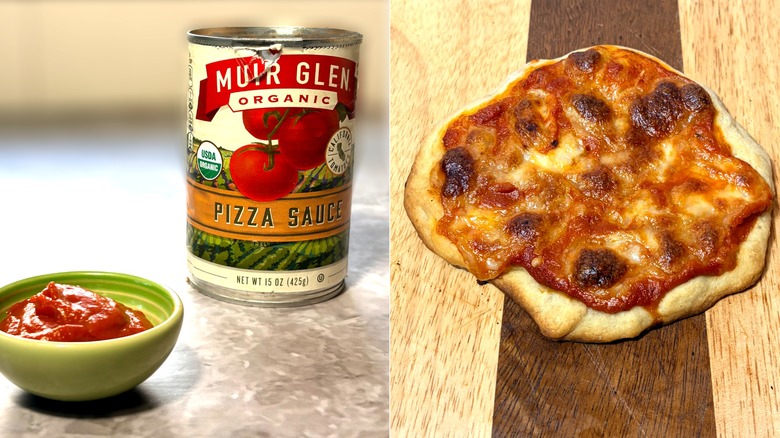
Muir Glen's Pizza Sauce is good, good stuff. There's so much to love about this sauce, and it's in the middle of the price range, which makes it a great option for both quality and value. This is a thick, dense sauce with deep layers of flavor. It's so robust and concentrated, you don't need much of it to get an intense burst of flavor in every bite of pizza. Even though I purposefully overdid it as far as the amount goes, I still didn't find the sauce to be overwhelming — a little much, perhaps, but still tasty.
Muir Glen knows tomatoes, ranking second in our list of the best canned tomato brands. Canned tomatoes and sauces, pastes, and salsas are the company's specialty, so it's no surprise that the tomato flavor here is dimensional and vibrant. There's a layer of sharply aromatic herbs and another layer of savory allium, and these strata work together to make this sauce complex and intriguing. There's not much negative to say about it, but it is the thickest sauce that I encountered on this journey, so it sat like a blanket on top of the crust rather than melding with it. If you want to make a pizza that's all about the sauce, go for this one.
2. Carbone
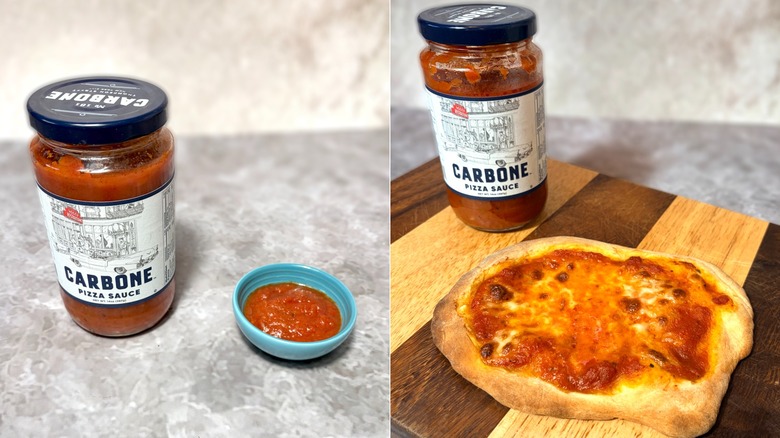
The first thing I noticed about Carbone Pizza Sauce was its texture. Somehow, it was silky and rich while still being fresh and light. Eating a pizza with this sauce felt like a juggling act — bright tomato, then a peppery punch, then a soft, supple finish. What I loved about this sauce from Carbone was its ability to meld the crust and cheese together while still maintaining its own identity. That's not an easy feat to pull off, and it resulted in a beautifully unified, cohesive pizza that became more than the sum of its parts.
Right off the bat, I could tell that whatever olive oil they use in this sauce was high quality. You can actually taste the fruitiness if you look for it. Even though the olive oil was obviously detectable, it didn't make the sauce oily, being so well integrated that it just added richness to the texture and enhanced the flavors that were already there — tomato, basil, and garlic all shone above it, with the perfect amount of salt and pepper to bring it all together. This was the most expensive sauce in this lineup, but once I tasted it, I understood why. It's pretty tough to beat, which is why there's only one sauce ranked higher.
1. Bianco DiNapoli New York Style
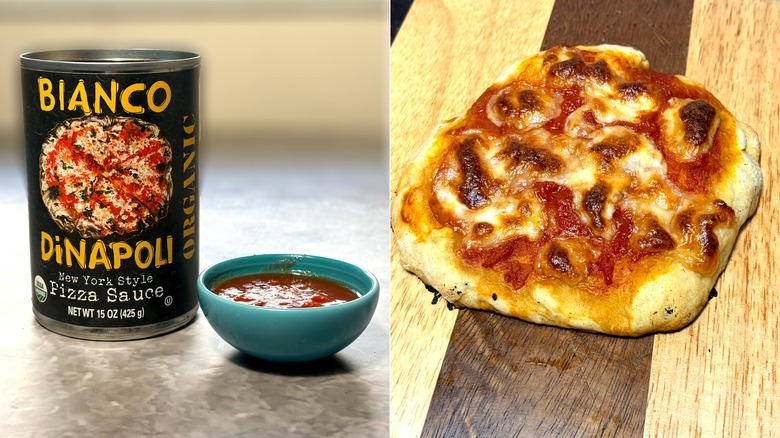
When I tasted Bianco DiNapoli New York Style Pizza Sauce on its own, I was underwhelmed and skeptical. It just tasted like tomatoes and salt, and seemed way too watery and thin. Eventually, I picked up on some garlic, and then a fresh, high-toned hint of basil, and the more I tasted, the more I liked it. Once I spooned it onto pizza dough and cooked it, my kitchen filled with an immaculate aroma of pure tomato, and that's when I realized this sauce was something special.
It's not complex. On the contrary, Bianco DiNapoli's pizza sauce is as simple as it gets. Organic tomatoes, garlic, basil, olive oil, and sea salt — that's it. I thought I preferred deeper, richer, more complex sauces, but this one made me rethink everything. This sauce is unassuming, confident in the knowledge that each of its precious few ingredients is top-notch, that its balance is impeccable, and that it's ready to play its role on your pizza with aplomb. A simple crust with this sauce and fresh mozzarella made me feel like I'd reached pizza nirvana. While it sits on the higher end price-wise, in my opinion, it's worth every dime.
Methodology
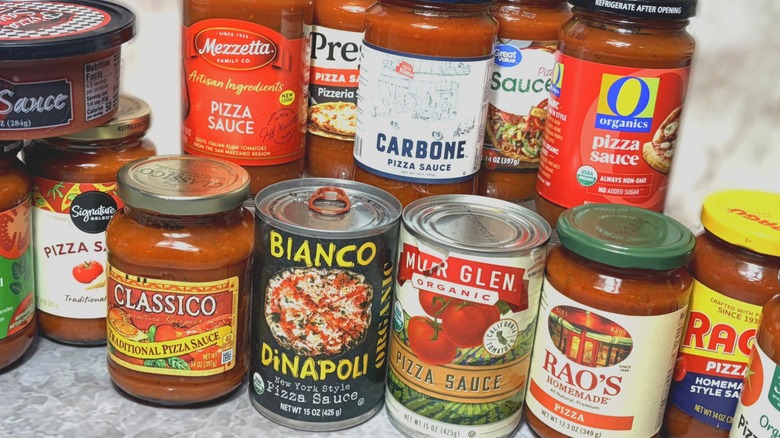
I searched my local grocery stores and noted all of the brands of tomato-based pizza sauce, omitting any variations. As there are dozens of brands on the market, I had to narrow it down, so I selected 14 that seemed to be the most widely available. For each sauce, I tasted it on its own, right out of the jar or can, then heated up. This gave me a pure idea of its flavors and textures. Then, for each brand, I made a pizza using store-bought dough, topped with sauce and mozzarella. I layered on a bit more sauce than pizza experts recommend (two ounces per 12-inch crust, in case you're curious), to fully taste the sauce front and center.
Flavor, texture, and balance were the main features I considered. I looked for a fresh, natural tomato flavor, a proper level of seasoning, and bright acidity. Whether the sauce was simple or more complex, I expected it to have a balance of sweetness, saltiness, and savoriness. Texture is key for pizza sauce — too watery and you end up with a soggy crust, but it shouldn't be thick like paste, either. Lastly, I looked at value. Those that hit the sweet spot of excellent quality and a good price ranked the highest.