
3 Meats That Have More Protein Than Steak
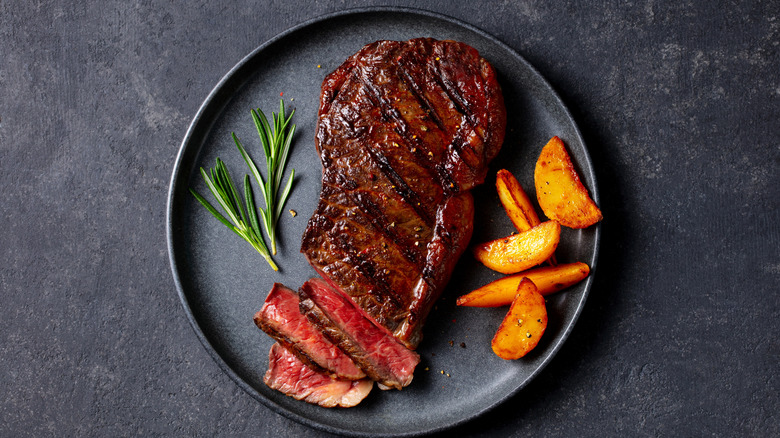
Protein is a popular trend in food today, to say the least. Countless different food products are now available fortified with extra protein they never had before, from cookies to popcorn to espresso martinis. Despite the trendiness, protein actually is important to the human body and can be found all over, from skin, muscle, and bones down to enzymes and even our blood itself. And as with many nutrients, it's arguably ideal if you can get what you need from natural foods.
Steak is a common meat choice for people looking to naturally increase their protein intake. Lean steaks are an especially good choice for packing on protein with minimal fats and oils. A top sirloin steak has an impressive 22.5 grams of protein per 4-ounce serving. Shrimp is also a common choice with similar protein content, plus fewer calories. But neither is the most protein-packed.
Meats with more protein than a sirloin steak cover some of the most common types out there. It includes chicken breast, one of the most commonly available poultry cuts, pork chops, a hearty American classic, and the iconic and versatile salmon.
Chicken breast
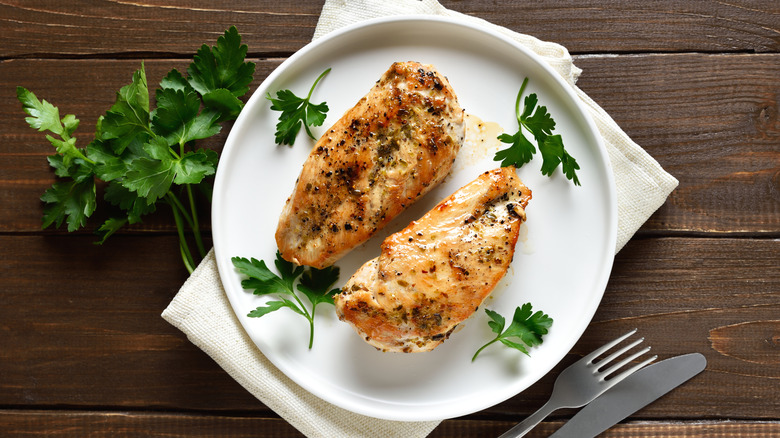
When it comes to protein content, chicken breast is perhaps the only cut of meat usually mentioned in the same echelon as steak. A 4-ounce serving of chicken breast contains about 25.4 grams of protein, over 10% more than the same amount of sirloin steak. And, for protein purposes, chicken breast really is best.
While thighs and drumsticks are also relatively high in protein, the protein count in white meat, like the breasts and wings, is even higher. And one could crush a pile of chicken wings for the protein, but for how much actual meat you get compared to the breast, the latter is a significantly more cost-effective option.
One of the drawbacks of this protein, though, is that, despite its commonality, it can be difficult to cook well. Try to avoid common cooking mistakes with chicken breast, like not using a salt brine, underseasoning, overcooking, or slicing too soon. All of these can result in bland and dry breasts, one of the last ways anyone wants to eat chicken.
Pork chops
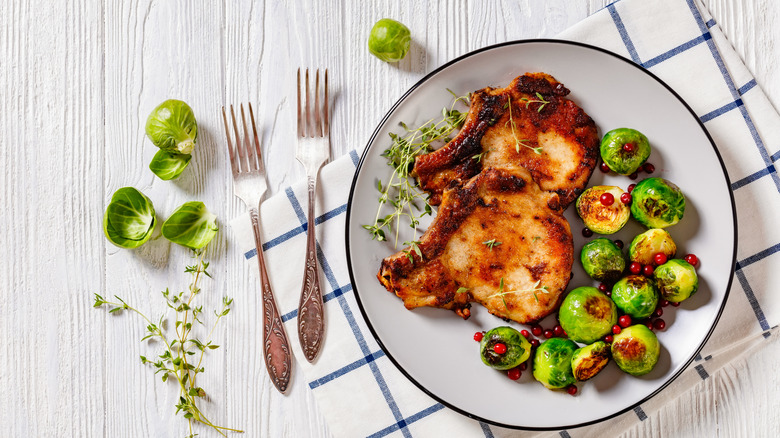
Pork chops are not quite as popular as they once were, especially among millennials and Gen Z, but they are still a great choice for diners wanting additional natural protein. Each 4-ounce serving of pork chops has roughly 23.4 grams of protein, less than chicken breast but more than sirloin. If protein is the main goal, it may be a more flavorful way to get what you need than the average chicken breast.
However, like chicken breast, cooking pork chops can be deceptively difficult. While juicy and flavorful, they're not the fattiest cut of pork, and can easily dry out. Luckily, the secret to thin and juicy diner-style pork chops is also easy: Give them a thin coat of flour and cornstarch, and quickly cook each side in hot oil.
The flour/cornstarch mixture aids in flavor and caramelization while also keeping more of the meat's natural juices from frying off. And high heat ensures that the thin meat cooks in a (relative) flash before anything gets burnt or dried out.
Salmon
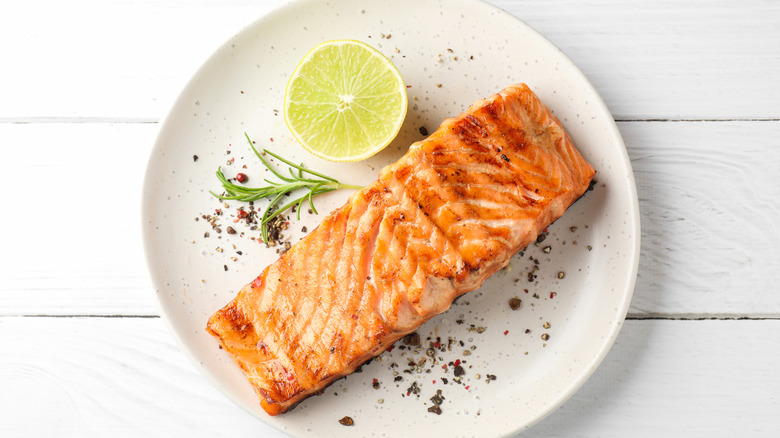
Salmon's flavor and nutritional profile make it a popular fish option, and for people minding their protein intake, salmon is generally higher in protein per serving than sirloin. Some varieties have more than others, and wild-caught fish tend to be more protein-rich due to a more varied diet. Wild Atlantic salmon, for instance, can have a whopping 28.8 grams of protein per 4-ounce serving, while sockeye salmon has around 24 grams.
There are lots of ways to cook salmon, from the grill to the oven or even eaten raw, but don't overcomplicate adding a quick punch of this protein-packed fish to your diet. Canned salmon is the perfect choice for a high-protein breakfast, or any meal for that matter.
Canned salmon goes seamlessly in omelettes, frittatas, and other scrambled egg-based dishes. But it can also take more sophisticated roles, like the hero in homemade salmon cakes or a savory salmon spread with cream cheese, capers, red onion, and dill.