

12 Of The Worst Corn Recalls In American History
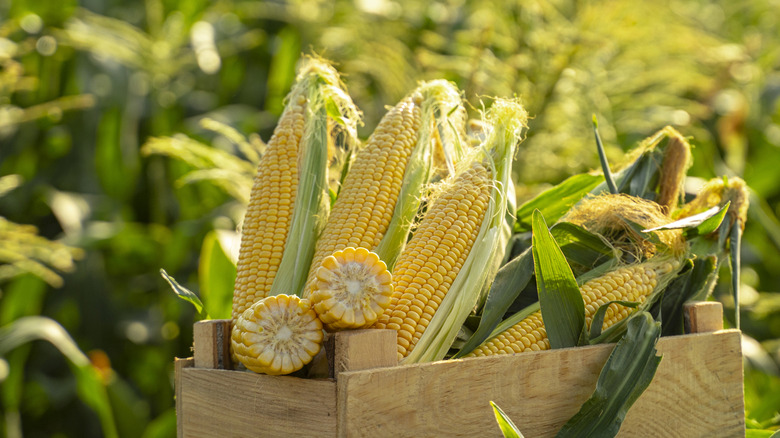
Corn is everywhere — and we mean everywhere. In the United States, countless people consume it every day, not just on its own but in processed form: Corn can be turned into flour, meal, syrup, starch, alcohol, oil, and plenty of other ingredients that can end up in food. It's even in aspirin. Because of this grain's ubiquity in the food chain, there are a lot of opportunities for things to be, shall we say, less than perfect — and due to that same ubiquity, when things go wrong, they can go very wrong indeed.
As a result, recalls involving corn or corn products can be absolutely enormous, with millions of pounds' worth of product affected. What's more, the reasons that corn can be recalled are very diverse. Because it frequently undergoes some form of processing, it's at a higher risk of being improperly canned or of foreign materials getting into the food — and like almost all foods, it can also be subject to potential contamination from bacteria like Listeria. Plus, some recalls have changed the face of our modern food landscape for good. Read on for the worst corn recalls in U.S. history.
1. Corn and other vegetables produced by CRF Frozen Foods
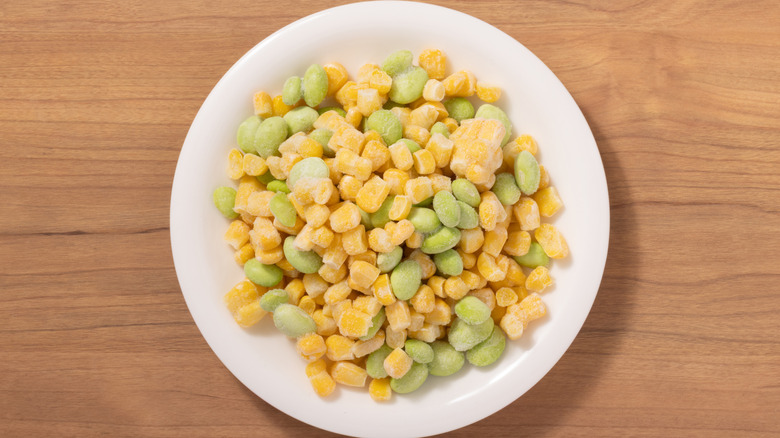
Even everyday foods like corn can quickly become dangerous when contaminated, and in some cases, this contamination can lead to fatal consequences. This sadly occurred back in 2016, with an outbreak of listeriosis leading to a huge recall by CRF Frozen Foods of its corn products and other vegetables. In April 2016, the frozen food manufacturer announced an initial recall of 11 frozen vegetable products due to potential contamination from Listeria bacteria (per the CDC). A little over a week later, this recall was expanded to encompass all of CRF's frozen fruit and vegetable products.
CRF is a big company, and as a consequence, nearly 360 products under dozens of different brand names had to be recalled. These included multiple types of corn sold by grocery retailers like Safeway. Unfortunately, by the time the recall was announced, the listeriosis outbreak traced to the products was already in motion. In total, nine people were hospitalized across four states, and three people died. The CRF plant implicated in the outbreak, meanwhile, shut down and reopened two years later. CRF's recall has since gone down in history as one of the worst frozen food recalls of all time, and certainly one of the most serious corn-related ones.
2. In 2016, almost 120,000 pounds of tamales were recalled due to Listeria concerns
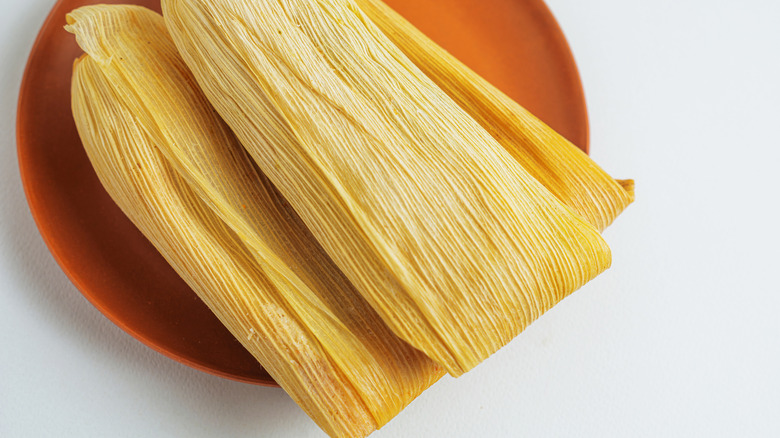
Sometimes, food recalls can be so enormous that they can potentially prompt sub-recalls that, on their own, would still be considered massive. This seems to have been the case in 2016, when the staggeringly large CRF Frozen Foods corn recall and the endless products that were affected appear to have created a further issue for La Autentica Foods. That year, the tamale producer had to recall nearly 120,000 pounds of its meat tamales, wrapped in corn husks, after concerns that they were contaminated with Listeria bacteria. These tamales had been produced over the course of more than seven months and shipped to multiple states and retail and restaurant outlets.
The recall was issued in the midst of the wider FDA recall of CRF's frozen corn, but it's important to note that no one had reported becoming ill after eating La Autentica's foods. Regardless, the USDA Food Safety and Inspection Service still advised customers not to consume any of its products and to either dispose of them or return them for a refund. This recall serves as a reminder of the intricacy of modern food production networks and how one potential contamination can lead to huge issues for multiple companies.
3. The controversial StarLink corn recalls
Few recalls of any nature have the legacy that the one involving StarLink corn does. StarLink is a genetically modified corn variety that, in 1998, was approved by the Environmental Protection Agency (EPA) for use as animal feed. This corn's modified nature meant that it could resist pests more effectively by incorporating an insecticidal protein. But because this protein was not properly digested by humans and could potentially act as an allergen, StarLink was banned from use in any food intended for humans.
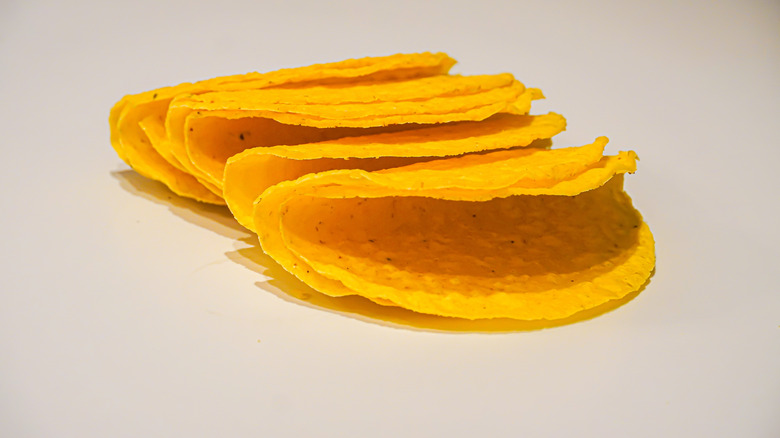
So, when StarLink was detected in Taco Bell-branded taco shells made by Kraft Foods, it was a huge deal. "Kraft Recalls Taco Shells With Bioengineered Corn," The New York Times reported in 2000. The food producer had to issue an enormous recall of its shells encompassing millions of boxes of product, with the corn used for them apparently entering the food chain unintentionally. Taco Bell also subsequently issued a recall for some of its own restaurant shells, which had been sourced from the same factory that the Kraft shells had come from. Although nobody became ill as a result of eating the products, it highlighted the potential lack of adequate regulation around genetically modified crops.
4. Metal fragments prompted a massive recall of masa in 2016
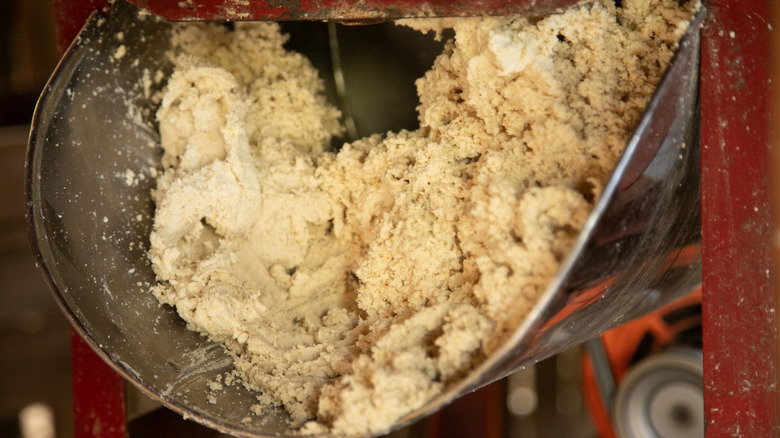
You know what we'd really rather avoid seeing in our masa? Metal. It's safe to say that the material has no place in food, not least in corn masa flour used to make chalupas, sopas, and tortilla chips. However, in 2016, metal turned up yet again in a processed food item, prompting a recall. Azteca Milling had to issue a recall of almost 850,000 pounds of its corn masa flour, shipped in 50-pound bags, after consumer complaints of metal fragments (per the FDA). Interestingly, the metal fragments were initially found not in the masa itself, but in tortilla chips made with it, causing Azteca and the other companies involved to have to work backwards.
When they did, it was subsequently found that the sifter screens Azteca had purchased from Great Western Manufacturing Co, which were in place at Azteca's milling facilities (and which were made by a company called Sefar), might have been responsible. Azteca then filed a lawsuit against Great Western Manufacturing and Sefar, citing negligence and breach of contract. The lawsuit was subsequently terminated in 2020. The upshot of all of this was that customers didn't seem to be injured by the metal fragments.
5. A corn meal recall in 1971 took place after aflatoxin was found
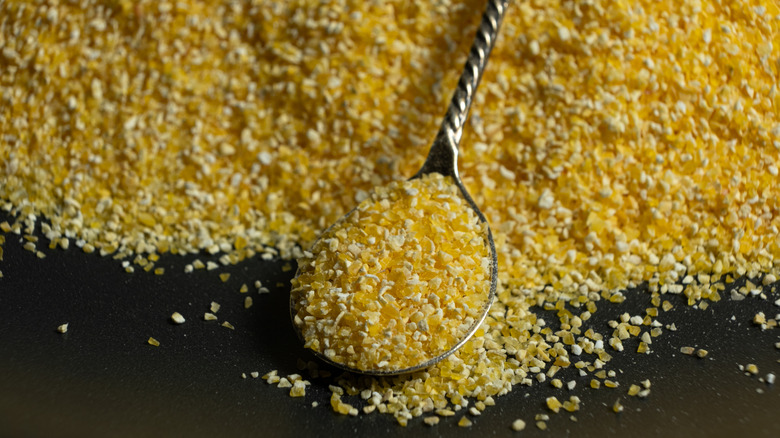
Although food recalls feel like they're a very modern occurrence (and they're certainly more deadly than ever), the fact is that they've been around for well over half a century. Corn has been recalled throughout that time. Back in 1971, a significant recall of cornmeal mix occurred due to high aflatoxin levels (per The New York Times). Almost 90 tons of corn meal mix from Morrison Milling Company, sold under two different brand names (Lit Lulu and Morrison's Corn Kits), had to be tracked down and taken off shelves because of the risk they posed to customers.
Although the Food and Drug Administration (FDA) states that human food can remain safe with low levels of aflatoxin in it, the toxins in Morrison Milling Company's cornmeal vastly exceeded this limit. The FDA advises that food can have no more than 20 parts per billion of aflatoxin; the Lit Lulu cornmeal contained 95 parts per billion, nearly five times the acceptable level. Given the potential effects of aflatoxin poisoning, which can include long-term growth issues and liver injury, this was clearly a very risky moment for the company — but thankfully, there don't seem to be any long-term repercussions from this recall incident.
6. Bonduelle's 2015 frozen corn recall was issued in more than a dozen states
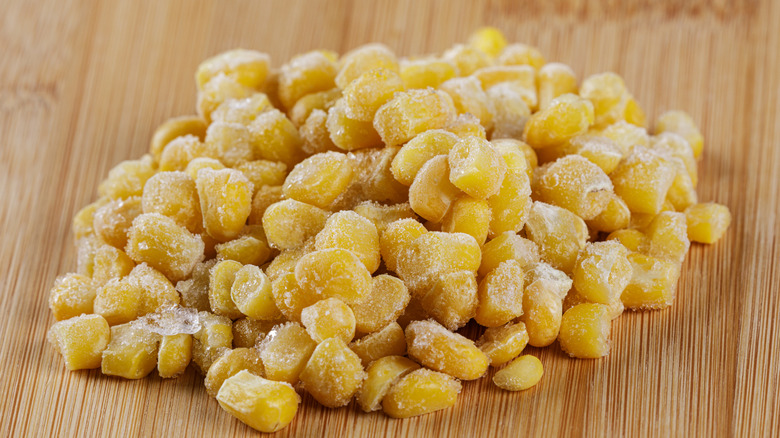
Frozen corn can be (somewhat surprisingly) prone to contamination from bacteria, and in 2015, the risk of Listeria reared its head once again. This time, it was Bonduelle USA's turn to bear the brunt of the responsibility and the recall. In September 2015, Bonduelle had to issue a recall of well over 9,300 cases of its frozen corn due to fears that it was contaminated with Listeria (per CNN). This corn was sold under multiple brand names, including Market Basket, West Creek, and Wylwood.
The recall was issued following a positive Listeria sample from an affected product, which prompted the company to snap into action and to immediately stop distributing the corn products involved. Unfortunately, the corn that had already been shipped out made it far and wide. Bonduelle's frozen corn was sent to stores in more than a dozen states, including multiple areas in the Northeast and as far south as Florida. The positive outcome for Bonduelle was that nobody reported any illnesses as a result of consuming its products.
7. A 2012 corn chowder recall was issued due to potential contamination
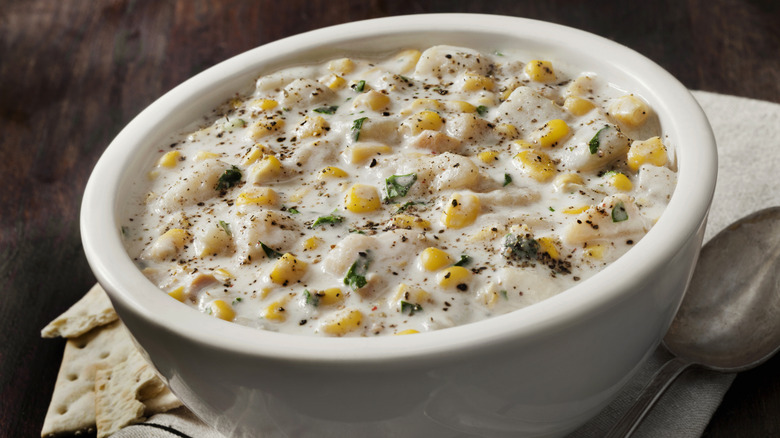
Because of the nature of modern food manufacturing facilities, which are full of moving parts and countless different materials, some surprising things can end up contaminating food items and prompting massive recalls. Few are as surprising as a marker pen, though. However, that's exactly what happened back in 2012, when Morgan Foods, Inc. had to issue a recall of its corn chowder products, after two customers said that they had found pieces of marker pen in their food. Kinda the last thing you want to be slurping up, right?
Morgan Foods had to ultimately recall almost 95,000 pounds of corn chowder, with four different varieties of chicken corn chowder affected (per Food Safety News). These chowders had been shipped to retailers like Wegman's and were spread widely across the country. Although this was a large amount of product, Morgan Foods' job was made slightly easier by the fact that it was dealing with one single best-by date, with the chowders all manufactured on the same day. That didn't take away from the potential severity of the recall and its consequences, though: Plastic pieces can represent a significant choking hazard in food, and it was lucky that nobody was affected.
8. Mislabeled Corn Flakes prompted a 2004 recall
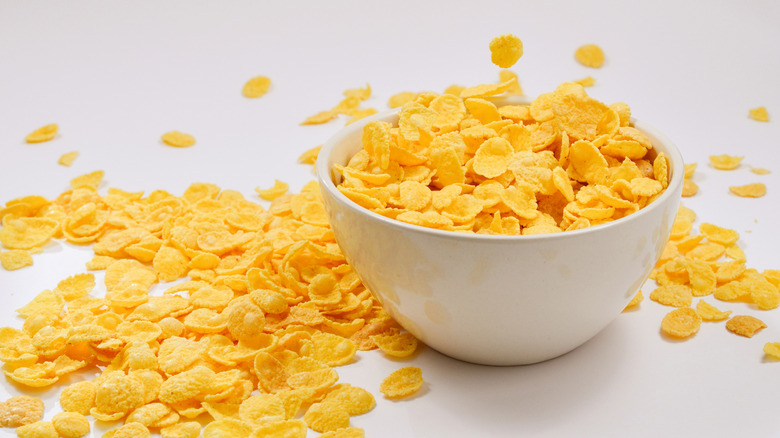
What do you expect when you open a box of Corn Flakes? Call us old-fashioned, but we expect ... Corn Flakes. It doesn't seem like too much to ask for, but back in 2004, a production line error resulted in thousands of boxes containing another Kellogg's cereal entirely. The cereal producer had to recall approximately 6,300 boxes of Corn Flakes after it was discovered that they were being packed with Special K instead. This equated to roughly 85,000 pounds of mislabeled product (per Food Industry Counsel) that had to be tracked down, which had been shipped to stores in the Midwestern and Western states.
Although this error might sound as though it was at worst a mildly irritating inconvenience for customers, the true risk was far more profound. Unlike Corn Flakes, Special K contains wheat and milk, both of which are allergens — and both of which were therefore undeclared on the boxes it was packed into. This recall, therefore, represented a serious risk for people who had milk or gluten allergies or sensitivities. Thankfully, at the time of recall, nobody had reported becoming ill from consuming the cereal, but it was a very close call for the company.
9. Contaminated corn was part of a massive recall from McCain Foods
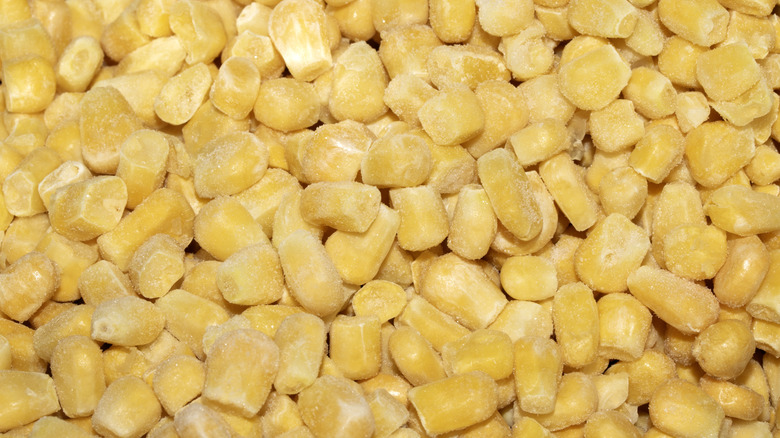
Because of the extraordinary size of some food companies, when recalls hit them, they can affect dozens, if not hundreds, of brands and retailers. This was the case back in 2018, when superproducer McCain Foods had to issue an enormous recall of its vegetable products, which included a significant amount of corn. Following several recalls issued by multiple supermarkets — including Walmart, Trader Joe's, and 7-Eleven – of its corn and vegetable products, McCain Foods was named as the supplier behind all of them. These products were found to be potentially contaminated with both Listeria and Salmonella bacteria, following an internal product audit conducted by McCain (via Food Industry Counsel).
The scale of the subsequent recall effort was staggering. Thousands upon thousands of cases of fire-roasted corn and corn blends, sold in huge cans and produced in multiple lots, had to be tracked down. Not only that, but mushrooms, onions, peppers, tomatoes, zucchini, jalapeños, pineapple, and more besides had to be tracked down, too. This ended up being 2018's biggest food recall event, and a couple of months later, the California plant that produced the contaminated vegetables ended up shutting down.
10. In 2017, multiple supermarkets recalled frozen corn
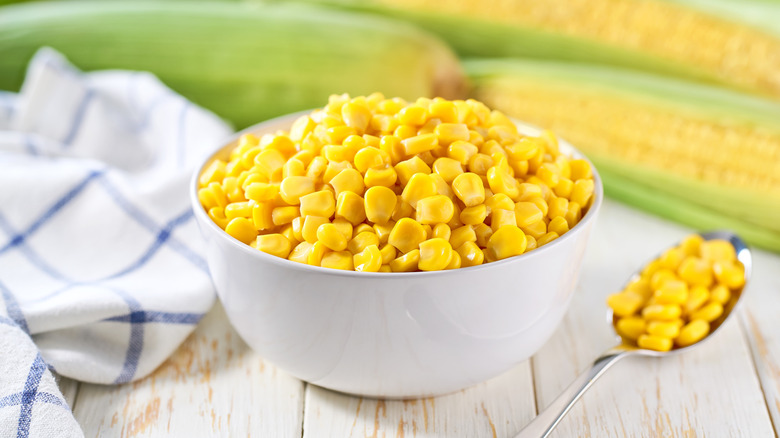
When one company owns and operates multiple supermarket chains, it can also often use the same suppliers. But when things go awry with the food they're producing and selling, things can go awry in a big way. This was evidenced back in 2017, when Giant Food Stores, Martin's Food Markets, and Stop & Shop supermarkets (all owned by Ahold Delhaize) announced that they were recalling their frozen corn products (per Food Safety News). The three chains issued simultaneous recall notices for their Frozen Whole Kernel Sweet Corn, sold in 16-ounce bags, as the products were thought to potentially be contaminated with Listeria monocytogenes bacteria.
While the stores hadn't received any reports of illnesses at the time of recall, that doesn't mean that this wasn't still a very serious event — especially given that Listeriosis can be fatal to individuals who have compromised immunity. The recall was further complicated, and made larger, by the fact that these bags of sweetcorn were sold with a best-by date of October 2019, as opposed to one specific date within the month. As such, employees and customers alike had to reckon with sweetcorn made throughout the entire best-by period, increasing the amount of potentially contaminated product.
11. Canned Del Monte corn shipped to 25 states was recalled in 2018
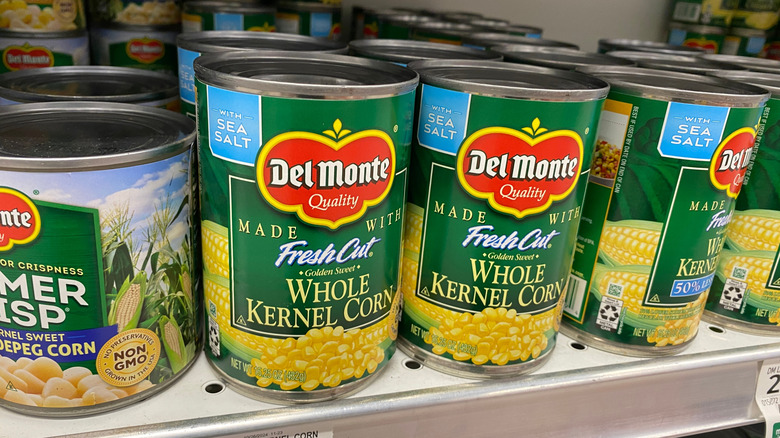
Canned food is often safe to eat immediately after being opened, but that's only if it's been processed correctly. If not, it can pose huge problems for everyone. Both customers and Del Monte Foods were reminded of this in 2018, when the latter had to issue a recall of canned corn shipped to half of the states in the U.S. — as well as internationally. Per the FDA, more than 64,000 cases of its Fiesta Corn were found to have potentially been under-processed and not adequately sterilized, a key factor in the development of Clostridium botulinum, which can cause botulism poisoning.
Naturally, Del Monte had to leap into action when it discovered the issue, but it wasn't helped by the fact that its Fiesta Corn had been sent far and wide. The cans had been shipped to multiple Central American, South American, and Caribbean countries, including Barbados, El Salvador, and Suriname. Ultimately, the recall passed without major incident, with nobody reporting any illnesses due to eating the canned corn. Its scale, though, served to show once again how international our food world is these days.
12. Several Utz corn chip products were recalled in 2018 due to undeclared milk
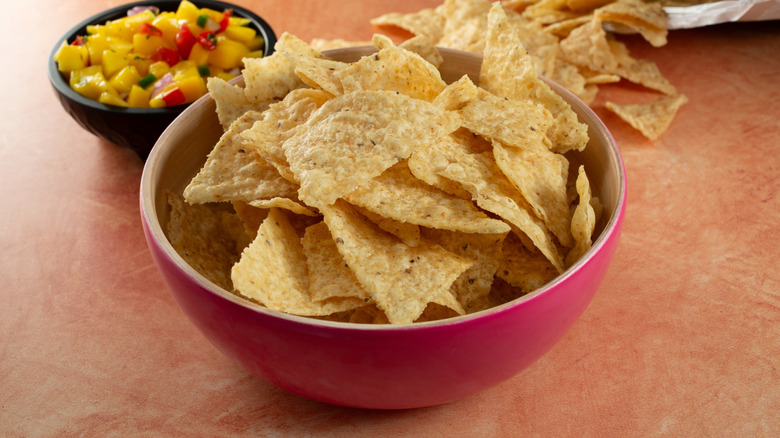
You can hardly call store-bought corn tortilla chips controversial — but back in 2018, they became slightly riskier than you might think. That was down to the presence of a potential milk allergen, which shouldn't have been there. Utz Quality Foods found itself in hot water in May of that year, when several of its tortilla chip brands were found to possibly have contained the allergen, prompting a large recall. Weis, Golden Flake, Good Health, and Utz-brand tortilla chips were all involved in the recall, according to the FDA.
This event was made troublesome not only by the fact that any milk allergen in the chips could have caused a reaction, but also by the fact that they had been shipped far and wide. The corn tortilla chips had been sold in 32 different states, from New York to Arizona, and plenty in between. What's more, the chips had been sold in several different-sized bags, and they had multiple sell-by dates spanning several weeks. Utz didn't specify how the potential allergen might have made its way into the chips, but the good news is that no illnesses were linked to the recall.