

This Fruit Tree Deserves A Spot In Your Small Backyard Garden
You don't need a passport to an exotic land to bring island energy to your garden. Adding some banana trees is all it takes to add tropical allure to your space, transforming your backyard into a mini oasis. This tree doesn't just produce delicious fruit, but also sprouts lush, oversized, bright green leaves, and produces vibrant flowers in colors that range from red-orange to deep purple.
Caring for these plants is fairly simple, but they need full, blazing sun, consistent moisture, space, and a lot of patience to thrive. The sun-loving banana plant (genus Musa spp) is fast-growing, doesn't do well with neglect or frost, and drinks a lot of water. So, if you prefer low-maintenance plants, it's probably best to opt for one of these. Unlike apple, peach, and many other fruit trees, banana trees require you to plant them in late spring to early summer for optimal growth, unless you live in warmer, subtropical climates. Climate is everything for these plants, so consider your climate zone, and if your area dips below freezing occasionally, you'll need a plan. They also take quite a while to bear fruit and require a lot of maintenance.
Despite it being a bit of a diva of a plant, if you trust the process, you'll be peeling back your way to tropical bliss in no time. And once it bears fruit, you can start using those fresh bananas in everything from ice cream to banana bread.
Planting a banana tree
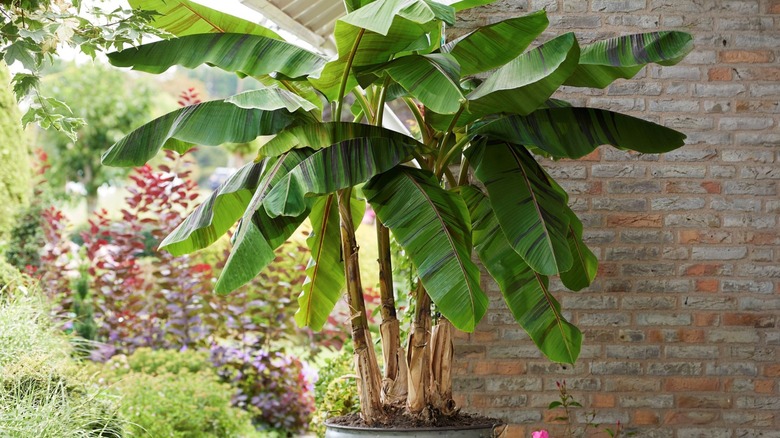
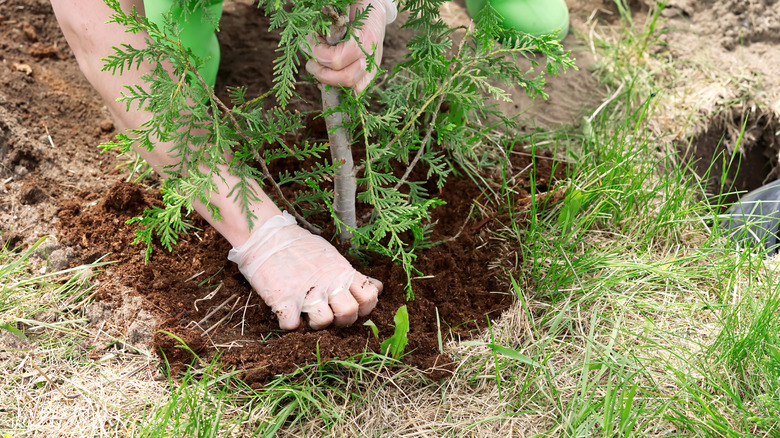
The first thing to know is that this fruit tree is not a tree at all but an herbaceous plant, the largest perennial in the world, in fact. You won't see a trunk, but rather thick leaves tightly rolled up over one another. You can get a starter plant at Home Depot or Lowe's. Before digging into the dirt, ensure you have the right banana plant for your climate. There are various types, but the Dwarf varieties are the most common for outdoor areas, the easiest to care for, and they produce edible fruit. Wait three to four weeks after the last frost in your area before planting outside.
Dwarf banana plants can grow up to 10 feet in the ground, but will stay smaller in pots, so pick a spot in your garden or on your patio with plenty of space. In your garden, plant them 8 to 10 feet apart. If you're growing in a planter, you can start with a 1-gallon pot, but it will need to be moved to a 15 to 25-gallon container.
Banana plants need six to eight hours of direct sunlight, so ensure you ensure you plant somewhere that's super bright, warm, and sheltered from harsh winds. To produce its lush leaves, banana trees require rich, well-draining soil, and organic matter. Mix in compost before planting, so it has an abundance of nutrients ready to go. Consider also adding a mix of perlite or sand to improve drainage and prevent waterlogging.
Caring for your plant
Banana plants add a dramatic flair to gardens, but, like caring for most fruit trees, there are some things to remember. Get ready to water these like crazy, because water evaporates easily from their leaves. Water several times a week during warmer temperatures, but don't saturate it, as that can cause root rot. Ensure your planter has proper drainage with large drainage holes.
Use a slow-release fertilizer every four to six weeks to ensure its health and to encourage leaf production. Also, add a thick layer of mulch around the base to retain moisture and keep weeds at bay. Do this regularly during the growing season to help them thrive.
Cut back on watering if your leaves are looking yellow or pale. If the leaves are curling or crispy, you need to water more. Since banana roots expand quickly, repot plants every one to two years in spring for maximum growth.
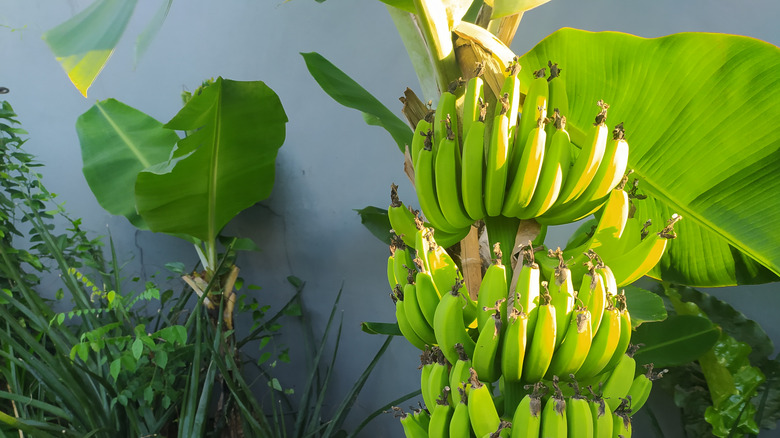
The first flowers appear after about six months, but it can take 9 to 18 months to produce fruit. The "mother plant" produces baby plants at its base, called "pups" or "suckers." Suckers can be pruned and replanted or left to replace the original plant. Once fruit appears, harvest just before the bananas are ripe.
While Dwarf banana varieties don't fold as easily to the wind, you still need to protect them. You can use two bamboo poles to support its stems or plant it near tall hedges. During the winter, bring your potted plant indoors. These plants can attract pests, such as spider mites and mealy bugs. It can also be prone to fungal diseases and bacterial wilt. Insecticidal soap or horticultural oil can help control these issues.