

3 Foods To Avoid From Costco's Meat Department
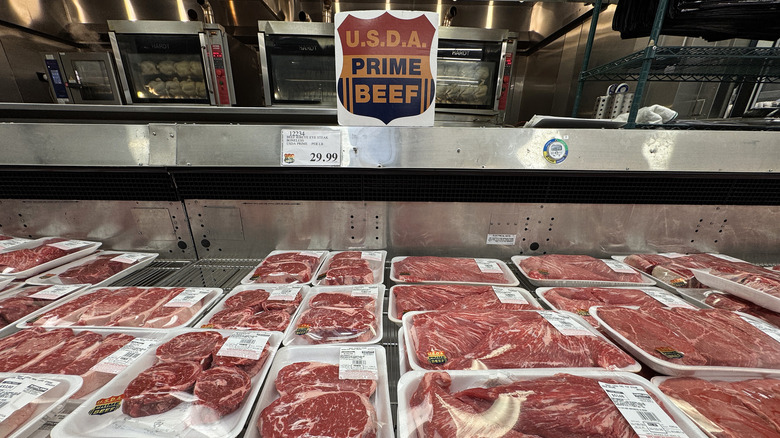
Costco is a go-to grocery store for millions of Americans nationwide, and while there are plenty of good deals on good food, not everything always matches up to the store's positive reputation. This is even true in the store's meat departments. Even though meat prices are generally high, many say these three types of meat aren't even worth Costco's generally good prices: Raw chicken breasts, steaks, and farmed Atlantic salmon.
Many of the most common complaints revolve around meat quality. As important as food texture is when eating, too often do some of these foods taste dry and tough, an especially disappointing realization when you bought bad meat in bulk. And although Costco's generous return process is a breeze, it's better if the food you bought is good in the first place.
The cause of any of these issues can be varied, and it may not always be Costco's fault. A business of this size doesn't get its meat from one location; suppliers vary by region, and they might each have their own issues at any time. Other times, faulty packaging is a particular headache. But regardless of where blame might land, you may want to buy these foods elsewhere.
Chicken breasts
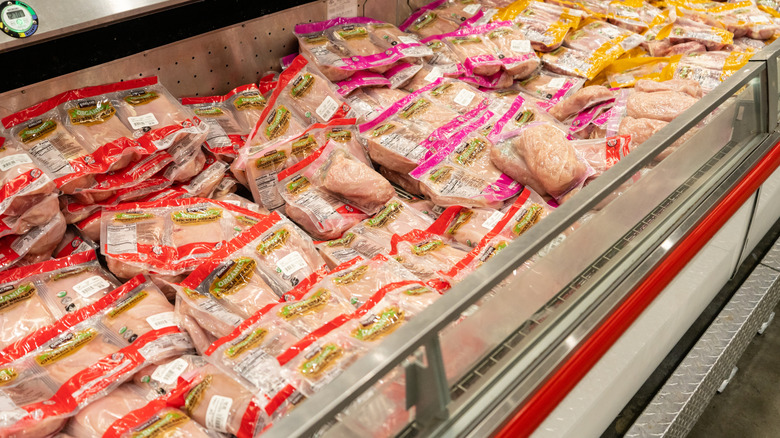
Not all Costco chicken is subpar. Of the Costco chicken products worth buying or avoiding, the rotisserie chicken remains a classic, and the Kirkland Signature raw chicken breasts remain an issue. It's worth noting that some customers have had good experiences, but many more run into the same issues that have plagued Costco chicken breasts for years.
The meat often takes too long to cook and comes out inappropriately tough and chewy, meat which customers often describe as woody in texture. This is an industry-wide issue related to using larger, faster-growing chickens, but it seems especially common at Costco. Some have said up to half a bag of Kirkland chicken breasts suffered from this disappointing texture, an issue that's plagued this product for years.
In this case, it's not just the product, though. People have also long complained about the breasts' leaky packaging making a mess of their hands, cars, or refrigerators. Thankfully, this is one complaint Costco has finally addressed, and the packaging is being replaced with a more leak-resistant design. Hopefully, this complaint will soon be resolved for good, but that unpleasant woodiness remains an issue.
Steaks
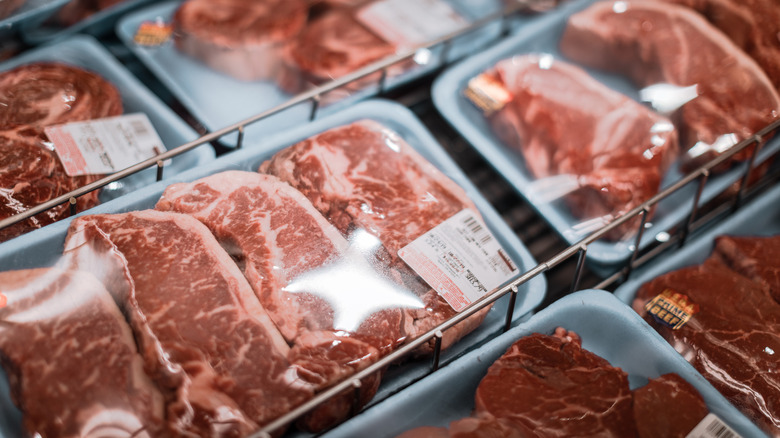
Steaks are a popular protein in America, and Costco can have some tempting deals, but some customers say they've seen too much low-quality meat too often. "They were so dry and had very little flavor. I haven't purchased meat from Costco since," said one Reddit user after disappointing New York strips. Another said that they briefly check the steaks and keep walking because of an overall lack of marbling.
It's possible that many of these are supplier issues, but the quality issues of one sub-par steak option are on Costco. Filet mignon has been a particular problem at Costco, with shoppers noticing that butchers don't trim the chain (a hard strip of fat) and silverskin (a tough membrane) off of what's supposed to be an ultra-tender steak. Sinew and other connective tissue may also be left behind.
If you don't cut it off yourself — which some customers may not know to do — your high-end steak will be a chewy disappointment. But according to an employee, this is part of why Costco's filets are relatively affordable: Cutting these corners on trimming lowers labor costs and, in turn, the steaks' price. However, it's still odd that Costco essentially expects the customer to finish butchering their store-bought filet mignon.
Farmed Atlantic salmon
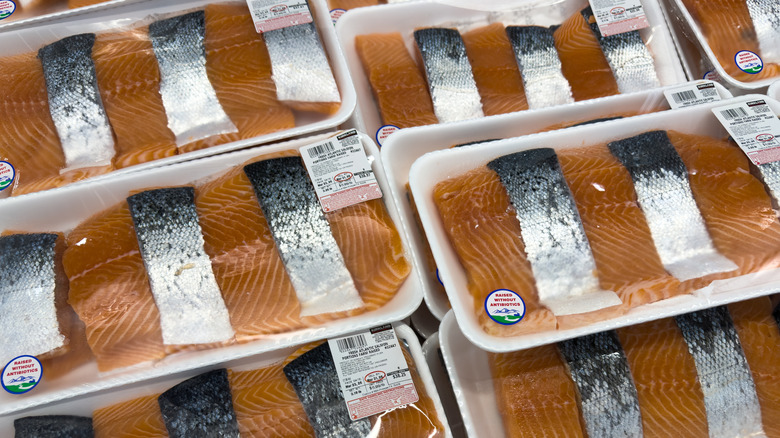
People say that Costco can be a good place to get salmon, but it depends on the type one gets. For instance, the Kirkland Signature wild-caught sockeye salmon is a hit and has been some customers' go-to for years. But Costco customers turned their backs last year on Kirkland's farmed Atlantic salmon.
Unfrozen filets may seem more appealing than frozen, but customers have complained of mushy textures and unpleasant odors, two things one never wants to see in raw fish. A Costco employee speculated that such examples have likely been available for a few days, with temperature changes from the sales floor to an overnight cooler causing these issues.
Customers have reported an even more upsetting issue, though: Parasites embedded in the salmon meat, even observed wriggling around inside the packaging. Though it sounds horrifying, it isn't actually unusual for salmon to have unpleasant additions like these. Nor is it especially harmful; either freezing the salmon or properly cooking it past 145 degrees Fahrenheit will kill any parasite that might be living on or in the meat. But if it smells off, as it often does, don't chance it.