

10 Common Mistakes To Avoid When Making Brownies From Scratch
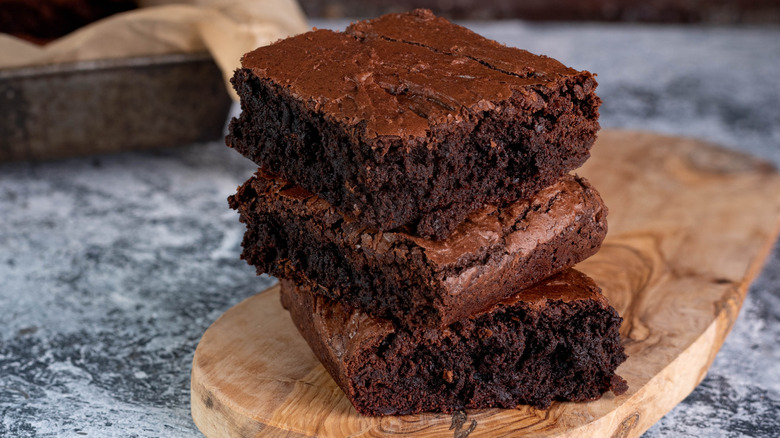
Let's face it: Brownies are a top-tier dessert. They are chocolaty, gooey, and though it may seem like I'm exaggerating to make a point, they actually have the power to make a bad day better. So, getting a brownie fix once in a while is surely a good idea. Many of you probably stick to getting your fix from your favorite bakery, while some of you probably prefer making them from scratch as there's nothing like fresh, homemade brownies. But has it ever happened that even though you feel like you've done everything right, your homemade brownies still don't turn out the way you would've hoped? This is a very common problem that novice home bakers face, and it happens because they inadvertently make some mistakes while preparing the dessert. That said, there's no reason to worry anymore, as I'm here to help you make perfect brownies effortlessly.
As a pastry chef with over five years of experience, I've made my fair share of brownies. I used to make plenty of mistakes in my early days, too. But over the years, I eventually understood what I was doing wrong and what I needed to avoid. And now, I'm here to share all those mistakes that you're likely making when preparing brownies from scratch so that you can avoid them as well. I will also suggest what you should do instead, as that'll help you make a perfect batch every single time.
1. Not measuring the ingredients properly
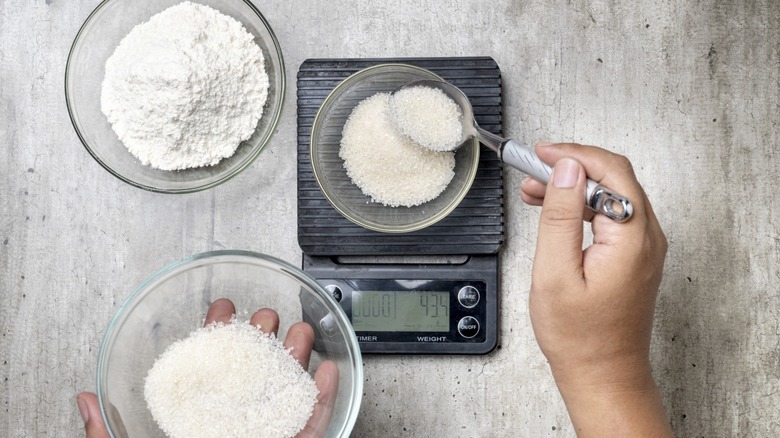
One of the most common blunders that many beginners tend to make with their brownies is not measuring the ingredients properly, and that eventually alters their texture. For instance, if you add too much flour, your brownies will turn out extremely dry. Similarly, if you add an excess of the liquid ingredients, the brownies will end up overly wet and mushy. On top of that, not measuring sugar and butter accurately can be a mistake, because a proper sugar ratio is key for chewy brownies and so is adding the right amount of fat. Considering all of this, it's ideal to stick to the quantities mentioned in the recipe as closely as you can rather than eyeballing them, so that you can get flawless fudgy brownies.
There are certain things to keep in mind when measuring ingredients. If you can, try going for a recipe where the measurements are given in pounds and ounces, as that way, you can measure everything on a kitchen scale and keep the quantities precise. If you have one of those recipes where the ingredients are measured in cups rather than by weight, you'll need to make sure you fill the measuring cup only to the rim. If you do overfill it mistakenly, scrape off the excess of each ingredient from the top, especially dry ones like flour and cocoa powder. This way, you won't end up adding more to the recipe than what's needed.
2. Not beating the eggs and sugar properly
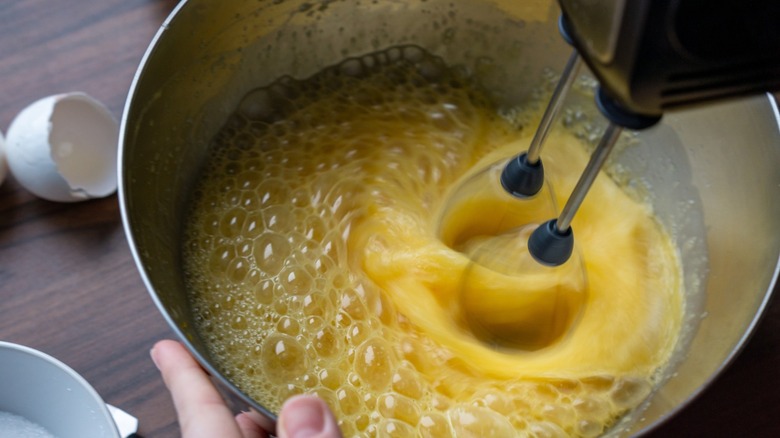
Did you know that the secret to making brownies with perfectly crackly tops is beating the eggs and sugar correctly? With that in mind, if you've so far just been beating these ingredients until they are combined when making brownies, you've been making a mistake. That's one of the reasons your brownies don't have those shiny, crackly tops. But before I tell you how long you need to beat these ingredients, let me first explain how this simple step leads to brownies with a glossy and crackly finish, and a rich texture.
When you beat the sugar with eggs, you end up aerating the batter slightly, and this process also dissolves the sugar. It's the dissolved sugar that helps form those crackly tops on your brownies. On top of that, beating these two ingredients until most of the sugar dissolves will also give you a batter that's smoother and lighter, resulting in brownies with a better texture.
It's also important to not beat the eggs and sugar for too long, as that could aerate the batter excessively and result in brownies with a cakey texture. Just beat them for about five minutes using a whisk (or a minute or two if you're using a hand mixer or a stand mixer), until the mixture looks glossy, is slightly thicker, and doesn't feel gritty when you rub it between your fingers.
3. Overmixing the batter after adding the dry ingredients
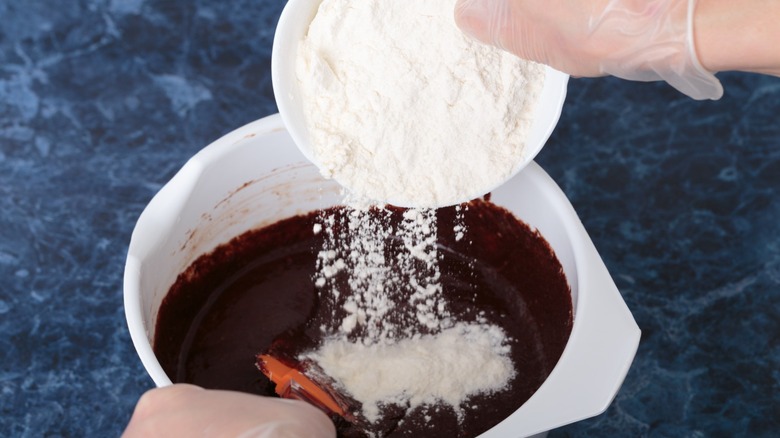
While overmixing the batter after adding dry ingredients works well for certain baking recipes, it surely doesn't for brownies. And so, if you've been mixing your batter a bit too much after adding dry ingredients like flour and cocoa powder to it, you should stop doing that, as it negatively impacts the texture of the brownies.
This happens because flour starts developing excessive gluten when you overmix it with the rest of the ingredients. Too much gluten can turn the brownies firm and tough instead of soft and fudgy. In fact, even if you mix the batter vigorously with a whisk after tossing in the dry ingredients, the flour can start developing gluten and ruin the texture of your brownies.
Taking these consequences into account, you should ideally fold ingredients like flour and cocoa powder gently into the batter with a silicone spatula — this will greatly reduce the chances of overmixing. Also keep in mind that while overmixing can result in brownies with an undesirable texture, so can undermixing. If you undermix the batter after adding the dry ingredients, your brownies will most likely have little lumps of these ingredients in them. Getting mouthfuls of raw flour and cocoa powder is surely a lot worse than eating firm and tough brownies. So, make sure you fold the dry ingredients into the batter until they are well combined and you don't see any streaks or lumps.
4. Using a large, flat pan
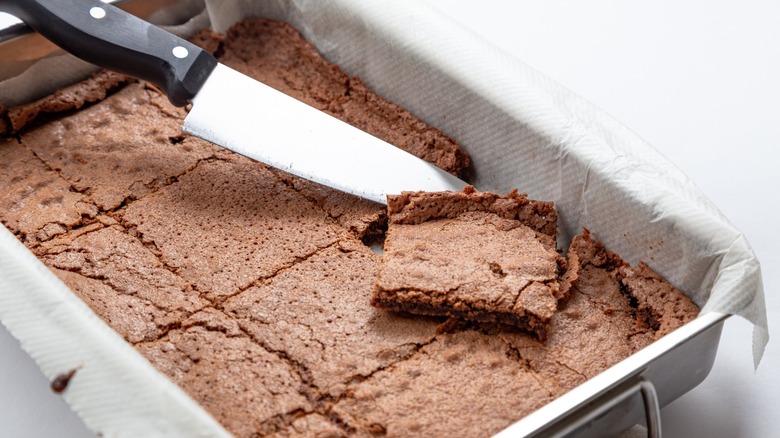
You might think that you can use any sort of pan to bake your brownies, and I get it, as I believed the same when I was a novice chef. But I eventually realized that the sort of pan you use can greatly affect the texture of brownies, too. Usually, smaller and deeper pans help retain their fudgy texture, whereas large, flat pans turn the brownies hard, and hence, I'd strongly recommend avoiding them.
The logic behind this is pretty simple: Large, flat pans heat up much faster in the oven. Considering that, if you have an extremely thin layer of brownie batter in one of these pans, it's obvious that it will bake a lot faster than it should and eventually turn hard, or sometimes even burn by the time you take it out of the oven. If you're in a fix and have nothing but one of these pans to bake your brownies, I'd suggest lowering your oven's temperature and also checking the brownies at least 10 minutes before you're supposed to take them out, just to be safe. But if you can, try buying a small and deep pan as it can be handy when you're making smaller batches of brownies — and use the flat one only when you're making a large batch.
Lastly, if you're someone who actually wants brownies with nothing but crispy edges, use a muffin tin instead of a large and flat pan, as it will keep the center fudgy.
5. Skipping lining your pan with parchment paper
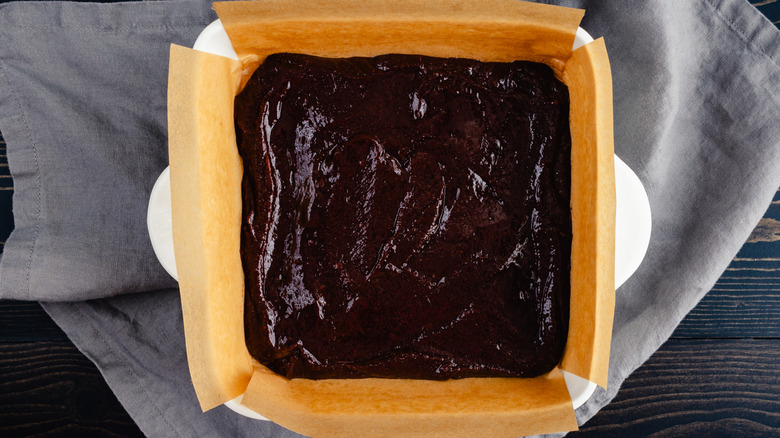
Many novice bakers don't line their pan with parchment paper before pouring the brownie batter into it. But let me tell you that this is indeed a big blunder. That's because even though it may seem like greasing the pan is enough for brownies, it actually isn't. And so, not lining the pan with parchment paper is bound to create a lot of issues.
If you pour brownie batter directly into a greased pan, it's very likely that the brownies will stick to it because of their high fat and sugar content. Additionally, the brownie slab might also break apart when you try to remove it from the pan. It's also worth noting that if you're using a metal pan, it's possible that along with sticking to the pan, the edges of the brownie slab may also bake faster and turn overly crispy, as they'll be in direct contact with the metal.
Lastly, cleaning that pan once you manage to take all those sticky brownie bits out will be a whole other task. Why put yourself through all this trouble when you can just line your pan with parchment paper? Just be sure to grease the pan properly and then lay the parchment paper on it. Not doing so is a common parchment paper mistake many make, but you should avoid it, as otherwise, it won't stay in place when you pour the batter into the pan.
6. Overbaking or underbaking them
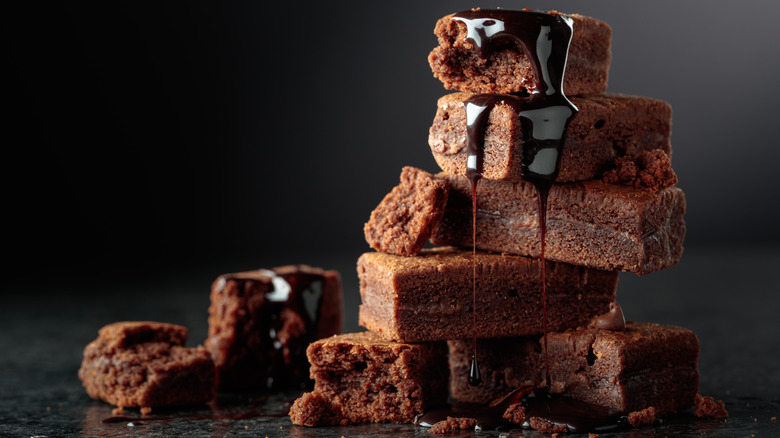
Since brownies are an easy, fuss-free dessert, many home bakers don't keep an eye on them while they are baking. Though this may not seem like a mistake, it actually is one, as not checking their doneness at the right time can result in brownies that are over- or underbaked.
As you'd probably know, overbaking will make the brownies crispy and hard instead of soft and fudgy. Underbaking, on the other hand, may seem like a good idea, as you'd believe that it would keep the brownies extra soft and fudgy. That is partly true, but underbaking them more than necessary isn't a good idea, as you'll essentially end up eating partly raw eggs and flour. Keeping these consequences in mind, I'd suggest checking if your brownies are done at least five minutes before you're supposed to take them out of the oven to prevent them from overbaking. You can insert a toothpick or a knife in the center, and if it comes out mostly clean (with just a few crumbs stuck to it), don't bake the brownies any further.
To prevent them from being underbaked, try not to take them out of the oven too soon. If the batter still sticks to the knife when you insert it in the center, bake the brownies for a little longer, ideally until the knife just has some moist crumbs stuck to it, as that's a sign they are ready.
7. Not rotating the pan halfway through baking
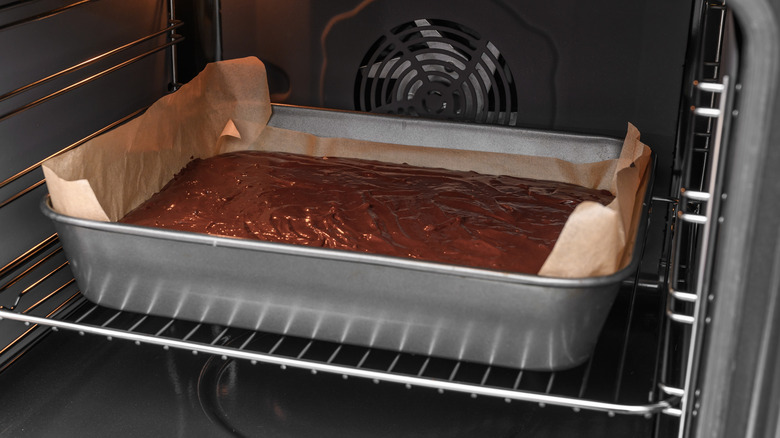
You've probably had instances where your brownies turned out unevenly baked despite getting the batter, oven temperature, and everything else right. Well, this can happen if you don't rotate the pan halfway through baking. While this little step may seem unnecessary, it's actually very crucial to get an evenly baked slab of brownies.
You might wonder why this step helps with getting perfectly baked brownies, as it's easy to believe that heat is distributed evenly everywhere inside the oven. That is sort of true, but what's also true is that most ovens have a hot spot, and that's usually towards the back. So, that part gets a lot hotter than the rest of the oven, and hence, the side of the brownies that's near the hot spot will bake faster, and in some cases, also overbake slightly compared to the other side. This is why rotating the pan is important to get evenly baked brownies every single time. There's one thing I'd suggest keeping in mind when rotating the pan, and that is doing it as quickly as you possibly can. If you take too long to rotate the pan, the oven's temperature will drop rapidly, and that too will eventually affect the way your brownies bake, as they'll most likely take longer to bake fully.
8. Cutting the slab while it's still hot
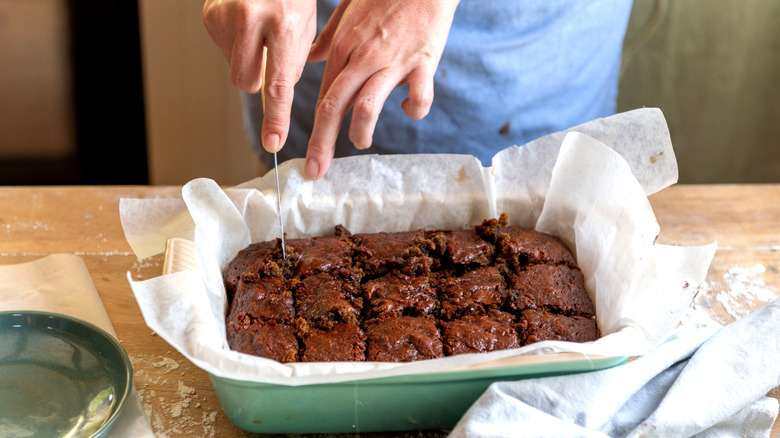
I get it, no one can resist digging into hot brownies once they are out of the oven. The smell is so inviting that you'd want to cut the slab up and eat the brownies right away. But you should avoid that, because cutting the slab while it's hot is a big mistake.
There are a lot of things that can go south if you cut the brownie slab right after you've taken it out of the oven. First, brownies usually keep cooking internally from residual heat even after you take them out of the oven, which is what essentially helps them set. If you cut the slab before it's fully set, it's obvious that the brownies won't be able to hold their shape. Besides that, they'll also keep sticking to the knife when you cut them, and while cleaning the knife, you'll end up wasting those stuck bits. Also, let's not forget that the texture of the brownies won't be the way it's supposed to be, as it will be overly soft and crumbly rather than soft and fudgy.
Lastly, the crackly tops may collapse even if you've beaten the eggs and sugar properly. Given that there's a lot that can go wrong, it's better to wait until the brownie slab cools before you cut it up.
9. Using the wrong knife and not wiping it periodically
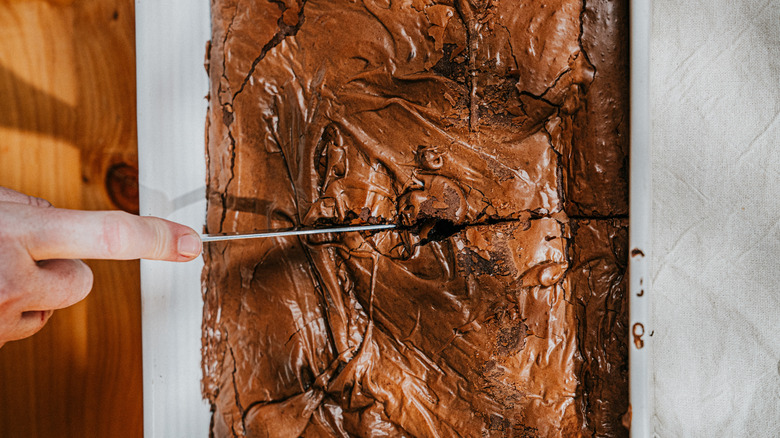
Even if you wait to cut the brownie slab until it cools down, you still won't get clean pieces if you use the wrong knife to cut it or don't wipe the knife occasionally. And so, it's crucial to use the right knife and also wipe it before every cut to ensure you get clean, even slices.
I'm sure you're wondering: What exactly do I mean by the right knife? Well, for starters, it has to be sharp. A dull knife is the worst thing you can use because you'll need to apply a lot of pressure when cutting the slab. As you apply pressure, it's likely that you'll end up with uneven cuts — even worse, you might mistakenly press down on the brownie slab with your hand. On the other hand, a sharp knife will easily glide through the slab and give you proper, clean-cut pieces of brownies without extra effort.
On a similar note, it's equally important to wipe the knife between each cut, or at least a couple of cuts, even when you're using a sharp knife. The reason is simply that brownies have a really gooey and fudgy interior, and so, some crumbs will stick to the knife. If you don't wipe those crumbs off, you won't get clean cuts, so I'd recommend keeping a few paper towels handy while cutting up the slab.
10. Using chocolate chips
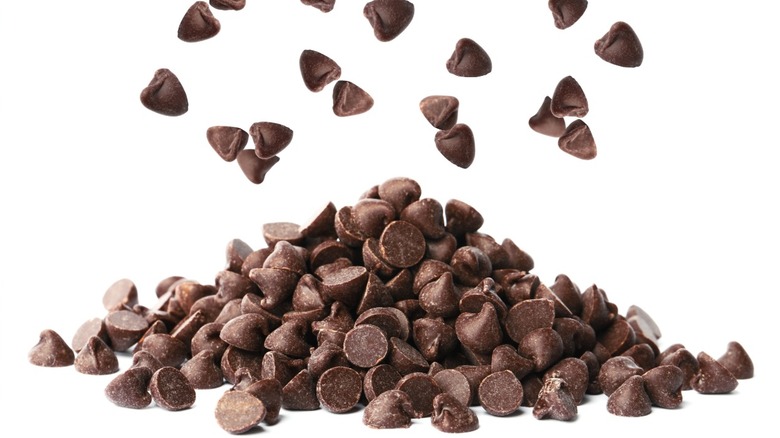
There could be times when you're baking brownies from scratch and you run out of baking chocolate bars. When you're in a situation like this, you'd probably consider using chocolate chips, believing they'd melt the same way as baking chocolate. But swapping chocolate bars for chocolate chips isn't the best idea – and even when you're in a pinch, I'd suggest not adding chocolate chips to your brownies.
This is because chocolate chips are usually packed with stabilizers so that they can hold their shape. That's actually why they don't melt properly even when you bake them at high temperatures (you've probably noticed this when you make chocolate chip cookies). Considering that, if you add them to your brownies, you'll be left with bits of chocolate in them rather than those gooey melted chocolate pockets that you were hoping for.
Besides this obvious issue, there are many other mishaps that can happen to your brownies when you use chocolate chips instead of baking chocolate. One of them is that these chips could make your brownies taste overly sweet, because along with stabilizers, they are usually packed with added sugar. On top of that, melted chocolate adds to the overall fudgy texture of brownies and makes the entire eating experience a lot better, and chocolate chips simply can't do that because they won't melt well. And so, it's best to grab a bar of baking chocolate when you're making brownies from scratch rather than relying on chocolate chips.