

10 Bartender's Rules For Making The Perfect Margarita
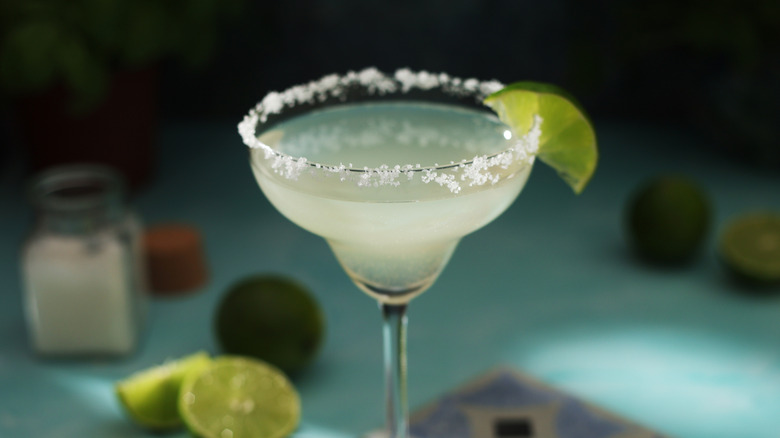
Most people think they can make a classic margarita well. I get why that's the case. The drink, which is inarguably one of the most popular in the United States, isn't exactly complicated. In its pure form, it contains just three ingredients, all of which are easy to obtain, and unless you do something drastically left-field with your recipe, you're likely to end up with a good result. However, as a bartender who's spent countless hours making margaritas of all kinds, I know that there's a very big difference between making a good one and making an excellent one. The key to the latter is all in your attention to detail.
Because margaritas are relatively simple, you can't cut corners with them, and both your technique and your ingredients need to be on point. You need to think carefully about what tequila you're using, and choose it carefully. You need to consider the difference between triple sec and orange liqueur, and how either might affect your drink. And you also need to know how to shake your drink properly (and why you shouldn't stir it), when to squeeze your limes, and why you should never use a premade mix. Luckily, I'm here to guide you through all of that. Ready to make the best margarita of your life? Let's go.
Measure first, add balance later
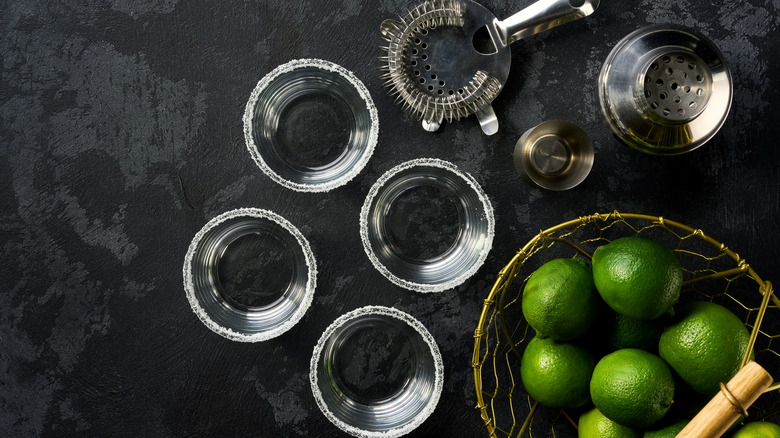
If you're ever sat down and cross-referenced margarita recipes (which I have, given that I'm constantly in pursuit of the perfect one), you'll see how much they can vary. Some ask for 50 milliliters of tequila, while others say two ounces or 60 milliliters. Others specify varying quantities of orange liqueur or lime juice, and others still say you should add syrup, agave nectar, or soda water, which takes you into different territory entirely. All of these nuances might not seem that significant, but even the slightest change in one of your components' quantities can have a big impact on your drink, which your palate may not agree with.
The best thing to do when making a margarita is to trust your instinct. I'd always recommend starting with a standard recipe of two ounces of tequila to one ounce each of triple sec and fresh lime juice (which is an expert-approved margarita ratio, in case you were wondering). Once you've mixed these three, you should then taste your drink and adjust accordingly. Margaritas should taste bright, fresh, zesty, and slightly bitter, and because of the differences between brands and fruits, sometimes these qualities can feel a little unbalanced, and you'll need more or less of one thing. Listen to your gut and your palate.
Use the best-quality tequila you can afford
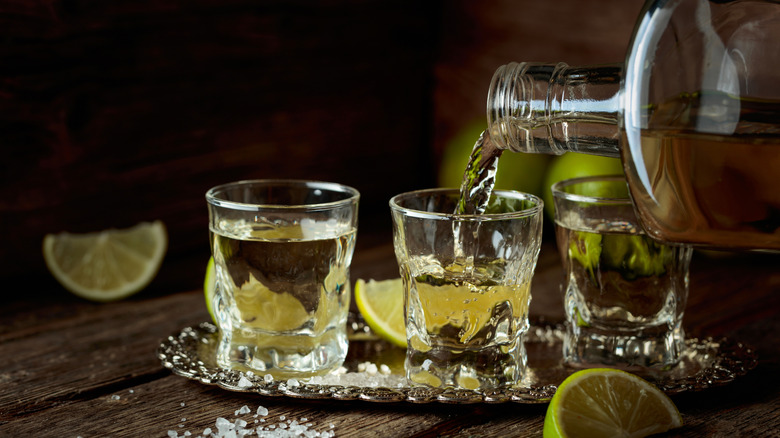
This one might sound like a no-brainer, but it's also something a lot of people forget. Agave is (and should be) the base note in a margarita, and you can't escape that. It needs to be balanced, smooth, grassy, and bitter, without being pungent — and all of that comes from the tequila itself. However, cheap tequila doesn't have that sense of balance, and you can never achieve it by adding additional ingredients or trying to round out your drink elsewhere. If you pick a low-quality tequila, your margarita will never taste amazing. That said, you don't have to spend hundreds of dollars on tequila for your margarita to get a good result.
Brands like Tapatio and Espolòn make excellent tequilas that won't blow your budget, but which will still imbue your drink with the agave note you need (and the necessary booziness that gives a margarita its punch). You also shouldn't be tempted to go cheap if you're using blanco tequila. It can be tempting to feel like you can get away with spending less, because the unaged spirit has a cleaner flavor, but if you go cheap, all it will taste like is alcohol.
Consider how strong your orange liqueur is
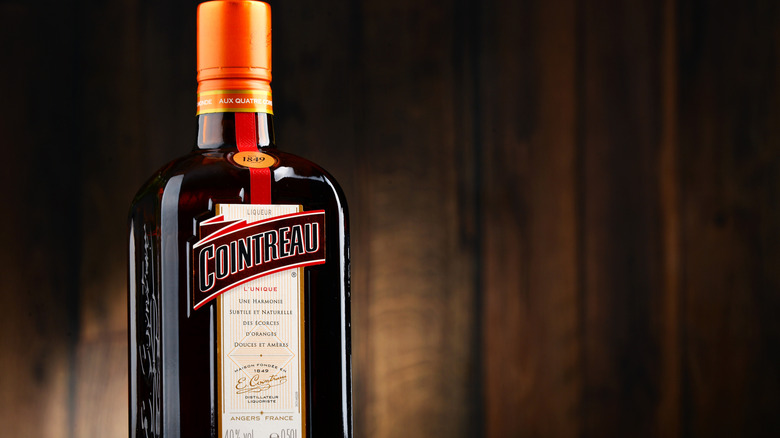
The world of orange liqueur is more varied than you might think. Sure, the likes of Cointreau, Grand Marnier, and Curaçao might be the big players, but beyond that, there are dozens, if not hundreds, of orange-flavored alcohols that people merrily add into margaritas every day. The problem is that not only do these alcohols vary significantly in flavor, but also in potency. Orange liqueur can be anywhere from 20% to 40% ABV, and the stronger yours is, the more punchy your margarita will be.
If you like a margarita that's a little subtler and smoother, you might want to opt for a lower-strength orange liqueur. Alternatively, if you like your drink to be full-bodied and uninhibited, go big. I personally like the power of a margarita made with triple sec, and specifically Cointreau, which has a rich citrus note backed up with a robust alcohol content. However, it can be too overwhelming and boozy for some tastes. What you shouldn't do, though, is try to add less of a strong liqueur to cut down on the alcohol. What you'll really be doing is removing some of its flavor.
There's no substitute for fresh lime
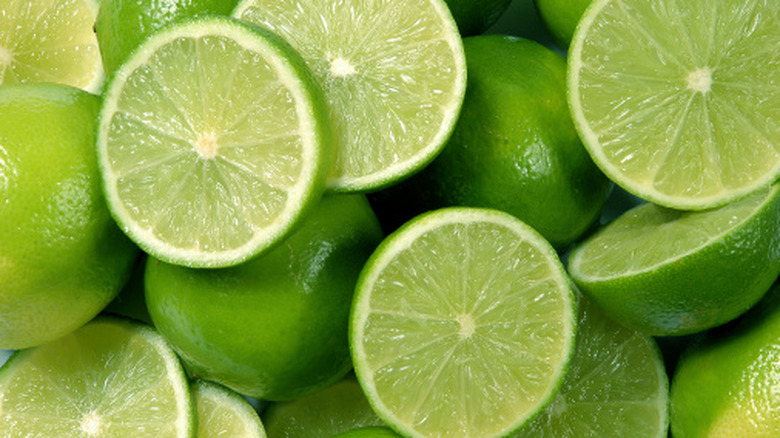
I'll shout this until I'm blue in the face: A good margarita will never, ever, contain bottled lime juice. It's metallic, it's flat, it's lacking in any vigor whatsoever. Lime in a margarita doesn't just add acidity and a floral note — it also acts as an intensifier for the other flavors, and bottled lime doesn't provide any of these qualities. Instead, it will tank your drink before you've taken your first sip. Rather than have this happen, find the best-quality, ripest limes you can find. Then, you should squeeze them well in advance of making your drink.
A lot of people simply squeeze their limes straight into their cocktail shaker, but not only will this give you an inconsistent quantity, but it'll also make your margarita too acidic. Freshly squeezed lime juice can sometimes have too much bite, and squeezing them in advance allows the juice to mellow out and lose some of that sting, giving you more of the florality you need. While some people recommend adding lime zest to your margarita, you really don't need to; this isn't a key lime pie, and it doesn't need that level of perfume.
Never, ever use a premade margarita mix
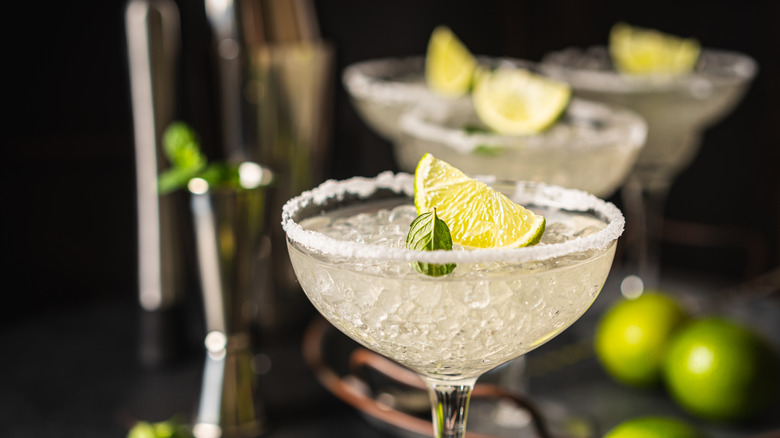
If you ever see a bartender reach for a premade margarita mix, you should run a mile. Nothing good has ever come from one of them. If these bottled formulas aren't full of sugar and flavorings (which they often are), then they'll have none of the zing that the fresh lime juice creates in your drink.
No matter how you square it, premade margarita mixes lead to flat, artificial-tasting margaritas, and they're never worth your time. Plus, if nothing else, they can be very expensive for what you actually get. This can add an unnecessary cost to your drink, for which you'll be rewarded with a flavor that doesn't cut the mustard.
If you're using a premade margarita mix in the hopes that it'll make your margarita sweeter, remember that this drink really shouldn't be that sweet in the first place (unless you're actually looking for a Tommy's margarita, or you're in the market for a more slushy-like frozen option). It should be bold and sharp, with a hint of sugar from the liqueur.
Your garnish matters
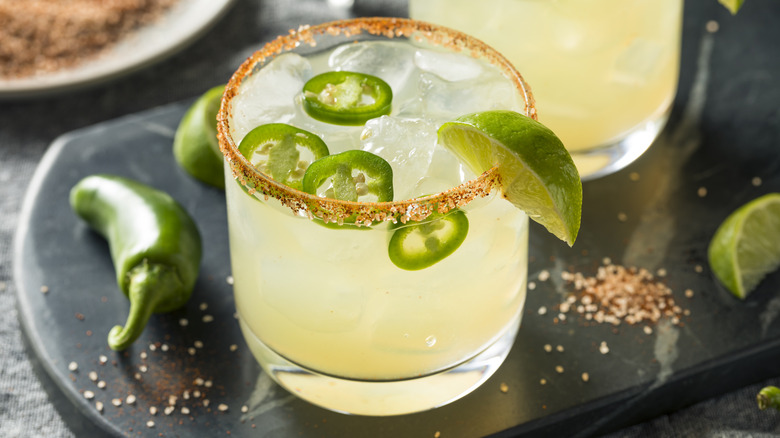
Margaritas always need a garnish. There, I said it. Sadly, though, all too often, they're left off the drink. Garnishes give margaritas (and any other cocktails) an additional bouquet that adds significantly to the overall quality of the drink, and they also imbue it with an extra bit of subtle flavor that creates a further texture underneath the main ingredients. Depending on what you choose, your garnish can provide zestiness, brightness, a tropical note, or spice. It's the cherry on top.
The traditional garnish for a margarita is a wedge of lime, which will amp up your drink without taking it into territory that feels too left-field. Lime wedges add a zesty aroma that lime juice doesn't give, without any of the bitterness that pure zest can provide. However, plenty of other garnishes can also augment your margarita: A dehydrated orange slice amps up the orange liqueur notes and gives it a gentler nose, a pineapple slice can add a tropical twist, and if you want to spice up a margarita, a fresh jalapeño slice can do just that, and add heat to your drink. None of these alternative garnishes is traditional, though, so bear that in mind.
Shake, don't stir
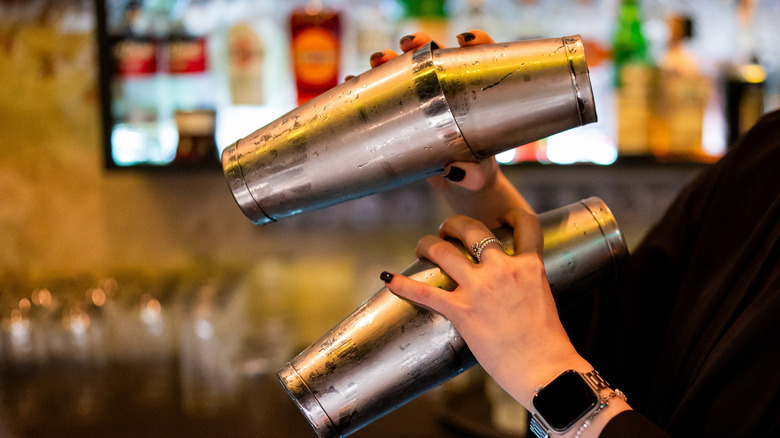
A stirred margarita is, to me, a bit of a tragedy. The flavor difference between a shaken and a stirred margarita is vast, and opting for the latter will leave you with a flat drink. Shaking adds aeration, which lightens your margarita and gives it a zestier mouthfeel (which is exactly what you want). It also softens the alcohol by diluting it quickly, taking some of the bite out of your beverage without leaving it tasteless. Plus, it chills your drink fast.
Stirring, on the other hand, can give a slightly inconsistent result, and it also doesn't chill the margarita nearly as quickly enough. Instead, as you wait for your drink to get cooler, it can take on too much water, while retaining a slightly uninspired mouthfeel. You end up with a margarita that's vaguely tasteless and just not chilly enough.
On the note of achieving a super cold drink, some people opt for using chilled liquors over room-temperature ones. While I understand the logic behind this, in that it gives you a colder, stronger drink, the dilution that shaking the liquor with ice gives you is key to a margarita's success. Otherwise, it can taste way too boozy and harsh.
Chill your glasses
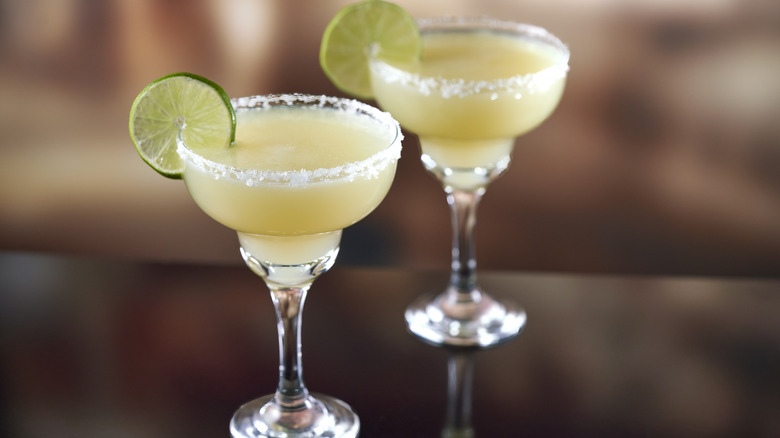
A margarita is a short drink, but it should be sipped. It shouldn't be knocked back, despite its reputation as a party beverage — it has nuance, layers, and a development that gently unfolds with each patient mouthful. I can understand why people tend to drink them quickly, though, as they can quickly warm up to room temperature, and in doing so, lose their appeal. A lot of people try to prevent this by adding ice cubes to their margarita, but this just dilutes it and weakens its flavor.
That's why I always like to chill my margarita glasses before I make my cocktail. Chilling your glasses before you pour your drinks out will help to keep the liquid inside them cool without adding any unnecessary moisture, allowing your drink to retain its bite and punch. You don't need to make them ice cold, though, as this can just be unpleasant. Put them in your fridge an hour before making your drinks, or give them a quick blast in the freezer for 15 to 20 minutes. Oh, and for best results, make sure you're using a bona fide margarita glass, and not just a tumbler. The wide rim of a margarita glass helps to allow its aromas to spread and escape, improving the quality of your drinking experience.
When salting the rim (or adding Tajín), be cautious
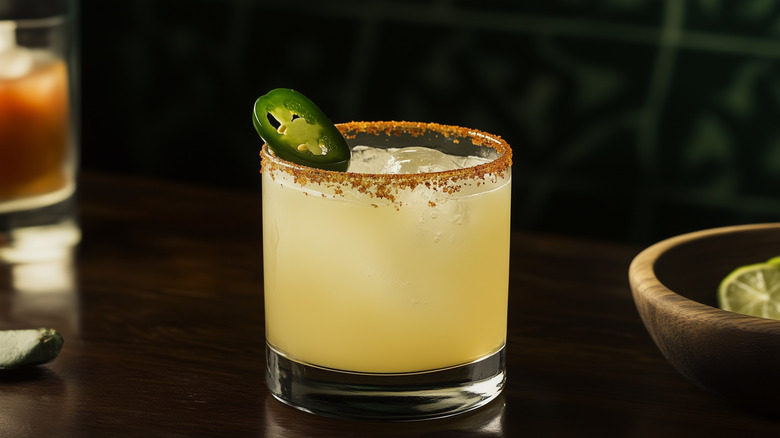
Adding salt or Tajín to the rim of your margarita glass can either make your drink or ruin it. Both ingredients can make a huge difference to the drink — salt will add intensity, salinity, flavor, and contrast, while Tajín will give you all that and add in a hefty dose of spice (in much the same way that Tajín works with so many other foods). Because of the punch both ingredients give, it can be tempting to be heavy-handed with one or the other and coat the whole outside of your glass with them. However, this is a one-way street to a badly-made margarita. The outside of your glass will draw focus and overwhelm your drink, and all of the hard work you've put into it will be ruined.
The solution here is to err on the side of caution and to use less than you think. Sure, you want a decent coating or salt or Tajín, but in an ideal world, they give a hint of flavor that complements the drink, not the primary flavor itself. I personally only ever coat one half of my margarita glasses, leaving the other side uncoated to provide relief. On the salt front, kosher salt is the way forward; iodized table salt will be way too acrid.
If you're making a frozen margarita, your recipe needs to be different
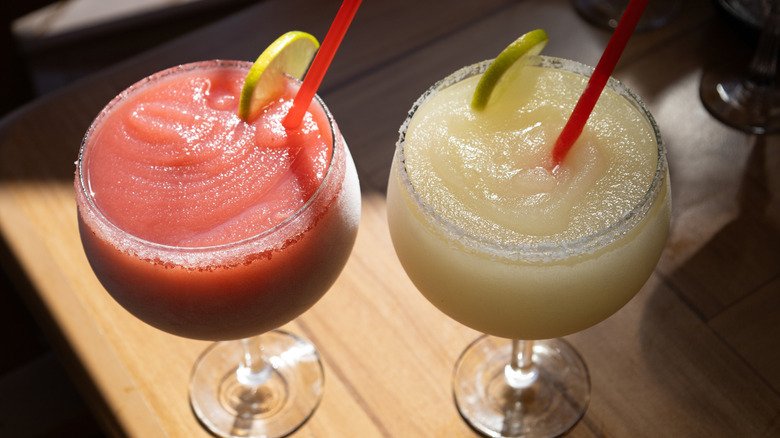
I'll hold my hands up and say it: I like a frozen margarita. Yes, other bartenders may roll their eyes at me, and I'm well aware that these drinks are miles away from what a true margarita actually tastes like, but when they're well-made, they're tasty, refreshing, and fun. However, they can also taste like a whole lot of nothing, simply because they can be mostly made of ice. To avoid this, you need to tweak your recipe slightly.
This is one situation where you do need some extra sweetness. In a frozen margarita, sweetness acts as an intensifier that brings out the agave notes, which can get lost in a cold mass of slush. Make sure you add in an extra dash of agave or simple syrup to create more flavor and contrast in your drink. I personally also like to add an extra splash of orange liqueur, which gives you both extra flavor and sugariness. I'd avoid adding more tequila in pursuit of a more pronounced taste, though — it'll make your drink too strong, and give it a metallic edge.