

10 Retro Steak Dishes Your Grandma Probably Loved
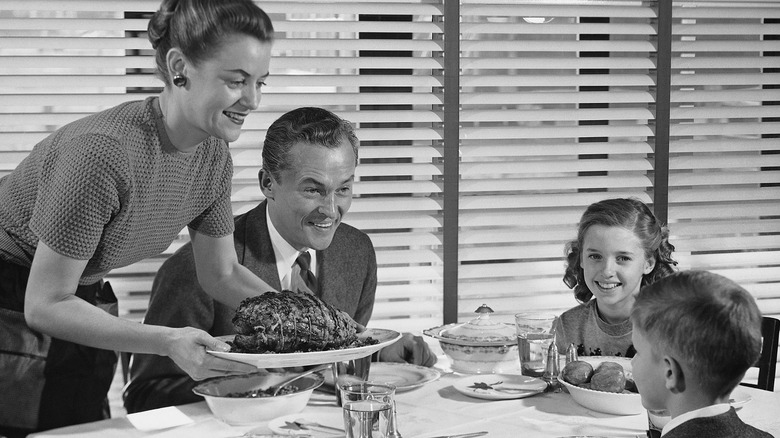
A meat steak is one of the most versatile dishes you can find, with so many cuts, seasonings, and preparation methods that the difficulty lies in choosing. Many professional chefs nowadays will tell you that less is more, and that choosing a good cut of meat should always be the main focus of your recipe. Yet, some of the retro steak dishes our grandmothers loved were as fancy as they come. Think hearty sauces, multiple ingredients, combined cuts, and even some spectacular flaming thrown in the mix.
We've trawled through historical cookbooks, online archives, and chefs' notes to find the most vintage of beef dishes. From the spicy pepper sauce that made Steak Diane popular in the 1980s to the decadence of the surf & turf and classic steak and eggs, it's time to set off on a nostalgic journey. Here are the retro steak recipes your grandmother probably loved.
Steak Diane
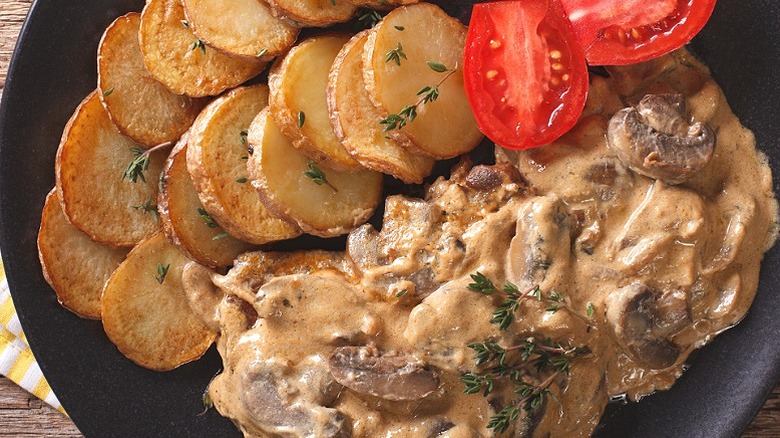
Once a New York favorite, the Steak Diane epitomized luxury as it was prepared right by your table at the restaurant. Its claim to fame is the splash of brandy that turned a simple steak into a literal tableside pyrotechnics show, ringing in the phrase "dinner theater" way before this became a thing in recent years. Ostensibly named for Diane, Goddess of the Hunt, it started out as a venison dish before pivoting to regular beef, perhaps because beef is considerably more affordable. The dish was probably first introduced to the United States at the Drake Hotel's restaurant by chef Beniamino Schiavon, known in culinary circles as "Nino of the Drake."
The Steak Diane recipe itself is pretty simple, but you'll need quite a few additional ingredients besides the meat. Prepare butter, mushrooms, shallots, beef broth, Worcestershire sauce, Dijon mustard, tomato paste, heavy cream, and of course, a splash of good Cognac. The result should be rich and buttery, with a lot more depth than your regular grilled steak.
Steak au poivre
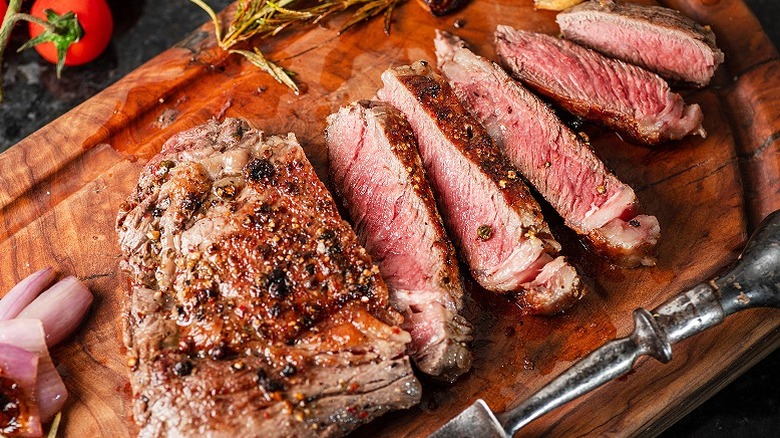
If chasing your steak with a crunchy crust of fiery peppercorns sounds like an excellent idea, the Steak au poivre will hit all the right taste notes for you. This retro steak dish actually sees its origins in a Parisian recipe that calls back to Steak Diane, using creamy pepper sauce with brandy. Why such a strong seasoning, you might ask. Peppercorns were believed to be a strong aphrodisiac, leading many would-be lovers to pair them with a steak for the ideal dinner date dish. That said, given how hearty it is, it's more likely to be conducive to a nice nap than romance.
Julia Child is credited with making Steak au poivre popular in the U.S. thanks to her 1961 recipe published in "The Art of French Cooking." Take note, though. When preparing this at home, don't use just any old peppercorns. For the best Steak au poivre recipe, don't be scared of adding multi-colored peppers in addition to the regular blend of black and green. Do it well, and you'll be rewarded with a tangy finish to your steak.
Salisbury steak
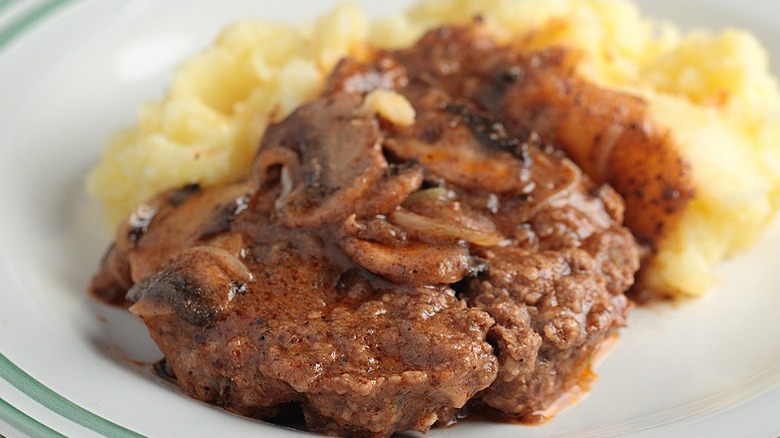
Can steak be controversial? Yes, when you're trying to market hamburgers doused in gravy as health food. This is exactly what Dr. James Salisbury attempted to do with the Salisbury steak, and he kind of succeeded when he created the dish in the 19th century. Of course, these were different times. Any nutritionist trying to convince us to eat what's essentially the precursor to a burger meal deal would today be laughed out of the kitchen.
Dr. Salisbury, however, was taken seriously enough to turn this vintage steak recipe into what's probably one of the first fad diets. His belief that a diet primarily rich in red meat is the healthiest approach will not find much favor or scientific basis today. That said, there's nothing wrong with the occasional indulgence, and this dish is known for being hearty and flavorful. Even better, the basic Salisbury steak recipe is perfectly doable using just one skillet.
Surf & turf
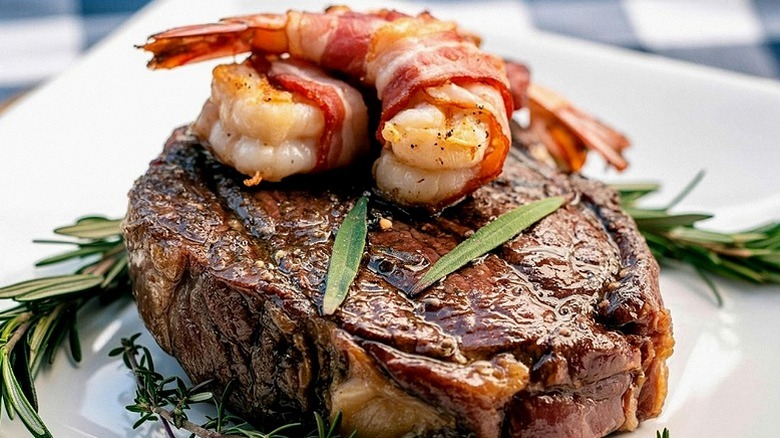
This retro steak dish is perfect for those of us who believe you can't have too much of a good thing. The classic surf & turf was considered the pinnacle of luxury dining, combining two very expensive food items into one dish. Whether prawns and steak actually make good plate fellows depends on your personal taste, but this 1960s dish remains popular at many contemporary steakhouses, so much so that we even celebrate Surf & Turf Day every four years on February 29.
Opinions vary about who first came up with the idea of throwing meat and seafood together on the same plate and calling it a dish. It's most likely that the recipe originated in the East or the West coast, and there's also some evidence that Native Americans got there as early as the 17th century, but that's as specific as it gets. The only thing that's not in dispute is that the dish is still viewed as a decadent treat, with many U.S. diners including it on the menu.
Chateaubriand
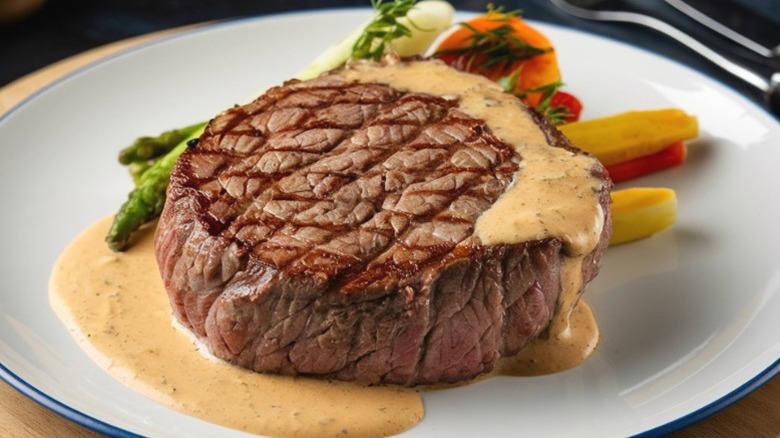
Here's another classic that creates controversy. Is chateaubriand a cut of meat, a cooking method, or both? To be fair, it doesn't matter what you decide. The only thing worth knowing is that this is one heck of a retro steak that traces its origins back to 1822 but is present on many restaurant menus to date. The French came up with this one as the ultimate in culinary decadence: a boneless cut that used to be cooked while wrapped in lower-quality steaks. These were later thrown away. Wasteful, indeed.
We've evolved a bit since then, and modern versions of the recipe feature a center-cut filet mignon served with a sauce made with shallots, stock, white wine, tarragon, and butter. It's still considered one of the most expensive meat dishes you can order and is typically served tableside for two. Want to know what a chateaubriand actually tastes like before ordering? Expect a very tender texture and a more delicate flavor than you typically get with cheaper steak recipes.
Delmonico steak
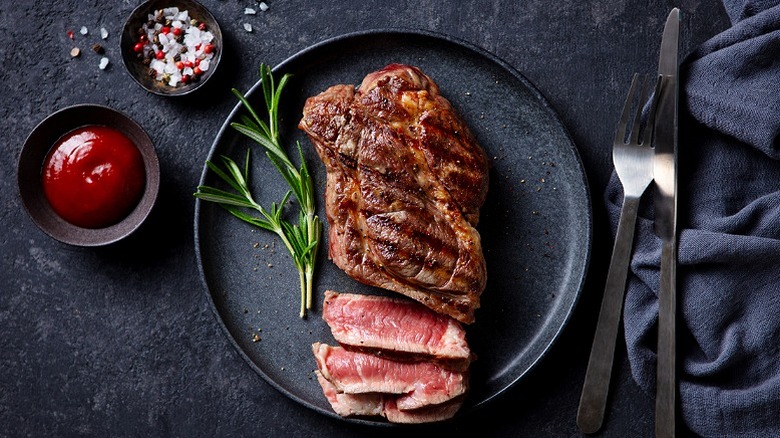
The Delmonico steak is named for the New York restaurant that reportedly first started serving it in the 1800s, incidentally also one of Abraham Lincoln's favorite restaurants. This retro meat dish is all about the rich flavor and marbling. Many believe that it was originally prepared from a specific cut in the rib section, but other accounts claim the cut was irrelevant. Only the thickness mattered.
Nowadays, restaurants that still serve it all offer their own reinterpretation, so you may find a Delmonico rib-eye at one place and be served a sirloin at another. This may not come as a complete surprise, but the restaurant that gave birth to this dish also created the Delmonico potatoes. Prepared on a creamy base of whole milk, heavy cream, Parmesan, nutmeg, and white pepper, they're very different from the usual steak and potato offering. Needless to say, they complement the rich flavor of the Delmonico steak beautifully.
Beef Wellington
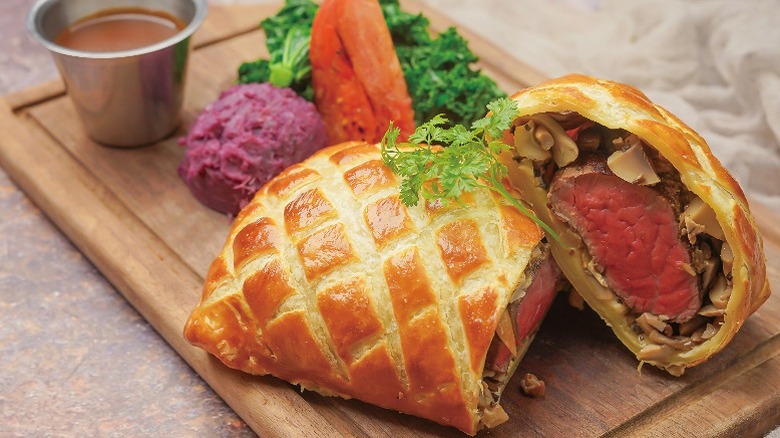
It's easy to see how this one became an icon. Combining juicy steak with creamy mushrooms and topping it all off with crispy pastry is genius. Yet, taste isn't the main reason why omitting it from your dinner party menu in the mid-20th century would've been the ultimate faux pas. The steak's popularity had a lot to do with the recipe's reputed illustrious connection to the original Duke of Wellington. At the time, the dish was still known as boeuf en croute — literally, beef wrapped in pastry. There are various accounts about the history of Beef Wellington, but many believe the recipe to have been named in honor of the man who defeated Napoleon Bonaparte.
The Classic Beef Wellington continues to attract more modern-day admirers, including Gordon Ramsay, who is known to serve it at many of his restaurants. Now, we all know that the biggest problem when combining meat and pastry is likely to be a soggy bottom. Julia Child, however, has a solution for this. In a video (via Facebook), she is shown using pre-cooked pastry on the bottom and raw dough on top, before bundling everything in the oven.
Minute steak
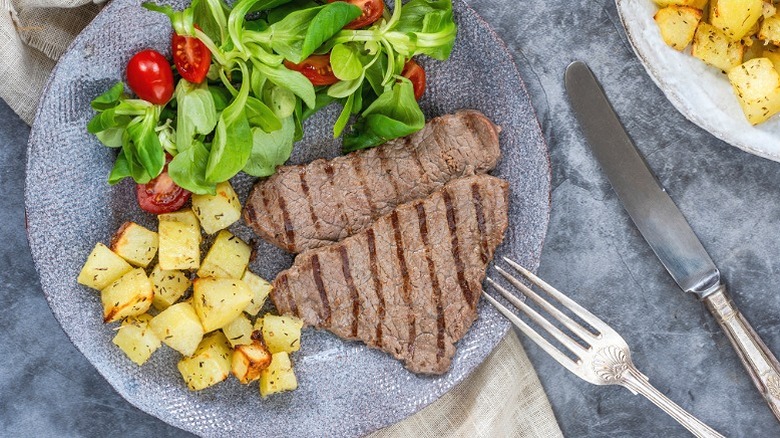
A steak that's ready in a minute? Sign us up. You may find this very vintage recipe referred to as a cube steak, although the terms are not quite interchangeable. Put simply, a minute steak is a very thin cut of beef. A cube steak, on the other hand, is one that's been put through a tenderizer.
Minute steaks were a staple between the 1950s and the 1980s, for two simple reasons. First of all, they provided a well-rounded but cheap dinner, because they come from the least expensive cuts like eye of round or sirloin. And, as the name suggests, they don't take too long to cook, making them the perfect weeknight dinner. Slap the steak between two slices of bread and add some tomatoes or lettuce if you want to hit your protein and greens count in one go. Or a fried egg if you're feeling cheeky. The main thing is that you'll be enjoying dinner in under five minutes.
London broil
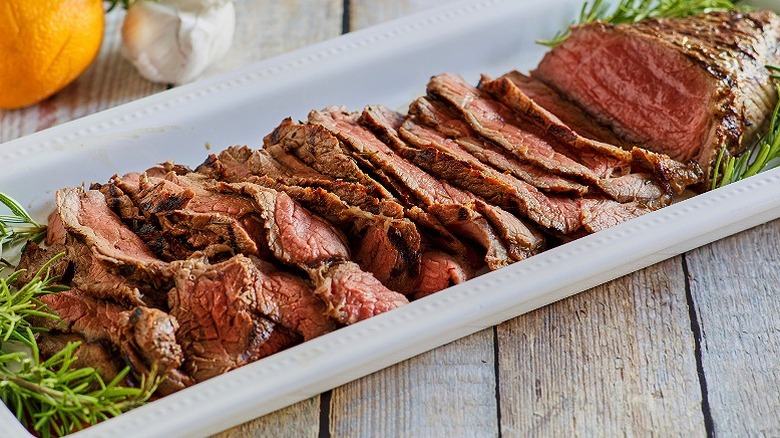
Don't be fooled by the name; there's nothing remotely British about the London broil. James Beard claimed that the dish actually originated in the U.S., more specifically in Philadelphia, although there doesn't seem to be any evidence to back his claim. What everyone agrees about is that the preparation method was created as a way to transform cheap, tough meat into a more palatable option. This is achieved by cutting the meat into strips and leaving it rare in the middle.
Today, the recipe has changed drastically, and many restaurants use good-quality flank meat that's marinated for two hours before broiling or placing it on the grill. Nowadays, if you order a London broil, you're likely to get chuck shoulder steak, a sirloin, or a top round steak. However, James Beard always advises using flank, believing that its thin and fibrous texture makes for the most authentic experience.
Steak and eggs
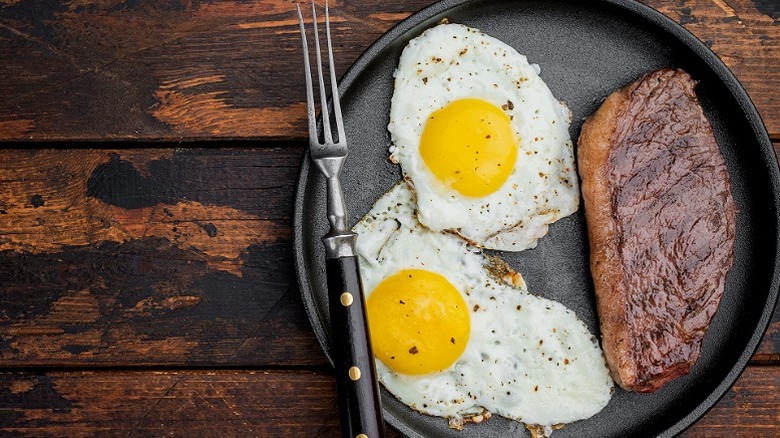
It's difficult to find a dish more iconic than steak and eggs, which remains a strong breakfast staple at American diners to this day. However, its actual origins are in Australia, where it gained popularity around World War II. The vintage steak dish is actually mentioned in a 1950s edition of The Herald, where it's described as the national dish.
In the 1940s, it was adopted by the U.S. Marine Corps, which favored it as their pre-landing breakfast. The popularity of the dish soared even higher after NASA served it to astronaut Alan Shepard right before he traveled to space. The tradition stuck, and nowadays astronauts are served steak and eggs before departing on a space mission. The official reason behind this choice relates to nutrition and science. Not only are steak and eggs high in protein, but they're also — to put it elegantly — a low-residue food. However, we're willing to bet that the high comfort factor of this traditional breakfast is the actual reason it proved to be so popular with astronauts.