
The Technique Behind Texas Roadhouse's Perfectly Sliced Steaks
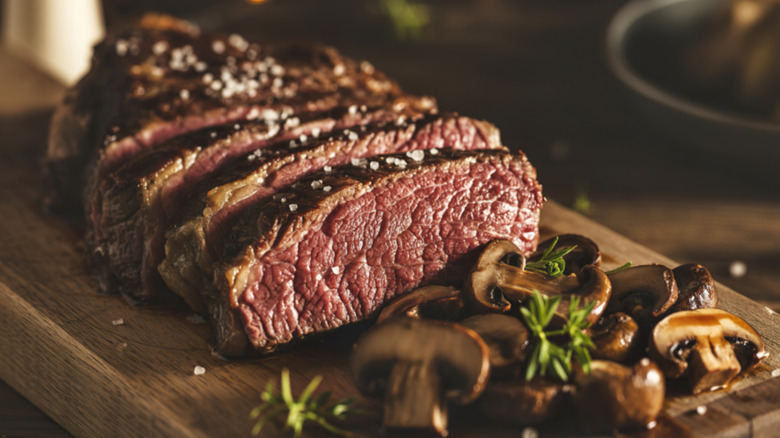
Texas Roadhouse is a popular destination for steak lovers, and it's easy to see why with a successful balance between quality, affordability, and convenience. Perhaps the most important part of that formula is a perfectly sliced steak, every time. And how they do it is with a capable set of human hands.
Every Texas Roadhouse has a designated meat cutter on staff, who is responsible for hand-cutting every steak served. They work inside a room kept at 34 degrees Fahrenheit, inspecting larger pieces of beef by eye and feel for appropriate marbling throughout before cutting. Starting at one end of the beef, they slice the appropriate steaks all the way through, with consistency being vital.
The business is built on providing good value to customers, so it's key that every steak be a certain size and thickness. After cutting meat for thousands of diners a week, these experts are able to tell the difference between a 12 and 14-ounce steak without using a scale. They're also responsible for trimming any undesirable connective or fatty tissue from the edges, with an ideal ratio of 90% meat to 10% fat.
Meat cutters make Texas Roadhouse work
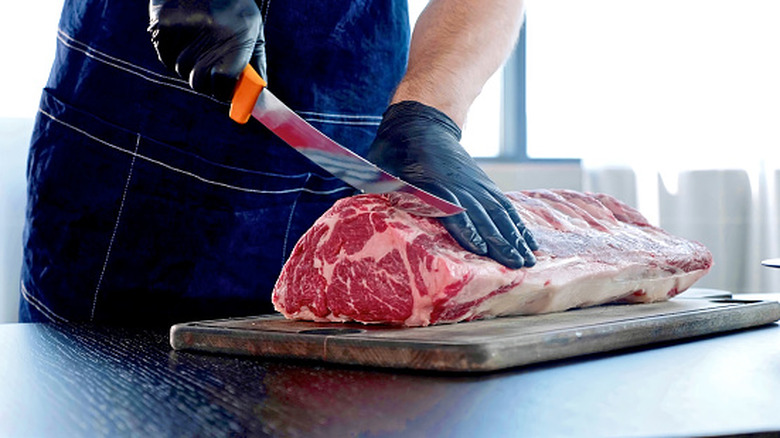
Every restaurant's meat cutter is the extra step that sets Texas Roadhouse steaks apart from your average steak. Having a designated staff member to hand-cut steaks in-house shows a commitment to the best cuts, which you don't always get out of restaurant steaks. And it's not just a marketing gimmick; it actually does mean a better meal.
Hand-cut steaks are superior to machine-cut meat because experts use their experience to perfectly trim gristle and other inedible parts with more precision than is possible than a machine or saw.
The benefits of this expertise can be seen in the bone-in ribeye, our pick as Texas Roadhouse's best cut of steak. Ribeyes are a classic choice for steak lovers, known for their rich, beefy flavor. But cutting a ribeye requires exactly the precision required by these meat cutters. Straight from the tenderloin, it's simply too much fat. But with a couple of precision cuts, it's ready to cook — and this one retains the bone for extra juiciness.