

9 Mistakes You're Making When Roasting Potatoes
We may receive a commission on purchases made from links.
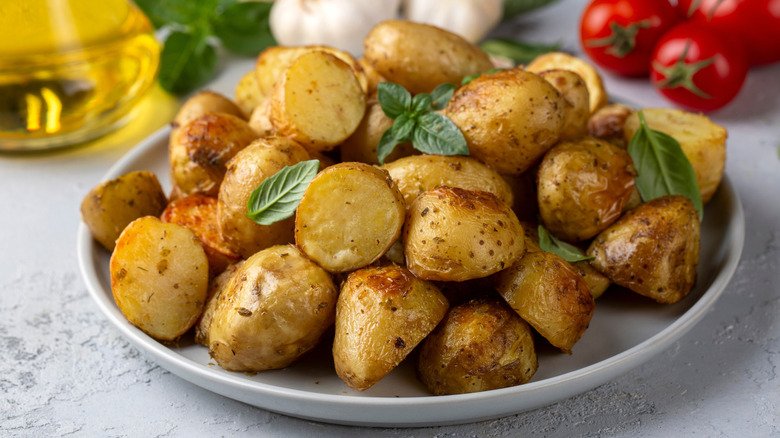
Potatoes may be the most versatile natural food items in the world. From these simple spuds, you can create so many delicious dishes, including fluffy French fries, tater tots, mashed potatoes, smashed potatoes, oven-baked baked potatoes, and more. But, one of my favorite things to do with this starchy vegetable is to roast them. When roasting potatoes correctly, you end up with a rich, flavorful spud that's soft and fluffy on the inside, while being satisfyingly crispy on the outside. Even better, freshly roasted potatoes are simple to make and pair well with countless main courses, from simple fare, like hamburgers, to more upscale options, like filet mignon. Unfortunately, while roasting potatoes is relatively straightforward, there are a few common mistakes people make when preparing them.
During my more than fifteen years in the food industry, I made more roasted potatoes than I could ever count, and paired them in nearly as many unique arrangements. And, during my three decades of home cooking, I've frequently made these as an accompaniment for my family's own meals. This long history of roasting potatoes has allowed me to hone and refine my skills through trial, error, and a bit of frustration. Thankfully, you can skip the frustration yourself because I'm here to share what I've learned along my journey. Ready to discover some of the biggest mistakes you're probably making when roasting potatoes? Let's get into it.
Mistake: Choosing the wrong type of potato
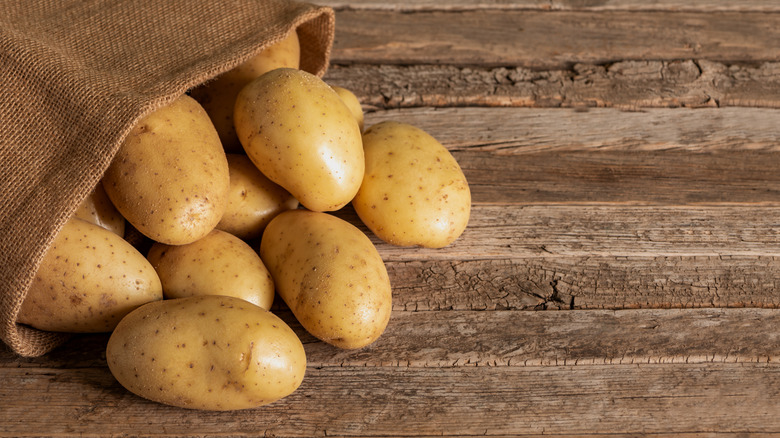
Not all potatoes are created equally, and, in my humble opinion, they aren't all created as deliciously, either. But, that's a topic for another day. The fact is that not every type of spud will make a good roasted potato. If you choose the wrong kind, you may end up with roasted potatoes that are too chewy, watery tasting, or that remain raw no matter how long you cook them.
You want to avoid any waxy potatoes, as they won't develop the taste or texture you're looking for. Waxy potato varieties include New Potatoes, Red Bliss, and Fingerlings. Instead, opt for starchy or all purpose potato varieties. Yukon Gold is my personal favorite choice, but Russets and Red Potatoes are also good options. Not sure how to tell the different potato varieties apart? Starchy options will have a thicker skin than waxy ones, while also retaining a higher moisture content.
Mistake: Not cutting them into a uniform size
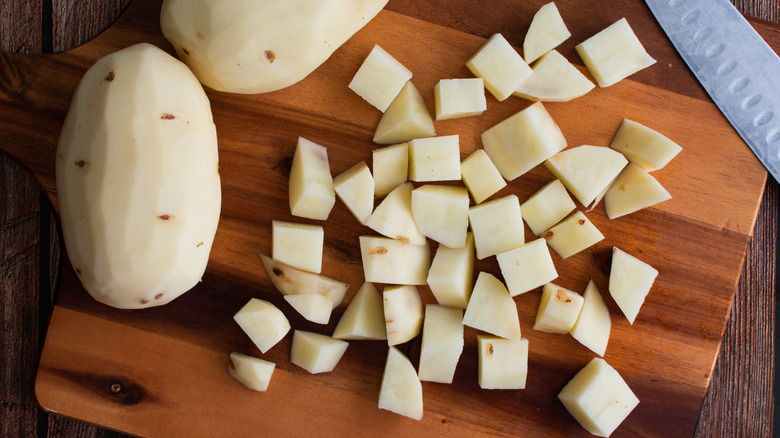
When you're roasting potatoes, it's important that you don't just cut them into pieces without care. If all of the potatoes are different sizes, you'll run into a lot of otherwise avoidable issues. The larger pieces won't be done enough, while the smaller ones will end up burnt. This isn't exactly a recipe for deliciousness.
To avoid this issue, you'll want to make sure you cut all your potato pieces into a uniform size. This doesn't mean you have to grab out a ruler and measure each one carefully, so don't worry. Rather, just make sure they're roughly the same size. This way, all of the pieces cook at the same time so you aren't left with any raw or burnt pieces.
Before cutting them, you may want to peel your potatoes. While this isn't necessary and you'll find chefs on both sides of the fence, I personally prefer to peel mine and recommend you do, too. I think the potatoes cook more evenly and taste better without the skin, but this is a matter of personal preference.
Mistake: Skipping parboiling
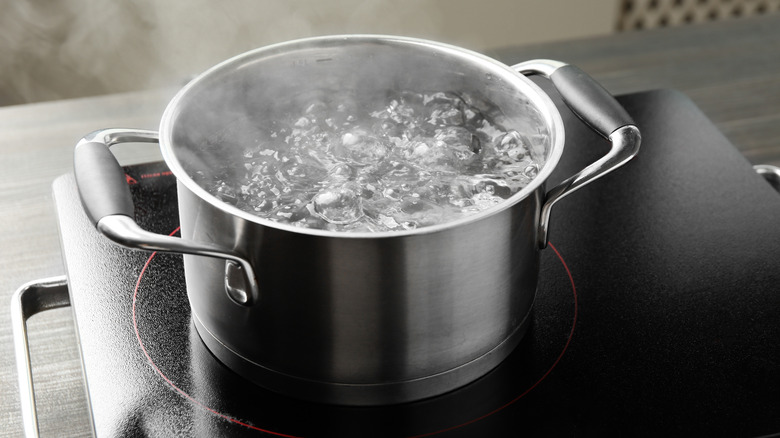
You can't simply cut the potatoes into uniform pieces and throw them into the oven. The potatoes will never get soft enough this way. Instead, you'll be left with rough, potentially raw, potatoes that are challenging to eat. Thankfully, there's an easy solution to this problem — parboil your potatoes before placing them into the oven.
Parboiling is exactly what it sounds like. It's partially boiling something before finishing it using another method of cooking. The brief boiling process will help soften and break down your roasting potatoes so that they become soft enough to eat without issue. The additional internal moisture also helps mildly with getting those perfect crispy edges.
Parboiling is very similar to another cooking technique called blanching. To clear up any confusion, the primary difference between the two is that blanching requires a shorter boiling time and is followed by an ice bath to stop the cooking process. On the other hand, parboiling requires a longer boiling time and the foods are generally transferred directly to another cooking method.
Mistake: Failing to dry them before roasting
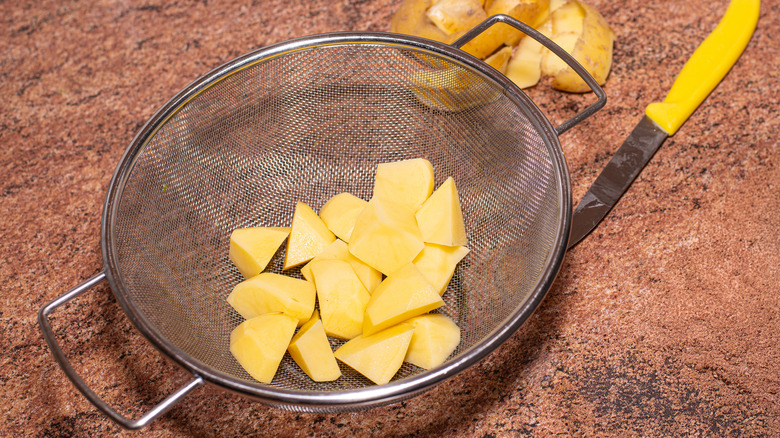
A little bit of internal moisture is excellent for roasted potatoes, but too much internal or external dampness can ruin the dish. This can cause the potatoes to introduce too much steam into the oven so that they become steamed rather than roasted. But, if you remember to dry your potatoes before roasting them, they'll crisp up nicely every time.
Once your potatoes are done parboiling, gently dump them into a large colander. You want one large enough that the potatoes can be spread out a bit rather than packed high atop one another. I highly recommend using a metal colander, like this Gulex Three-Quart Stainless Steel Strainer on Amazon because they hold up better to the high heat of boiling water than plastic options. Allow them to sit in the strainer for about 5 to 10 minutes, or until they aren't freely dripping water. Carefully pat them dry with a clean paper towel before throwing them into a bowl to be seasoned.
Mistake: Overcrowding the pan
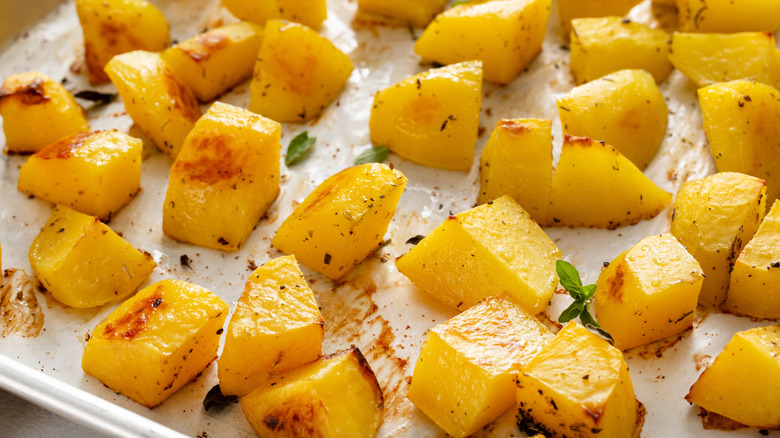
The colander isn't the only thing you should avoid overcrowding. You'll also want to be very careful about overcrowding the pan you intend to cook your potatoes in. If they're piled atop each other, the potatoes will end up steamed instead of roasted. This means they'll be soft and mushy instead of having that nice crispy outer layer and soft, fluffy insides. As you can probably tell by now, there's a fine line to walk between roasting and steaming your potatoes.
The potatoes should be laid out single file so that none are stacked. If you need to use two or even three pans to accommodate the amount of potatoes you're roasting, that's okay. It also helps to use the right kind of pan, although there are varying recommendations by different chefs. Personally, I like to use metal baking sheets with low rimmed sides because I find that they produce crispier potatoes in a little bit less time than alternatives.
If you don't already have some, I recommend this two-pack of Commercial Quality Sheet Pans from Saffron & Sage Home Living on Amazon. They're a good size so that, between them, should fit nearly all your needs. Plus, they're warp resistant, don't rust, and conduct heat really well.
Mistake: Going too light on the seasonings
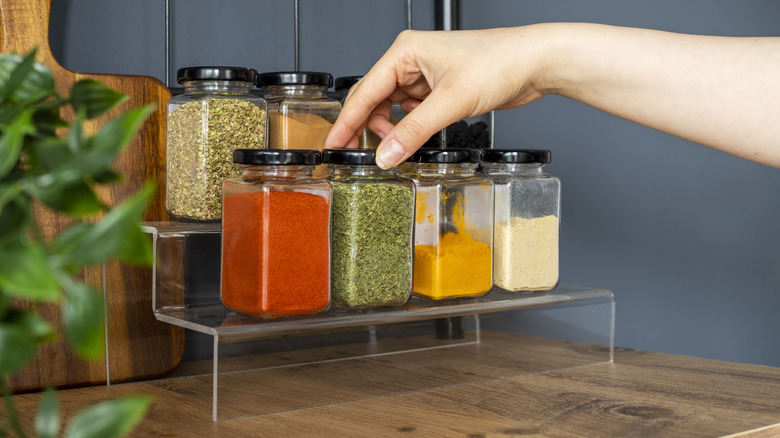
To me, seasonings are one of the things that makes or breaks a dish. If you want flavorful roasted potatoes, ample seasonings are crucial. Often, people are afraid of being too heavy-handed, but with potatoes, that's actually quite hard to do. I tend to season liberally, and yet, I usually end up adding more salt and spices after an initial taste test.
For roasted potatoes, I recommend using salt, pepper, onion powder, garlic powder, paprika, and parsley. If you want something extra earthy, you can also add a dash of oregano or Italian seasoning mix. And, if you're looking to restock your spice cabinet to facilitate ample seasonings, I recommend checking out the best Aldi spices because they're both high-quality and affordable.
You should also take care that your potatoes are fully coated. Seasoning them after they've been lined up in the pan won't suffice for this. Instead, you'll want to drop your potatoes into a mixing bowl after they've been dried. Then, add your seasonings and oil before gently tossing the potatoes. This ensures that every side of starchy goodness gets fully coated, meaning there won't be any dull, bland bites in your meal. You can streamline this process by ensuring you have your mise en place, a classic French cooking trick, set up ahead of time.
Mistake: Using too much or too little oil
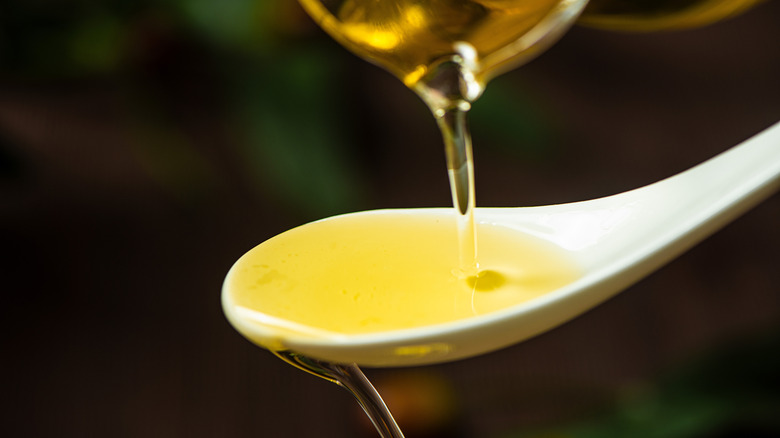
Using too much or too little oil is one of the most common mistakes I see people making when roasting potatoes (or even when preparing similar dishes, like fried potatoes). It's also an error I frequently made when I was first starting out in my career, so I am well aware of how easy it is to slide too far one way or the other. But, doing so can have devastating consequences for your dish. Too much oil will make the potatoes greasy, which might lead to stomach issues when they're eaten — especially for anyone who may have a sensitive stomach. But, too little oil and your roasted potatoes will never crisp up enough.
So, how do you know what the perfect amount of oil is? The key is to aim for just enough that each potato has a very thin, light coating. You don't want any excess oil in the bottom of your mixing bowl or pooling on your baking sheet. A good rule of thumb for achieving this is to use only about one tablespoon of oil for every pound of potatoes you've diced.
Mistake: Using the wrong oil
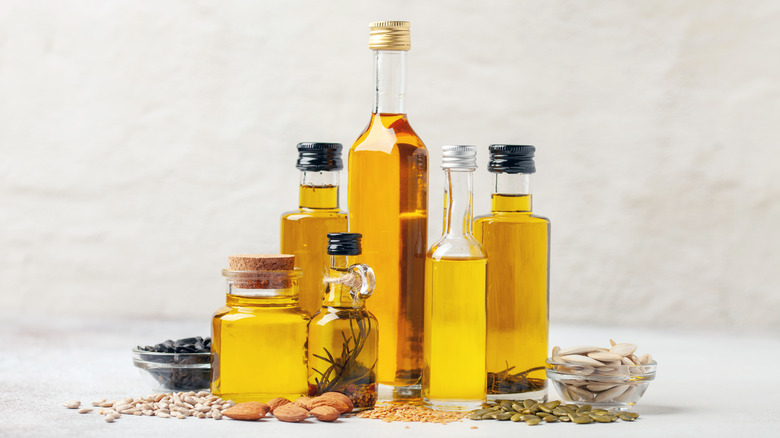
Just like you can't use every potato for roasting, you can't use just any oil to coat them. Ideally, you should look for oils that have a high smoke point and rich fats. Canola oil is an excellent choice thanks to its high smoke point, but you can also use sunflower oil, avocado oil, or grapeseed oil. If you want something with exceptionally rich fats to create an extra savory dish, opt for beef fat, bacon drippings, duck fat, goose fat, or even ghee.
Avoid oils with low smoke points because they'll burn easily, leading to a smoky taste that might be a bit bitter. Oils with low smoke points might also cause your roasted potatoes to generate a lot of smoke, leading to a nasty smell in your kitchen. Regular butter (salted or unsalted) is a prime example of what not to use — note that this is different from ghee or clarified butter, which have a higher smoke point. Other poor choices include extra-virgin olive oil, unrefined coconut oil, and sesame oil.
Mistake: Prepping the pan incorrectly
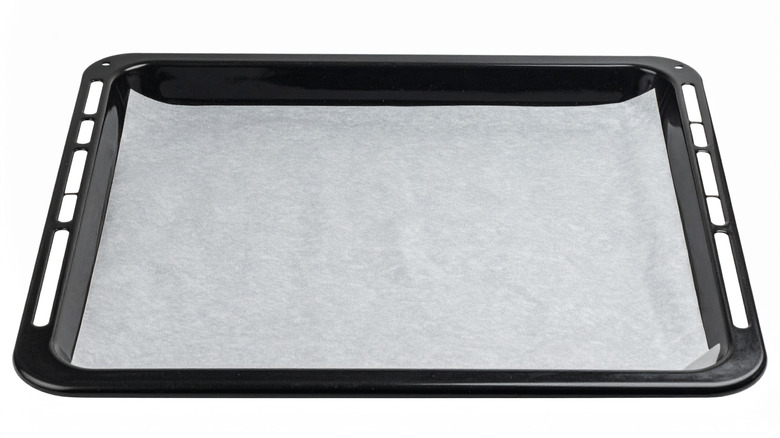
You've done everything else right. You've chosen the right potato and the right oil to coat them with. You've parboiled them and seasoned them well. Don't ruin your good work by prepping the pan incorrectly. A few of the most common mistakes include forgetting to oil the pan and not laying down parchment paper. Forgetting to do these two quick, yet crucial, steps will lead to your potatoes sticking to the pan, things not crisping up the right way, or a range of other problems
The correct way to prep your pan is to first rub a very light layer of oil along both the bottom and sides. Don't forget the sides, which is so easy to do and can cause the potatoes to stick and tear. Then, lay down a fitted piece of parchment paper on the bottom, which will help prevent sticking and protect your pans. It's on top of this that you can lay your seasoned potato chunks in a single layer.