

9 Best Spicy Mixers To Pair With Mezcal
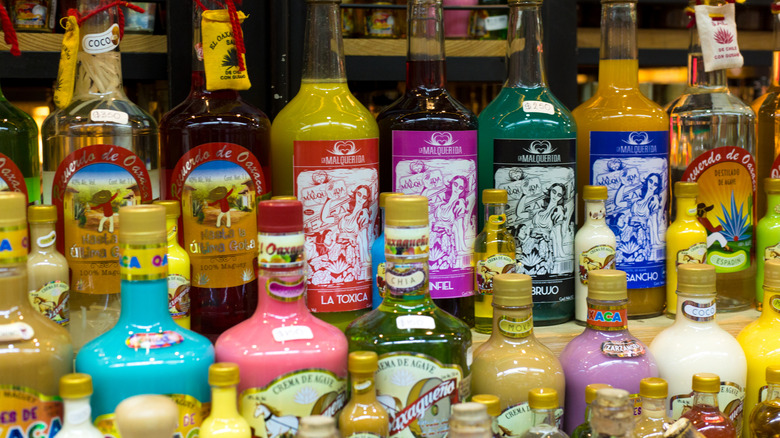
To me, nothing embodies the spirit of Mexico like mezcal. It's a vibrant, varied, and unique category of spirit that, at its best, truly encapsulates the depth and character of the agave plant. If you're not familiar, mezcal is similar to tequila but with some fundamental differences. While tequila is only made from one specific variety of agave plant, mezcal doesn't have such restrictions, so you'll see single-varietal mezcals made from various wild agave plants of all kinds, as well as blends. Additionally, mezcal is made in a much wider geographical area than tequila, which is only legally allowed to be distilled in Jalisco.
As far as flavor goes, most people consider mezcal's signature not to be smoke. While it's true that most mezcals are somewhat smoky due to the fact that the agave is roasted before it's distilled, many mezcals exhibit a much more complex profile. They can be tropical, vegetal, briny, savory, meaty, and even sweet. One thing that virtually all of them have in common is that they're fantastic when paired with spicy flavors. As a long-time bartender and cocktail creator, and a lover of mezcal, I've put together a list of my favorite spicy ingredients to mix with this complex Mexican spirit.
1. Ginger beer
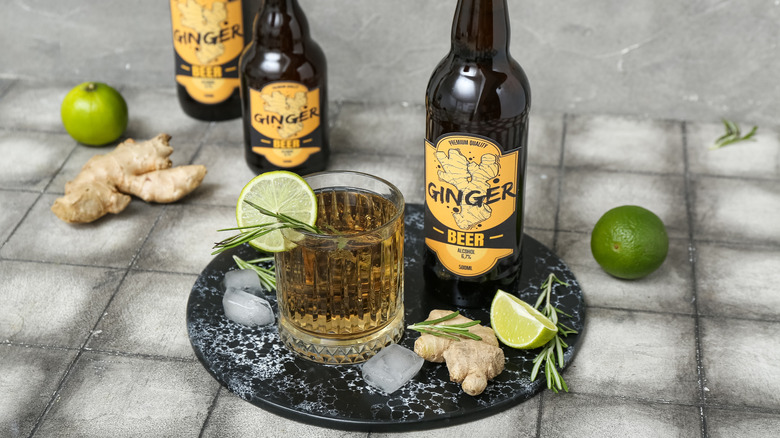
The aromatics of ginger play nicely with the intensity of mezcal, bringing a bright, zesty flavor to the forefront. You can add fresh ginger to a mezcal cocktail, but it's a lot easier to add it in liquid form, to save you from having to peel, slice, and muddle those rugged knobs. Ginger beer is a fermented beverage made from the ginger root, but it's non-alcoholic despite the name.
Ginger beer comes in many styles, so you can find a brand you like and stick with it. There are the milder varieties, like Fever Tree, those with a balanced spiciness, like Bundaberg, and the boldest, spiciest styles, such as Maine Root. Mezcal with a splash of ginger beer is an easy and satisfying way to enjoy the spirit's affinity with ginger while keeping the mezcal's flavors from being overwhelmed. Probably the most popular drink with this combination, though, is the mezcal mule, also known as the Mexican mule. This recipe takes the classic Moscow mule and simply replaces vodka with mezcal, giving the drink a much more complex flavor.
2. Chile peppers
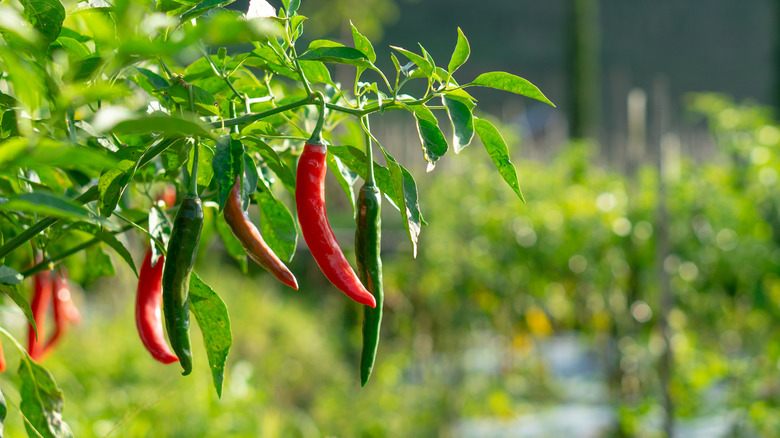
Fresh chiles can be incorporated into mezcal drinks in a number of ways: Puréed, muddled, and added as an ingredient, or even steeped in the mezcal itself to make a chile infusion. Particularly smoky mezcals make an exceptional partner for super fiery chilies, with the intensity of each playing up the other component. Del Maguey's Vida and Illegal's Joven are good introductions to smoke-forward mezcals, and they're typically on the affordable side of the spectrum, so you can experiment with adding chiles without breaking the bank. I like these with formidable, dramatically hot peppers — think scotch bonnet or habanero. Depending on your tolerance, you can go even hotter, but too much heat can drown out the mezcal's flavors.
Milder varieties of fresh peppers, like poblano and aji amarillo, can be lovely complements to fruitier mezcals. Look for those made from tobalá or espadín agave varieties, which typically showcase the most fruit-forward flavors. Of course, finding the best match of pepper and spirit for your personal palate is a journey only you can go on, so consider these to be starting points. Each chile and bottle has its own unique profile, and any pairing will throw together some interesting results.
3. Hot honey
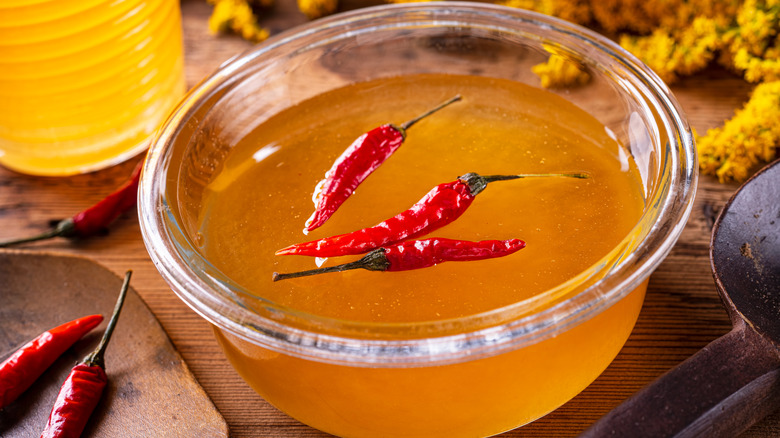
You may have noticed hot honey popping up in stores and on menus everywhere, and you're not imagining things. The popularity of this ingredient has certainly skyrocketed in recent years, and not just for pizzas and chicken wings. Hot honey makes a great cocktail ingredient, because of its balance of heat and sweet. It works particularly well with mezcal, as the spicy notes enhance mezcal's smokiness while the texture and sweetness round out the harsher edges of the spirit.
It's easy to incorporate into cocktails, too. In any drink recipe that calls for honey or honey syrup, you can simply swap one for the other. It can also be used in place of sweetening elements like simple syrup and agave, though that may call for some adjustment to the amount. Here's a great variation on a classic cocktail in which to try the hot honey swap: Take a bee's knees cocktail, swap in mezcal for gin, and make your honey syrup with hot honey. The mezcal version of this cocktail is often called a killer bee or a yellowjacket, but adding hot honey makes it even more deadly, so it calls for perhaps a wasp or hornet in its name to encapsulate its intensity.
4. Tajín
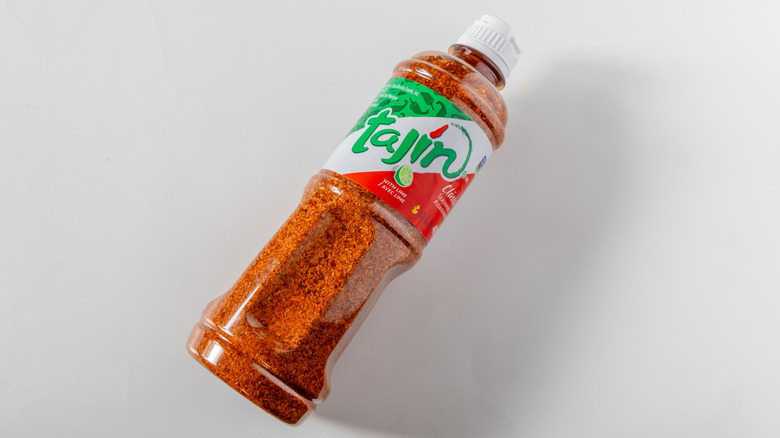
I'll never forget when a friend first introduced me to Tajín by sprinkling it on chopped melon and pineapple. This blend of salt, chile, and lime makes fruit come alive, adding the perfect combination of citrus and heat with just enough saltiness to give the flavors an extra dimension. I had the brilliant idea to use the spice blend as a cocktail rim for a margarita in place of plain salt, only to find out that it was already so popular that the brand sells its own cocktail rimmer specifically for that use — not just for margaritas, but for bloody marys, micheladas, and any other drink that could use an upfront kick. As a Mexican product, it only makes sense that Tajín is wonderfully suited to Mexican cocktails, and that's exactly the case with mezcal drinks.
The easiest way to try out Tajín and mezcal is to rim the glass of either a mezcal margarita or a mezcal bloody mary (sometimes called a maria ahumado, which translates to smoky maria — bloody maria is what a bloody mary with tequila is often called). While Tajín does shine on the rim of a cocktail, you can also sprinkle it on top of your drink, or even mix it in with your ingredients if you want the flavor to be more uniform throughout. It has a fairly mild heat level, so don't be shy.
5. Cayenne simple syrup
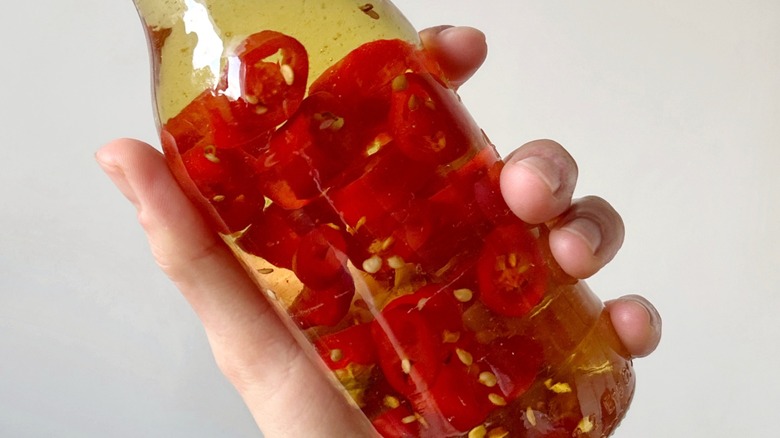
Cayenne pepper is commonly found dried and ground in a jar on the spice rack, but you can find it fresh as well. It's a long, slim pepper, vibrant red when ripe, with a medium heat level that makes it a versatile ingredient in both food and drinks. Its relatively neutral flavor is another bonus, and why it's my preferred pepper to turn to when making a hot simple syrup for cocktails. Its neutrality means it works well with any base spirit and most other cocktail components, making it ideal for mezcal fans who want to add a kick while still being able to taste the spirit's flavors.
You can make your own cayenne simple syrup, with either fresh or ground cayenne, starting with plain simple syrup and then adding the cayenne. Making your own is a great way to monitor the syrup's heat, so you can get it just to your liking, by omitting or keeping the seeds if you're using fresh peppers, and by limiting or extending the maceration time for either type. If you're not feeling crafty, there's a great cayenne syrup available from 1883 Maison Routin that also has a hint of cinnamon, another flavor that melds beautifully with mezcal. Any cayenne simple syrup can be swapped in for the sweetening element of a recipe.
6. Spicy bitters
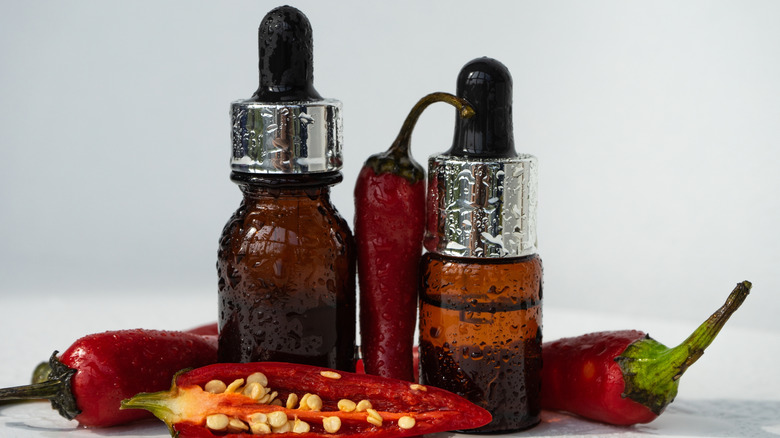
One of the best ways to up your mixology game is to get to know bitters. Having a selection of cocktail bitters on hand can take a drink from mediocre to spectacular. There are thousands upon thousands of bitter styles, brands, and flavors out there, and they typically aren't cheap, so it can be a challenge to know which ones to invest in. For mezcal fans, I'd recommend starting with hot and spicy bitters. They can be pleasantly warm or fiery, roasted or brightly vegetal, mild or intense, but all of the bitters in this category make mezcal cocktails really sing.
There are too many excellent hot and spicy bitters to mention all of my favorites, but here are some of the best to keep an eye out for. Dashfire Mole bitters were specially created for use with agave spirits, and with a flavor profile that's hot but also chocolatey, these bring out a wonderful depth and complexity when mixed with mezcal. Bennett Bitters makes a variety with quite hot Caribbean chilies and an actual edible scorpion in each bottle (don't worry, there's a vegan scorpion version too). Hella's Smoked Chili bitters are a no-brainer with mezcal, enhancing the spirit's natural smokiness while adding mild heat from Oaxacan Pasilla chilies. As with all bitters, they're highly concentrated, so a few dashes are all you need in each drink.
7. Bloody mary mix
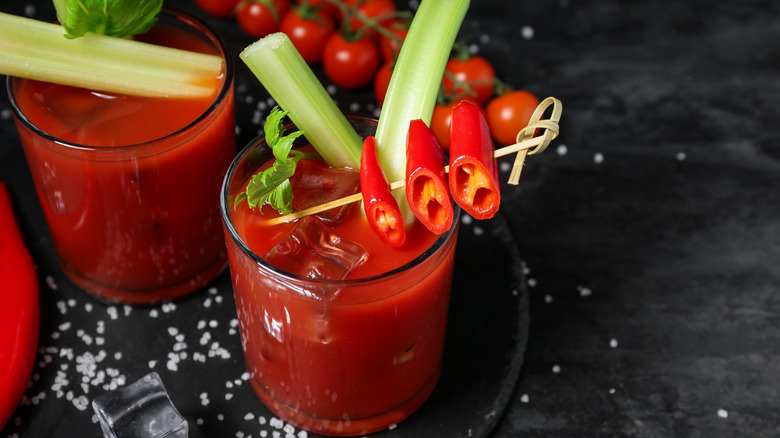
An iconic brunch drink, the bloody mary is probably the best-known spicy cocktail, which means that bloody mary mix is likely the best-known spicy mixer. While some of the early recipes for this drink don't call for anything spicy, others listed Tabasco or cayenne pepper as an ingredient, and it's that spicy version that's lasted through the generations. As previously mentioned when we talked about Tajín, if you replace the vodka in the recipe with mezcal, it becomes a maria ahumado, or a smoky maria. To go along with mezcal's much more intense flavor, the mix should be as spicy as your heat tolerance allows.
There are plenty of store-bought bloody mary mixes to choose from, often labeled with their heat level to make things easy. You can always put your own spin on store-bought mix, or make your own completely from scratch. Personally, I love making the mix myself, because I think it should be as fresh and vibrant as possible, and I like to be able to moderate my spice and salt levels. If I have a very green or vegetal mezcal, or a lighter and fruitier one, I might use a green pepper hot sauce instead of the typical red. The fun thing about bloody mary mix is personalizing it to your taste.
8. Sangrita
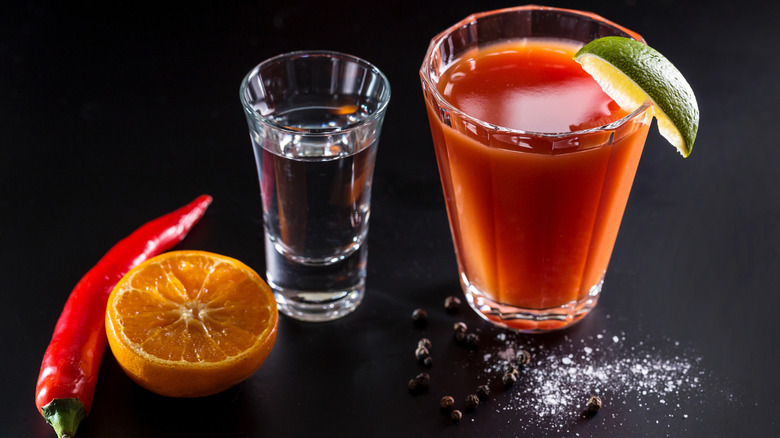
While the names are so close that it often gets confusing, sangrita is a very different beverage to sangria. While sangria is a European fruit and wine drink with ancient origins, now most commonly associated with Spain, sangrita is a more modern Mexican invention that can vary widely in style and ingredients. It's traditionally served alongside tequila and mezcal as a sort of chaser or palate cleanser, so it usually involves fresh and bright ingredients to keep your taste buds awake. Some are fruit-based, with orange and pomegranate along with some chile for heat, while some are more savory and tomato-based, with fresh herbs. There's also a green sangrita that's made with tomatillos.
Part of the fun you can have with sangrita is trying different styles along with different mezcals. Because there's such a wide range of flavor profiles for each beverage, you can mix and match until you find the perfect pairing, a sangrita recipe that either contrasts or complements the mezcal to create an ideal duo. While purists would never mix the two together, if you feel like bucking tradition, you can use the two drinks as the basis for a cocktail.
9. Pickle juice
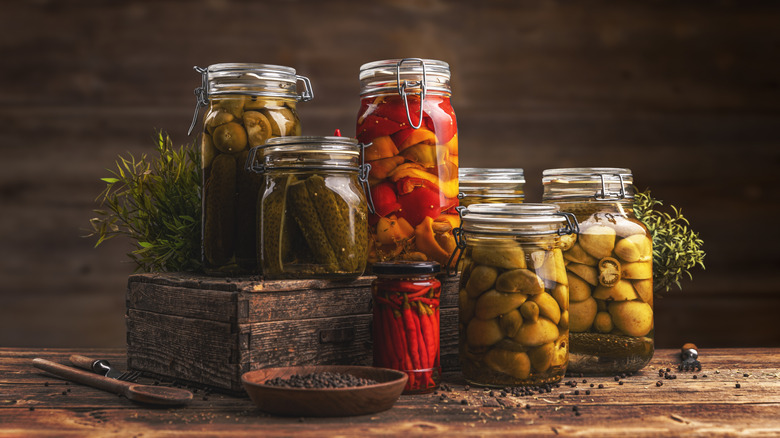
As a self-professed pickle fanatic, I'm always looking for ways to bring pickles into drinks. Dill pickles are my all-time favorite, and that salty, sour, herbaceous brine is beautiful in drinks like martinis (as a side note, you can buy pure brine online, sans pickles, for easily making drinks). When it comes to mezcal cocktails, I prefer juice with a little more kick, so I usually go for the brine from spicy dills. That's just the tip of the cocktail iceberg, though. As pickles can be made from countless ingredients, and brines can be made with all kinds of different flavorings, you can go full mad scientist when it comes to mixing mezcal and pickle juice.
A great direction to go in is pickled peppers. Tangy but mild pepperoncinis have a vibrantly bright juice, perfect for bringing out the fruity and vegetal notes in mezcal without overpowering them, while pickled jalapeño juice adds a more intense heat, and you can keep going up the Scoville scale from there. If you're a fan of the Gibson cocktail, which includes pickled onion, you can make a mezcal version, mixing in some onion brine along with pickled pepper brine to add a punch of vinegary, savory, and spicy flavor. The combinations are endless.