

The DIY Granite Countertop Cleaner Than Won't Leave Stains Or Scratches
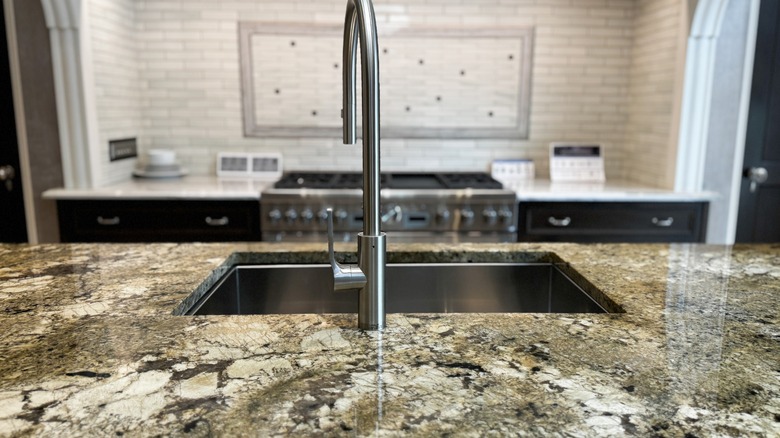
When you have granite countertops, it's important that you understand how to properly clean them to avoid creating stains and scratches on the stone and its finish. You may have heard that all you need is salt and lemon to clean kitchen stains, but this doesn't work for granite because acidic lemon juice can corrode the sealant, leaving the stone vulnerable to etching and stains. Instead, you should use a pH-neutral cleaner, but you don't have to buy a commercially formulated spray.
You can make a DIY granite countertop cleaner with a mild dish detergent, 70% isopropyl alcohol (like your standard rubbing alcohol), and water — ingredients that you probably already have at home. While the dish soap has degreasing properties, adding alcohol will also give the solution disinfecting characteristics, boosting its cleaning powers. Start by adding ½ teaspoon of soap and ½ cup of alcohol into a spray bottle. Then, pour 1 ½ cups of warm water into the bottle and gently shake to mix the ingredients. Before shaking, you can add 10 to 20 drops of basil, cinnamon, citrus, or lavender essential oils for a pleasing scent that's still pH-neutral.
Wipe off your granite countertops with a clean, soft cloth or sponge when you're ready to start cleaning. Then spray the counter generously, letting it sit for three to five minutes to lift grime and stains. Use one soft cloth or sponge to wipe the cleaner away in a circular motion, and use another to dry the surface and prevent streaking.
More tips for keeping your granite countertop spotless and scratch-free
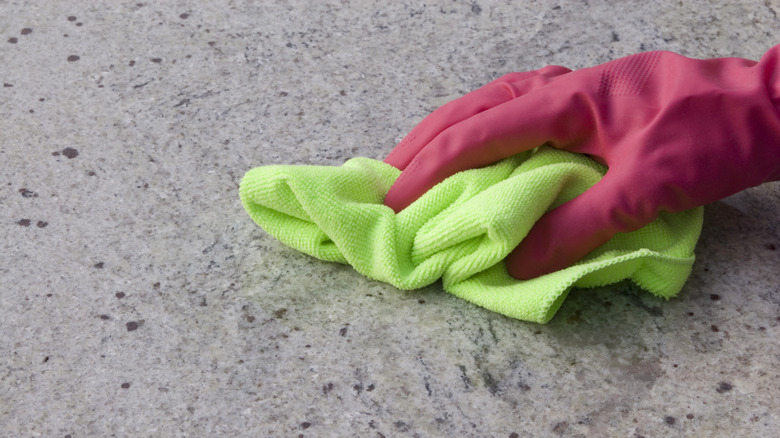
One thing you need to know about having granite counters in your kitchen is that there's more to keeping them in tip-top shape than using the right cleaner. Irakli Khizanishvili, CEO and Owner of Proslit Tile & Stone, previously provided Daily Meal with some expert-approved tips for keeping your kitchen stone countertops as good as new.
For example, you should always blot up spills as soon as possible so that they don't have time to set in and create stains in this porous stone. Make sure to use a blotting technique rather than wiping to avoid spreading potentially damaging substances that could make etching or staining worse. Also, you should never use abrasive cleaning tools, cut food directly on the countertop, or place hot plates, pots, or pans on it without a potholder or trivet. All of these can damage the sealant, which can eventually lead to stone chipping and staining.
Speaking of sealant, maintaining granite countertops requires periodic resealing because it naturally diminishes with normal wear and tear. How often you need to reseal depends on how busy your kitchen is and how well you can protect the stone from unnecessary damage. Generally, it needs to be done every one to three years. The most common sign that you need to reseal it is when the stone starts to look darker than usual.