

McDonald's Is Facing A Lawsuit Over Its Iconic McRib
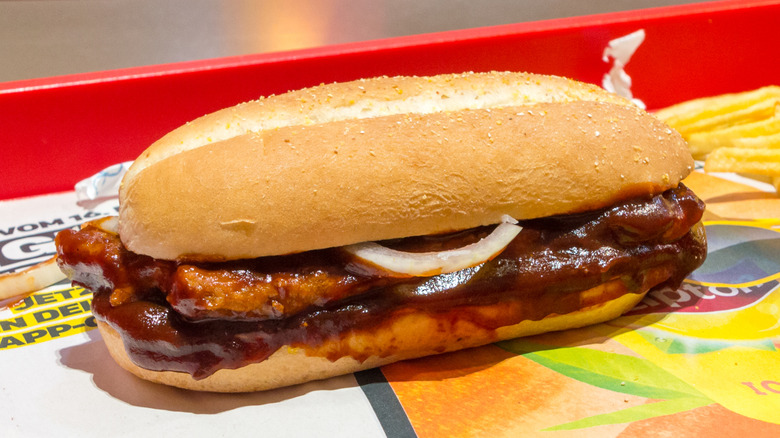
A legal complaint filed late last year in Illinois alleges that McDonald's famous McRib is an illegal example of false advertising. According to the lawsuit, the McRib contains no actual rib meat, the basis for the plaintiffs' allegation that the McRib's name, marketing, and presentation are unfairly deceptive to consumers.
McDonald's has responded to the lawsuit, which alleges that the sandwiches are actually made of restructured pork, using organs like hearts, tripe, and scalded stomach. The company denies the inclusion of any organ meats, instead doubling down on publicly available evidence that the McRib is made of ground pork shoulder, while not denying that it's free of any rib meat.
The lawsuit is currently seeking class-action status to cover the entire United States, as well as several state-level classes, specifically New York, California, Illinois, and the District of Columbia. If the complainants are granted class-action status, then anyone who bought a McRib in the United States in the past four years could be eligible to join the lawsuit, which is seeking damages and restitution, as well as injunctive relief: getting McDonald's to stop selling the McRib as we know it.
McDonald's history of iconic lawsuits
McDonald's is no stranger to major legal action and has initiated some significant cases. In 2024, the fast-food leader sued four major meatpacking companies for alleged beef price fixing. One member of the alleged conspiracy, Cargill, settled out of court and was dropped from the lawsuit, but cases against the other three remain active.
The Golden Arches were also at the center of an infamous McDonald's coffee lawsuit that you probably misunderstand. In 1992, a woman won punitive damages against the company for being burnt by its coffee. She was widely mocked for being upset that her hot coffee was hot, but McDonald's serves coffee at nearly 190 degrees Fahrenheit, a temperature at which spilled coffee can — and in her case did — cause third-degree burns in seconds. McDonald's now warns customers of the danger, but its brew is often still served scalding hot.
It remains to be seen what effects the McRib lawsuit will have on the chain. But with the McRib being such a popular product for generations, it seems unlikely that the sandwich itself is in danger. You can expect it to live on, even if McDonald's is ultimately forced to change the name or recipe.