

10 Iconic Cocktails That Were Huge In The '80s
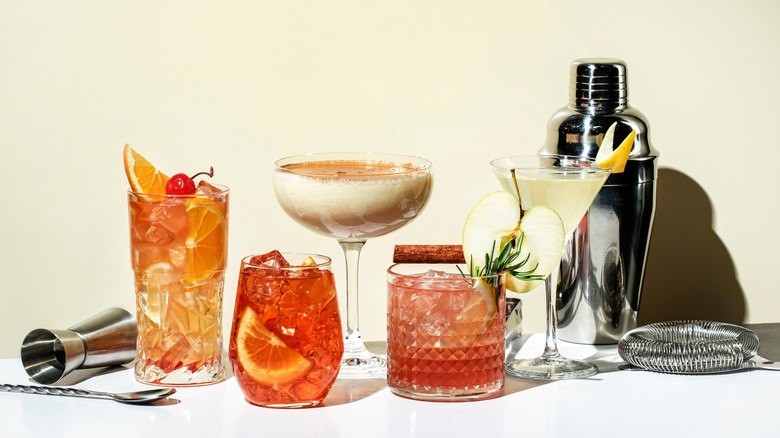
The '80s were a distinct moment in cocktail history, though ironically, the drinks that defined this era spoke more to the bold spirit of the age than to any definitive cocktail culture. In a decade when going out was closely linked with ordering drinks at a rising tide of bars, dance venues, and nightclubs, there was ample occasion to quench one's thirst with any number of trendy new drinks — these simply emphasized convenience over sophistication.
Reflecting the decade's passion for vivid colors and pop culture, '80s cocktails emphasize bold, bombastic flavors. Whether opting for color, flavor, potency, or all of the above, bartending trends in the '80s veered towards fruity, flavorful drinks with suggestive names. The introduction of a series of fruity-flavored Schnapps throughout this decade contributed to the rise in sweet cocktails, which often used vodka as the base of choice. Cocktail composition and drinking culture also reflected the time period's embrace of all things synthetic. Following the synthesizers replacing instruments in pop music and the spandex, lycra, and polyester which made up the latest fashion, mixology became a synthesized version of itself, too. Bartenders often whipped up cocktails quickly with pre-made mixers, further emphasizing the saccharine taste of the drinks most popular during this era. Without further ado, here are 10 iconic cocktails that defined the 1980s.
Sex on the Beach

An emblematic vodka-based cocktail of the 1980s, Sex on the Beach gets its flavor from cranberry juice, orange juice, and peach schnapps. The latter may be the whole reason the cocktail exists, as rumors suggest that the drink was the result of an '80s promotional campaign in Florida for this new, fruity liqueur. The name certainly fits the decade's trend of suggestively named cocktails, though there is little evidence pointing to any such campaign that may have brought the drink to life. However, it is known to have existed in bartending guides since at least 1982.
While Sex on the Beach seems to be purely a product of the 1980s, the simple truth is that this drink is a hybrid of two others: the Fuzzy Navel (peach schnapps and orange juice) and the Cape Codder (another name for a vodka cranberry). Whoever thought to merge these drinks into one ultimate concoction may be lost to history, but the result was quickly immortalized in pop culture. It was featured at TGI Fridays, a fitting option for the growing restaurant chain that got its start as a trailblazing singles bar. Having equally revived and redefined cocktail culture, TGI Fridays' original New York location was also the loose inspiration behind the bar that also features Sex on the Beach in the 1988 film "Cocktail."
Amaretto Sour
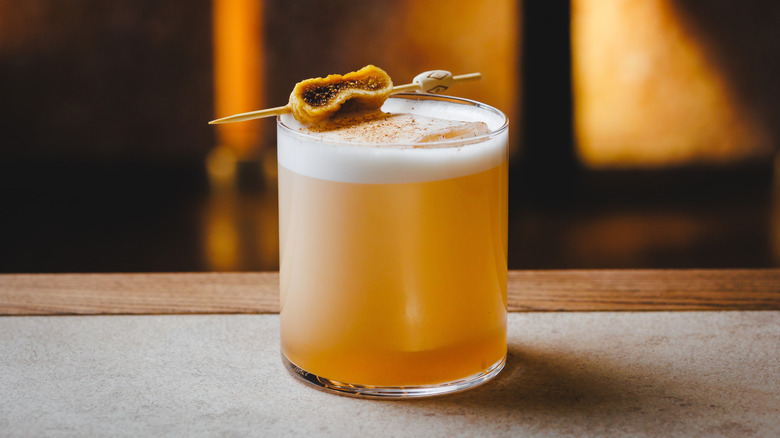
Amaretto liqueur features in a few signature cocktails of the 1980s, the most iconic being the simple and classy amaretto sour. Dating back to the Renaissance era, amaretto is a vaguely bitter, amber-colored elixir made from a mixture of almonds with fruit pits — either from cherries, peaches, or apricots, though the latter is most common. Amaretto's main flavor can therefore have nutty, fruity, and caramelized notes, making it refined enough to be consumed straight and served after a meal. Though enjoyed in Italy for centuries, the liqueur didn't become a regular US import until the 1960s, from which it gradually found its way into bars and mixed drinks.
Considered a milder version of the whiskey sour — a simple triad of whiskey, lemon juice, and a bit of sweetener — the amaretto sour appeared in the '80s as an even simpler pairing of just amaretto and lemon juice. Not present in bartending guides published before this decade, the amaretto sour fit in among the disco-bold flavors of the era by suggesting the liqueur be combined with sour mix to simplify the mixing process. Purists have since come to scorn this '80s bartending hack, and the drink has enjoyed somewhat of a revival in the past decade, thanks to the efforts of bartending icon Jeffrey Morganthaler, who is among those who insist that the drink must be made with fresh lemon juice.
B-52
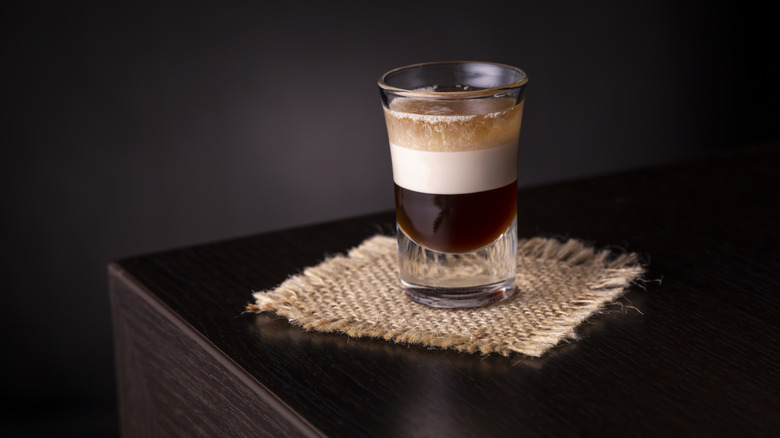
The B-52 cocktail was invented in Alberta, Canada, in 1977. The bartender behind this mixed shot with a sweet zing is typically presumed to be Peter Fich at the Banff Springs Hotel. Fitch was known to name cocktails after bands he admired, and the B-52 takes its name from the B-52's, an American rock band formed in the mid-70s. In a roundabout way, the cocktail is actually named for B-52 bomber planes, the shape of which inspired the female band members' beehive hairstyles and, subsequently, the group's name. It is nevertheless a fitting title considering that the cocktail is meant to be downed in one shot.
The original mixture is a triad of coffee liqueur, Irish cream liqueur, and Grand Marnier, making for three concentric rings of color, liquor, and flavor. The cocktail took off in the 1980s, as did a long list of variations. For example, the B-53 shot features vodka, while a B-54 adds amaretto instead, making use of another liqueur that became very popular in the same decade. These three were the most popular versions of the shot throughout the 1980s, featured in bartending guides of the era, but there have been countless variations on the B-52 recipe.
Long Island Iced Tea
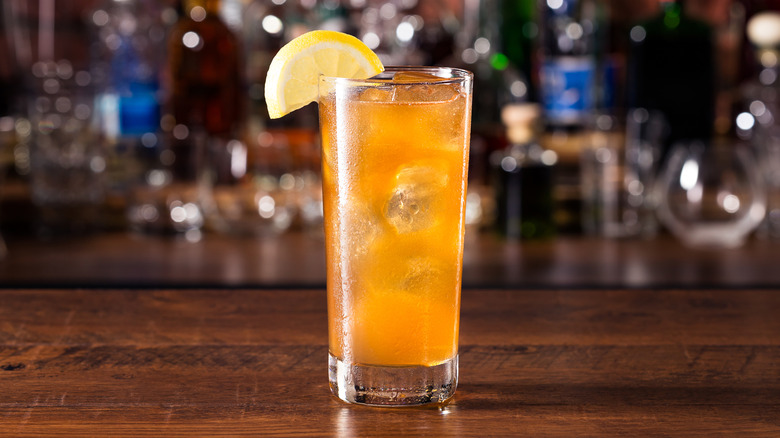
Some might suggest that the Long Island Iced Tea's resemblance to iced tea was a Prohibition-era tactic for disguising its alcohol content. A community in Kingsport, Tennessee, has laid claim to the alleged origins of the drink, suggesting the inventor was a local named Charles Bishop. The Long Island iced tea might have been named after Long Island in Kingsport, TN. Whether or not this tale is the true source of origin, the Long Island iced tea didn't reach the height of its popularity until the 1980s. Over half a century later, this boozy confection started popping up in bars along the oblong, southeastern island butting up against New York and Connecticut, also known as Long Island.
Both locations might account for the drink's name, a coincidence that gives the cocktail a bit of a mythic association. Nevertheless, wherever it came from, the recipe is equally deceptively potent, making a mix of five liquors. The traditional mélange consists of rum, gin, vodka, tequila, and triple sec, and the whole thing gets the edge taken off by adding lemon and lime juice, as well as a large splash of cola. Today's bartenders have become leery of the Long Island, as the final outcome does indeed wash down as smoothly as iced tea. The drink may be one of the stronger confections amongst '80s cocktail favorites, but it's also easy to sip.
Espresso Martini
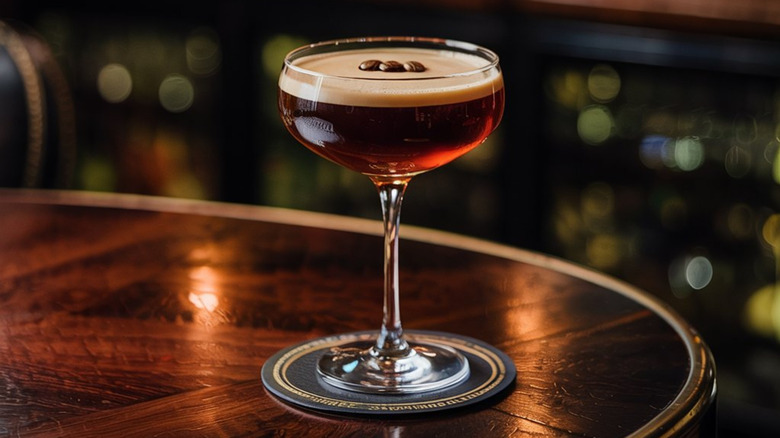
Originating from a bar in London's Soho neighborhood, the espresso martini was a creation invented and then perfected by local bartending legend Dick Bradsell. At some point during the 1980s, the neighborhood was more crowded than usual with production on a David Bowie film underway. This attracted a clientèle that might not typically have frequented Bradsell's bar, including a young model whose identity remains anonymous, though her career and bar order would both go on to become legendary.
As the story goes, she requested a drink that would wake her up and get her a little buzzed all at once. Bradsell's solution was to make the most of the new coffee machine the bar had just acquired. He mixed espresso with vodka — that ubiquitous liquor of choice in the '80s — and then balanced out any contrast in these opposing strong flavors by adding in some coffee liqueur. The cocktail was a success and could be easily modified to fit anyone's coffee preferences, whether keeping things on the bitter side or making them sweeter. While the type of coffee in the drink can vary without changing up the recipe too much, food writer Gail Simmons' secret to an espresso martini suggests the brand of Vodka makes all the difference. Whether ordered today as a pick-me-up or as more of a dessert cocktail, the espresso martini is traditionally served with three coffee beans on top, meant to represent the Italian tradition of "health, wealth, and happiness."
Tequila Sunrise
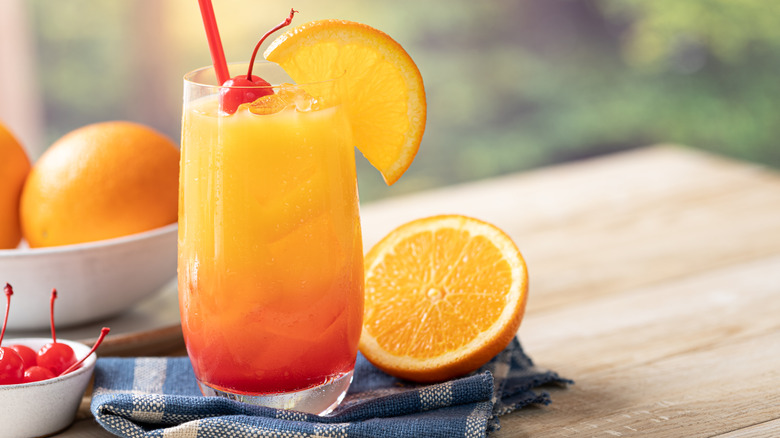
The Tequila Sunrise is yet another '80s cocktail with origins oozing with myth and mystery. One claim suggests the drink comes from Phoenix, Arizona's Biltmore Hotel, sometime between the 1930s and 40s, but an older tale says the drink got its start at the Agua Caliente Casino in Tijuana. A popular destination for early Hollywood regulars to flock to and an ideal place to escape for a bit of revelry, this became all the more à la mode during Prohibition, when liquor could still be enjoyed in large quantities across the border. The original Tequila Sunrise may have been born in this place out of these circumstances, and its original form was a mixture of crème de cassis, grenadine, lime, and tequila.
Whether or not this is the true origin tale, the cocktail made a resurgence with a reimagined recipe in the 1970s. Mixed in Sausalito, California, the Tequila Sunrise's makeover included the orange juice and gin that define the version more recognizable today. This configuration was introduced to Mick Jagger when the Rolling Stones were passing through, and the rockstar was immediately converted, hence why the American tour that followed was forever associated with cocaine and Tequila Sunrise. The drink was further popularized — and its rock-and-roll associations solidified — when the Eagles' song of the same name was released in 1973. The cocktail remained popular into the '80s, further becoming a cultural reference through the 1988 thriller "Tequila Sunrise."
Kamikaze
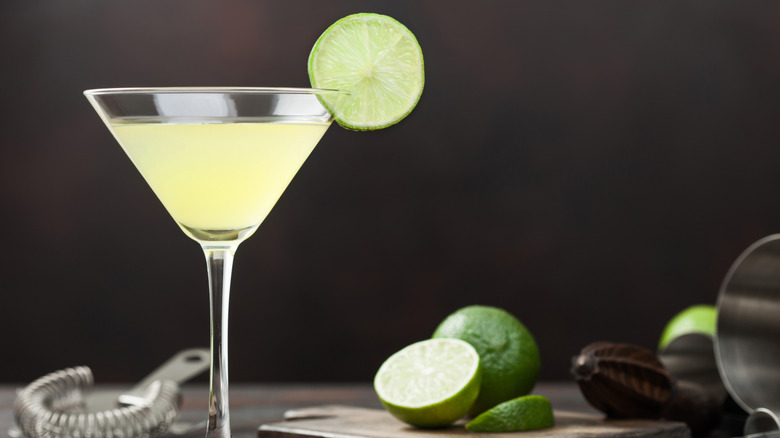
Though not originally a cocktail, the Kamikaze evolved into one between the 1970s and 1980s, when the drink began to make more of an appearance in bars. Though the name has led to creation stories linked with WWII and a postwar inception on a Japanese naval base, the truth about where this combination came from is still very murky. In any case, the original recipe was for a shot consisting of vodka and triple sec washed down with a bit of lime. Fitting in well with the vodka-based cocktails that reigned supreme during the '80s, this drink, once it evolved into an official cocktail served in a chilled glass, is technically a vodka margarita.
A product of its time, the Kamikaze got a bit less sophisticated in the '80s, when bartenders who had to whip it up quickly on busy nights often simply poured in liquor with a pre-made sour mix. The fluorescent green result certainly got the job done, but this made for a much less delicate drink. Part and parcel with the fluorescent cocktail colors trending in the 1980s, this shortcut Kamikaze has numerous iterations. The most colorful might be the Blue Kamikaze, which includes Blue Curaçao that gives the drink a neon hue fit for the disco. Today's purists, however, insist that the Kamikaze is at its finest when prepared with its original triad, eliminating pre-made mixers and opting for fresh lime juice.
Slow Comfortable Screw
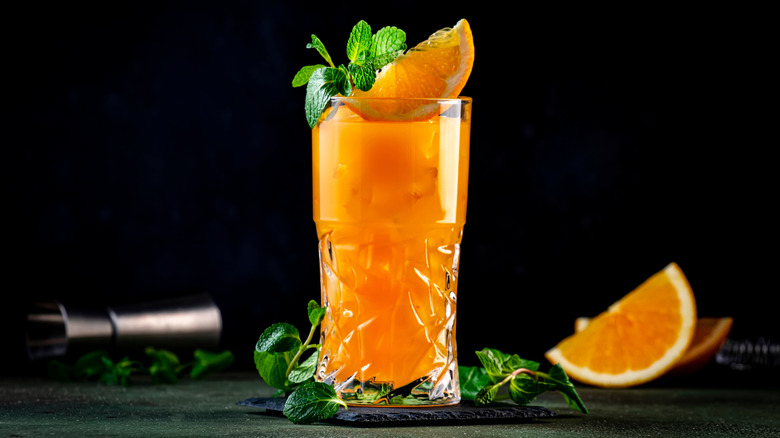
Yet another drink with an X-rated name, the Slow Comfortable Screw belongs to a cocktail family born out of the 1980s, all reimagined versions of the Screwdriver. The Screwdriver was one of the OG gin cocktails, an invention of necessity when vodka and orange juice were the only things handy. As the story goes, the drink got its name because the tool in question was the only thing on site that could function as a stirring vessel.
As for the descendants that would pop up in the 1980s, one of the most emblematic was the Slow Comfortable Screw, which took its name and distinguishing attribute from the addition of sloe gin. Sloe gin isn't really gin, but it works in this case as a base in place of vodka. For merely a Slow Screw, this "gin" was all that needed to be switched out from the Screwdriver recipe. It's the addition of Southern Comfort, a whiskey liqueur with notes both fruity and spicy, which adds the "comfortable" part to the name. More elaborate "screw" cocktails abound, and the names get longer in a tongue-in-cheek way to reference their ingredients. A Slow Comfortable Screw Against a Wall adds Galliano liqueur. One of these, Against a Cold, Hard Wall, adds all this and overproof rum on top. Though variations abound, the Slow Comfortable Screw's fewer ingredients prove that simplicity can be all a good cocktail requires.
Bramble
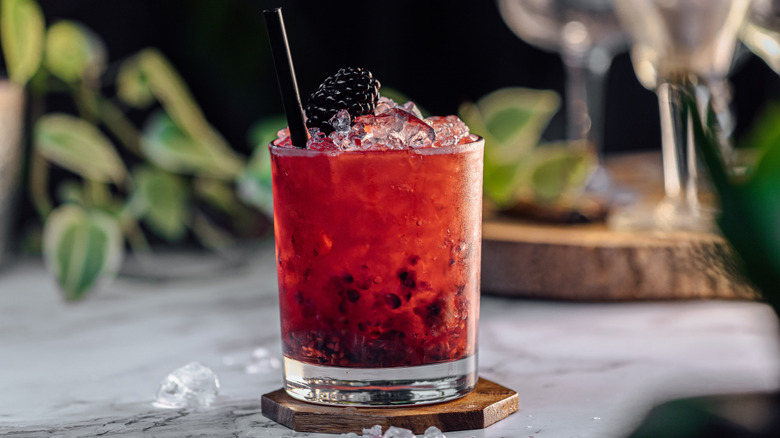
Another creation from London bartending guru Dick Bradsell, the Bramble is one of the subtler cocktails to emerge from the 1980s. Invented just like the espresso martini while Bradsell was employed as the bar manager at Fred's Club in Soho, the inspiration behind this sophisticatedly simple drink was Bradsell's desire to invent a proper cocktail from his homeland. Despite some of the internationally sourced ingredients, the Bramble is an aesthetic cocktail with a British twist. When putting together all the parts, Bradsell drew inspiration from his own childhood growing up on England's southern coast, the Isle of Wight, where, as a boy, he found himself ensnared in many a bramble bush while hunting ripe blackberries.
Said to be a play on the Singapore Sling and a variation on a gin sour, the bramble, consequently, is a cocktail with a subdued fruitiness, relying on the blackberry-based crème de mûre to define its signature flavor. This gets added to a combination of gin and lemon juice, making for something equal parts sweet and tart. The ensemble is served, traditionally, over crushed ice, as this neutralizes any possibility of something too sour or saccharine, and ensures a harmonious mixture that goes down ever so smoothly.
Fuzzy Navel
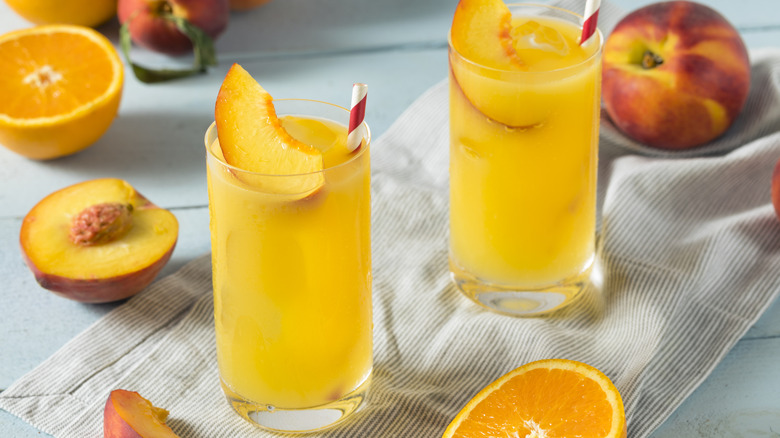
Invented in 1984, the Fuzzy Navel is a much sweeter take on the Screwdriver's vodka and orange juice. It's the result of a marketing campaign for Peachtree Schnapps. Drastically impacting the cocktail scene with its simplicity and tastiness, the drink's flavor and low alcohol content fit well with the era's trend towards sweeter drinks that sought less of the inevitable bitterness that comes with adding hard liquor. Easy to mix up and quick to please, the Fuzzy Navel may have been snubbed by purists, but no one could deny its success. This drink helped turn Peach Schnapps into a cultural staple and essential bartending ingredient, as more than 12 million bottles were sold in its first year of production.
Whether this resounding success spoke more to the Schnapps or the Fuzzy Navel itself, there exist variations on the cocktail to fit all flavor palettes. The Hairy Navel adds the vodka from the Screwdriver back in to create something stronger. Alternatively, the Woo Woo edges closer to Sex on the Beach, reimagining the flavor palette by switching out orange juice for cranberry, and making for a more colorful but no less fruity mix that's just as easy to sip.