

4 Tips For Maintaining Your Vintage Pyrex Pieces
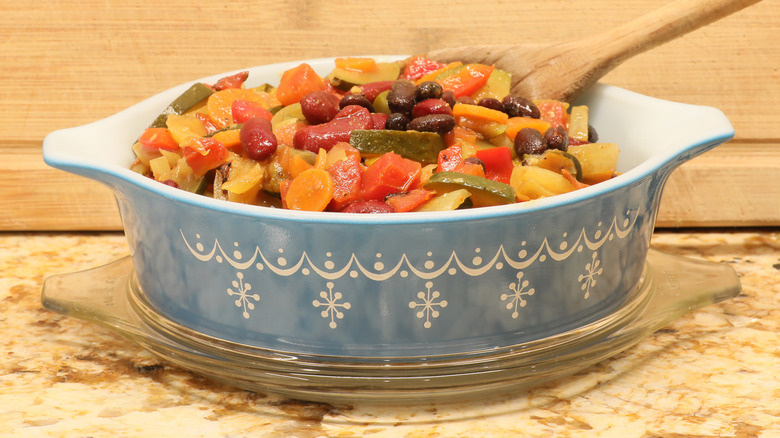
One of the selling points of Pyrex cookware has always been its durability, so it's no wonder that many vintage pieces are still in perfectly good condition after decades of use. But just because something is tougher than your average glass doesn't mean you shouldn't be gentle with it to make sure it lasts for generations to come.
There are a few simple rules of thumb to keep vintage Pyrex borosilicate (or any old glassware, such as the Pyrex-like Anchor-Hocking cookware made of soda-lime glass) in good condition. And they all revolve around treating these precious antiques with the care they deserve. Even if they can take much harsher treatment without breaking, you'll want to do better by the glass than simply not breaking it.
Improper maintenance can dull glossy finishes, fade colors, wear away patterns, and scuff or even scratch glass surfaces, all without actually breaking the piece. And the joy of collecting pieces like these is significantly diminished if they no longer look as good as they cook.
Never use the dishwasher
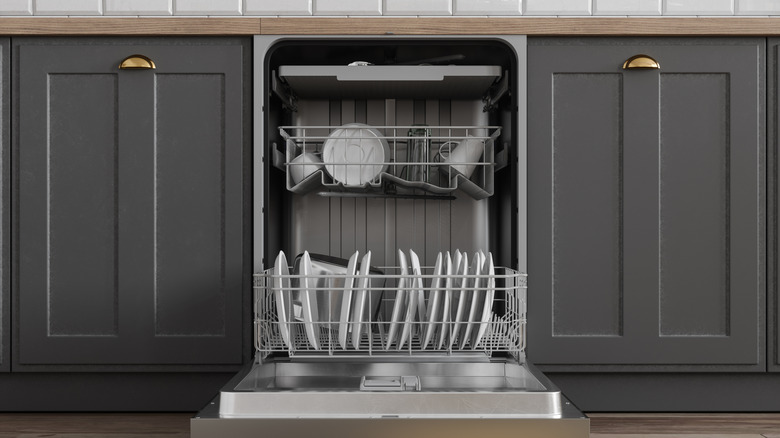
Dishwashers are the best choice for easily and efficiently cleaned dishes, but they're one of the worst things you could do to vintage Pyrex. Over time, the cleaning power of dishwasher detergents will strip your glass of its glossiness, as well as any color finishes. Imagine tracking down a piece of "sunny" vintage Pyrex at the thrift store, only for your dishwasher to blast away its coveted yellow daisy print.
The best way to clean vintage Pyrex dishes is with warm water, baking soda, and mild dish soap. Combine everything and rub clean with a sponge, repeating as necessary. For stubborn grease, you can also try soaking the dishes in warm water with a splash of white vinegar.
Persistent stains can pose more of a challenge. Applying a small amount of baking soda directly to the problem area with warm water can work well, though scrubbing too hard will damage the finish. Some people recommend Bar Keeper's Friend as a last resort, though it can rapidly dissolve the finish.
Avoid metal utensils
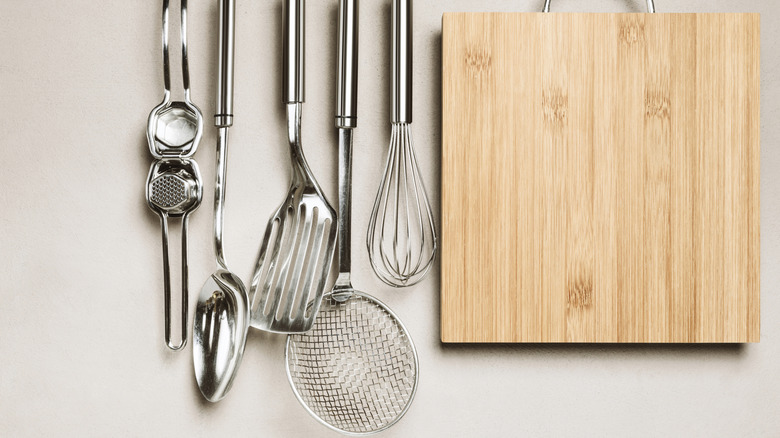
Dishwashers aren't the only potential danger to the finish on your Pyrex pieces. Metal utensils can mar the appearance of your glass, too. Sharper tools like knives might actually scratch vintage Pyrex, so keep these items far apart in your kitchen. Even duller metal utensils like forks and knives can leave behind scuff marks that look like scratches and are annoying to remove.
The easiest way to deal with this is to skip the headache and simply use wooden, plastic, or silicone utensils instead. But some Pyrex fans swear by a certain product for removing metal marks from their vintage pieces.
Pyrex fans on Flickr say that the special cleaner sold by Pyrex's former longtime manufacturer, Corning Ware, works wonders on metal marks. Though this should be used sparingly, as others have reported that it can remove some of the finish, much like (though not as extensively as) Bar Keeper's Friend.
Inspect them for damage regularly
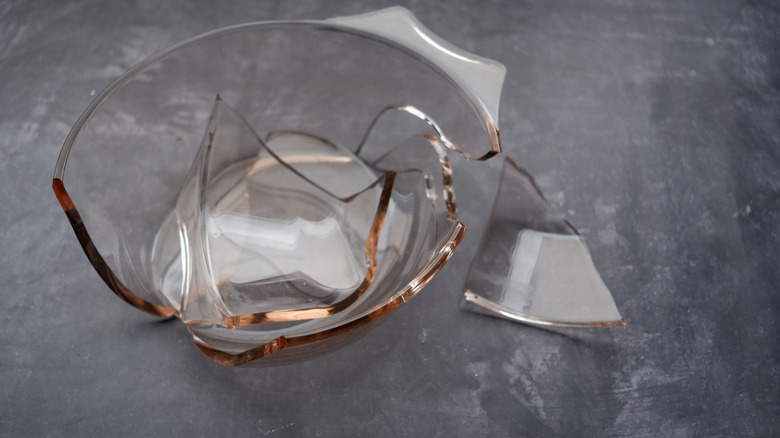
Pyrex is known for its durability, but these dishes are far from invincible. For instance, you should never broil food in Pyrex cookware because the risk of breakage is too high. The piece might not completely shatter, though — it may only get a single crack, but this can pose an ongoing threat.
Don't cook with any vintage Pyrex pieces with cracks or chips, as these may lead to further breakage and potential glass shards in food. What's more, don't try repairing damaged vintage Pyrex if you're planning on using it for heating or food. Depending on the extent of the damage, however, a broken piece may still be suitable for display or other use.
Broken vintage Pyrex may be reusable in a mosaic trivet, in custom jewelry, or as tiling for serving platters and Lazy Susans. Alternatively, you can just make the crack or chip face the wall so the rest of the piece looks pretty in the china cabinet.
Use paste wax to restore display-only pieces
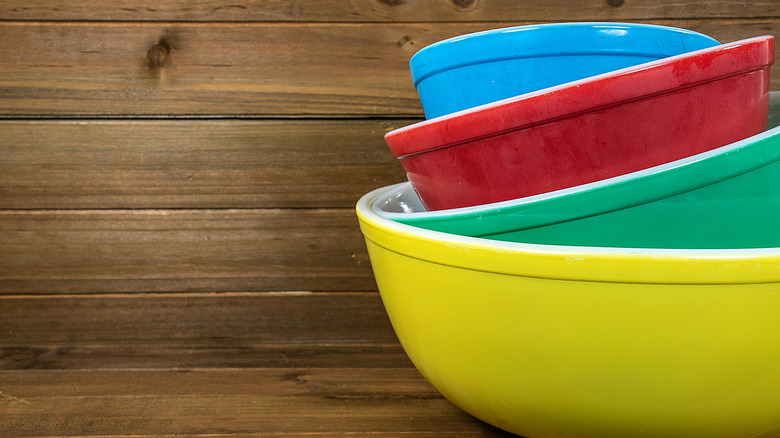
If your vintage Pyrex is retired from cooking but still too pretty to give up, you can improve its visual appeal by using a small amount of paste wax to restore any long-lost luster. A paste wax is a room temperature-solid mixture of oil and wax typically used for finishing wood furniture, but it restores glossiness to Pyrex similar to how waxing a car makes it shinier.
It's important to note that you shouldn't use paste waxes on any vintage Pyrex that will be exposed to either heat or food. Commercially available paste waxes often contain toxic or flammable chemicals. Not only could paste-waxed Pyrex leach hazardous substances into your food, they might also smoke and catch fire in the oven.
When applying a paste wax to vintage Pyrex, do so in a well-ventilated area to keep yourself safe from fumes. Lay down a thin layer on the affected area, let the wax sit for about 10 minutes, and then buff it out with a clean, lint-free cloth.