

10 Vintage Cooking Habits That Younger Generations Don't Understand
Cooking is a funny thing. It's an activity that encourages both an understanding of the practices that our parents and grandparents utilized and a willingness to innovate and try new things. Inevitably, though, as time goes on and new inventions, techniques, and tastes are developed, the old ways of doing things die away. It's part of the reason why there are so many retro recipes that used to be made every week that are no longer in rotation, and it's also why there are loads of old-school habits that we rarely see anymore.
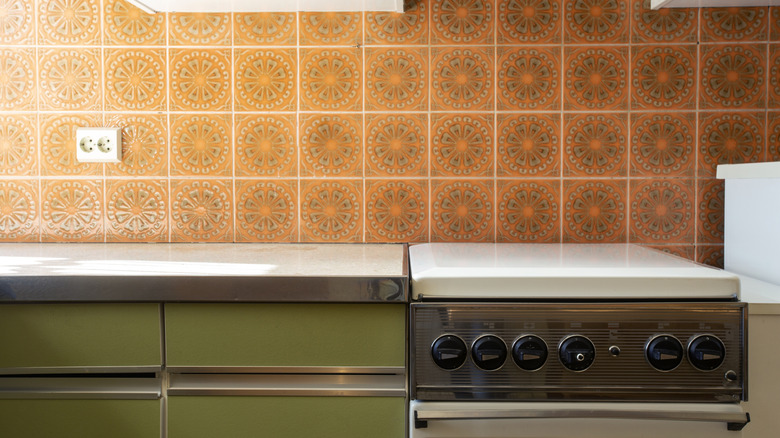
The dwindling popularity of some of these habits definitely makes sense. For younger folks, it's difficult to understand why older generations insisted on placing anything they could get their hands on in Jell-O, or using unhealthier fats like margarine or lard in every one of their dishes. Others, like home canning or using analogue cooking equipment, have been replaced as cooking and food technologies have advanced. However, other habits are ones that we kinda miss. Things like turning leftovers into new dishes or following back-of-the-box recipes used to be standard activities, but are now pretty rare — and we'd argue that we've lost a little bit of simplicity from cooking as a result.
Using a mortar and pestle
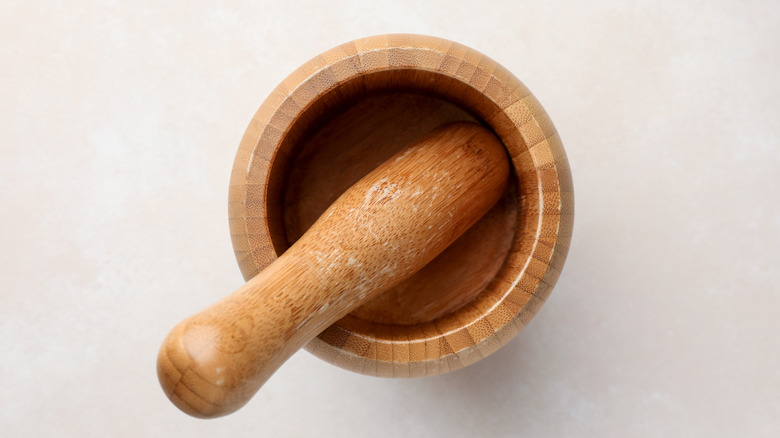
It may be hard to believe, but there was a time when people didn't have access to electricity-powered food processors to break down their food. In fact, that was the case for thousands of years, and the food processor was only invented fairly recently. The commercial food processor was first invented in 1963, and the domestic Magimix followed, before thousands of other manufacturers got in on the fun. Before this, older generations had to use their hands to break down and mush up food, and the mortar and pestle was the go-to piece of equipment to do so.
Mortars and pestles have been used to grind food like spices for approximately 10,000 years. Found in various forms all over the world, they were (and still are) used to crush and pound food into paste or dust — and in doing so, they can release flavor and aroma more effectively than if you use a food processor. Well-made mortars and pestles will also last way longer than the average food processor, but there's no denying that they're harder work than flicking on a switch. As a result, the food processor is now the dominant method of processing food quickly, while mortars and pestles (and other processing tools like the food mill) have faded in popularity.
Placing everything in Jell-O
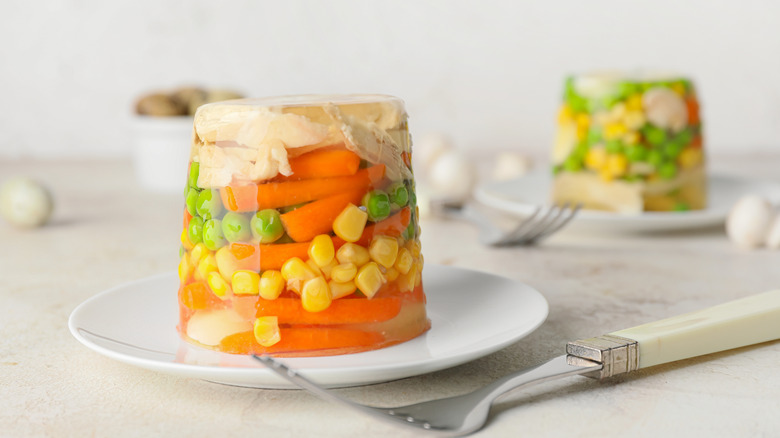
Look, we're gonna be honest: We're a little bit sad that people no longer have the instinct to make Jell-O versions of salads, desserts, appetizers, and entrées. Don't get us wrong, we far prefer the flavor and texture of dishes that aren't covered in gelatin, but this kitschy habit definitely brought a lot of fun to the kitchen that we miss.
Jell-O dishes were a quirk of mid-20th-century cooking, and they would remain popular with home chefs through to the 1980s. These dishes actually have a long cultural lineage, with aspic dishes being a feature of cuisines around the world for hundreds of years before Jell-O was invented and took off. In the United States, though, Jell-O salads and fish dishes became dinner party fare, and were driven by the popularity of cookbooks like "Joys of Jell-O."
As time wore on, though, people likely gradually realized that putting everything in Jell-O was a little limiting. There was also a move away from lurid novelty dishes and towards more refined foods and tastes. Nowadays, Jell-O is almost exclusively a dessert item, and while you might find it in certain dishes, it's pretty rare to see it used in savory form.
Using margarine or lard in dishes
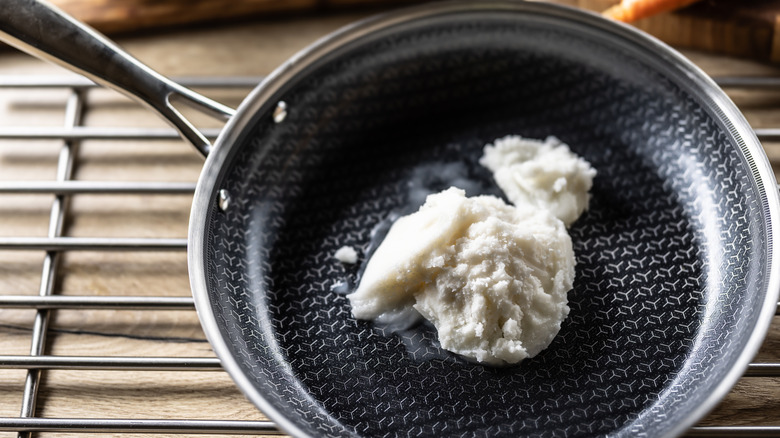
Long before olive oil, canola oil, and vegetable oils ruled the roost, people's go-to fats were margarine and lard. Lard, or rendered pork fat, was a cooking staple for generations and was popular for two reasons: Its rich flavor and its resourcefulness. Using lard (which was a byproduct of pork production) as cooking fat helped people cut down on food waste. However, lard was gradually replaced by commercially-made vegetable oils, and their availability, combined with a growing awareness of how unhealthy lard could be, meant that it's pretty much all but disappeared.
A similar thing happened with margarine, which is arguably more popular than lard today, but way less common than it used to be. Margarine exploded in popularity during the 20th century as a butter alternative, and nutrition-conscious cooks were promised the spreadability of butter without much of the risk to heart health.
The problem was that as time went on, people developed a better understanding of margarine, and it gradually came to light that it wasn't that much better for you than butter after all. Once this was fully established, the practice of using margarine in everything died out somewhat, as some people opted to reintroduce butter, and others stuck to liquid-based vegetable oils. There are still plenty of margarine fans out there, of course — but not everyone's devoted to it.
Cooking with organ meat
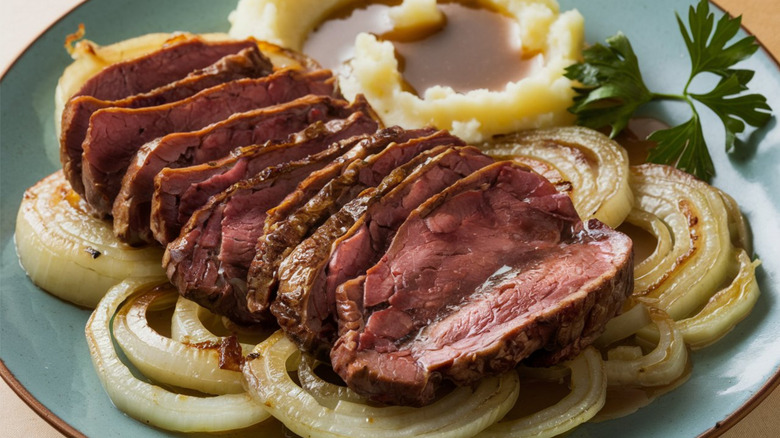
There was a time when organ meat was way more popular than it is today. Staples like liver and onions, and the use of other offal cuts, used to be common in the U.S. Their ubiquity was arguably linked to more local, less wasteful meat production practices, and the need to ensure that the whole animal was used up. Furthermore, organ meat was (and is) more affordable than other meat cuts, which became very appealing during times like the Great Depression and the Second World War.
As the 20th century went on, though, consumption of organ meat dwindled as people turned towards more luxurious cuts of meat. Folks also began to feel more and more squeamish about eating offal, and increasingly viewed it as something that people only ate when they couldn't afford anything else. The fact that it's an acquired taste doesn't help, either: Organ meat often has a strong gamey note that can be difficult to get used to.
All this being said, in the last few years, organ meat has found a lot of new supporters, thanks to its affordability and the value found in cooking nose-to-tail. However, it's still an ingredient that's relatively rare these days, and one that younger generations prefer to avoid entirely.
Preparing food without a microwave

It may be hard to believe, but there was a time when you couldn't just put your food in the microwave and zap it for two minutes. That time was a little more recent than you probably think, too. The modern microwave was invented in 1945, and the very first models were produced the following year. However, folks were generally priced out of these early microwaves, and they also often wouldn't fit in people's homes very easily. It wasn't until the 1970s that home microwaves became cheap and small enough for most people to buy, and by the mid-1980s, they were increasingly popular.
Nowadays, the vast majority of people have microwaves in their kitchens. Before this, they had to rely on the old ways of doing things. The oven and the stovetop were the chefs' best friends, and everything just took a little bit longer. As for leftovers, these had to be reheated differently or repurposed. We personally think that microwaves have taken a little bit of charm out of cooking — but with the continued convenience they add to every day use, we can't be too mad about it.
Creaming virtually anything

For a long time, serving things in cream was the way to go. The practice of creaming everything from peas to beef likely began emerging in the late 19th century, when people in the U.S. began to develop a greater awareness of how to make and use white sauces. This then ushered in an era of items bathed in a creamy coating, which could either be served as sides or as the main event. Some dishes, like chicken a la king (which has very contested origins) or chipped beef on toast, became classics, and not always ones that people loved. Chipped beef on toast, for example, was widely mocked by the military personnel it would often feed. Others were a bit more casual, and vegetables like mushrooms would often get the creaming treatment to make them feel slightly more elevated.
Now, creaming hasn't entirely gone away. Side dishes like creamed spinach are still standard and popular on steakhouse menus, and it's still fairly easy to find cream-based sauces in chicken or pork dishes. However, the obsession with making everything creamy has certainly died down. People now favor different textures in their sides, and we think the world's a lot richer for it.
Turning leftovers into brand-new dishes
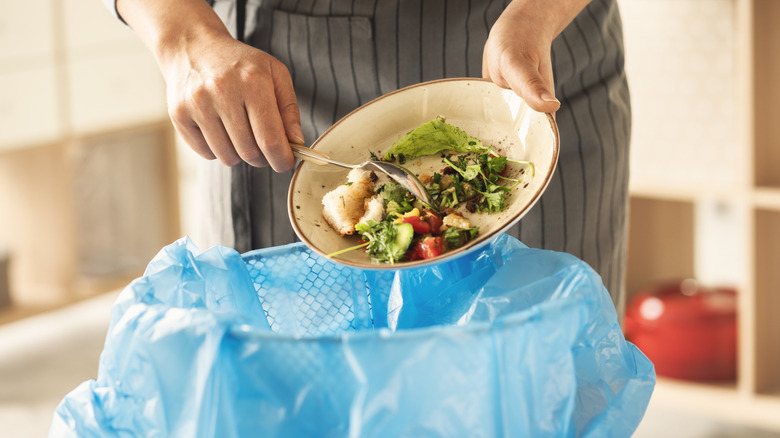
You probably have some leftovers in your fridge right now, right? What are you going to do with them? Just eat them as they are? Yeah, we thought so. Leftovers haven't gone anywhere, but how we use them has changed a lot in just a few generations.
There used to be a time when leftovers were routinely turned into something totally new, as a means to get two dishes out of one, to avoid waste, and also to show off your creativity. This "Golden Age of Leftovers" ran from the Great Depression all the way through to the '50s. It resulted in many cookbook recipes that told you exactly how to repurpose last night's meal into today's culinary masterpiece.
However, things started to shift in the 1960s. Leftovers and the meals they were made from started to feel old-fashioned. People began to have way more options to choose from, and so the need to make new dishes out of old ones just wasn't there anymore. The popularity of the microwave changed how we use leftovers even more: Now, people can heat them with the press of a button. Leftovers are now typically enjoyed for what they are, and it's way less common to see them turned into something else.
Following back-of-the-box recipes
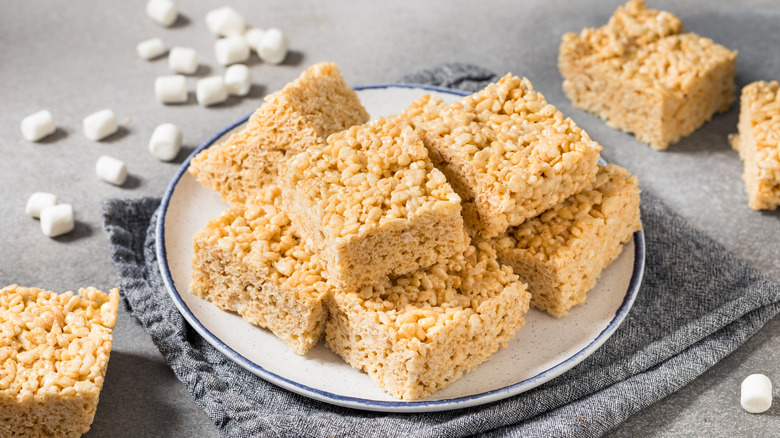
We blame the internet for this one. Just a few generations ago, the back of a food product box was one of the biggest sources of culinary inspiration out there. The rise of processed food items at the start of the 20th century brought with it a lot of opportunities for both companies and consumers. For companies like General Mills, back-of-the-box recipes were a way to advertise the usefulness of their product and to develop brand loyalty. For customers, these recipes granted access to new ideas or foods that they may not have found in cookbooks, and also showed them how to use products that they could have otherwise avoided.
Back-of-the-box recipes became formulas for foods that were handed down from generation to generation, and some of the most famous snacks or foods of all time, like Rice Krispies Treats, started their life printed on packaging. Then, the way that we accessed information changed for good. TV channels like Food Network created a new avenue for inspiration. People began to look to food blogs and social media for recipes. You can still find recipes on the back of food boxes today, but a lot fewer people are checking for them.
Making meat the most important thing on the table
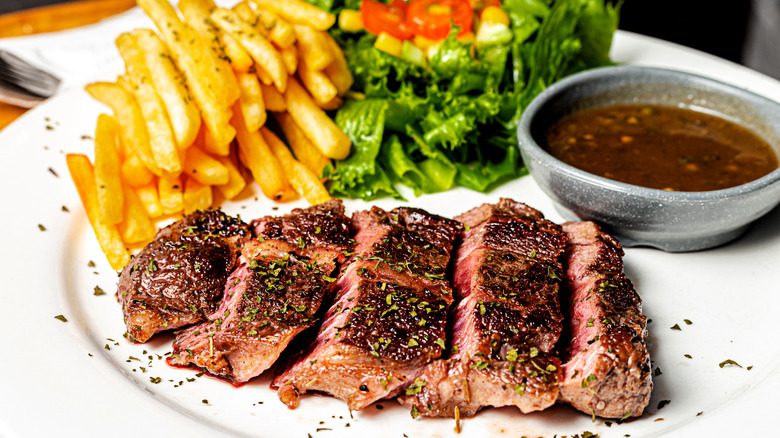
Meat's not going anywhere soon, but the age of it being more important than anything else is over. Meat is inextricably linked to the culinary landscape of the U.S., and it was one of the key commodities of the 19th and 20th centuries. Plenty of people still eat it every day, and despite rising prices, it remains popular.
All that being said, meat consumption has waxed and waned over the years, and nowadays, more people are choosing to cut down on meat consumption. Simultaneously, customers are increasingly becoming interested in plant-based meat alternatives, and this is happening not just on a domestic scale but on a global one. Younger generations are realizing that while meat may have a place in the diet, it also comes with health risks and environmental and welfare impacts that may be too great a cost. They're also falling in love with vegan recipes that have all of the flavor of meat dishes, but less of the negatives.
Canning foods at home
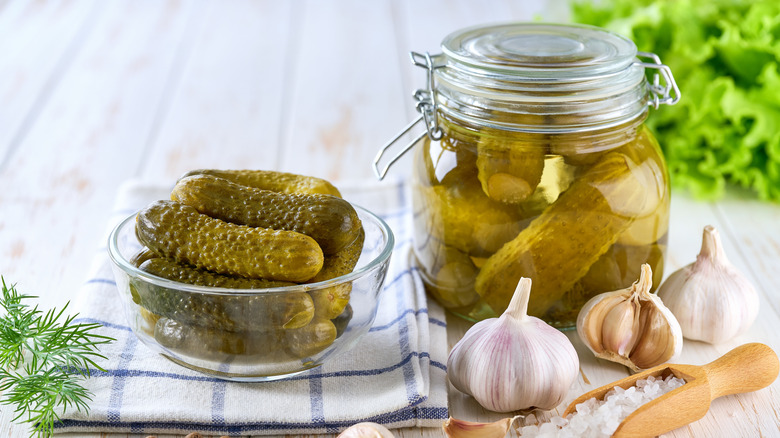
America used to be a nation of canners. Canning food to preserve it stretches back to the early 19th century, and the canning industry in the U.S. was established throughout the 1800s. Home canning became more popular towards the end of the 19th century, thanks to the invention and production of Mason jars. Before long, everyone was canning their own food, saving money while they did so, and turning seasonal produce into something they could enjoy year-round.
As the 20th century pushed on, though, making your own canned fruit and vegetables began to take a bit of a backseat. This is arguably due to the wider availability of affordable store-bought canned foods, which are way more convenient to buy than canning things yourself. The increasing threat of botulism was also perhaps a factor in the dying out of home canning, as folks began to feel that it just wasn't worth the risk. Mason jars are still popular today, of course, but they're often used for storage instead of food production.