
5 Julia Child Quotes To Live (And Cook) By In The Kitchen
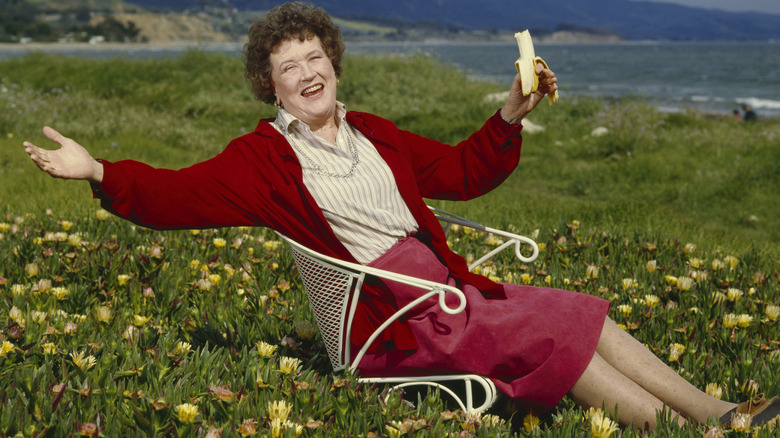
Julia Child changed how Americans cook with her original television show, "The French Chef." It wasn't pretentious. Food was meant to be explored, and mistakes were celebrated. In the process of teaching us how to make meals, she taught us new ways of thinking about food and life.
In order to leave behind good quotes, you need to have a rich and interesting life. For instance, Julia Child (née McWilliams) signed up for the Office of Strategic Services, the precursor to the CIA, in 1942. Working as a researcher, she was posted to Ceylon (present-day Sri Lanka) and China. She met fellow service member Paul Child, whom she would eventually wed. Her husband loved her immensely, though at the time he found her cooking to be awful.
It wasn't until Julia Child was 36 years old that she made her famous sojourn to Paris, where her husband was posted with the US Foreign Service. The next year she signed up for a year-long program at Le Cordon Bleu. Due to a failed exam, the program took her extra time, and she graduated in the spring of 1951. The cooking education legend didn't even become a successful cook herself until she was 38, but her career is legendary. All this life led to great quotes, and we've compiled our favorite five below.
Let go of the fear of failure
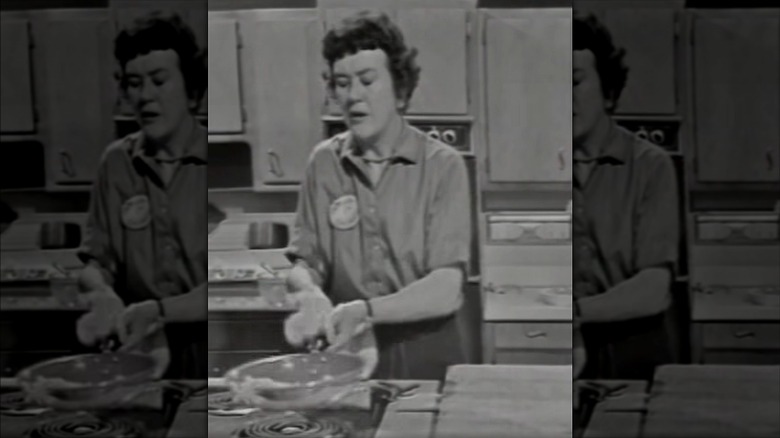
"The only real stumbling block is fear of failure. In cooking you've got to have a what-the-hell attitude."
Being afraid of failure is the easiest way to fail. You're never going to make risotto perfectly the first, second, or fifth time. But if you're afraid of making imperfect risotto, you will probably never hit that perfect dish. The more you focus on the mistakes you can make, the more prone you are to making them. A basketball player who thinks more about missing than making a free throw will more often miss the shot. In sports it's called "the yips." In a segment of her show, Julia Child once talked about flipping mashed potatoes in a pan. The most important factor is to do it confidently. You have to let go of your mashed-potato-pan-flipping yips.
There are many causes of fear of failure, and it's not as easy as just reading a quote to cure it. If you can, it helps to see cooking mistakes as learning moments to laugh about. Then, no matter how much a person won't let you live it down a decade later, you know that in the future you'll be better (and likely less afraid).
Keep it simple and fresh
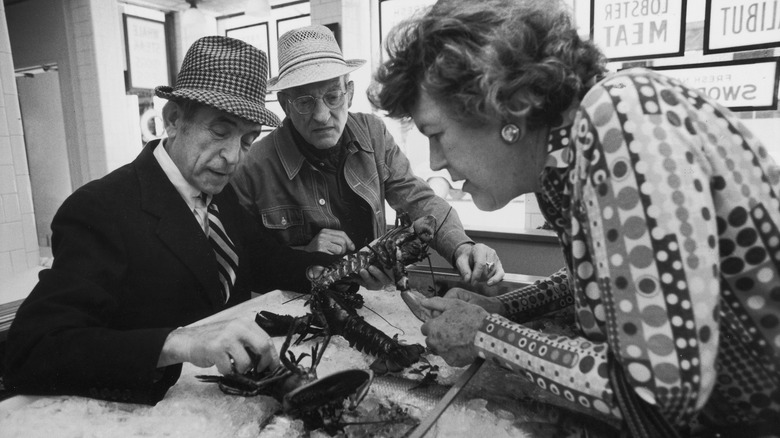
"You don't have to cook fancy or complicated masterpieces — just good food from fresh ingredients."
When I spent time in the French countryside, I was amazed by my friend's cooking. The first time they made dinner for me, I was expecting something complicated. Instead, they pan-fried fresh zucchini from a neighbor's garden, made a quick, simple roux as a base for a sauce, and fed me one of the best dishes I had in all my months in the country. There is no need to overcomplicate things when the ingredients are already good.
Keeping things simple and just focusing on quality can seem anathema to modern society, but it consistently works. Knowing what produce is in season is important to having inexpensive, quality ingredients to work with. While Instagram can be full of over-the-top dishes that are intimidating to make, how often do they actually taste as good as something like a ripe, grilled peach with homemade whipped cream? Nature is already doing all the hard work of making something delicious; let's ride her coattails.
Three universal tips
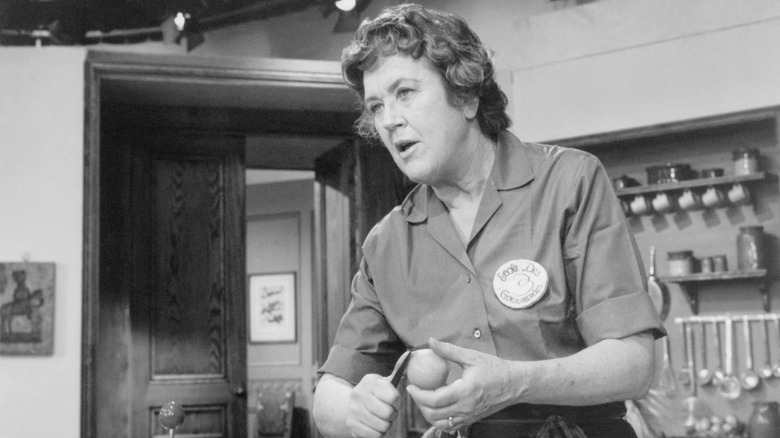
"To be a good cook you have to have a love of the good, a love of hard work, and a love of creating."
In the kitchen, if you don't love eating good food, the work of turning an assortment of ingredients into a comprehensive dish and then making a meal will be a struggle. Most of what is needed to be a great home chef can come out of the three qualities she mentions. Not having them doesn't mean you'll never be a great chef; it just means you know what to work on.
You can learn to love good food by slowing down and engaging all your senses while you eat, discovering what you like best along the way. Learning to love hard work isn't easy. Psychiatrists have found you can get into a flow state when tackling hard tasks by ensuring you're in a positive mindset before you start (via USC). Once you start creating meals, or anything in life, the love for creation will come. Whatever it is — something you eat, read, hold in your hands, or listen to — having it be your own creation can be such a positive feeling that you get drawn to doing it over and over again.
Always learn
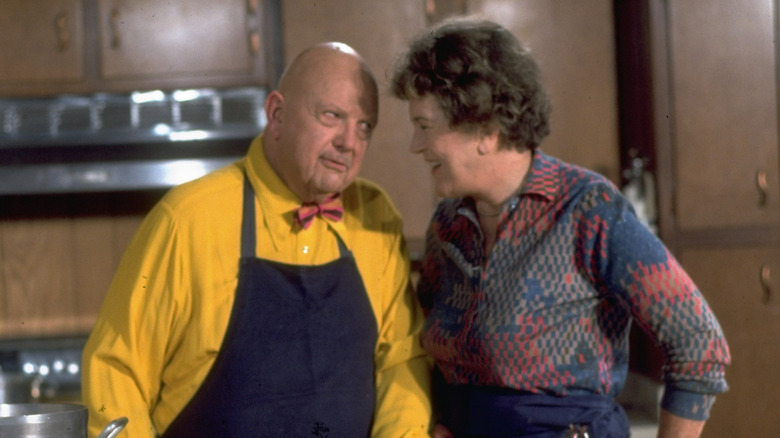
"The more you know, the more you can create. There's no end to imagination in the kitchen."
There is no excuse to stop learning. True masters of a craft realize there is so much more that they don't know and remain open to what others can teach them. Celebrated baker and pizza maker Ken Forkish wrote about making pizza in his book on bread, "Flour Water Salt Yeast." When he traveled to Italy to do more research for his go-to guide to at-home pizza making, "The Elements of Pizza: Unlocking the Secrets to World-Class Pies at Home," he learned that there were many more ways to think about pizza than he could imagine.
Learning and keeping an open mindset is how you create new dishes. Without this imagination we wouldn't have such recent creations like curry pizza, or, going further back, Nashville hot chicken. It's partially this openness that led to Caesar Cardini throwing together seemingly wild ingredients to create the Caesar salad.
The secret ingredient

"With enough butter, anything is good."
Julia Child lived to be 91 and seemingly enjoyed every minute of it, so who are we to say butter is bad for you? She famously hated margarine and railed against what she called the "fat police." She made it through the margarine-crazed '80s and '90s and would approve of butter's reemerging popularity. Health-wise, however, it's still best to consume butter in moderation.
Butter is the secret weapon used by many professional chefs to make dishes extra tasty. Whether it's a knob of butter at the end of making a sauce, as in the French technique of monter au beurre, or adding extra butter and then more butter to mashed potatoes like Chef Jean-Georges Vongerichten, it's an ingredient that only improves whatever it's added to. Sometimes, a meal calls for indulgence, and you can make anything better by adding butter until it's delicious.