

The Trader Joe's Kitchenware Find That's Elegant And Affordable
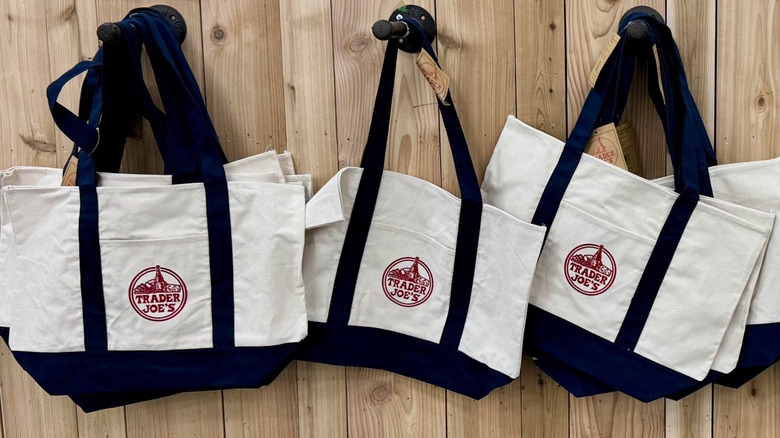
The vast amount of unique products at Trader Joe's makes it a favorite stop for groceries, and, occasionally, kitchen decor items. But as with a lot of Trader Joe's products, the hottest kitchenware finds don't last long, and once they're out it might be a while before they return. And for one of the most popular of these items, that time is here again.
According to Trader Joe's, the large olive wood cutting board is back on store shelves now. Part of a suite of olive wood products including a bowl, mosaic board, and spatula, the olive wood cutting board is prized by fans for its striking natural beauty and durability.
There are years of comments online from Trader Joe's shoppers who bought one of these cutting boards long ago and still enjoy them. The irregular grain patterns inherent in olive wood make this piece exceptionally nice. But it also requires correct maintenance to last many years, because incorrect techniques can quickly turn this beautiful board into scrap wood.
How to care for your Trader Joe's olive wood cutting board
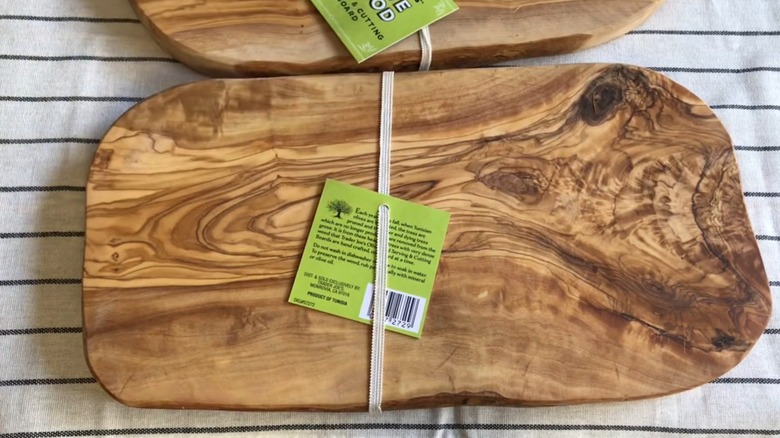
There are a number of simple but important steps for how to properly care for cutting boards like this one. These include, but aren't limited to, hand washing immediately after cooking to minimize bacterial growth, sanitizing with lemon and baking soda, and hand drying immediately after rinsing both sides. You should also moisturize the wood with mineral (not olive) oil regularly. Methods and frequency can vary, but you'll know the board is sufficiently moisturized when water beads on its surface.
But even very hard woods like olive are still porous, and you won't ever wipe all the moisture off after washing. That's why it's important to store wooden cutting boards vertically and extend their lifespans by letting both sides fully and equally air dry. This makes warping and mold growth less likely.
If properly maintained, Trader Joe's olive wood cutting board can see you through years of cooking tasks. But don't chop large pieces of meat on it. The big difference between cutting boards and butcher's blocks is that the latter are much thicker and heavier, appropriate for cleaving apart larger pieces of meat. Doing such heavy cutting risks damaging the olive wood board, but it is up to most other tasks.