

Ordering Mistakes Everyone Makes At Breakfast Chain Restaurants
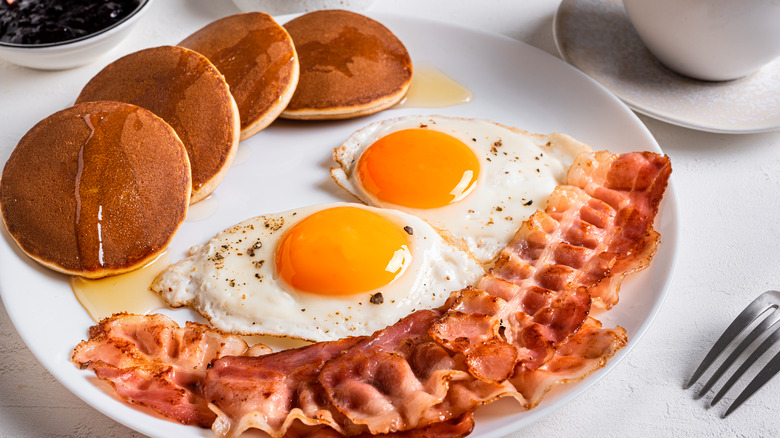
There's something about going out for breakfast that just feels so satisfying. At the start of the day, when you're bleary-eyed and don't have the energy to cook, the luxury of sitting down in a warm chain restaurant and having a satisfying meal prepared for you is second to none. That's if you get your order right, that is. Ordering mistakes at breakfast can be surprisingly common, and while the breakfast chain landscape is constantly changing, with some chains barely existing anymore and other chains popping up everywhere, the errors customers make are pretty constant.
What's frustrating is that so many of these mistakes can be avoided. Things like specifying egg doneness, knowing the difference between menu items, and asking for certain foods or drinks can be sidestepped with just a bit of foresight. Look, we get why people make mistakes when ordering breakfast: It's the first thing in the morning, they haven't had their coffee yet, and it can be difficult to get their head straight. However, we're determined to put a stop to it once and for all by pointing out the biggest, most common mishaps.
Skipping over deals or combos
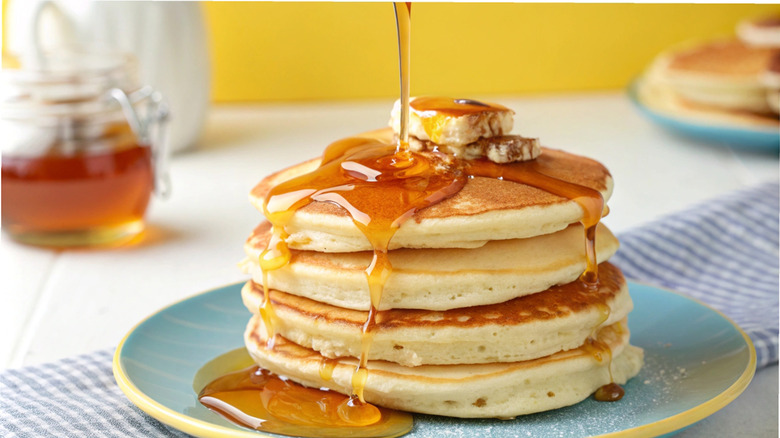
When the sun's still rising, and you're hankering for some food, the last thing you want is to be challenged by an ultra-long menu. Generally speaking, when you're going to a breakfast chain restaurant, you probably have a good idea of what type of food's gonna satisfy your cravings that morning. As a result, it can be easy to just opt for the same old thing and not check out what deals or combos your chain restaurant has on offer.
If you do this, you may be missing out on a huge amount of savings for what's basically the same order. Take IHOP, for instance: In 2025, the restaurant debuted its Everyday Value Menu, which gave customers the opportunity to grab four full breakfast meals for either $6 or $7. One of these, the Breakfast Faves Combo, contains two pancakes, two eggs, and two bacon strips or sausage links. If you were to order these items separately, you'd pay $2.99 for the eggs alone, $3.69 for two slices of bacon, and $7.49 for three pancakes (prices vary by location). All of that could be avoided if you simply checked out the combos section first, people. Don't skip it, and cast your eye over it before you make your choice.
Opting for items that won't fill you up (or provide much nutrition)
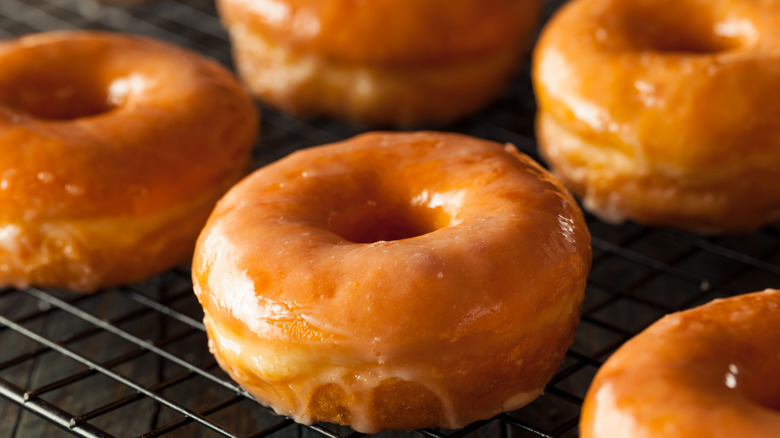
Going for breakfast at a chain restaurant can be a real treat, and an opportunity to order a meal or item that you wouldn't normally make at home. For a lot of people, though, this means going for a dish that may be big on flavor but low on nutrition. The landscape of breakfast items at chain and fast food restaurants can be pretty wild, and some of them can be very unhealthy, while also providing little by way of quelling your appetite. For example, at Dunkin', its Glazed Jelly Stick has 540 calories, 37 grams of sugar, and 15 grams of saturated fat, but only 4 grams of protein. It may taste good, but you'll be hungry about an hour later.
Instead of doing this, you should apply some logic to your breakfast order. What can you get for the money that's going to leave you satisfied, and how can you balance tastier treats with more nutritionally sound options? Simple swaps like opting for a whole wheat muffin or toast may provide you with more vitamins or fiber, or asking for an egg white scramble instead of fried eggs can give you more lean protein on your plate. You can still have sausage and bacon if you want, of course — but don't make those the only items you're eating.
Forgetting to specify egg doneness
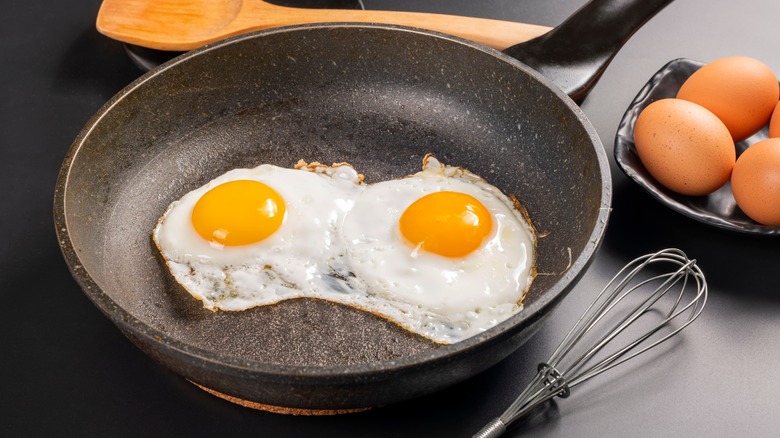
You probably know this already, but there are a lot of different ways that eggs can be cooked. However, when we're eating out at breakfast chain restaurants, we tend to stick to the tried and tested classics, with sunny-side up, over-easy, and over-medium being common options for fried eggs. The thing is that while these styles are similar, they produce a subtly different result — and if you don't specify how you like your eggs cooked to your server, you could end up with any of them, and end up with a slightly disappointing meal.
Remember, folks, your server isn't psychic: They have no idea how you want your eggs cooked if you don't tell them. So, tell them! Most servers will ask how you'd like your eggs made, but if they don't, ensure you specify it with them so you don't end up with something you don't want. Additionally, don't be afraid to try something completely different. If you're ordering from a place like IHOP, which has chefs trained to cook eggs in loads of different ways, you can ask for styles like basted eggs, and you'll likely get what you want (provided that it's not too busy, of course).
Confusing hashbrowns, breakfast hash, and home fries
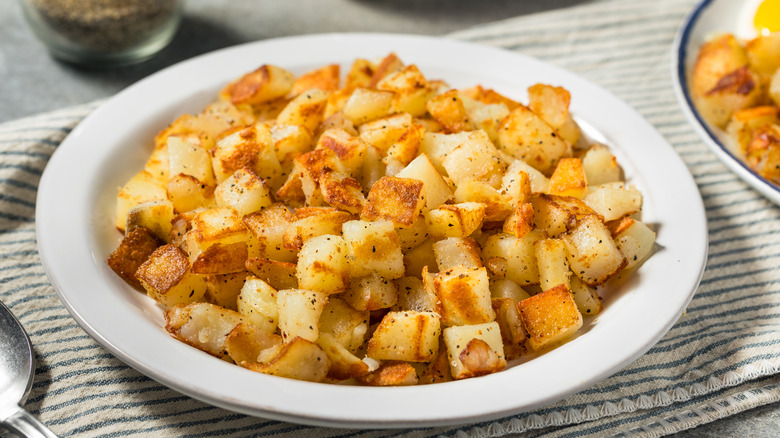
If you're accustomed to having a simpler breakfast, going to a chain for the first meal of the day can be quite overwhelming. You're suddenly presented with all of these different options, and have access to a host of foods you probably wouldn't make at home on a weekday morning. Several of these are potato-based, and many of these dishes have similar-sounding names. As a consequence, it's not unusual to get confused between hash and hashbrowns, or think that home fries are the same as one or both of these foods.
Well, they're not – and let's break it down. Hashbrowns and home fries are both made primarily from potatoes, but hashbrowns consist of shredded potatoes pushed into a patty. Home fries, meanwhile, are a loose jumble of cubed potatoes. Both of them are fried in a skillet and have a similar taste, but their forms are totally different. Hash, meanwhile, is an elevated form of home fries, mixing fried cubed potatoes with chopped meats and vegetables. It can be a side, but it's also eaten as a full meal. All of them are tasty, but it pays to know the difference before you order.
Ordering your food at the wrong time

If you're ordering breakfast food at a fast-food chain, then you probably know that it's usually not available all day. This can mean there's a huge rush to get your grub in before the cut-off point to ensure you get the food you crave. The problem is that the time fast food restaurants stop making breakfast is also one of the worst times you can order from them. This was revealed by former McDonald's corporate chef Mike Haracz, who filmed a TikTok video explaining exactly why.
In the video, Haracz pointed out that McDonald's makes its breakfast menu items and lunch with the same equipment. At 10:30 a.m. (which is when it stops serving breakfast), all the cooks swap out items like hashbrowns and eggs for fries and burgers. Consequently, this can mean that there's a certain amount of chaos in the kitchen, and it may mean that your dish isn't cooked as optimally as you like. Furthermore, you may end up with the dregs of the breakfast food, with chefs working through the last of the items before they finish for the day. Avoid either of these things happening by ordering your food well ahead of the cut-off.
Asking for decaf coffee later in the morning
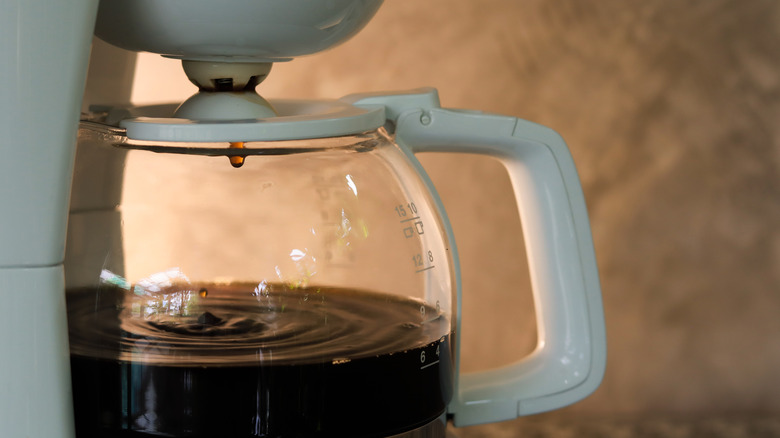
At a certain point in the day, many of us switch from drinking regular coffee to something a little less caffeinated. For some people, that can mean swapping to decaf coffee, perhaps before the clock strikes midday (hey, we don't blame them — we want to sleep, too). If you're doing this in the breakfast chain restaurant you're sitting in, though, you may end up with a pretty awful drink. Decaf coffee is one of those products that restaurants don't sell a lot of, and as a result, they may well brew it in advance and then leave it to sit there, sometimes for several hours. A breakfast restaurant insider revealed to Food Republic that in the places they worked, decaf would sometimes only be brewed once a day.
Therefore, what you end up with is a super-stale cup of coffee that tastes burnt and acrid. You'll likely leave most of it untouched, and you'll waste your money. This may not be the case if you're ordering a decaf espresso drink, but if it's coming from a coffee pot, it's best to ask when it was made before you take the plunge.
Forgetting to ask about portion sizes
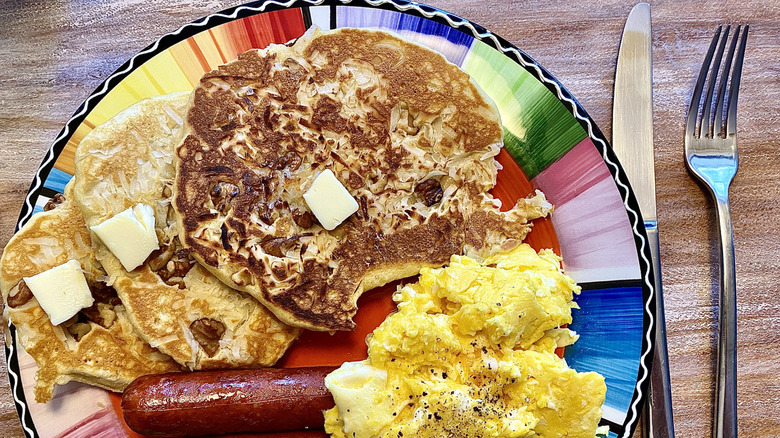
Portion sizes are changing, people. It used to be the case that the size of meals across the board at breakfast chains was pretty massive, with certain places like IHOP presenting customers with mega stacks of pancakes and huge mounds of eggs per order. More recently, though, things have started to shrink: There's been a push to reduce portion sizes due to a combination of health awareness, changing demographics, and the sheer cost for restaurants to make their food.
Because of this, you may well find that the meal you ordered at your favorite breakfast chain is a little smaller than you were expecting. Conversely, you may well assume that things are getting smaller, but find that the restaurant you're eating in actually deals with quite big portions — or else you end up over-ordering on the assumption of a more manageable meal, and then you end up with too much food. There's a solution to all of these things happening: Just ask your server how big your meal is going to be. It'll save a lot of guesswork, and you won't be surprised when it arrives.
Ordering fancier dishes like Eggs Benedict from certain restaurants
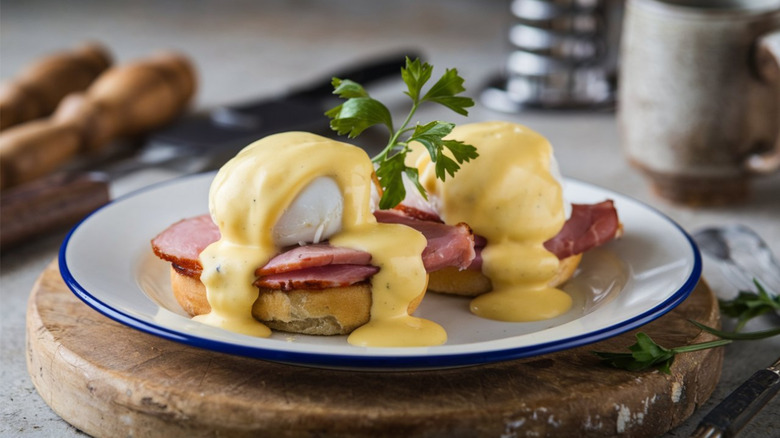
Breakfast chains tend to the basics pretty well. However, when it comes to certain, more elegant dishes, they can fall a little flat. Breakfast chain restaurants are built for speed and mass service, and the attention to detail required for something more complicated, like Eggs Benedict, can be a bit too much to ask for. You may, therefore, see chain restaurants putting a spin on dishes like Eggs Benedict, which feels pretty disappointing (Panera's Ham Croissant Benny is a good example of this, with the sandwich a pale imitation of the classic dish), or they may completely butcher its cooking.
One particular offender on this front is First Watch — a breakfast chain that isn't worth the price. Customers have railed against its Eggs Benedict, and multiple social media posts have flagged the poor quality of this dish at its restaurants, with its eggs being overcooked, its Hollandaise sauce overly lemony and bland, and additions like salmon not packing a punch. Before you order a dish like this at a breakfast chain, consider whether the chefs in the kitchen will have the time to make it as good as it should be, and if the chain itself will give you the quality you likely want. If you suspect that's not the case, you should skip it and order it elsewhere.
Asking for loads of modifications to your order
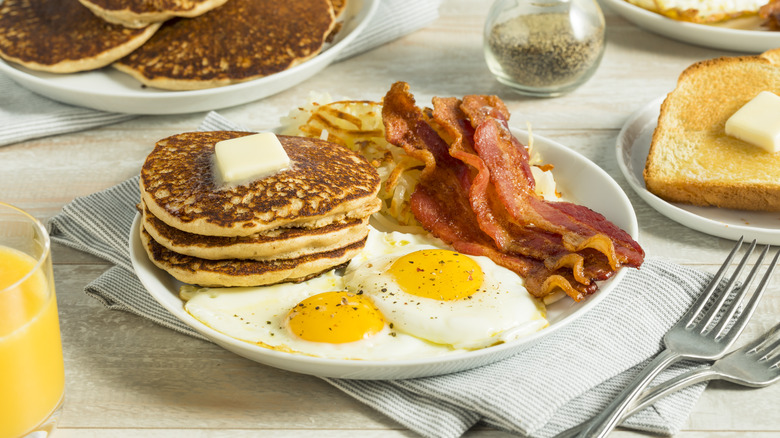
Breakfast's one of those dishes that everyone likes in a slightly different way, and so it's not uncommon for breakfast chain servers to deal with modifications to orders here and there. However, way too many people take it overboard and ask for pretty much everything to be done differently. That's where things get complicated. Not only is it quite annoying when people do this, but it can also cause confusion as the order passes from server to kitchen. Some places may not be able to make the modifications you want, or the order could be miscommunicated.
Beyond all this, big modifications to orders take the chefs a lot of time to deal with, and this can be totally impractical. "If you're just swapping something from one dish to another dish, that usually is not that big of a deal," Chris "Gerber" Mathie told The Takeout, but when you're asking for every single item to be changed or cooked differently, it can really irk people. Mathie states that you may as well order something else entirely. Bear in mind, too, that breakfast chains don't exactly love it when people modify things in the first place, and recent moves by Denny's, which recently cut back the amount of customizations it offers on its menu, prove this point.
Forgetting to check dietary or allergy restrictions
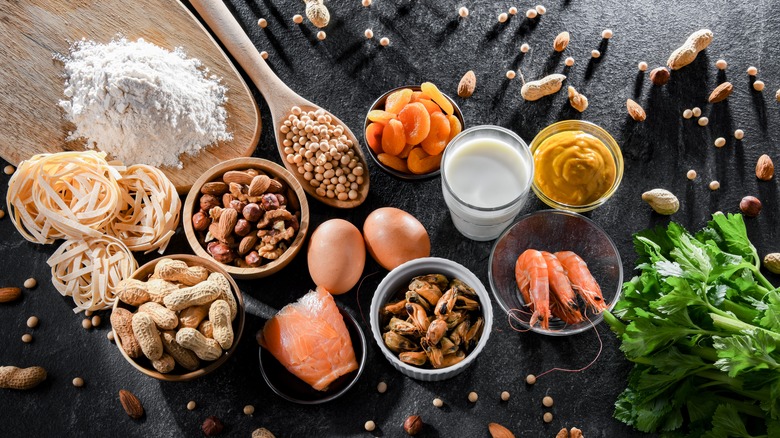
Breakfast foods can be a bit of a nightmare for people who have to consider dietary or allergy restrictions. Western-style breakfasts typically contain common allergens like wheat, eggs, dairy, and nuts, and they're often meat-based. This can make it a bit of a tightrope to order in chain restaurants — and when you consider the fact that a lot of breakfast dishes are processed with other ingredients you might not expect, things can get even more complicated. At Denny's, for example, all three of its sausage items contain sesame, while Waffle House's margarine has dairy in it.
To avoid any issues when dining at a breakfast chain, you must check the restaurant's dietary and allergen information. Ask your server what's in the food you're ordering, and flag any allergies you have to them before they leave the table. This is important so that they can pass it on to the kitchen, and the chefs can then limit any cross-contamination.
Static Media owns and operates Daily Meal, Food Republic, and The Takeout.