

Campbell's Soup Is Under Investigation By Florida's Attorney General After VP's Leaked Tirade
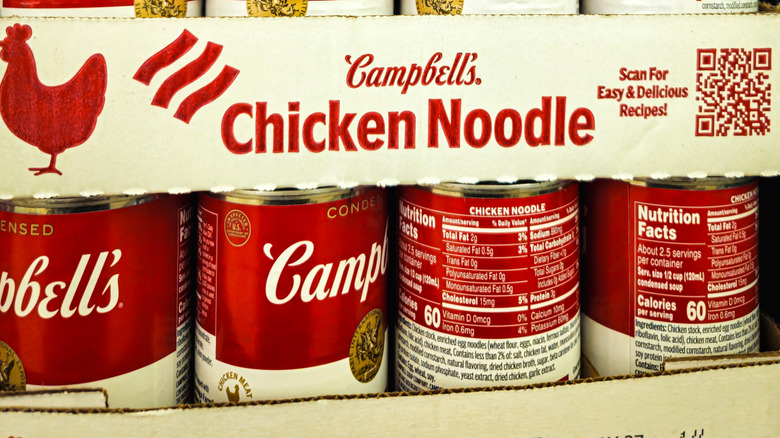
Campbell's is in trouble due to a recently leaked diatribe allegedly recorded of the company's vice president and chief information security officer, Martin Bally. The recording is full of racially offensive remarks about some of the company's employees and insults directed toward the economic class of its customers. One line about bioengineered meat, however, is getting most of the attention. Bally, who had admitted to having eaten edibles before work, is quoted as saying, "Bioengineered meat — I don't wanna eat a piece of chicken that came from a 3-D printer," (per Click on Detroit). In response, the Attorney General of the state of Florida posted on X, "Florida law bans lab-grown meat. Our Consumer Protection division is launching an investigation and will demand answers from Campbell's."
In a company news release, Campbell's response to the allegations included, "The comments on the recording are not only inaccurate — they are patently absurd." The spokesperson continued, "Keep in mind, the alleged comments are made by an IT person, who has nothing to do with how we make our food."
The comments came to light after an employee, Robert Garza, who had recorded his conversation with Bally, reported to the company what the VP said about his coworkers. Garza was then fired, which, he alleges in a lawsuit, was in retaliation.
Would Campbell's use lab-grown meat?
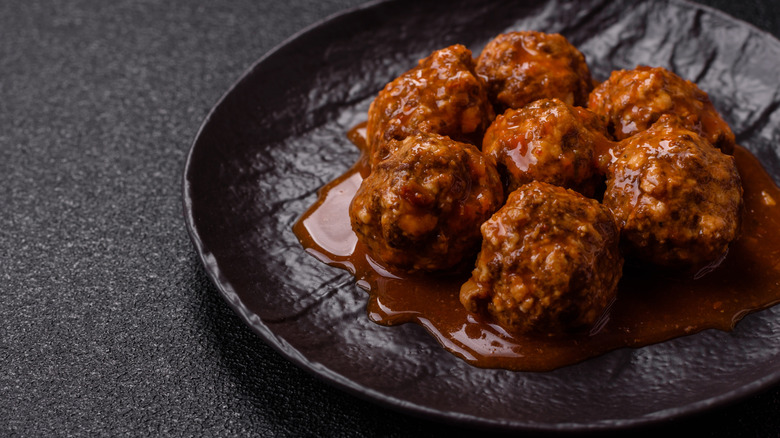
While we don't know what goes on behind the scenes at Campbell's, keep in mind that lab-grown meat, while a reality, is far from commercial viability. If Martin Bally was correct in his assertion that Campbell's food is for "poor people," would it use a more expensive meat source? Though it was a lengthy, hour-long rant full of illegal racial profiling, the Florida AG seems to be focusing on the one line that was most likely hyperbole.
An early example of lab-grown meat for sale in Berkeley, California, costs $13.99 for a pack of 8 meatballs. The company, Mission Barns, is just the third in the U.S. to receive regulatory approval to sell this type of meat to consumers. Ultimately, we're likely a long way from finding meat that is not from an animal on the shelves of our local grocery stores, but lab-grown chicken may enter the dining scene sooner than we thought. It also won't stop rumors from spreading, like the recent controversy over the claim that Aldi's bacon was made in a lab rather than a pig.