

Unexpected Ways To Use Pickle Brine In Your Cooking
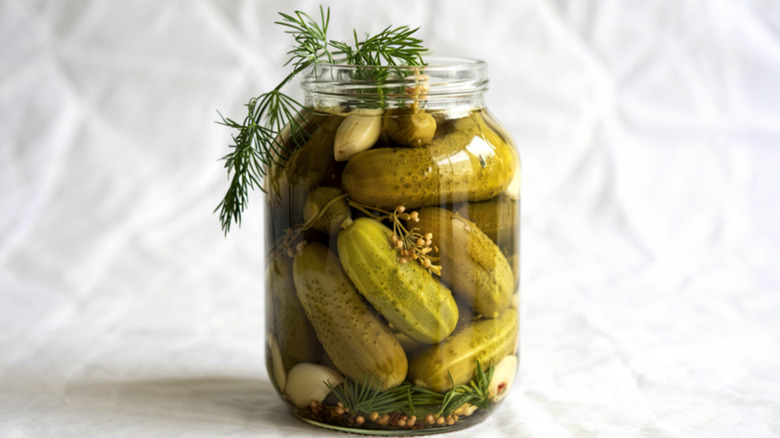
In our opinion, pickle brine has been the unsung hero of the kitchen until relatively recently. This flavorful liquid has all of the saltiness, sourness, funkiness, and intensity of pickles, and all it takes is a dash or two to transform a meal into something special. Lots of people have caught onto this fact, and nowadays, pickle brine is included in salad dressings or added to marinades as a quick way to impart a huge amount of flavor.
We guess we have to be pleased about this fact — after all, pickle brine's glory has long been overdue, and we love that people aren't wasting it anymore — but we also think that people have got a little stuck. Beyond these few uses, it can be difficult to know how to use pickle brine, and it feels like people have stopped challenging themselves with their inclusion in dishes. Well, that's all about to change. We decided to dig deep into some of the most unexpected ways that you can use pickle brine, and show you how versatile this ingredient can be. From steaming vegetables to seasoning burgers, to using it as the base of a pan sauce, here are all of your new favorite ways to use pickle brine in your cooking.
Boil your potatoes in pickle brine
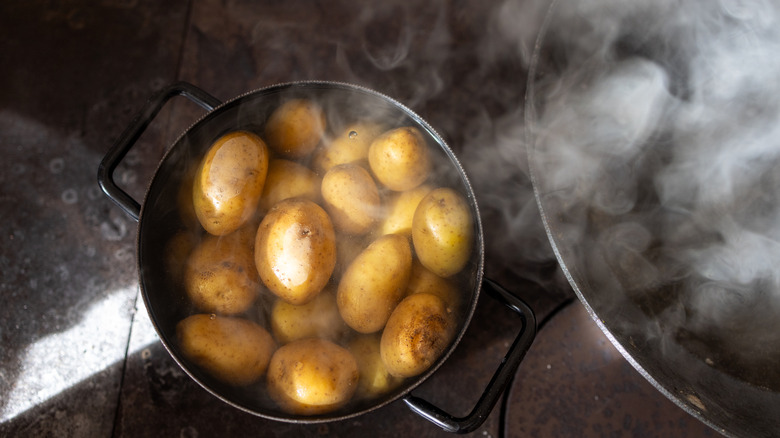
Today's the day it all changes, folks. Today's the day you start boiling your potatoes in pickle brine. This may sound as though it's a recipe for disaster (or at the very least, an acrid-smelling kitchen), but trust us when we say that it's a game-changer. Boiling your potatoes in pickle brine seasons them considerably more effectively than if you're just using salt and pepper. The brine gets right into the potatoes, making every bite slightly sharp, vinegary, salty, and totally delicious. That being said, they don't totally absorb the brine, so you don't have to worry about things getting too intense. It just gives them a little boost.
Boiling potatoes in pickle brine will only work if you're making a dish that suits its flavor profile. It's an awesome way to prepare potatoes for a salad, or to jump-start dill-roasted potatoes. If you want more flavor, don't dilute your brine with anything, and just pour it straight into the pan; just be ready for your eyes to sting slightly from the vinegar as it boils. If, however, you want things to be a little milder, you can cut your pickle brine with water.
Toss pickle brine into homemade dip
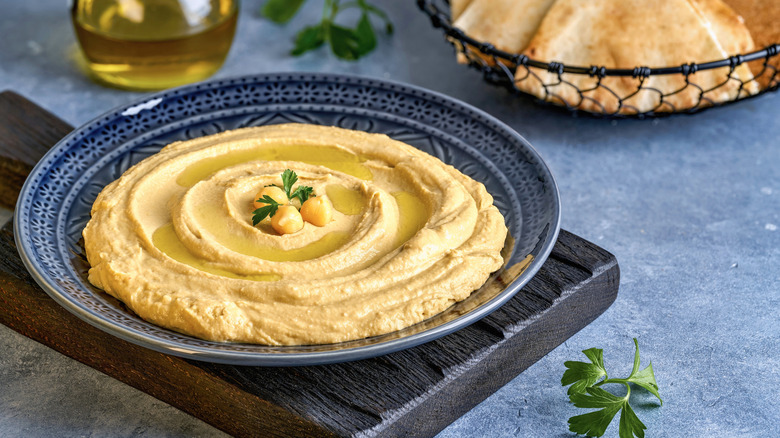
We can't be the only people who feel as though homemade dip sometimes lacks the punch of restaurant versions. That's sort of to be expected, considering that restaurant chefs spend their working days making things as tasty as possible — but it can still be disappointing when you end up with a tasteless hummus or sour cream dip. What's more, adding salt to it can often just increase the sodium unnecessarily, and give it too much saltiness and not enough real flavor.
Enter pickle brine. A few splashes of leftover brine can give dips way more complexity, and also thin out thicker mixtures without watering them down. The funkiness and sourness work wonders in sour cream or cream cheese-based dips, and keep them from tasting too dense and rich. Alternatively, it can work as an accompaniment to lemon juice in hummus, giving it a brininess that bland chickpeas often really need. Don't stop there, though: Try throwing it into taramasalata, French onion dip, or even a homemade salsa for a little lift.
Pickle brine gives steamed vegetables extra tang
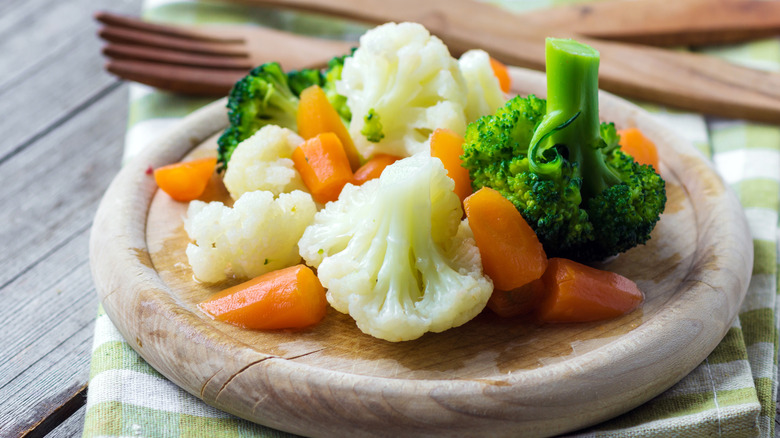
If you aren't adding pickle brine to your steaming liquid for your vegetables yet, it's time to start. Steaming veggies in pickle brine infuses sour, salty notes into them ever so slightly, without taking away from their delicacy. You're left with vegetables that are subtly seasoned and which have a little extra kick, but which don't taste weird or distracting. It's a win-win strategy, and a far cooler way of seasoning them than just adding a load of salt at the end.
We'd advise adding just a little bit of pickle brine to your steaming liquid, so as just to give it a little bit of tang. Opting for a full pickle brine steam bath will flavor your vegetables too aggressively, and you'll lose their natural notes. Oh, and don't be scared to use pickle brine to steam other things, too. Adding some brine when you steam fish or seafood can infuse them with a rich salinity and a tanginess that adds a lot of complexity for not a lot of work.
Incorporate pickle brine into your burgers

Pickle brine burgers? It's not as strange as you think. Pickles are one of the key ingredients to a brilliant burger, after all, and so by incorporating the brine, you're really just amping things up a little more. Pickle brine gives all of that funkiness and sourness without any of the pickle texture, which can sometimes be a little distracting or jarring. Plus, when it's mixed into your meat, it mellows out and provides an intense note underneath everything. It's heaven, folks.
If you're using pickle brine directly to season your burger mix, be fairly sparing. Go for a couple of tablespoons per pound of ground beef, which will be enough to season without overwhelming everything else. If you need to, cook a mini patty to check how it's working with the rest of the ingredients. However, there's another way to incorporate a pickle flavor. When you're steaming your burgers with your cheese to melt it, pour or spray some pickle brine around the meat before covering it with a dome. This will simultaneously soften your cheese and infuse the burger with all of those pickle notes. Trust us, it rocks.
Pickle brine can be the best ingredient for homemade chutneys
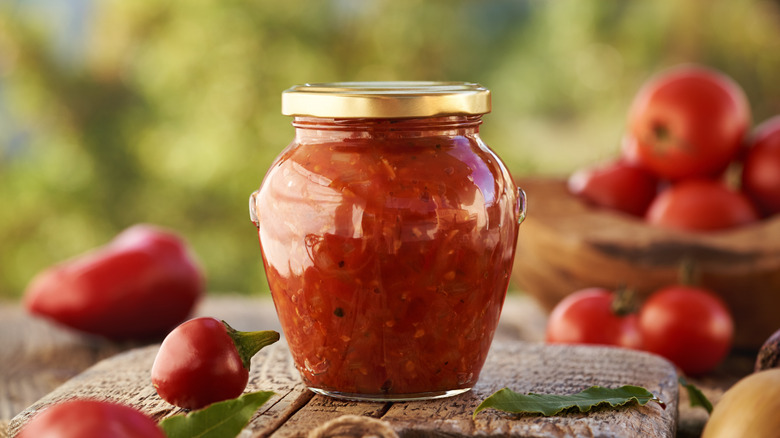
When it's made correctly, chutney is sharp, spicy, sweet, and delightfully multifaceted. Homemade chutney, however, can fail to hit all of those flavor notes, and it can also be lacking in presence. A lot of this can come down to the ingredients you use, and specifically the acidity you opt for. If you're only using white wine vinegar, as many recipes suggest you do, you'll get a clean flavor profile, but one that's also not necessarily that interesting.
That's why we recommend adding pickle brine into the mix. Adding a splash of brine to your vinegar can give it more depth and breadth, incorporating herbal and funky notes into the mix. These, in turn, will make your chutney taste fuller and more distinctive. If you use a fermented pickle brine, you'll also get that inimitable sour note. Make sure you don't substitute all of your vinegar for pickle brine, though: If you do, your chutney will end up way too salty, and its balance with the sweetness in the spread will be all off.
Pour pickle brine into your soup
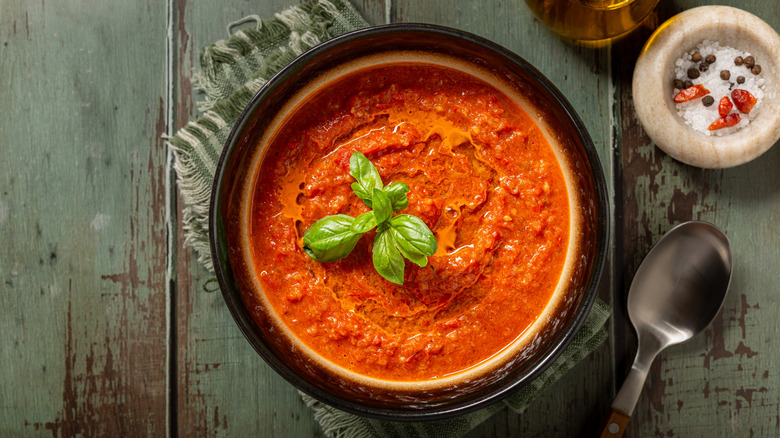
Is your soup feeling a little flat? We know exactly what it needs. Pickle brine is a tried-and-tested solution to boring broths, with the ingredient adding funk, sourness, tang, and saltiness to the base of your dish. In some recipes, like Polish zuppa ogórkowa, it lifts the central flavor profile of the recipe itself, imbuing it with an even more of the intense flavor. In other dishes, like gazpacho, it adds an important undertone to what can often be a fairly bland bowl, and contrasts with the other notes at play.
You can add as much or as little pickle brine as you want: The only real limit is how much flavor you desire, and how high your tolerance for saltiness and acidity is. If you're feeling bold, substitute a quarter of your soup base with brine, and give your soup a real kick. If you want to keep things slightly more low-key, just add a few tablespoons. Remember, though, that while you can always add more, it's harder to take it away — so if in doubt, err on the side of caution.
Use pickle brine to cook rice or couscous
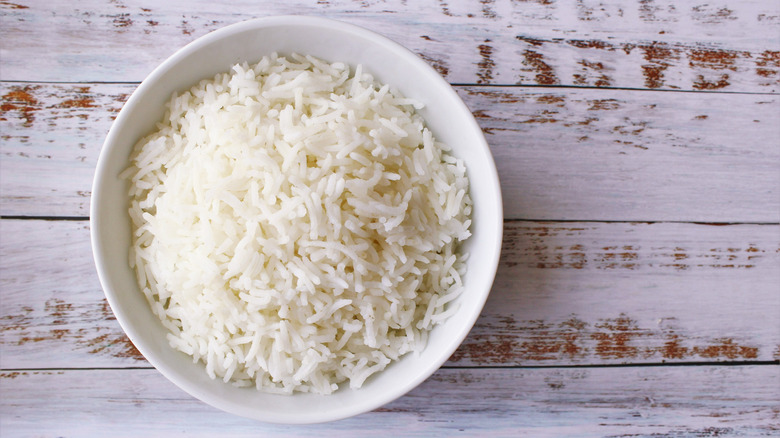
Sometimes, grains just need a little bit of something. That something can be pickle brine, folks. It may sound a little strange, but cooking rice or couscous in pickle brine gives it an extraordinary amount of flavor, even when just adding a tiny bit. When you add pickle brine to rice, couscous, or other grains like quinoa, it seasons them throughout and infuses them with all of the flavor of the brine. You end up with a carbohydrate that's far from bland, and instead tastes garlicky, salty, slightly herbal, and a little bit sour.
Importantly, though, you shouldn't be using just pickle brine here. If you do, your rice or couscous will end up way too salty and pungent, and they'll lose their subtle fragrances. Opt for around 25% pickle brine to 75% water, adding a little more brine if you want things to be more punchy. If you find that it's not adding that much flavor, next time you can adjust your ratios and throw in a little more. However, at the start, less is more.
Add pickle brine to bread
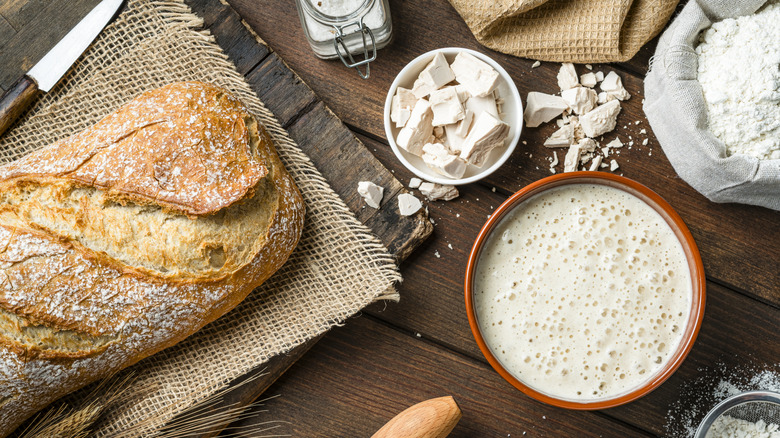
It's cool, guys — you can thank us for this one later. Pickle brine bread is one of those things that you didn't know you were missing from your life until now. Adding pickle brine to bread gives it a subtly tangy flavor and imbues it with notes of garlic, dill, and acidity. It intensifies the dough without making it too overwhelming, and it's the perfect undertone for a load of different toppings. If you want extra texture, you can add in some chopped pickles, and you can also include some extra dill weed for a more herbal twist.
Pickle brine can be used in standard yeast-based breads, but you can also include it in virtually any other type of bread you like. It's awesome in a sourdough, where it complements the inherently sour flavor of the bread and amps up the funkier tastes at play. If you don't want to wait for your bread to rise, splash some pickle brine into a flatbread recipe, combining it with some yogurt for some additional tang. Wherever you choose to use it, it'll make a big difference.
Pickle brine can make a quick pan sauce
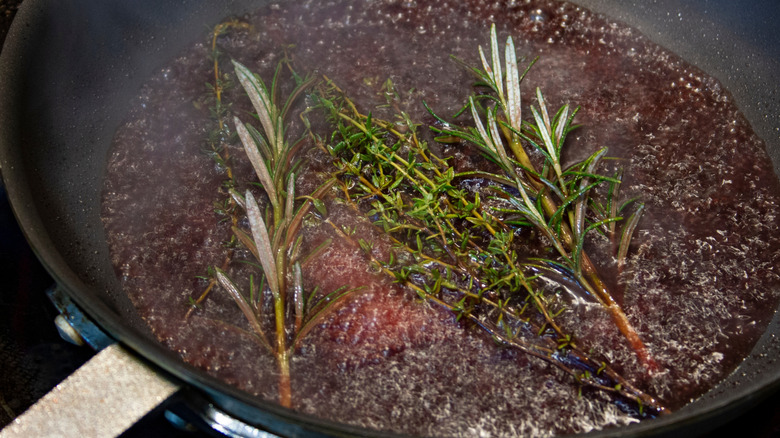
Learning how to elevate a pan sauce is essential for every budding chef, and often, all it takes is a few key ingredients. For us, pickle brine is the one to beat. Pickle brine works in the same way as water does in a pan sauce, loosening the fond on the bottom of the pan and incorporating all of the intense flavors together. Water, however, can dilute these flavors, while pickle brine can augment them. Simultaneously, its briny, acidic notes can boost the savory taste of a pan sauce while stopping it from being too plain. Oh, and it'll also season itself. What's not to like?
A pickle brine pan sauce will work well with any meat you're making, but it's particularly good with pork. The acidic, herbal notes work well with pork's subtlety, giving it a little more excitement without completely nullifying its taste. If you want your pan sauce to have extra texture, you can also chop up some pickles and throw them in. As the sauce cooks, they'll soften, but still keep their crisp bite.
The secret ingredient for meatloaf? Pickle brine
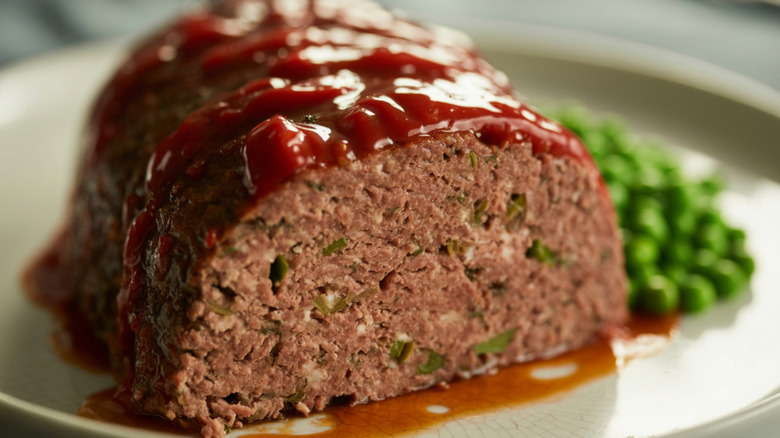
The problem with meatloaf is that it can often lack layers of flavor. A lot of the time, the dish tastes intensely meaty, but doesn't have any tanginess to contrast with the meat itself. Instead, that note comes through in its glaze, which can often dominate things. You can introduce it more subtly by adding pickle brine to the meat itself. Pickle brine can give meatloaf some important acidity and season the meat from within in a more interesting way than just adding salt and pepper. It can also add floral and allium notes, and create a lightness that keeps the meat from being too savory.
You don't have to stop there, though. By including pickle brine in your meatloaf glaze, you can intensify its flavor and push against the sweeter notes provided by ketchup and sugar. It can also help to thin out glazes that are too dense. Try adding a half-cup of pickle brine for the equivalent amount of ketchup, making sure to taste it before daubing it onto the meat.