

10 Foods That Can Make Your Kitchen Smell Bad

When you walk into your kitchen, one thing you'd hope is for it to smell great. Mostly, as long as you clean up properly and keep your garbage disposal as stink-free as possible, it's easy to prevent your kitchen from smelling bad. However, your kitchen can sometimes still have a lingering odor even if you're very thorough with cleaning, and that might have less to do with cleanliness and more with certain food items.
While most foods smell welcoming, some others have an extremely pungent and off-putting odor that can stink up your kitchen before you know it. Keep in mind that these aren't necessarily foods that are spoiled or rotten, but items that are actually fresh, and generally carry a very strong, almost putrid stench. You might already be aware of a few of them (like fish and onions), while some others may come as a surprise, especially if you've never worked with them before.
Perhaps you've just stocked up on something new, and now your kitchen has started smelling odd and you're wondering how to get rid of it. Or, maybe you want to know which ingredients can make your kitchen stink to avoid ever having to deal with bad odors. Either way, you're at the right place, as we've made up a list of food items that can make your kitchen smell bad, why they do so, and what you can do to get rid of the odor as soon as possible.
1. Cauliflower
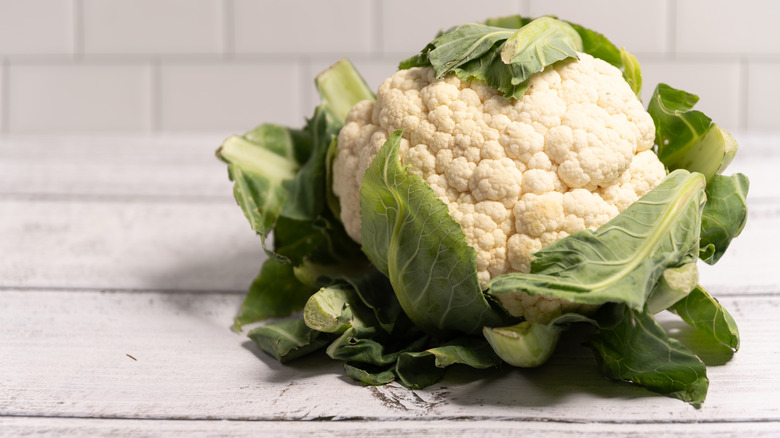
Though cauliflower is pretty versatile and easy to work with, it has a very bad reputation of smelling like, well, farts. (We didn't make this up, and we bet a lot of you were thinking the same!) But, if you've cooked the veggie a lot of times, you may have also noticed that the stench is quite heavy especially when you boil it, and more so if you boil it for too long. The reason behind this happening is that cauliflower is packed with sulfur-based compounds. Since it's easy to over-boil the veggie and it's hard to keep the smell contained while boiling, it spreads quickly in your kitchen. It's also worth knowing that the odor of cauliflower tends to be stronger when the veggie is older and less fresh.
That said, if you really like how cauliflower tastes, you don't need to stop cooking it just because of the smell. There are some ways to cook the veggie while also controlling the smell, with the easiest option being steaming the florets, which keeps the odor somewhat contained. Besides that, if you're really keen on boiling the veggie, which is necessary for some recipes (like a roasted garlic cauliflower mash) add some milk or a lemon wedge to the water to mask the smell. Once you've got that sorted, you can easily make a range of amazing cauliflower dishes you'll end up raving about without any worries. Just remember to cook the veggie only until it's soft but not mushy, regardless of the method.
2. Fish

Most would know that fish has a very strong odor, and when you cook it, it can make your kitchen smell bad. But, why does this protein powerhouse carry such a horrendous stench? It comes down to a couple of factors. Firstly, you may have noticed that saltwater fish has a much stronger odor than its freshwater counterpart. Without getting too much into scientific jargon, the main thing worth knowing is that this smell is mostly because of the chemical process of trimethylamine oxide (also known as TMAO) in the fish's body converting to trimethylamine (TMA) when cooked. Besides that, the odor is also a result of how long the fish has been out in the open before you buy or use it, as it develops a stronger odor once it is stale.
You might consider switching to freshwater fish altogether, as it's easy to assume it could keep your kitchen from smelling. That is partly true, but while it's generally not as intense as the smell of its saltwater counterparts, some freshwater fish can have an odor too. The smell of freshwater fish tends to be more muddy.
The silver lining here is that there are ways to prevent your kitchen from stinking up, regardless of the type of fish you choose. The best ways to cook fish without making your kitchen smell are by wrapping it in parchment paper while cooking, or soaking it in milk before that. Also, remember to keep all your windows open to let the smell out. Lastly, you can also rub some lemon juice on the fish before cooking to neutralize its smell.
3. Certain types of cheese

Ah, cheese! It's creamy, gooey, delicious, and has such a welcoming smell. Well sadly, not all types are like that. Some types of cheese, especially those that have been aged for a while, tend to have a very sharp smell that not everyone likes. Moreover, some types of cheese also have a rind that's been washed with different liquids, for instance, limburger cheese with brine, and Stinking Bishop with pear cider. This also causes the cheese to smell strongly.
But moving past why it smells, the real question here is: If you want to try this type of cheese out, how can you ensure it doesn't make your kitchen stink? The easiest and most obvious way to prevent your kitchen from smelling is by keeping all doors, windows, and vents open so the stench can easily disperse out of your kitchen. If that doesn't work, try lighting up some scented candles. In extreme cases, you could heat up coffee in water with a few strong-smelling spices. This not only masks the smell of the cheese, it also makes your kitchen smell delicious. All in all, if you've heard great things about the flavor of stinky cheese, don't give up on trying them just yet — give these handy tricks a shot.
4. Durian

If you've never been to countries like Malaysia or Singapore, or aren't into international foods, it's possible you might not even have heard about durian. In case you haven't, it's worth knowing that while it has an amazing flavor, its smell is quite the opposite. This fruit has an extremely putrid odor that spreads like wildfire as soon as you cut into it. So yes, it can easily make your kitchen smell bad in a jiffy if you ever buy one, now that durian is available even in the United States at Asian supermarkets.
We won't bore you with a lot of details about why durian smells bad, as it can get slightly technical. But the gist of it is that the fruit contains 44 compounds that give it a very distinct smell, according to a study published in The Journal of Agriculture and Food Chemistry in 2012. While not all of these compounds necessarily have a stench, some of them, like hydrogen sulfide and methanethiol are responsible for the unpleasant smell.
Having said that, durian does taste pretty amazing, and its odor shouldn't be a reason for you to not buy it, regardless of whether you've tried it before or not. Luckily, there are ways to mask its stench. Regular air fresheners won't work for durians, but leaving out bowls of dry coffee grounds in your kitchen will help absorb the smell. You can also leave out charcoal or a mix of baking soda and water, which also help to neutralize the smell so that you can enjoy the flavor.
5. Hard-boiled eggs
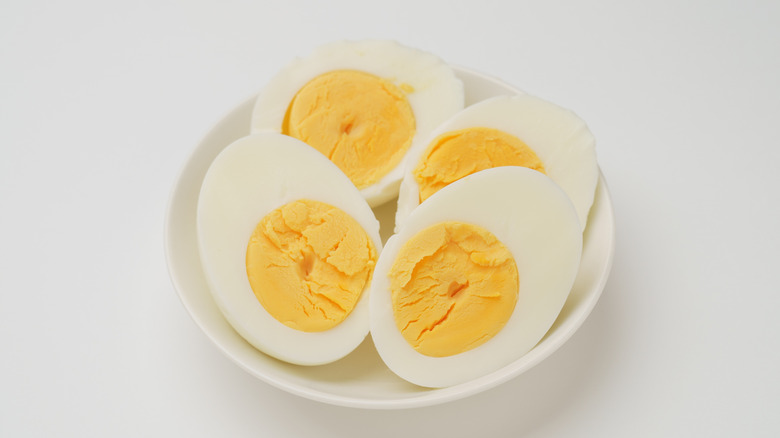
When you make an omelette or a sunny-side up, eggs don't necessarily smell bad. But boiled eggs usually have an odor that can spread really fast. While properly boiled eggs can also have a mild stench, a strong, off-putting odor is more likely if you boil them for even a little longer than you should. Have you ever wondered why this happens though? Well, the thing is that when you boil eggs for too long, a reaction occurs that makes them release hydrogen sulfide. And as you might know, any compound containing sulfur is notorious for smelling terrible, and will certainly make your kitchen stink.
Cutting to the chase though, if you'd still like to make hard-boiled eggs, you can try a vinegar hack to prevent them from smelling. For that, you just need to add a bit of vinegar to the water and then go about with boiling your eggs like you usually would. It's also crucial to choose eggs that aren't too old, as those will smell, no matter what. The main thing to keep in mind, though, is not to overcook your eggs while boiling, as this is the main culprit when it comes to bad smells. Also, once you take your eggs out of the boiling water, immediately throw them in some cold water to prevent them from continuing to cook.
6. Rancid cooking oil

Good quality cooking oil won't make your kitchen smell bad. But if you use it over and over again until it turns rancid, it will emit a terrible odor for sure. So, if you've been using the same oil to fry your favorite treats, and it's started looking darker and has been releasing a horrible stench, it's best to get rid of it as soon as possible. In fact, other than stinking up your kitchen, another reason you shouldn't use rancid oil is that it can also be bad for your health.
You may have also had instances where you haven't necessarily reused oil, but it has still turned rancid and started releasing an unpleasant smell. This comes down to improper storage, like exposing the oil to sunlight for long periods of time, or not sealing the container properly.
Now, let's get to what you're here for: What can you actually do if your kitchen has a lingering smell of rancid cooking oil? Certain things are a given, like airing the room out and using air fresheners. If that doesn't work, you can boil water with some vinegar to neutralize the smell. You can also light scented candles or incense sticks of your choice, while continuing to keep the windows open for maximum ventilation. Last but not least, leaving out used tea bags or dry ground coffee will help soak up the odor well.
7. Brussels sprouts

Similar to cauliflower, Brussels sprouts let out a highly unpleasant sulfur-like odor when they are boiled and make your kitchen stink up in a jiffy. That's actually one of the reasons why a lot of people avoid eating them altogether. Similar to some of the other foods on this list, Brussels sprouts release hydrogen sulfide when they're boiled for too long, which is why cooking these veggies for even just a couple of extra minutes can be one of the biggest mistakes you are making when cooking Brussels sprouts.
Luckily, there are easy ways to cook Brussels sprouts while keeping the horrid smell at bay. One of them is switching to other methods like roasting or sautéing. Though not foolproof, these methods do make them smell less than boiling does. You could also coat them with oil and strong smelling seasonings and spices, as that further reduces the chance of them smelling bad. Else, you can add them raw to things like salads. Remember that even when sautéing or roasting, the key is to cook them just until they are done and not overdone.
In case you're still keen on boiling Brussels sprouts, you can do that, but you need to make sure you only boil them for a maximum of five minutes. To be on the safe side, keep all your windows open once you start boiling them. In the case that they start letting out a smell even a couple of minutes before they're ready, at least the odor can escape.
8. Overripe fruits
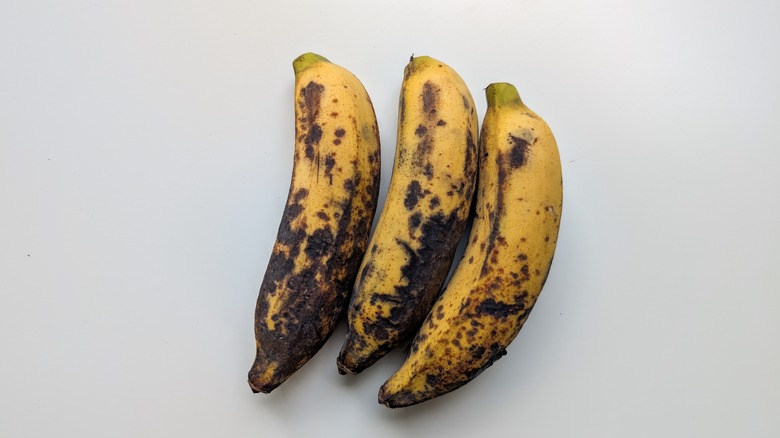
Fruits that are overripe tend to let out an odor that can make your entire kitchen smell pretty bad, even if they aren't spoiled or rotten. The odor comes down to certain compounds present in these fruits. While they are packed with many, the bad smell is usually due to compounds like ethanol, acetic acid, and butyric acid, to name a few.
If you've got a bunch of extra-ripe fruits somewhere in your kitchen, it's best to toss them out to get rid of the smell as soon as possible. This is even more necessary if they seem like they are just about to go bad, as eating spoiled fruits can cause certain mild health issues like bloating or nausea. So, definitely not worth taking a risk.
The smell of overripe fruits can still linger in your kitchen even after you've thrown them out. In that case, you'll have to go for the usual techniques to get rid of the stench. This includes ventilating the room thoroughly, using air fresheners, and lighting candles. If your fruit is getting very ripe but hasn't yet started smelling bad or looking like they are about to spoil, there's good news. You don't need to toss those overripe fruits out, as you can whip up some jam with them instead to make the most of them.
9. Onions
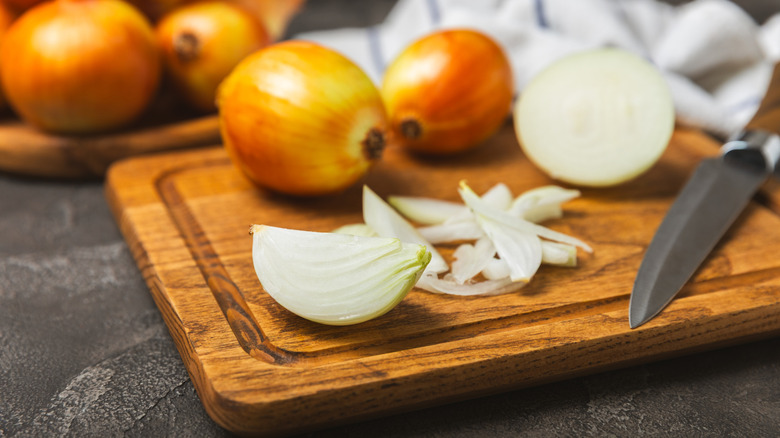
Onions are notorious for making everything around them smell, whether it's your hands, your utensils, or even your kitchen. Though the smell may not always be bad, it is certainly quite pungent and can be difficult to get rid of. We won't get too much into what makes them smell the way they do, but essentially, it's because they contain propyl sulfoxide. As you may have guessed from the name already, a form of sulfur is the culprit (no shocker).
When it comes to keeping your kitchen odor-free when cutting onions, we have a few tips. Firstly, cook something else alongside them that has a stronger, better smell. Bake a loaf of bread if you can, as that will mask the smell of onions with its wonderful aroma. However, if you aren't able to put in the effort to make bread from scratch, cook something that's packed with a bunch of spices, if you're into that.
To make it even easier, you could also just boil a few strong smelling spices and herbs in water along with a few wedges of your favorite citrus fruit to cover up the potent onion odor. Remember to do all of this before you start slicing or chopping onions, as that's when they usually release their strong smell. Of course, you can also light strong incense sticks or candles before you start working with onions.
10. Certain fermented foods

If you've ever even been around fermented foods like sauerkraut and kimchi at restaurants, you'd probably know they have a really pungent smell. So yes, if you happen to make them at home or even bring pre-made versions of them to your kitchen, they will likely make it smell rather unpleasant. One of the sources behind the strong smell in these foods is — you guessed it – hydrogen sulfide. This compound is released from these foods during the fermentation process, but just because there's a bad smell doesn't mean there's anything wrong with the product. In fact, it's believed that the stronger their smell (as long as it's not completely rotten), the better these fermented foods are likely to taste. This may seem slightly counterintuitive, but it's true!
However, hydrogen sulfide isn't the only culprit when it comes to the smell of fermented foods: The stench is also due to certain fatty acids, which can emulate the smells of body odor, flatulence, rancid butter, and even goats. But all that still doesn't make fermented foods not worth eating. There's no reason to stop making or buying kimchi or sauerkraut and letting it ferment in your kitchen, especially if you like how they taste. As far as getting rid of the smell or even neutralizing it slightly, just make sure you open all doors and windows in your house whenever you get these foods out of their containers. Other than that, keep your air purifier on, and just stay out of the kitchen for a while and let the smell leave naturally.