

Sick Of Dry Turkey? An Oven Bag Is What You're Looking For
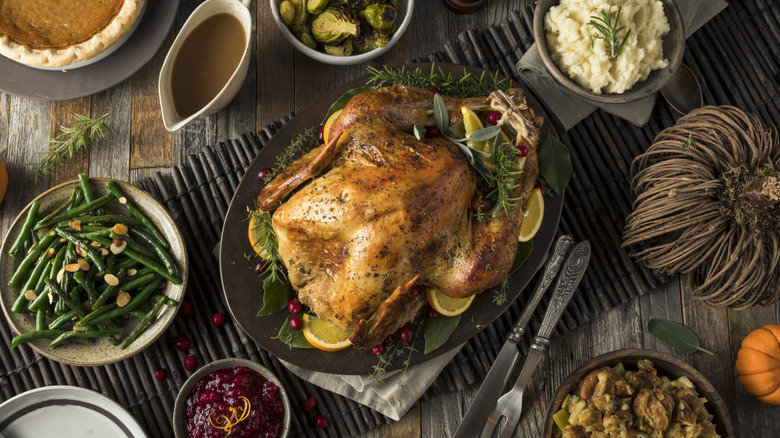
Turkey might be a common main dish on Thanksgiving tables, but unfortunately, so is a dry bird. Because of how long roasting takes, the white meat commonly dries out by the time the turkey is fully cooked. There are many ways to avoid this, but perhaps one of the easiest is a simple oven bag.
These are single-use, BPA-free nylon bags designed to fit whole turkeys and other large roasts. And as the name suggests, they can withstand the heat of oven temperatures, typically up to 400 degrees Fahrenheit. That feature is essential: Only oven bags can be used in the oven. Ordinary paper or plastic bags pose significant safety risks at such high temperatures.
Turkeys lose so much water while cooking that a finished bird will be 25% to 33% lighter than it was raw. An oven bag traps the majority of that water and keeps the bird much more moist than if it were roasted. But before you toss your bagged turkey in the oven, there are a few tricks to know if you want to do it right.
Tips for using an oven bag
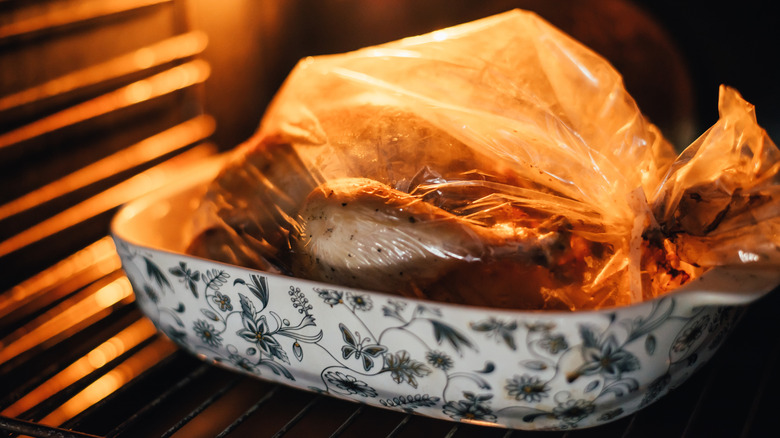
Before adding your turkey to your oven bag, consider loosely coating the bag's interior with about 1 tablespoon of flour. This will mix with the bird's juices and keep the bag from bursting in the oven. Also consider assembling a bed of fresh herbs and chopped vegetables like onions and carrots that can cook for a long time. Their steam will keep the turkey moist and prevent its juices from burning.
When everything is inside the bag, tie it closed and cut six ½-inch slits in the bag, making sure each one is near a breast or a thigh for easy temperature checks. These vents are also a safeguard against bursting. Double-check that no part of the bag is touching the inside of the oven, including heating elements. (If it does make contact, there are a few ways to clean and remove melted plastic from an oven, like peeling it off at low heat.)
Before you cook, also know that trapped steam cooks oven-bagged turkeys about an hour faster than roasting. But don't rely on timing for doneness — instead, check deep in the breast and thigh for internal temperatures of 170 to 180 degrees Fahrenheit. When it's done, rest it in the bag for 30 minutes before opening to reveal a moist, succulent bird.
Oven bags, crispy skin, and stuffed turkeys
Because oven bags trap steam, they're not the best choice for anyone who wants their bird to have a crispy exterior. You can make the skin somewhat crispier by cutting open the bag or even removing it for the final part of cooking. This stage could last anywhere from 15 minutes to a full hour, depending on your preferences.
Thanksgiving often calls for more than just turkey and vegetables, though. A 2025 report from Campbell's revealed that stuffing is America's favorite Thanksgiving side, but if you're thinking about cooking it in a bagged turkey, you may want to reconsider.
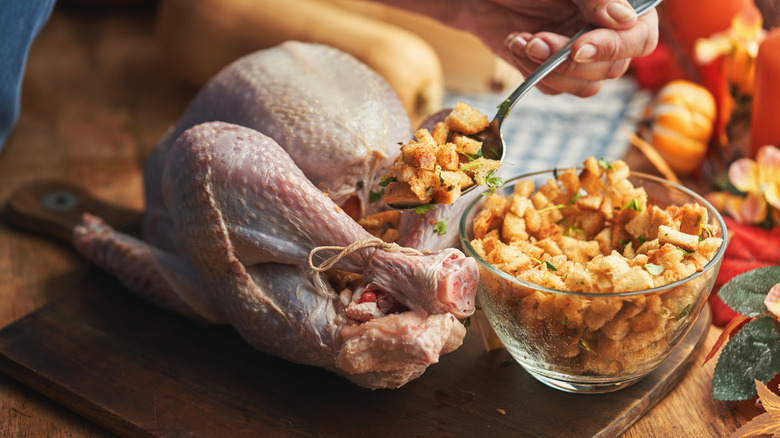
Because turkey cooks faster in an oven bag, the interior cavity doesn't reach the high temperatures it would during roasting. Any stuffing inside may not get hot enough to fully cook the raw eggs in the mixture. You can still cook stuffing inside a bagged turkey, as long as it reaches at least 165 degrees Fahrenheit. You may, however, have an easier time cooking it in a separate dish, which also happens to be Ina Garten's preferred way to make stuffing.