

10 Mistakes That Are Ruining Boxed Brownie Mix Every Time, According To A Baker

There's nothing quite like made-from-scratch chocolate brownies fresh out of the oven. They're warm, fudgy, and mouthwateringly delicious. But, of course, it isn't always practical to make your brownies from scratch, whether it's because you don't have enough time, the ingredients aren't all on hand in your kitchen, or something else. Thankfully, boxed brownie mixes offer an easy way to make fresh, hot sweet treats without needing the expertise, time, or ingredients necessary for baked-from-scratch options. But, if you feel like your boxed brownies are consistently falling flat, failing to live up to your expectations, there's probably a reason for that.
During my more than 10 years spent actively working in and running bakeries, I made countless brownie recipes, running the gambit of potential variations. Since then, I've made even more brownie recipes at home, both homemade and boxed versions — because yes, even professional bakers make use of pre-made options out of sheer convenience. Unfortunately, my expertise has shown me that there are a few common mistakes people make that lead to ruining their boxed brownies. This leads to frustration and confusion. You might ask: What went wrong?
Today, I'll share 10 mistakes that I've learned are ruining boxed brownie mix every time. Plus, I'll offer practical advice on what to do instead, so your boxed brownies taste delicious and homemade every time.
Using water instead of milk
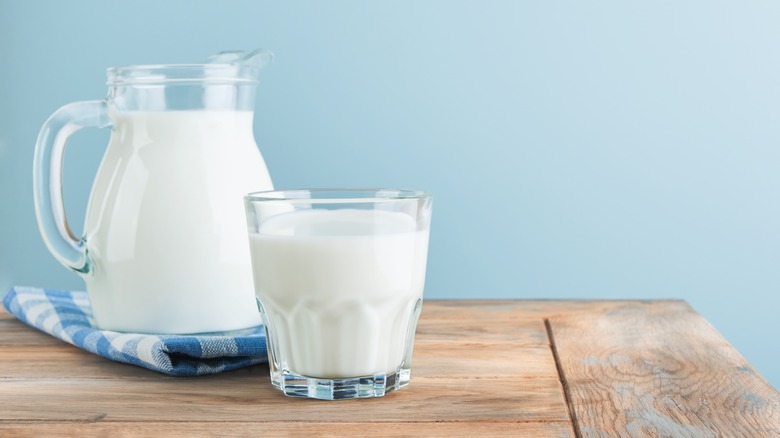
The beauty of boxed brownie mixes is that they call for limited ingredients — all of which you probably have in your kitchen right now. But, the biggest thing you should take away from this article is that following those instructions printed on the box will lead to subpar brownies every single time. With a few small substitutions or additions, you can transform that mix into something rivaling your homemade dessert without fail. And, the easiest switch you can make is using milk instead of water.
If you're using water like the instructions say, you'll be left with brownies that taste flat. They may cook just fine texturally, but they'll be one-dimensional, making it obvious they come from a box. What you should do instead is use whole milk, which creates a richer, moister brownie with a better mouthfeel and complex flavor profile. You can swap these ingredients out at a one-to-one ratio, meaning you simply use the same amount of milk as you would water, according to the printed instructions.
Choosing the wrong type of pan
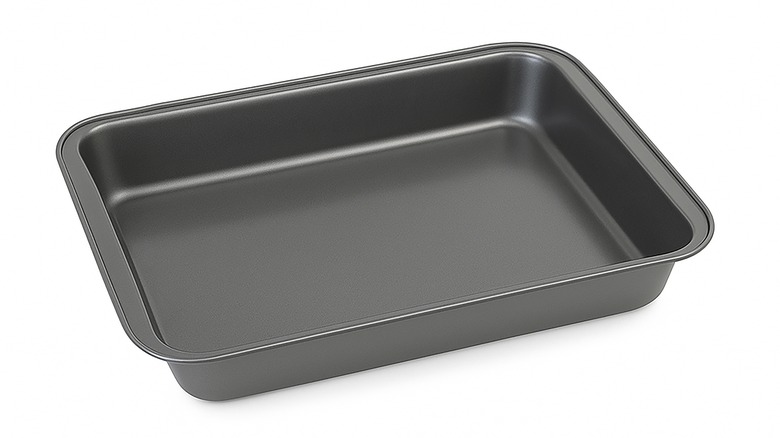
Did you know that the type of pan you cook your boxed brownies in will make a huge difference in how they ultimately come out? The most common mistake I see people making is using glass baking pans. Glass isn't a great conductor of heat — there are alternatives, which we'll discuss in a moment — so it takes longer to cook your brownies in them. If you're adhering to the timing on the instructions, you'll end up with undercooked brownies. Even if you cook them longer, the sides, top, and bottom of your brownies will never crisp up the way you're hoping.
A better alternative is to use metal baking pans. Metal is an excellent heat conductor, which will allow your brownies to cook in the specified time. Plus, you'll be treated to nice crisp edges with a perfect fudgy center that's sure to please anyone who eats them.
There are two basic types of metal pans you could choose from. Although both will give you the desired results, they do offer some mild variation. Light metal pans are perfect if you want a bit of crust, but you prefer a slightly softer texture. Dark metal pans are ideal if you want your crust as crispy and thick as possible.
Forgetting to prepare your baking dish
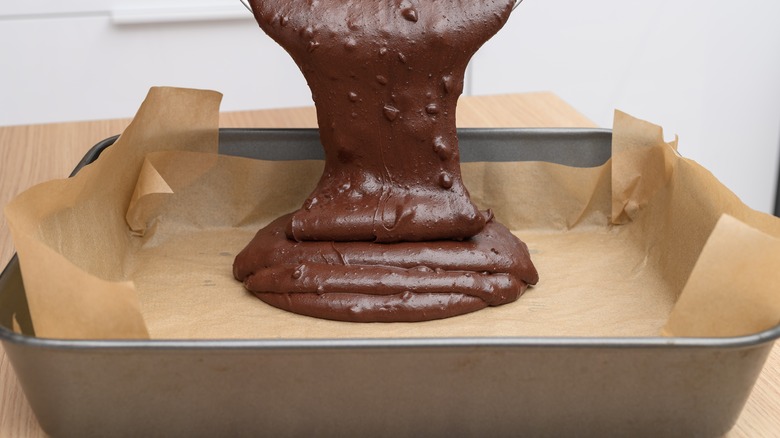
One of the biggest mistakes I see people making with their boxed brownie mix is forgetting to prepare their baking dish. You can't just pour brownie mix into a pan and call it a day. Proper prep work should take only a few minutes and can save you a lot of hassle in the long run.
At a minimum, you should spray your metal pan with your cooking oil of choice. The best cooking oil options are tasteless, have a high smoke point, and are allergen-friendly (so you don't introduce unnecessary allergens to your dish). A few excellent oil options include vegetable, canola, avocado, sunflower, and grapeseed. You can also use butter, if preferred, as long as you're not making a dairy-free brownie mix.
Of course, I highly recommend taking this a step further to ensure your brownies don't stick to the pan. One option is to lightly dust the baking pan with flour — you can also use a one-for-one gluten free flour if you have to follow a gluten-free diet. Alternatively, you could line the pan with oven-safe parchment paper.
Over mixing the batter

Over mixing the batter is easy to do, which is probably why it's one of the most common mistakes I see ruining boxed brownie mixes. Air is added to your batter as you mix, which will make the final brownies lighter and fluffier at first. But, if you continue to mix and overdo it, your brownies will come out rubbery and basically inedible.
For traditional fudgy brownies, you should only be mixing your batter until the ingredients are fully combined. As long as there are no obvious clumps of mix and everything is incorporated, it's okay if there are a few small lumps as these shouldn't affect your final product.
Although it can be tempting to use an electric hand mixer or counter stand mixer, you want to avoid these for boxed brownie mixes. Since they require such a short mixing time, it's best to mix by hand using a sturdy whisk. Manually tackling this step will introduce the least amount of air into your batter and offer the best results.
Not adding one more egg
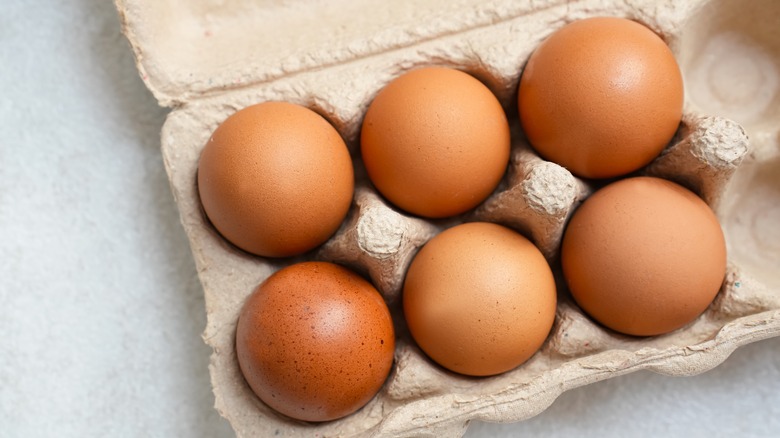
Most boxed brownie instructions call for eggs, which will generally range from one to three, depending on the exact product. I always recommend deviating from the boxed instructions and adding one more egg — i.e., if the box calls for two eggs, add three. This small extra ingredient will create more structure, richness, and moisture in your brownies, helping to elevate your boxed mix to something equally as good as homemade options.
To understand why this works, it helps to know why eggs are so important to baking. Egg whites are a natural leavening agent that work as a glue to keep your brownies together, thus reducing the risk of your sweet treat falling apart as you try to serve it. Egg yolks have a high fat content that directly contributes to the richness of your baked goods, while also helping to hold everything together. Plus, they can help promote a deeper coloring to your brownies, which can be more visually appealing.
Failing to preheat oven before popping in the brownies
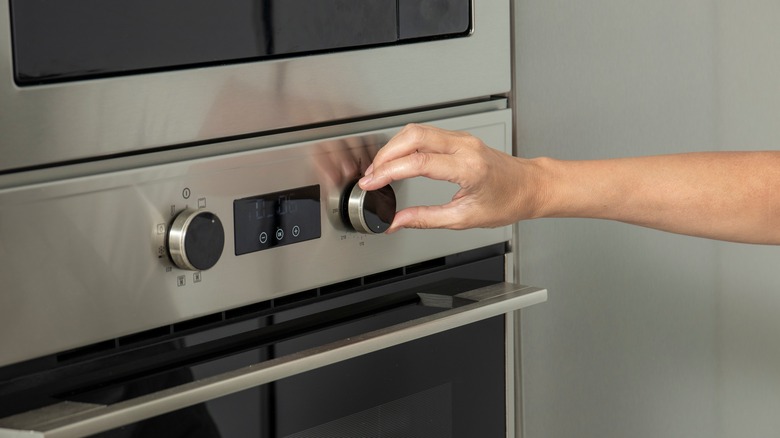
Every boxed baking mix and every baked goods recipe calls for you to preheat the oven. In fact, any recipe that uses the oven will call for this. Unfortunately, many people don't realize how important preheating the oven is and, as such, they make the disastrous mistake of skipping this step. However, an oven that isn't preheated can lead to uneven cooking, brownies that are not done when your timer goes off, and even your whole batch of brownies ultimately failing.
Preheating ensures the whole oven has come up to the temperature your brownies require. Prior to this, the oven may be too low of a temperature or it may have colder pockets throughout. I find it helpful to turn on the oven before I do anything else when cooking something like brownies. Over time, this step becomes a habit and you're less likely to forget.
Skipping the mix-ins
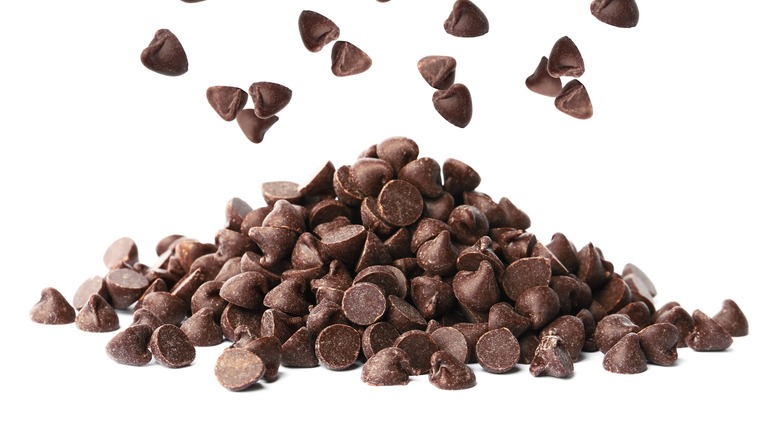
There's nothing inherently wrong with a boxed brownie mix on its own, but they generally create a one-dimensional final product. Something that can set homemade variations apart are their incorporation of mix-ins, and, thankfully, this is simple to do with a boxed mix. By including mix-ins, you'll add flavor depth and textural complexity that makes your baked good much more professional.
There are many mix-ins you could use to customize brownies. A popular inclusion are baking chips, with semi-sweet chocolate chips being one of the most common options. Other baking chips could include toffee, caramel, dark chocolate, milk chocolate, and peanut butter. Alternatively, nuts add a nice counterpoint to the rich profile of your brownies, with finely chopped walnuts being one of my favorites.
Remember to add your chosen mix-ins at the end, after everything else is combined. Instead of whisking them in, carefully fold your chosen additions into the rest of the batter. This will help prevent accidental over mixing and ensure your extra ingredients don't fall apart prior to baking.
Not allowing your brownies to cool before cutting
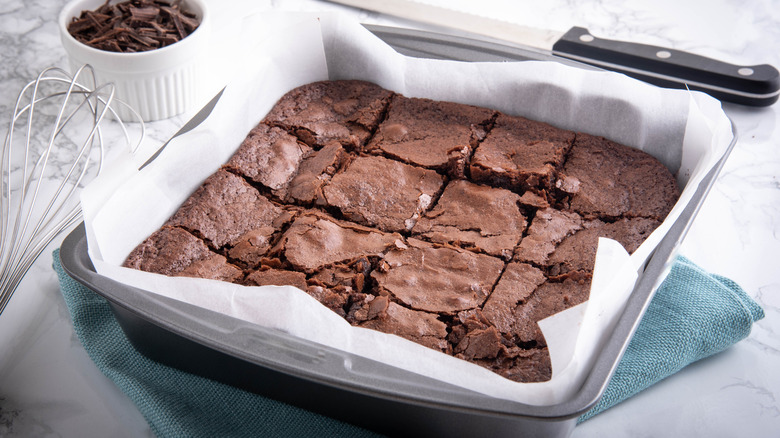
Fudgy chocolate brownies fresh out of the oven fill your kitchen with the most mouthwatering smells and they look so delicious that it's tempting to forge ahead with your first taste. However, now is not a time to throw caution to the wind because not allowing your brownies to cool before cutting is a common mistake ruining boxed brownies. If you cut them too soon, your sweet treat may stick to your knife, fall apart when you pick them up, or crumble while you try to do the actual cut. The worst part of it is that it ruins them at the very end of your baking process, when you're so close to a nearly perfect final product.
As they cool to room temperature, brownies and other baked goods do two important things. First, they continue cooking slightly while still hot, which can ensure the center of your brownies are completely done and the crust is as firm as you want it to be. Second, the brownies will solidify, making them easier to handle during cutting and eating. For the cleanest cuts, it's preferable to have lined the dish with parchment paper so you can carefully pull the batch from the pan. Then, use a long, sharp knife and run it under water between each cut.
Using cold eggs instead of room temperature ones
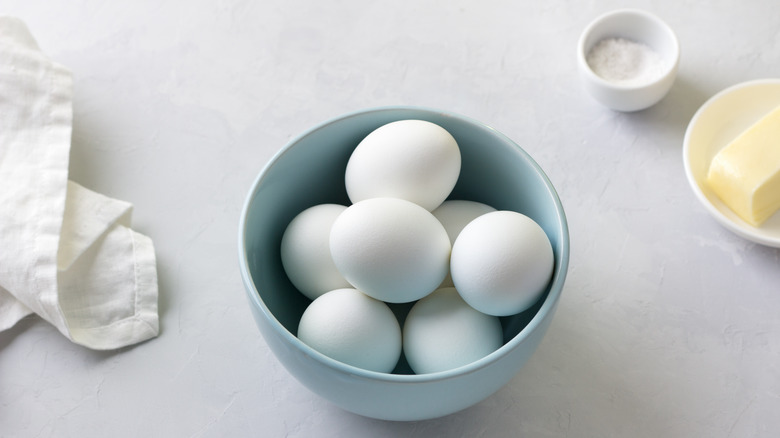
Have you been struggling with brownie batter that clumps or becomes too firm to easily combine? Cold eggs could be the culprit. American store-bought eggs are most often stored in the refrigerator. Once cold, the eggs firm up and become challenging to work with. This can lead to the problems mentioned before, as well as brownies that taste overly eggy because of poor incorporation.
Allowing your eggs to come up to room temperature before using them is a simple fix to this common issue. Of course, this does require a little advanced planning on your part as it takes as long as an hour (or even two) for eggs to warm up appropriately. At the same time, you'll need to ensure you don't leave your eggs out too long because they can go bad and cause food-borne illnesses.
The benefit of this advance planning is a much smoother brownie baking process. Room temp eggs will be less firm themselves, allowing them to combine easier into your mix. As a result, the brownie mix won't get cold and shouldn't firm up or clump.
Adding oil instead of swapping it out for butter
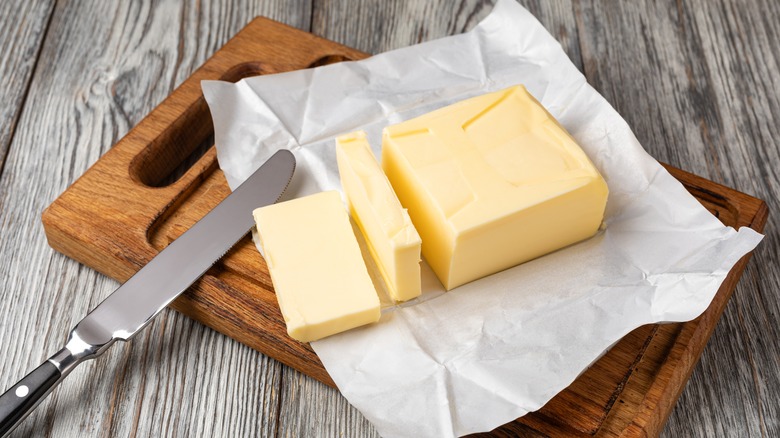
Using water instead of milk isn't the only quick, easy swap that will help prevent ruined boxed brownie mixes. Using butter instead of the oil commonly called for on the box will also lend itself to much better results. This is because oil is good at creating the moisture you need in your brownies, but it doesn't impart any flavor or additional benefits. You might end up with an okay final result, but it will mediocre.
Butter, on the other hand, is just as good at creating moisture as oil — even better, in fact. But, thanks to its high fat content and full-bodied flavor, butter also adds richness and depth to your recipe that would otherwise be lacking. Just swap oil for softened, room temperature butter at a one-to-one ratio to see a big difference. Avoid melting butter in the microwave for this because the hot butter can cause the eggs in your brownie mix to begin cooking.