

Cafeteria-Style Restaurant Foods Most People Don't Talk About Anymore
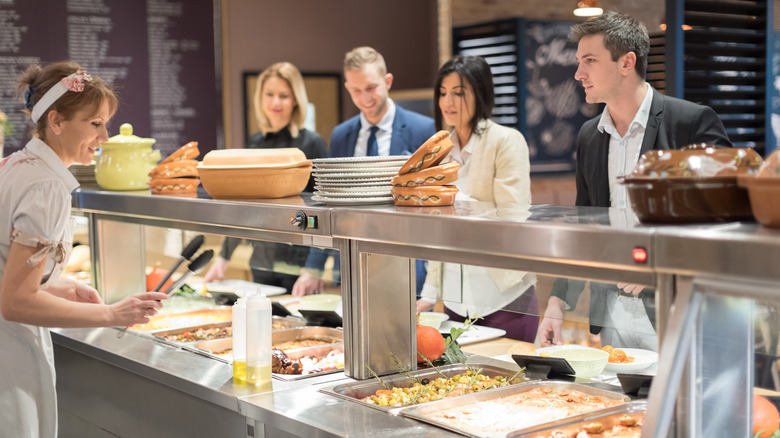
When you think of a cafeteria, your mind might instantly take you back to school. But, did you know the whole concept of a school cafeteria was actually inspired by restaurants that served food the same way? Yes, it's true! Cafeteria-style restaurants were all the rage in the 20th century. Though similar restaurants existed even in the late 19th century, their popularity especially grew after one opened in Los Angeles in 1905. These restaurants thrived because they offered simple, home-style food that customers could see and choose for themselves. The food options at these establishments changed based on what was in vogue and how much people were willing to spend.
Even though the United States still has many cafeteria-style restaurants, they sadly aren't as popular anymore. And the ones that are around still serve hearty, home-style meals — but since people's preferences have evolved over time, these restaurants shifted to more modern food options. Sure, you will find fried chicken, mac and cheese, beans, mashed potatoes, pies, and other food at these cafeteria-style restaurants. But many dishes that were prevalent at these spots in yesteryear, like liver and onions, Salisbury steak, or even rice pudding are barely seen or talked about today. If you're into vintage food trends, join us as we take a look at a few classics from these restaurants that have gone out of style.
Liver and onions
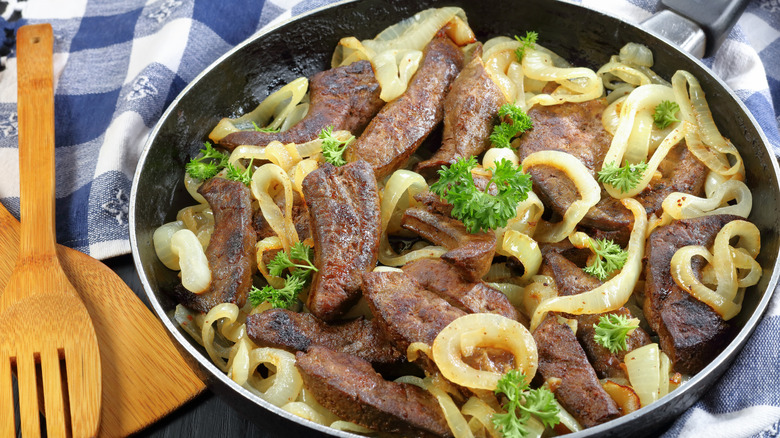
Liver and onions was often a go-to meal for many during the Great Depression and World War II. Cafeteria-style restaurants in America also offered it around the same time, so that customers could eat a wholesome meal without burning a hole in their pockets, thanks to liver being a budget-friendly option. But despite being a hit for a while at these restaurants, this old-school liver dish isn't nearly as popular anymore.
There are several reasons that led to this dish falling out of favor. Firstly, most folks seemed to like offal just as much as any other meat back in the day and ate it often. But that whole idea faded over time, and many stopped finding liver appetizing. Plus, after other meats became affordable, people may have wanted to eat dishes made with those rather than liver and onions. Given all these factors, cafeteria-style restaurants eventually replaced the dish with ones that were more preferred.
That being said, if you remember eating delicious liver and onions at one of these restaurants and would love to relive those memories, you can easily cook up the dish at home. Just make sure not to overcook the liver and caramelize the onions properly, and you'll be good to go. Also consider tossing in heavy cream if you'd like to mellow out the offal's sharp flavor.
Salisbury steak
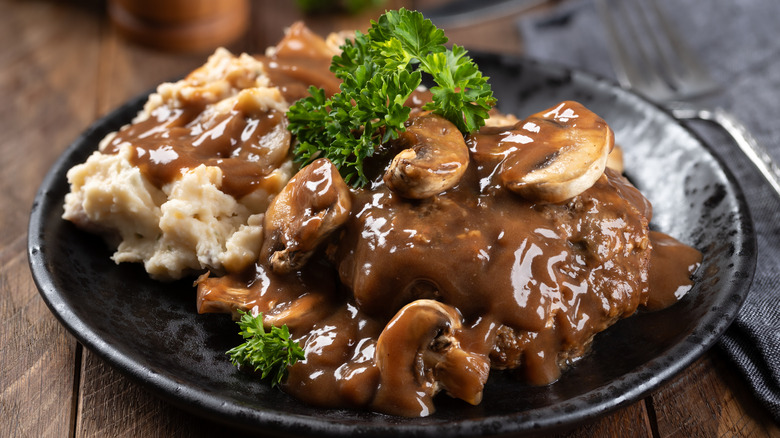
You might remember Salisbury steak as a beloved TV dinner. It was also a usual meal served at your school cafeteria in the mid to late 1900s. Turns out, Salisbury steak was just as commonly served at cafeteria-style restaurants (including the famous Luby's cafeteria) when it was at its peak. It isn't clearly known what made this dish so popular at these establishments, but some claims remain that it's because it was protein-rich while also being affordable for everyone, thanks to the ground beef.
Salisbury steak's roots actually go back much further than TV dinners and cafeterias. It was created by Dr. James Henry Salisbury in the late 1800s. Back then, it wasn't as delicious as the Salisbury steak some would remember. In fact, it was invented by Dr. Salisbury to help civil war soldiers with digestive issues. Cut to almost a century later, and people tweaked the recipe and made this simple dish into an extravagant meal, usually serving it alongside a thick mushroom gravy.
While it's difficult to pinpoint why most people don't talk about this dish or eat it much anymore, it could be they wanted to move over to other options. But considering how quickly you can prepare Salisbury steak in one skillet with budget-friendly ingredients, it's worth revisiting, even though you might not find it at cafeteria-style restaurants anymore. All you need to do is form patties with ground beef and seasonings, sear them, and then simmer them in a mushroom sauce.
Tuna noodle casserole
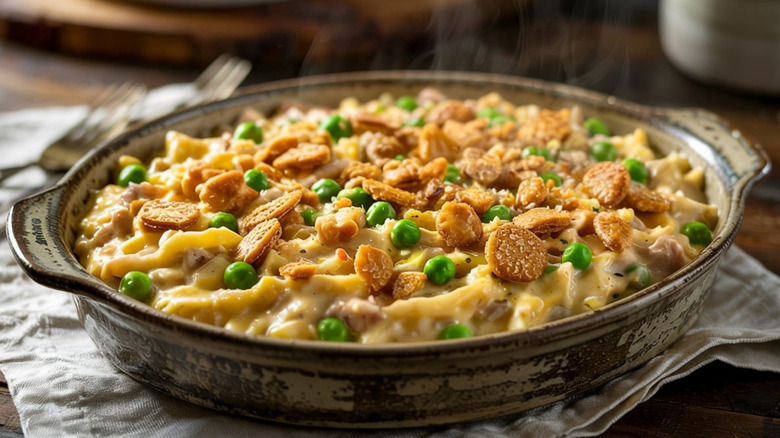
Though this is one of those dishes for which people have always had polarizing views, it's no secret that tuna noodle casserole ruled the American food scene once upon a time. It was really easy to put together, and it gave that warm, comforting feeling. Since it was also a pretty home-style dish, and cafeteria-style restaurants were known for serving such meals, tuna noodle casserole was often served at most, if not all, such restaurants.
Originally from the Pacific Northwest, tuna noodle casserole became a hit across the country after recipes began popping up everywhere. This happened somewhere in the 1930s, and the dish was supposedly served at cafeteria-style restaurants even in the '50s. But after seeing a fantastic peak that lasted a little over two decades, this casserole ultimately went out of style, and it's now rarely seen at these restaurants, or even at homes. That said, you should consider making it, especially if you think canned tuna isn't all that bad. It barely takes any time to put together, and the best part is, the oven does most of the work. Plus, there are several ways to take your tuna noodle casserole to the next level if you're looking for an upgrade from the old-school cafeteria-style recipe, like simply topping it with cheese or using a variety of canned seafood.
Chocolate cream pie
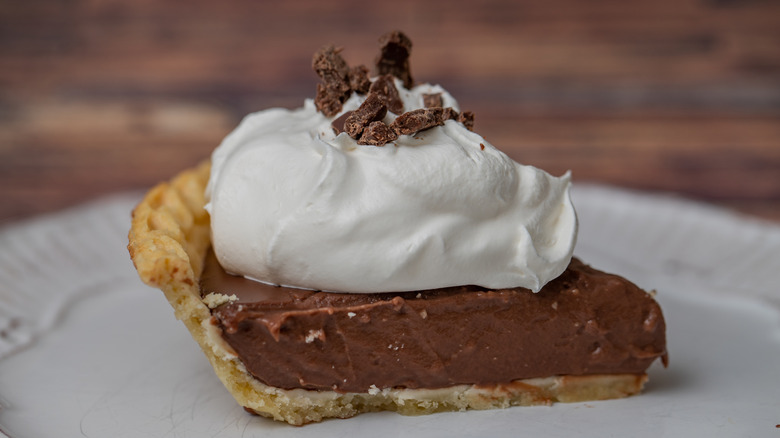
Various types of pies are still a staple at cafeteria-style restaurants, be it apple pie, pumpkin pie, or even sweet potato pie. However, chocolate cream pie isn't a dessert you see too often there these days, even though it was a regular feature at one time. It was also served at famous cafeteria-style restaurants like Morrison's (now Picadilly) and Bishop's (later acquired by Kmart, and now closed), and customers went ga-ga over it.
This pie likely ended up at these restaurants because they wanted to serve what was in vogue. And chocolate cream pie was quite loved over the 20th century for various reasons. Firstly, people liked using chocolate in dessert recipes like this one as it was easily available. Plus by the mid 1900s, convenient options such as instant pudding mixes had also started taking over, which made preparing the pie a lot easier. Though chocolate cream pie was common at cafeteria-style restaurants for quite some time, it eventually got replaced with other options, and it's unclear why this happened.
It's quite strange that most people don't talk about this dessert as much anymore, given that it probably had a luscious flavor, thanks to the chocolate. Nevertheless, it's worth making it at home, especially if you love decadent sweet treats. Start by making a graham cracker crust in a pie tin, add in a filling made with packaged chocolate pudding mix, chill, and garnish with heaps of whipped cream and chocolate curls, then devour!
Beef Stroganoff
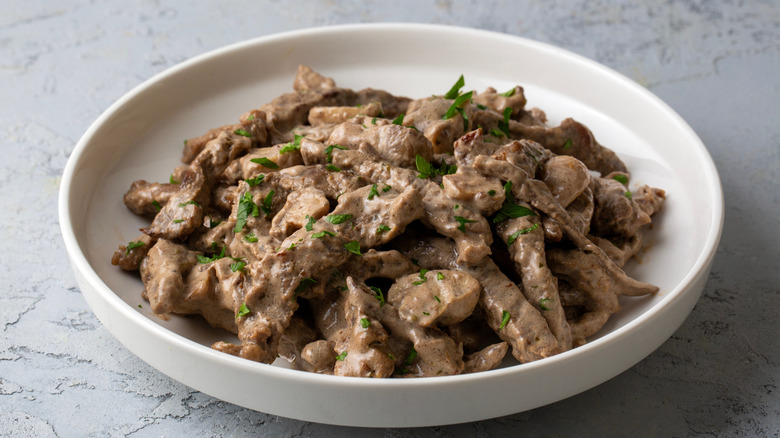
Beef Stroganoff is a pretty old-timey dish with roots from Russia. The dish was supposedly named after one of two aristocrats from the country, though no one knows which one for sure. Speaking of how it made its way to the United States, it was indeed brought over by immigrants, after which it was seen almost everywhere, including cafeteria-style restaurants.
This dish was particularly popular in the country in the mid 20th century. It isn't clearly known when beef Stroganoff peaked at cafeteria-style restaurants. But it can be assumed that it was a common feature at these establishments around the mid 1900s, too. It was easy to prepare in bulk, which was possibly one reason why they usually served it. Plus, it could be made with simple and sometimes even canned ingredients.
Honestly, it's a little weird that the dish saw a decline at these cafeterias and also at homes across the country, despite all these plus points. Moreover, it also consisted of ingredients that go really well together, like thinly sliced steak, mushrooms, sour cream, mustard, onions, and tomato paste, which makes its faded prevalence even stranger. That being said, doesn't the list of ingredients make you feel like this dish is worth revisiting? If yes, you should give it a go at home for sure. We'd especially recommend using tenderloin, as it's the absolute best cut of beef for beef Stroganoff.
Sardine sandwiches

Just the thought of sardines might give most people the icks, as they are oily and have a pungent flavor. But you might also know that sardine sandwiches were once quite a staple in the United States, particularly in the early to mid 1900s. So, it isn't surprising that they were served at cafeteria-style restaurants.
Sardine sandwiches were a go-to especially during the Great Depression, as the canned fish was pocket-friendly. Considering that, it's possible that cafeteria-style restaurants started serving these sandwiches so people could enjoy an affordable meal. Moreover, around the same time, recipes for various types of sardine sandwiches were published in cookbooks like "Meals Tasted, Tested, and Approved" and "Woman's Home Companion Cook Book." This made it even more well-known among the masses. So, their popularity could have been another reason why these sandwiches were served at cafeteria-style restaurants. Eventually though, they stopped serving these sandwiches, mostly because other options became more affordable — and people's preferences also evolved.
Unlike other options on this list, we agree that not everyone would want to consider giving this vintage sandwich a shot. That said, if you'd still want to try it but would also like to mask the flavor of sardines, there's good news. By adding ingredients like Dijon mustard, cheese, and tomato sauce to the sandwich, you can easily mellow out the sharp flavor of the canned fish and enjoy this forgotten sandwich.
Custard pie
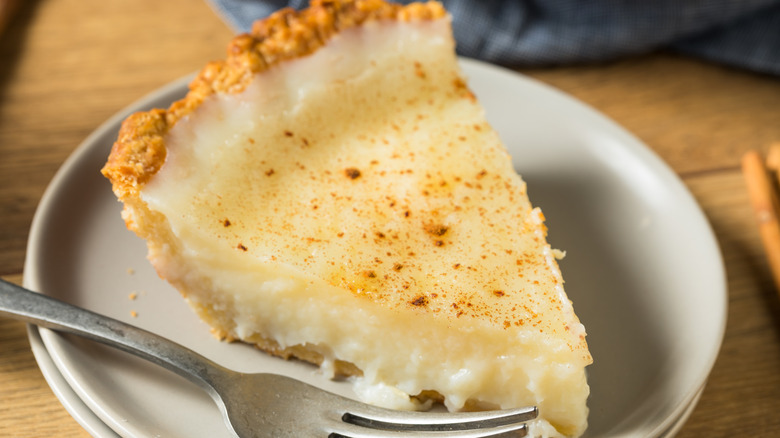
Similar to chocolate cream pie, custard pie was a standard offering at cafeteria-style restaurants. It was also served at the same Morrison's cafeteria and Bishop's cafeteria once upon a time, until it was replaced with modern pies. In fact, this pie that supposedly arrived in the United States with European immigrants is now rare everywhere, let alone at cafeteria-style restaurants.
Most people don't talk about custard pie anymore even though it was easy to prepare with pantry staples. That was probably one of the reasons why everyone loved it back in the day, and why it was served a lot at cafeteria-style restaurants. But, it's still not too late to bring it back, even more so if you're fond of trying pie flavors that you haven't had before.
To make a custard pie, you'll first need to prepare a pie crust, but you can use a store-bought one if you'd like. Once you line the pie tin with the dough, make sure you blind bake it first, as that's one of the main reasons why your custard pie can end up with a soggy crust. Then, whip up a custard by whisking together whole eggs, extra yolks, sugar, vanilla, and milk. If you'd like to make it the way Morrison's cafeteria did, you can also toss in some tapioca powder and margarine. Sprinkle a bit of nutmeg on top, and bake until the pie sets. As simple as that.
Rice pudding
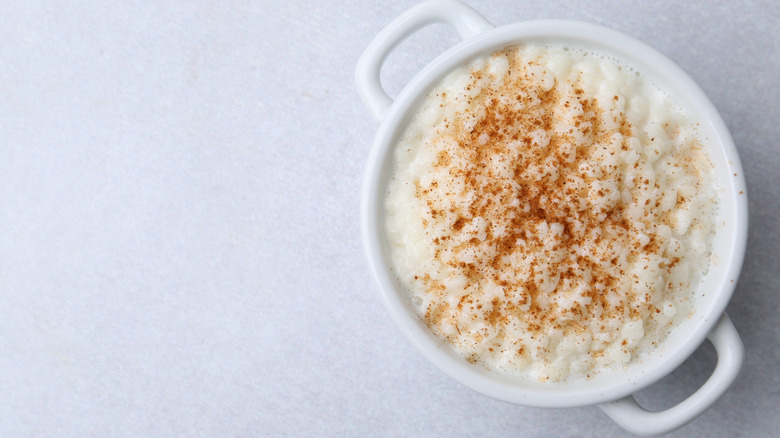
Most of us would agree that rice pudding is a fairly old-school dessert, as people have been eating it since the dawn of time. Though it might not be as popular anymore, rice pudding was quite the rage in yesteryear, which is why it often showed up at cafeteria-style restaurants. But, how did this simple rice-based dessert gain so much traction in the United States? Here's a little history lesson.
Rice pudding is originally from Asia, but it eventually found its way to Europe. That's actually where the rice pudding most people in America know of was created, as Europeans were the ones who added ingredients like cream and sugar to the concoction. As immigrants from the continent arrived in the United States, they brought the dish along with them. Soon after, it became prevalent everywhere in the country and hence, was also served at many cafeteria-style restaurants. While some of these restaurants served it as-is, Morrison's cafeteria actually took rice pudding to the next level by turning it into a custard. They basically mixed rice and raisins with the same custard base they used for custard pie, then baked it and served the dessert.
Despite being a simple nostalgic treat, most people don't talk about this dessert anymore. It's worth reviving though, that's for sure. The best part is, you could experiment and try making a new sort of rice pudding like Morrison's cafeteria, or stick to the basic version, as it will taste great either way.
Jell-O

Jell-O was quite loved in the United States in the 20th century as it could be made easily. Plus, the company also released a cookbook called "Joys of Jell-O" which featured many dessert recipes that could be made with the powdered and flavored gelatin base, which made it even more popular. And let's not forget Jell-O was also pocket-friendly. So, cafeteria-style restaurants picked up on that whole trend and began serving it, too.
While most people haven't entirely stopped talking about Jell-O, it's also a fact that cafeteria-style restaurants or other food establishments don't serve it like they used to. It's now become a treat that people usually make and eat at home. The real question here is, what led to this once beloved dessert's eventual decline at these restaurants? Well, after a point, everyone realized that Jell-O wasn't the healthiest, so it wasn't as favored. Plus, the Jell-O trend went on for quite some time, so it's possible people started preferring other dessert options. And cafeteria-style restaurants ultimately replaced it with pies, cookies, and cakes.