

These 10 Restaurant Chains Have Struggled In 2025
It may seem as though restaurant chains, with their multiple locations, corporate structures, and financial investors, may be more insulated from a downward economic climate than those that are operating independently. However, even some of the biggest chains are struggling to make ends meet and are losing locations at an extraordinarily fast pace. Over the last few years, customers have increasingly been more cost-conscious when it comes to their spending on dining out — and when combined with rising labor costs, it's left chains having to make a lot of tough decisions. Furthermore, it's important to remember that chain restaurants are all in competition with one another, and therefore are having to make bold swings with their menus and offer deals that further slash profit margins, putting them in an even more precarious position.
Some of the chains that are struggling the most might surprise you. Juggernauts like KFC, TGI Fridays, Subway, and Chipotle have all had a difficult 2025, with lower sales, poor stock performances, and widespread closures of their units. Some smaller chains have been left devastated by 2025, too, and a few of them have even had to file for bankruptcy. Here's 10 restaurant chains that have really struggled in 2025.
KFC
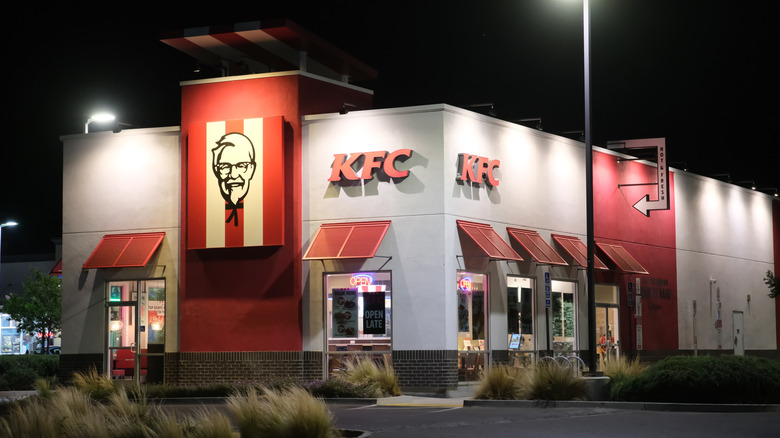
For decades, KFC was the undisputed king of fried chicken, but in the last few years, that reputation has been tested like never before. It's facing a serious dip in sales, with more people turning away from the brand. In this day and age, there are loads of fried chicken options out there, and competitors like Chick-fil-A and Bojangles have had a stellar few years, while KFC has been plagued by quality issues, with customers having increasingly poor experiences at its stores and disliking its unhealthy menu items.
All of this has translated into KFC having a difficult time in 2025, with sales declining by a massive 5% in the second quarter of the year. This decline continues a downward trend for the brand, with the end of 2024 having seen a similar 5% decrease in sales, and sales figures throughout 2024 also being down. Top executives at Yum Brands, the company that owns KFC, have noted that it's operating in rocky circumstances. However, they've also pointed out that the chicken chain's move to try and entice customers back in with its "Kentucky Fried Comeback" promotion didn't quite go to plan, and people weren't enthusiastic about the brand's efforts. If it doesn't do something that customers really chime with soon, it'll be in real trouble.
TGI Fridays
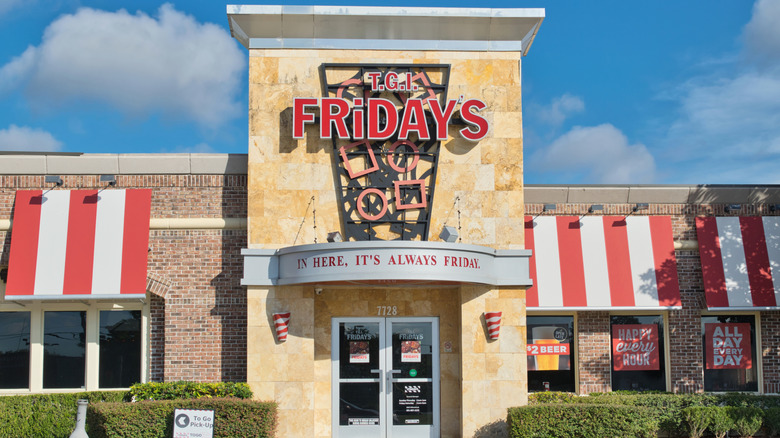
To say that TGI Fridays has had a difficult 2025 is the understatement of the century. The chain was once one of the most beloved restaurants in the country, but over time, it began being viewed as a somewhat outdated place to eat. As new competitors came in and began taking over, TGI Fridays struggled, facing a lack of enthusiasm and a mozzarella stick lawsuit — and all of this culminated in a bankruptcy claim in November 2024, with the restaurant citing COVID-19 and its capital structure as reasons for the filing.
Since then, it's had a tough time. In the bankruptcy claim, TGI Fridays stated it wouldn't be closing any restaurants, but just a few months later, it shuttered 30 locations. This followed widespread closures of its restaurants in the lead-up to the bankruptcy filing. By the end of April 2025, TGI Fridays had just 85 locations around the country, but the subsequent months of the year would see it losing even more. In August, a TGI Fridays unit in Coral Springs, Florida, shut its doors for the last time, and we wouldn't be surprised if more were to follow before the year was out.
On The Border
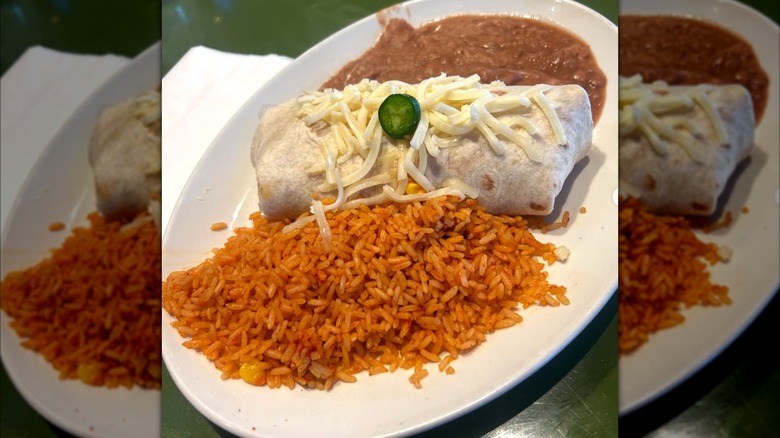
The events that On The Border has been through in 2025 are pretty brutal. The once-popular Mexican chain has been serving customers for more than four decades, but this year was the moment when everything seriously went south, when the chain filed for Chapter 11 bankruptcy in March. The documents revealed that On The Border had more than $25 million in debt and over 10,000 creditors to pay back. The bankruptcy claim followed a shrinking in size for the brand, with 40 units lost in the previous few years.
That shrinking continued just a few weeks after On The Border's bankruptcy claim, with the chain announcing that it was closing more than 70 of its restaurants, leaving it with barely any units remaining. A few months later, it looked like hope was on the horizon for On The Border when it was purchased by Pappas Restaurants, the owner of Pappasito's Cantina. Pappas Restaurants stated that it was excited to help On The Border grow, but just a month later, yet another of its units closed. We wonder whether its new owners have bitten off more than they can chew, and it's unclear how this brand can weather the storm.
Hooters
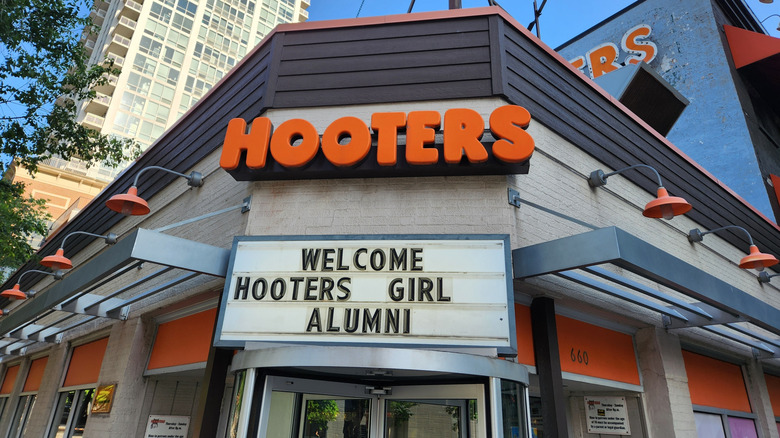
If there was ever a sign that times were changing, it's from Hooter's and the year it's had. The famous restaurant, known both for its wings and its servers (and the countless accusations of misogyny and sexism that both the brand and its patrons have faced), has started to feel like a relic. In April 2025, time finally caught up to the restaurant chain, and it filed for bankruptcy. It did so in an atmosphere of customers tightening belts along with labor costing more than ever, but it's hard to deny that diners have likely moved on from the restaurant's concept.
Its bankruptcy claim was followed by even more bad news when, in June, Hooters suddenly announced it was closing dozens of its restaurants. Later in the year, it also shifted to a pure franchise model, a plan that was laid in motion during its bankruptcy claim. This plan has been designed to try and save Hooters and keep it operating for years to come, but the model depends on franchisees buying in and wanting to keep the brand alive. They'll only do that if they feel like it's a safe bet — and that may not be the case going forward.
Abuelo's
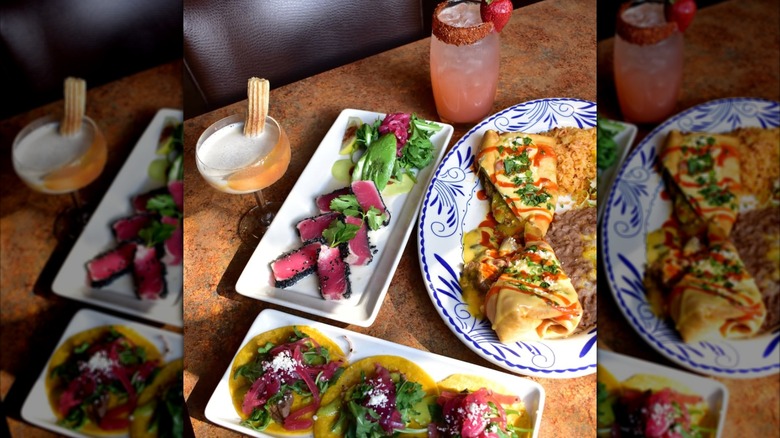
Abuelo's has been facing a slow decline in the last few years, and 2025 looks as though it might be its worst year on record. Founded in 1989, Abuelo's managed to sustain a steady growth for a few decades, and in 2009, it reached its peak. However, from there things started to take a downturn, and COVID-19 proved disastrous for the chain, which once had 40 locations. In 2025, its unit number had dropped significantly, and it announced that it was filing for bankruptcy. In doing so, it reported that its ingredients were getting more expensive, it was having difficulty with staff, its sales were dropping, and customers were preferring to dine elsewhere. Yikes.
Abuelo's stated all 16 remaining units will stay open despite the bankruptcy claim. The chain also indicated that it was committed to keeping its operations going for both customers and employees. However, it's pretty clear this restaurant is in trouble, and it's unclear how it's going to turn things around.
Chipotle
It seems like there are no restaurants truly safe in 2025, and some of the biggest out there are showing signs that things aren't quite as they may seem. If you need any proof of this, take a look at Chipotle. On the surface, the fast-casual Mexican chain looks as though it's doing fantastic: It has thousands of stores across the United States, and it's one of the most immediately recognizable restaurant brands out there.
However, on the sales front, things are rocky. In July 2025, it announced that it was down a whopping 4% from its previous year. It also told the world that its operating margins and its earnings per share were both lower. Chipotle appears to have been affected by the spending slowdown that it had escaped up until this point. These downturns were also reflected in its stock price, which has taken a nosedive this year, with the company shedding 28% of its value up until August 2025. This is a clear sign of a lack of investor confidence, and while it may not be as in trouble as other restaurants, it's not out of the woods yet.
Subway
Subway is one of those restaurants that may not feel like it's struggling due to its sheer size. The most famous sandwich shop of them all has around 20,000 locations across the United States, and you can find one in virtually every mall across the land. However, it's important to note that it once had far more units than that. At its peak in 2015, it had approximately 27,000 restaurants, and that number's been gradually sinking ever since. In 2024, it had to close a massive 631 restaurants in the U.S., and it spent much of 2025 without a permanent CEO, leaving the company adrift at a time of crisis.
There is a silver lining for Subway on the international front: The store has managed to continue growing overseas for two consecutive years. Domestically, though, it's having a hard time, partly due to the fierce competition it faces from other brands. Competitor Jersey Mike's has been having a stellar run of success with its subs, and customers are switching over to the alternative restaurant's sandwiches, while Subway franchisees grow increasingly irritated with how the business is operating.
Denny's
Denny's experienced a terrible 2024 and has been struggling to stay in business, and toward the end of the year it announced it was closing 50 of its restaurants in just a few months, citing underperformance as the main reason for these closures. This shuttering operation followed a difficult period for the brand, which saw a large number of its restaurants stop operating round-the-clock, in a bid to save money.
In the same announcement, though, Denny's also stated it was closing 100 further restaurants throughout 2025 — and then, just a few months later, it said it was pressing ahead with closing dozens more. In total, 180 restaurants were due to close in just 24 months, a huge proportion of its remaining locations. This, paired with a sluggish renovation program that had only affected a few dozen of its restaurants, has made the chain feel like it's falling behind. In recent months, it has announced a wide-scale Value Menu offer, with meals for just $5, in a bid to get customers back through its doors.
Planta
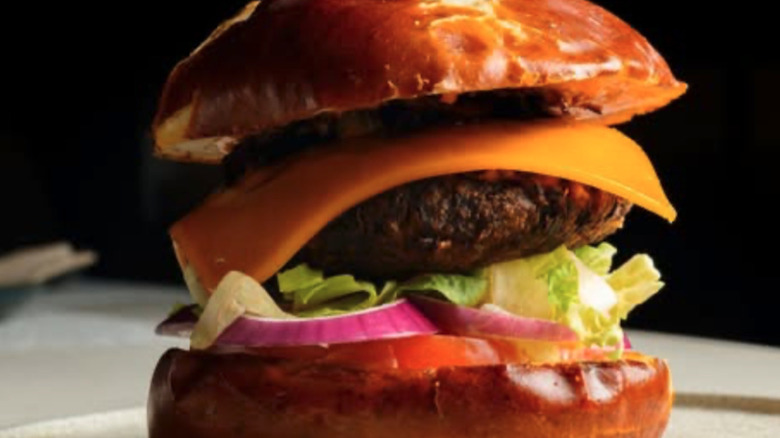
We've gotta say, we find it tough when a restaurant that's founded on clearly noble ideals is struggling — and so we're sparing a thought for Planta. The plant-based restaurant chain was founded in 2016, and it offers diners an array of vegan options in a full-service format. The Toronto-based chain managed to grow to a size of 18 units, with restaurants located in major cities across the United States, as well as in Canada.
In May 2025, however, Planta announced it was filing for Chapter 11 bankruptcy. It did so while claiming that customers were simply not spending as much money as they used to, which was ultimately affecting its balance sheet and returns for its creditors. As a result of the bankruptcy claim, Planta then had to conduct an audit of its restaurants — and unfortunately found that the majority of them had to close. In September, it stated that it was closing all but eight of its existing locations, in a bid to stay afloat and keep operating in the future. Ten Planta restaurants were cued up for closure, and we wouldn't be surprised if the chain is struggling for a while.
Bar Louie
Bar Louie has had a tough 2025 — and, to be honest, it's been having a tough decade. The gastrobar restaurant concept, which launched back in 1990, once reached a peak of more than 130 locations in 2018. However, by 2020, it was filing for Chapter 11 bankruptcy and putting itself up for sale. It's worth noting that this happened in January 2020, a few months before the pandemic, which no doubt exacerbated its issues.
Cut to March 2025, and Bar Louie once again filed for bankruptcy, seemingly unable to get itself out of its dire financial circumstances. By 2025, its unit size had shrunk enormously, and at the time of filing for bankruptcy, it was down to just 48 locations. Just a few months later, Bar Louie announced it was closing its Arlington, Dallas location. It appears that customers have simply fallen out of love with the gastrobar concept, and Bar Louie's one of the main casualties.