

Why Cardboard And Your Microwave Simply Do Not Mix
We may receive a commission on purchases made from links.
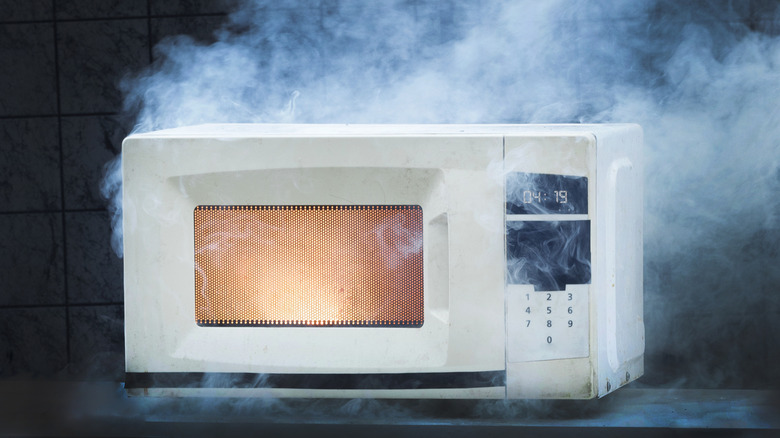
You might not realize that you've been doing some things with your microwave that you shouldn't do. For instance, you should avoid your microwave's full power option when reheating food because the food heats unevenly and dries out. You should also never clean your microwave with metal products or else risk a fire hazard, but that's not the only material that can catch a spark. Putting cardboard in the microwave can cause a fire, too.
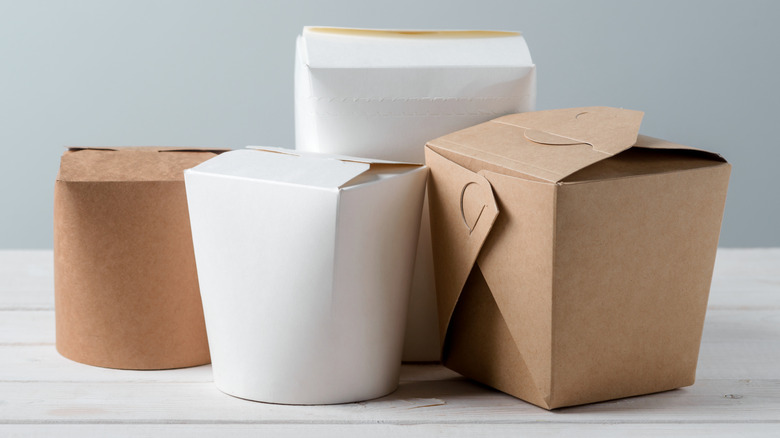
A lot of foods that we eat come in cardboard packaging, so it might seem like a safe way to reheat leftovers. However, cardboard is made of flammable paper fibers that could ignite when exposed to the same high heat as microwaved liquids and foods. If that's the case, though, why can paper towels go in the microwave to prevent reheating foods from splattering? Most paper towels don't contain the glues, inks, waxes, or other plastic coatings that cardboard containers do. These materials make the cardboard even more flammable. On top of that, they can leach into your food during the heating process.
The cardboard materials aren't the only thing to worry about. Grease and other food residues in used cardboard containers, such as pizza boxes, increase the risk of a fire starting and spreading quickly in the microwave.
What to put in the microwave instead of cardboard
While cardboard is one of the everyday items you should never put in the microwave, some types are designed specifically for microwave use and can withstand the heat without catching fire. Unless a cardboard container has a microwave-safe label, it's best to put food that you plan to reheat in a different container. Rubbermaid, for example, makes containers that are made of Tritan plastic, which is non-toxic and safe to use in the microwave. Best of all, you can order a set on Amazon for about $35.
That's not the only plastic that can go in the microwave either. Ziploc bags can be used to defrost and reheat as long as you carefully watch foods that are high in fat or sugar. Also, you shouldn't completely seal the bag so that steam can escape. You can even use paper bowls or plates that don't have a plastic coating. On the other hand, you can use ceramic, glass, or stoneware bowls, plates, mugs, and more. Even bakeware and mixing bowls made of these materials are microwave-safe. The only time when you can't use such dishware is if it contains a metallic inlay or paint or is delicate crystal.