

Home Renter Shares Affordable Solution To Upgrade Your Kitchen Sink
We may receive a commission on purchases made from links.
When it comes to renting your home, you're more limited in the upgrades and changes that you can make than if you own it. Your landlord isn't likely to make alterations unless they're absolutely necessary. For instance, replacing a leaky roof is a higher priority than fixing low water pressure, especially if the cause of the poor pressure is the kitchen faucet. In that case, your faucet is the one appliance upgrade you need if you have a tiny kitchen and low water pressure.
One home renter shared this solution in a TikTok video, demonstrating the different settings and noting the power of the new faucet compared to the old one. Unlike pricey kitchen upgrades that aren't worth it, such as pot filler faucets that can cost up to $3,500, replacing the faucet for your kitchen sink is an affordable option. It costs only $100 to $200, such as the Moen Edwyn stainless steel pull-down faucet for about $195. In some cases, though, you can find highly rated kitchen faucets for even less, like the WEWE high-arc, pull-down sprayer for about $80.
If you already have a pull-down faucet, it's even cheaper to just replace the head for more power. For example, the TIORIY spray head replacement is around $18 and available in various finishes.
You can install a new kitchen faucet yourself
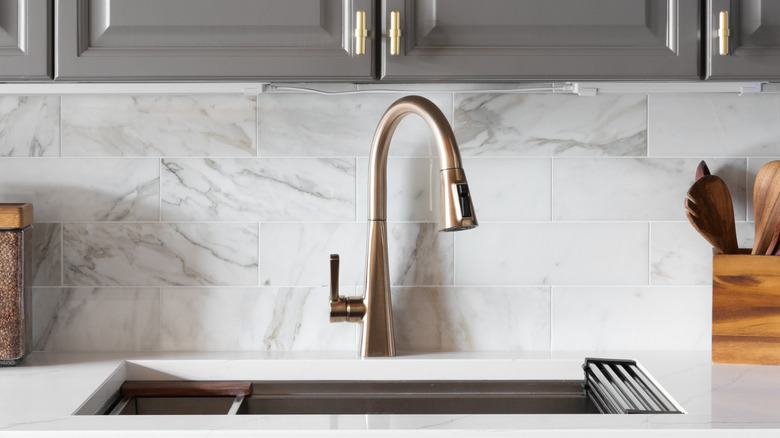
Unlike many of the hacks to make the most of minimal cabinet space, replacing a kitchen faucet yourself is a moderately difficult task but certainly possible if you're comfortable using a wrench. The first thing that you need to determine is the type of mount your existing faucet has. Every sink has a certain number of holes through which the device is mounted, and any replacement you get must match up to avoid the need to drill additional ones.
Once you have the right hardware to fit your kitchen sink, clear out anything stored in the cabinets below. Then, turn off the water at the under-sink valve. Next, turn on the faucet to drain the water that remains inside and relieve pressure on the pipes. This will let you detach the water lines from the old faucet before removing it, so water doesn't get everywhere.
Finally, you'll essentially do everything in reverse to install the new kitchen faucet: Secure the fixture, connect the water lines, detach the aerator, turn on the faucet to encourage debris flow, turn on the water valves, and check for leaks. Keep in mind that you should follow any special instructions from the manufacturer throughout the process, such as wrapping plumber's tape around the threads where the water lines connect to the new faucet.