

This Cut Of Beef Makes Steak Au Poivre Truly Shine
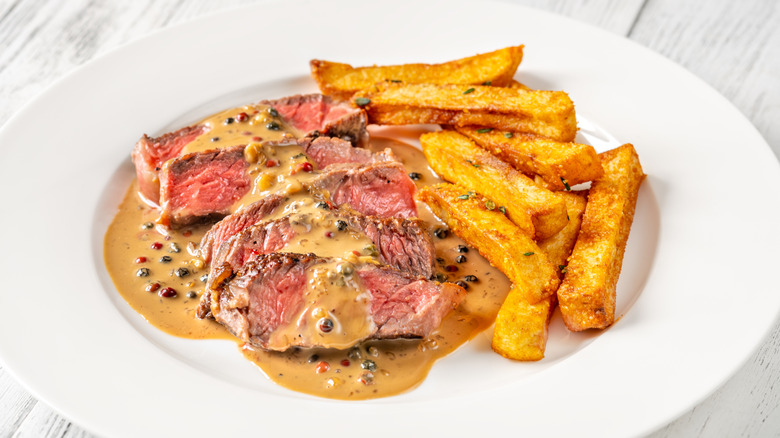
A good sauce can really bring a steak dinner together, and that's especially true of steak au poivre, a classic French dish of peppercorn-crusted steak finished with a pepper sauce. This dish is traditionally prepared with filet mignon, where its relatively mild taste provides an open stage for the pepper crust and sauce au poivre.
But peppercorns often have a strong, assertive taste, one that stands up perfectly well to much more flavorful cuts of steak. This is why New York strip is also a common choice for steak au poivre, especially at steakhouses and restaurants. Its stronger, beefier flavor provides a better counterpart to this dish's distinctive peppers.
While both of these cuts of steak are relatively lean compared to fattier options like ribeye, a New York strip has significantly more marbling than filet mignon. These white streaks of fat have a veiny appearance when raw, but they render out during cooking for superior flavor. The spiciness of a pepper melange is a perfect companion for the rich beefiness of a New York strip.
Cooking the best steak au poivre
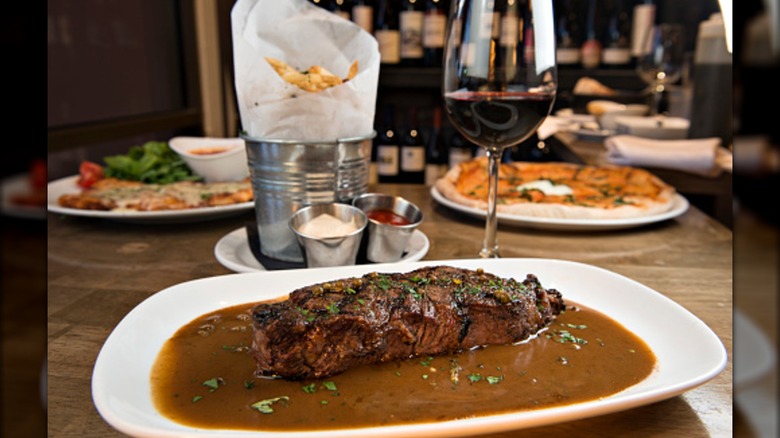
Before you get cooking, make sure you choose the right type of crust, as the best steak au poivre uses at least two types of peppercorns. Different kinds will impart different flavors, so it's worth experimenting to find your favorite combination. Any colors can work, but traditional recipes typically include at least the black and green varieties.
The main difference between green and black peppercorns is one of maturity. Green peppercorns are just unripe black peppercorns, but the flavor differences are more profound than that. Green peppercorns have a fruitier flavor profile than black ones, with an herbaceousness that especially comes through when the peppercorns are dried.
A New York strip is usually cooked at a high temperature, but you may want to think twice before searing steak au poivre. Some find the bitterness of burnt peppercorns inedible, but others might enjoy that extra bite — ultimately, it's a matter of personal preference. If you absolutely need your strip seared, consider only crusting one side of the steak to cook briefly, saving the sear for the uncrusted side.