

Save Money On Veggie Garden Soil With A Classic Technique (Thanks, Germany)

If you're filling a lot of raised beds to plant fruits and veggies, don't forget hügelkultur! If you haven't heard of the German technique, which translates to "mound culture," read on! Typically practiced as an open mound of soil, modifying hügelkultur to garden beds will save you a lot of money while still giving you healthy, fertile soil to grow your plants in.
Fall is the perfect time to start, as the practice largely uses fallen leaves and decaying logs as the base of your garden bed. First, you lay fallen logs into the bed, then sticks and branches. Follow the bits of wood with fallen leaves and yard clippings, and finally compost (many common kitchen scraps make great garden compost) and manure.
Throughout the fall and winter, you can fill the beds with these nutrient-rich bits from your yard. Then, once that is all in place and spring begins, you can cover it with your garden soil. If you do it right and have everything on hand already, it's a zero-cost way to fill up those large garden beds. Now you have a place to regrow your kitchen scraps like green onions and lettuce!
How hügelkultur works
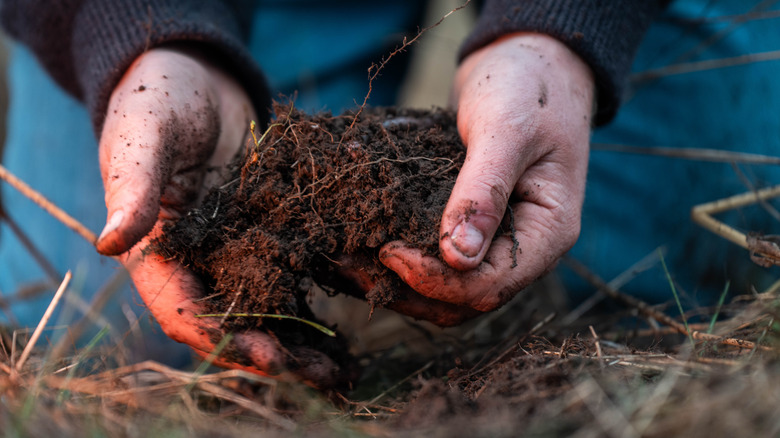
The practice of hügelkultur has been used as a sustainable gardening practice in Germany and throughout Eastern Europe for hundreds of years. It works by providing the plants with fertilizer as the various yard bits and bobs decay. Plus, the logs at the base of the mound absorb water, keeping the soil moist for longer between waterings. Some people report that, after a few years, the logs absorb so much water they don't need to do any additional watering between rains.
One potential downside is that the logs sometimes absorb nitrogen from the soil in the first few years of the mound. You can plant some plants that add nitrogen to the soil, like fenugreek, peas, and beans. Used coffee grounds are another great way to fertilize a garden, as they replenish the soil with nitrogen.
Through the years, the bed may settle as everything decomposes. You can top off the garden bed with additional soil before planting for spring. Now that you know how to get good, rich soil for cheap, what do you plan on growing?