

Here's How Often Should You Be Cleaning Your Gas Stove's Burner Ports
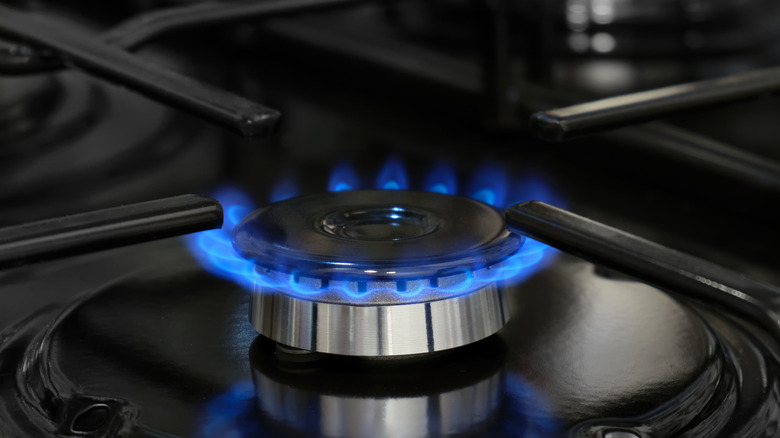
Getting the kitchen back in order can be daunting after cooking a big meal. There are counters to wipe down, a sink full of dishes, and ingredients to put away. It helps to have key kitchen cleaning products always stocked. Leaving the stove for another time can be tempting, but it's best not to wait too long. The Takeout spoke to Dennis Godynuk, the lead appliance expert at Comfort Appliance Repair in Nashville, Tennessee, to learn more about cleaning your burner ports. According to Godynuk you should brush them out weekly.
The burner port is the part under the caps where the gas gets lit and the flames come out. Godynuck says signs to look out for "a lopsided or weak flame, yellow tips or soot, endless clicking with no light, or that gas smell without ignition." Ideally, this weekly procedure is coupled with more preventative measures. Godynuck advises home chefs to "wipe spills as soon as the stove is cool. Use a deeper pan for sauces that like to foam." Even with the best cooks, though, messes are bound to happen.
The Daily Meal & The Takeout are both owned by Static Media.
How to clean your stove's burner ports
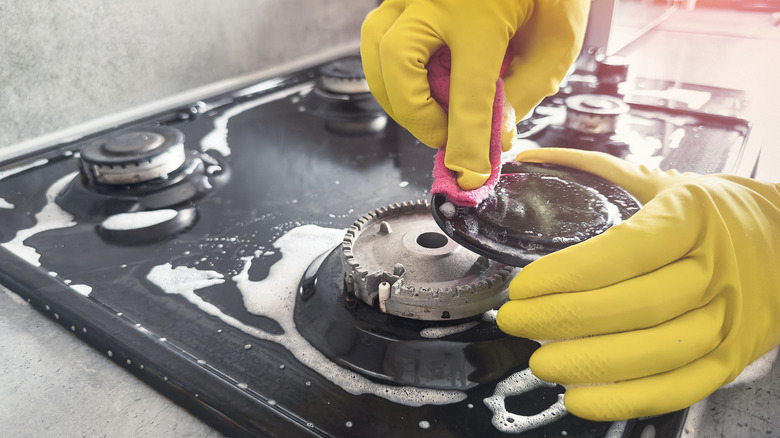
Before you clean your stove's burner ports, there are two things you should do. First, and most important, turn off your stove and let it cool down. It sounds obvious, but it's too easy to forget and burn yourself. Second is to review your stove's instruction manual. The following guide works for many stoves, but not all of them. Make sure your stove doesn't have any specific instructions. If this is a part of a bigger project, make sure you avoid mistakes when cleaning your kitchen.
Remove the burner caps if you have them and the burner heads, and soak those in water and dish soap or distilled vinegar. After around 30 minutes, they should be easier to clean. Using something non-abrasive like a sponge plus an old toothbrush, scrub down the burner heads and caps. Use the nylon of the toothbrush to get into the tiny ports that the gas comes out of. Never use a toothpick because that can break off and clog the hole. Finally, let them fully dry before putting the stovetop back together.
Now your stove should be nice and clean! Ready to cook your next meal, but let's limit future messes. We recommend always frying in a Dutch oven.