

The Most Important Seasoning Tip When Cooking Venison Steaks

Venison is an underrated type of game meat that usually comes from deer. Many home cooks aren't very familiar with it. So when a cut from this animal is described as steak, you might wonder if you can cook it just like beef. You may even be tempted to salt the venison in advance. But don't let the "steak" part of the name fool you. Because deer meat is so lean, it's prone to drying out from oversalting before it even hits a hot pan. It's best not to add that seasoning prior to cooking.
If you are going to salt venison steaks, consider doing it when the meat is served, allowing each guest to season their serving taste with less risk of overly dry food. But if you must salt venison before cooking, use a light touch to avoid accidentally making jerky.
Another option is to incorporate salt into a vinegar-based (or otherwise acidic) marinade for four to 24 hours, which also helps break down tougher fibers in the meat. However, venison's leanness means it can overmarinate easily, and the meat could become bland and mushy. Perhaps the best way to season venison steaks is with a dry rub.
Salt-free dry rub possibilities for venison

Many flavors known for going well with beef steaks, including garlic, onion, paprika, rosemary, and thyme all blend harmoniously with venison steaks too. Combine powdered versions of these seasonings into a dry rub that's applied to the meat just before cooking. This should result in a restaurant-quality crust that lets the meat's natural flavors shine. But can you season this meat well without salt?
Salt-free venison recipes are rare, perhaps because a common way to reduce the food's gaminess is to soak it in a salty brine. However, you can also soak venison in milk before cooking for a similar effect. In either case, pat the meat completely dry after soaking, so you can achieve a desirable sear. (Slow-cooking venison reduces gaminess as well, but the low heat hinders crust formation.)
To try your hand at a salt-free venison dry rub, consider strong aromatics that pack a lot of flavor. Lively seasonings like chili powder, black pepper, cardamom, coriander, bay leaves, sage, and juniper berries are all great possibilities. After seasoning, let the meat air dry in the fridge on a wire rack for an even crispier crust. But venison can be a tricky protein to cook, and more goes into the perfect venison steak than good seasonings — with or without salt.
Add fat to create a juicy venison steak
One of the pitfalls of cooking venison is assuming it is just like beef. This assumption can cause kitchen mishaps and a final result that has the consistency of shoe leather. The fat in beef is what keeps it moist, no matter what you do with it. Venison fat is a different story.
Deer meat is so lean to begin with, and many people opt to trim off the fat anyway, as it can adopt a candle wax-like texture when cooked. But just because autumn is the best season for eating venison doesn't mean you should waste cuts of this plentiful protein. Make the most of it by using alternative fats while cooking, to keep the meat appropriately moist.
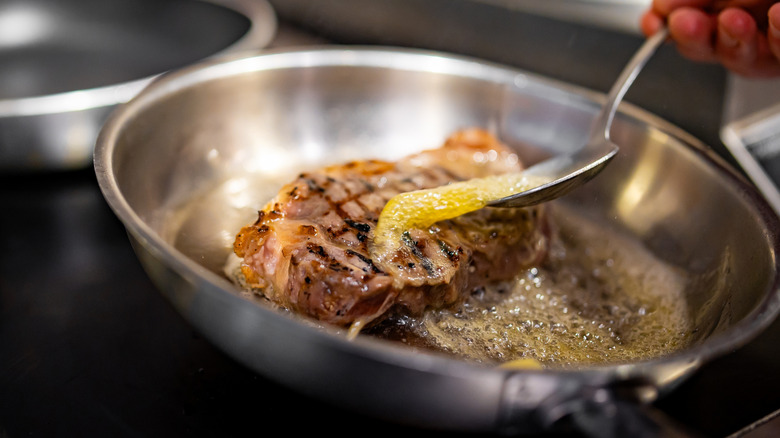
About halfway through cooking your steak on the pan, add in a few tablespoons of butter, along with some garlic and herbs if you desire. Then, tilt the pan to one side and scoop this mixture repeatedly over the meat until it's done — this is a process known as butter-basting. You can also use other fats, like tallow, ghee, lard, or even olive or avocado oil, which will all help seal in moisture and promote a flavorful final dish. Just make sure to cook your venison quickly on high heat to avoid drying out this delicious and underrated meat.