

The Extra Step You Should Take For The Most Flavorful Baked Potato
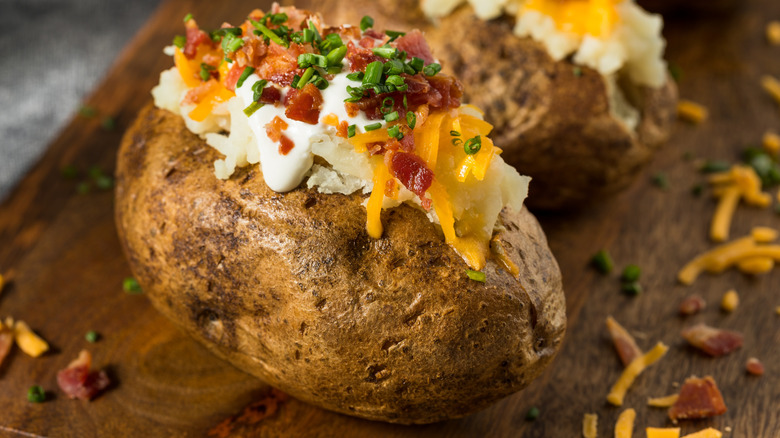
Making a delicious baked potato isn't rocket science; you can get a pretty decent one by just sticking it in a hot oven and waiting an hour or so. But why settle for a decent potato when you can take it to the next level with one extra step? Enter the salt scrub. Not only will a gritty paste of salt and water ensure your potatoes are clean (because yes, you should scrub your potatoes before baking them), but it will make the skins beautifully crisp and tender. This way, the skins become less of an afterthought and more of an equal star with the soft, fluffy insides. Once you scrub your potatoes with the salt paste, remove any excess with paper towels until the skin is clean and dry.
The type of salt you use doesn't make much difference, so feel free to use the kind that best fits your needs. For instance, the main difference between table salt and sea salt (aside from where and how they're sourced) is the size of the salt crystals. Sea salt crystals are usually larger and might do a better job of scrubbing the potato clean, though sea salt is also available in fine crystals. Another difference is that table salt is often fortified with iodine, but considering you're wiping away the excess salt at the end, the iodine or lack thereof is negligible.
Why a salt scrub can result in a better baked potato
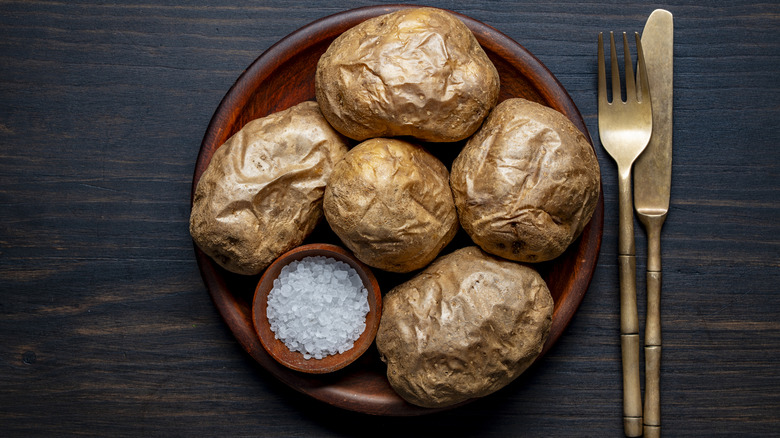
Adding a salt scrub to your prep helps you avoid common baked potato pitfalls — like dirty skin. To state the obvious, no one wants to bite into dirt. The friction of the salt scrub dislodges stubborn debris that a quick rinse might miss. While a vegetable brush would arguably accomplish the same thing, it's the way the salt scrub improves the texture of baked potato skin that makes it a cooking hack worth exploring.
Because sodium more easily dissolves fibrous vegetable pectin by breaking down the cell wall, the idea here is that a salt scrub will help break down the pectin in the potato's skin, making it more tender and allowing it to cook more quickly. While it's hard to say whether any cell walls are breaking down during a 30-second salt scrub, another possibility is that salt physically removes a thin outer layer of potato skin, leaving a softer, thinner exterior that's easier to crisp up.
You can amplify the effect by rubbing a bit of oil on your potatoes before baking them, but make sure you use an oil with a medium or high smoke point. Otherwise, you risk dealing with an unappetizing, smoky mess in your oven. Check out our ultimate guide to smoke points to help you pick the best oil for the job.
Use salt for more than just a potato scrub
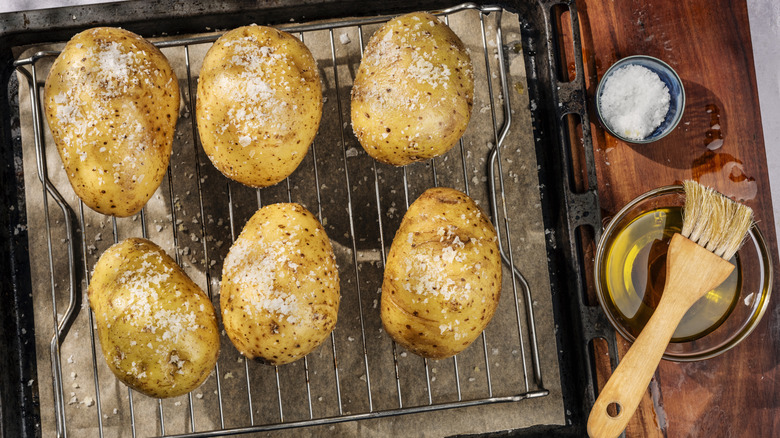
While a salt scrub is a great way to clean your potato and give it crispier skin, a key part of the process is wiping away the scrub and any debris that was cleaned off the potato. After all, salt and dirt aren't an appetizing combo. If you're working with an already scrubbed potato, however, you might want to use your salt differently — to make salt-crusted baked potatoes.
Not to be confused with Syracuse salt potatoes, which are a regional dish made from boiling new potatoes in heavily salted water until a salty crust forms on them, salt-crusted baked potatoes are often found in steakhouses and restaurant chains like Red Lobster, Texas Roadhouse, and Outback Steakhouse. To make them is simple: Freshly cleaned and air-dried potatoes are first covered in oil and then rolled in kosher or coarse sea salt before baking. The salt sticks to the potato throughout the cooking (and serving) process, leaving you with potatoes that have ultra crispy skin, pillowy fluffy insides, and delicious salty seasoning, to boot.
We say, why not clean your potatoes with a salt scrub, and once the excess is wiped away, coat the potato in oil and salt for the best of both worlds? This is not recommended for anyone with high blood pressure or who is otherwise following a reduced-sodium diet.
More tips for a great baked potato

If you're going to all the trouble of pampering your potato with salt, make sure you've got a handle on the other tips and tricks that will give you the best baked potato. After all, what good is a salt scrub or crust if you lose it all with the wrong potato or cooking method?
First, make sure you have the right potato variety. While both waxy and starchy potatoes have their place in the kitchen, starchy potatoes like russets are ideal for baked potatoes. All that extra starch is what makes the inside of your potato extra fluffy. Once you've scrubbed and prepped your starchy russets, step away from the aluminum foil. While your first inclination might be to wrap your potatoes in aluminum foil to trap the heat and make them cook more quickly, heat isn't all that gets trapped. Wrapping up your baked potatoes also traps moisture, essentially steaming them. This mistake gives them soggy skins. Instead, put your potatoes on a baking sheet or oven rack, fully exposed.
Once you have a perfectly baked potato, the real fun begins. It's time to add toppings. Celebrity chefs elevate their baked potatoes with everything from whipped feta (Ina Garten) to chorizo (Aarón Sánchez), but the sky is the limit. Then again, if you've followed these steps, you should have a fluffy, flavorful baked potato from the get-go. Everything else is just dressing.