

9 Classic Foods Lumberjacks Used To Eat Back In The Day
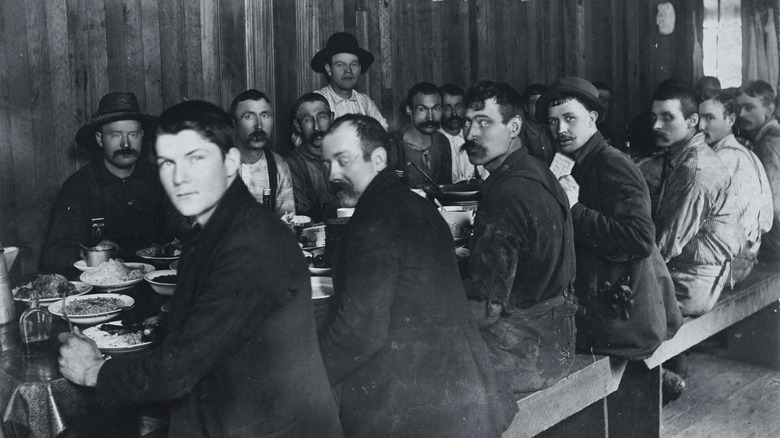
Old cliches usually have some truth behind them, and the classic image of 19th and early 20th century lumberjacks having enormous appetites is an example of this. They ate a lot because they had to. Long hours of grueling and dangerous physical labor in challenging conditions, including cold, wet weather, meant they needed an enormous amount of calories just to survive – by some estimates between 5,000 and 6,000 calories a day.
So few people appreciate their workday meals more than lumberjacks did, and few people in the logging profession were more respected (or better paid) than the lumber camp head cook. The head cook at the logging camp was charged with producing hearty, plentiful meals for around a hundred ravenous men, often with limited ingredients. Of course hard work and hunger make everything taste better, but contemporary accounts from lumber camps report the food could be genuinely delicious — something discerning diners anywhere would happily enjoy. Here are some of the classic dishes that kept old-time lumberjacks fueled and happy.
Baked beans
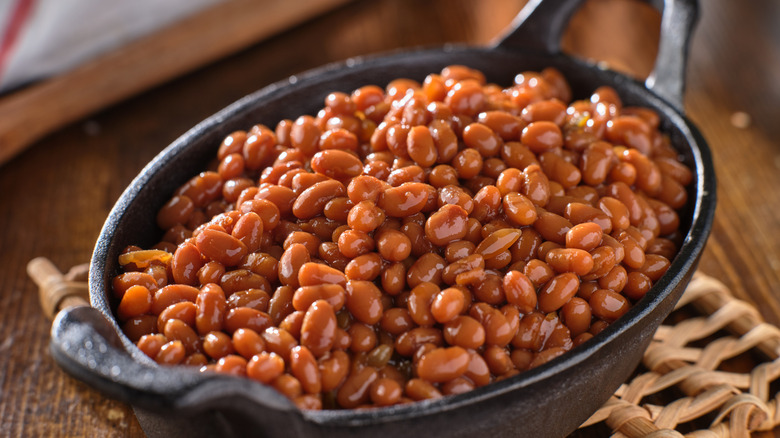
For frontier laborers — from gold miners to cowboys to lumberjacks — getting nutritious food in sufficient quantities was often a challenge. In the remote areas where they worked, fresh meat, fruit, and vegetables were often rare treats. Even with these constraints, however, enterprising lumber camp cooks still managed to whip up flavorful and nutritious meals. Among the regular offerings in Maine's lumber camps was a big pot of baked beans.
Baked beans were a favorite among camp cooks and lumberjacks alike for good reason. Cooks loved them because they could be made with easily available, affordable, and nonperishable ingredients (dried beans, salt pork, and molasses) and were a set-it-and-forget-it kind of dish; the beans cooked slowly, buried in a pit over a smoldering wood fire. And lumberjacks appreciated having a filling and satisfying meal at the end of a day of hard work. "Baked beans are strong food, ideal for active men in cold weather. One can work harder and longer on pork and beans, without feeling hungry, than on any other food with which I am acquainted, save bear meat," an early 20th-century camping guide noted (p. 156).
Pancakes

Lumberjacks were known for their huge breakfasts, and even today, diners in some areas still proudly serve lumberjack breakfasts – typically a hearty plate of eggs, breakfast meat, pancakes, and potatoes. For modern diners, they're a decadent treat. But for historic lumberjacks, they were essential for survival. They needed an enormous number of calories to endure a long morning of slogging through the woods and processing massive trees with nothing but hand tools. And these breakfasts very often featured pancakes, along with biscuits, oatmeal, fried potatoes, salt pork, ham or sausage, doughnuts, beans, and dried fruit.
Like other workers in isolated areas, such as miners, lumberjacks and their cooks often had to get by with limited access to commercial ingredients, such as yeast or chemical leavening. This meant their pancakes often got their heft from a sourdough starter, which the cook could maintain with just flour and water. As a bonus, this made the pancakes even tastier.
Beef stew
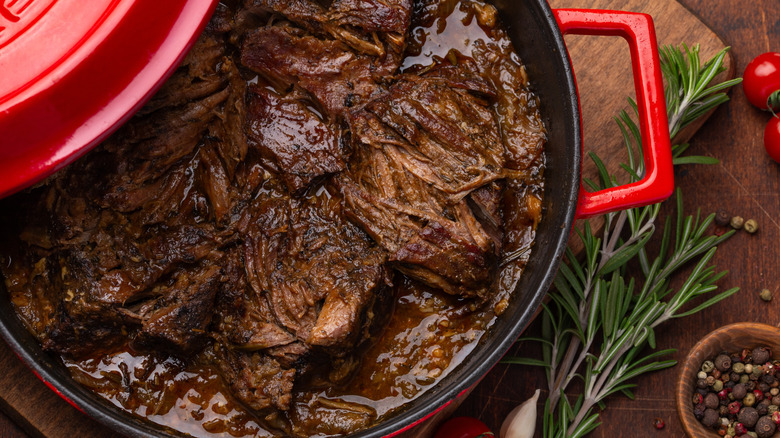
In the 1890s, Michigan lumberjacks would look forward to the arrival of the cook's wagon carrying their lunch. It wasn't just sandwiches and chips, either. Often, it was a hearty hot beef stew loaded with carrots, potatoes, onions, rutabagas, and other veggies, along with sourdough bread followed by big helpings of pie and coffee.
Lumberjack meals weren't always something to look forward to. The earliest American lumberjacks worked in camps far from main roads and other settlements, making it difficult to bring in supplies. This meant regular access to fresh food was out of the question. But over time, improved roads — along with pressure to retain experienced workers — led to improved food, including steady supplies of fresh meat and vegetables. According to an 1885 report, a camp of 55 lumberjacks in northern Michigan consumed 4,000 pounds of fresh meat and 300 bushels of potatoes in a 20-week period.
Dried apple pie
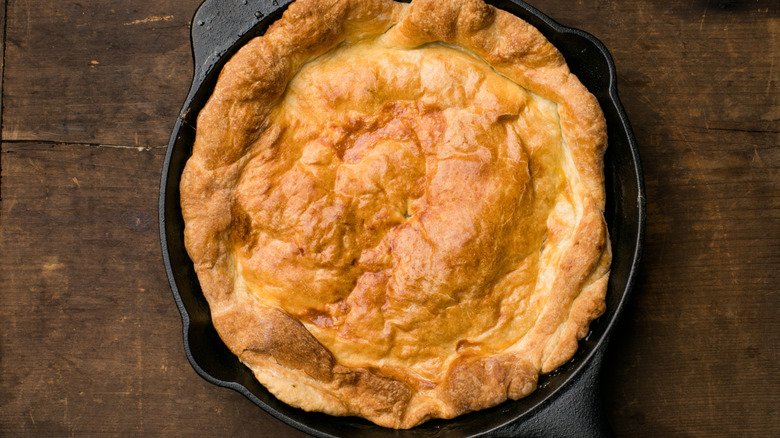
Lumberjacks had huge sweet tooths, and who could blame them? With their long days of physically demanding work, a regular sugar rush must have felt good. A big favorite for them was pie, which they not only got after lunch and dinner but sometimes — if the cook was feeling generous or there were leftovers from the day before — even at breakfast. Among their favorite pies were varieties little known today, including dried apple pie — dried apples being easier to obtain and store than fresh.
Modern reconstructions of dried apple pie call for the apples to be soaked overnight in water or cider until they're soft, then layered in a pie crust with cinnamon, sugar, nutmeg, and flour before baking. But the pies were only as good as the apples they contained. An anonymous hater penned a scathing poem about the horrors of pies made with wormy, unpeeled fruit dried in dirty conditions, where they say the dried apples "serve a roost for flies/until they're ready to make pies." More generous eaters in lumber camps nicknamed this treat "pregnant woman's pie" for the way the apples puffed up when rehydrated.
Baked cod
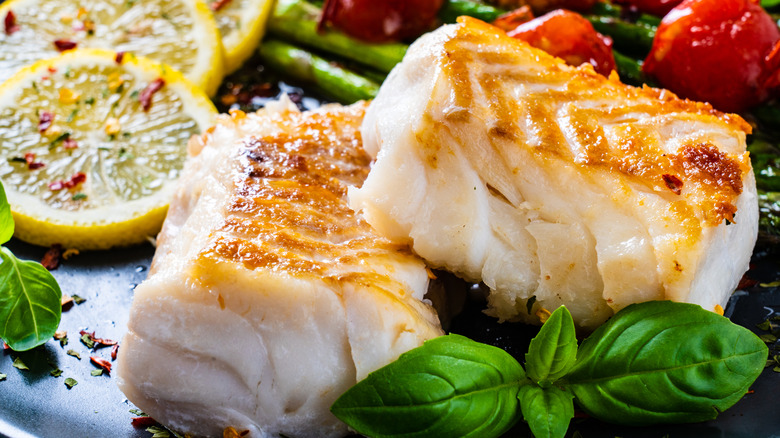
Seafood might seem like the last thing you'd expect to see on the table in an isolated lumber camp. But the wide availability of salted, dried fish such as cod, herring, and salmon made it a practical option for camp cooks, since it was nonperishable and easy to store. And as lumber camps grew and became better integrated into their surrounding communities, camp cooks also gained access to fresh fish through wholesale grocers. Lumber camp menus showed a variety of fish preparations: baked, in a chowder with potatoes, and codfish cakes, all of which could be made with either fresh or rehydrated dried fish. When working with dried fish, however, cooks had to plan ahead – salt cod in particular needs to be soaked for at least 24 hours to become soft enough to eat and thoroughly rinsed to remove excess salt.
To modern cooks and eaters who know cod as rather pricy for a whitefish, this seafood choice may seem odd for a logging camp, where cost effectiveness was crucial. But for centuries, Atlantic cod was easy to catch and plentiful –- until it wasn't. Overfishing of the once-common fish depleted its population, making codfish cakes a rare treat these days rather than a weeknight staple.
Vinegar pie
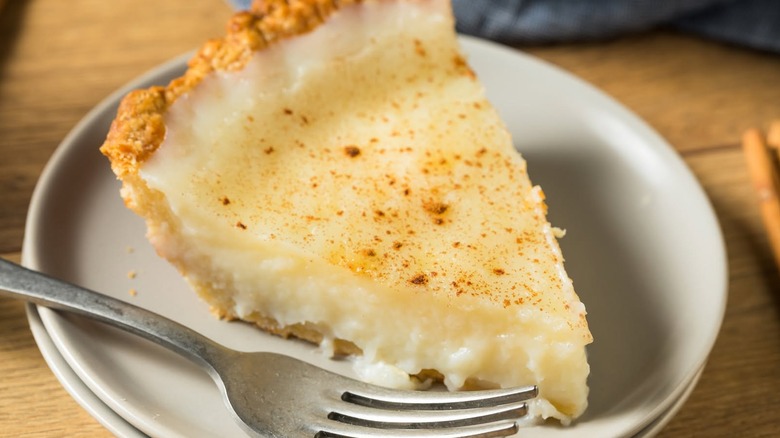
Meals in certain lumber camps were known to be so tasty that visitors compared them to high-end restaurant meals. "I tell you," an observer named Sam Churchill wrote in "Old Boy, Did You Get Enough of Pie?: A Social History of Food in Logging Camps," "there wasn't a Portland or Astoria hotel that could match the Western Cooperage cookhouse [a logging camp kitchen] on Sunday." Food was such a priority that camps had dedicated bakers as well as cooks, and one lumber camp baker was so highly reputed that a new high-end hotel in Seattle recruited and hired him away from the camp. But while lumber camp kitchens developed a reputation for bounty, skilled camp cooks also knew how to do a lot with a little, and few dishes epitomized this talent better than vinegar pie.
Vinegar pie was an old-time favorite made with standard lumber camp ingredients. The batter was made up of staples like eggs, butter, sugar, flour, and vinegar baked in a pie shell. The recipe was essentially a chess pie flavored with vinegar instead of lemon. It may sound weird to modern diners, but it was a welcome sight for hungry lumberjacks.
Dried fruit
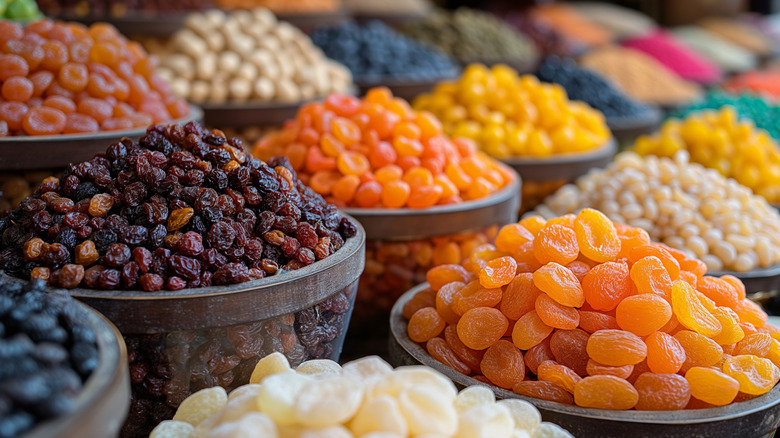
Dried fruit was a staple in lumberjack camps. Since most dried fruit is compact and nonperishable, it's easy to transport and store. And camps went through enormous amounts of it. One camp in California, the Sierra Flume and Lumber Company, supplied its camp of 1,200 laborers with 5 tons of dried fruit per year between 1875 and 1878. It's also thought to be the reason why early lumberjacks, unlike gold miners and sailors, rarely suffered from scurvy, despite the near absence of fresh fruit and vegetables in their diets.
Dried fruit, which included dried apples, currants, raisins, and prunes, also provided hungry lumberjacks with a welcome hit of sugar. Prunes were a common item on lumberjack menus, often showing up stewed or as a dense, sweet pie filling. Raisins likewise got star billing as a pie filling, which was all the more impressive given that raisins were considered a luxury ingredient in the 19th century, since each grape needed to be seeded by hand before drying. And in some camps, mincemeat pie wasn't just for Thanksgiving– it was in regular rotation, offering yet another opportunity for a dried fruit fix.
Pork
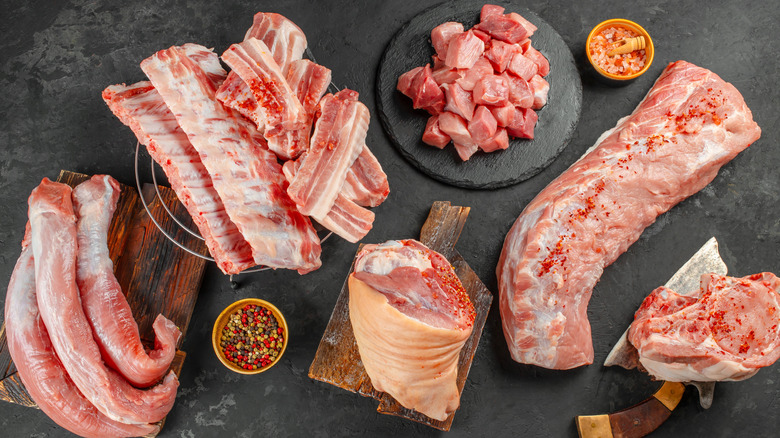
Meals were serious business for lumberjacks. They had only about 15 minutes to eat and talking at the table was forbidden, which meant their only job was to stuff themselves with as many calories as they could as quickly as possible before returning to their 12-hour work shift. Among the foods they often found waiting at the table was pork in its many forms. Salt pork was an affordable staple that added flavor and richness to baked beans. Bacon and sausage were dependable favorites on the breakfast table. And as camps gained access to fresh meat, roast pork made regular appearances at lunch and dinner.
Pork was in regular rotation for two reasons: First, it was plentiful and inexpensive – some established lumber camps even raised their own pigs. Second, and just as importantly, diners enjoyed it. Long hours, stingy pay, and miserable working conditions (lumberjacks reported having to sleep in wet clothes in unheated cabins during the New England winter) provided plentiful incentive to seek easier work elsewhere. But the hearty, meaty meals gave them reason to stay while keeping them fueled and energized.
Gingerbread
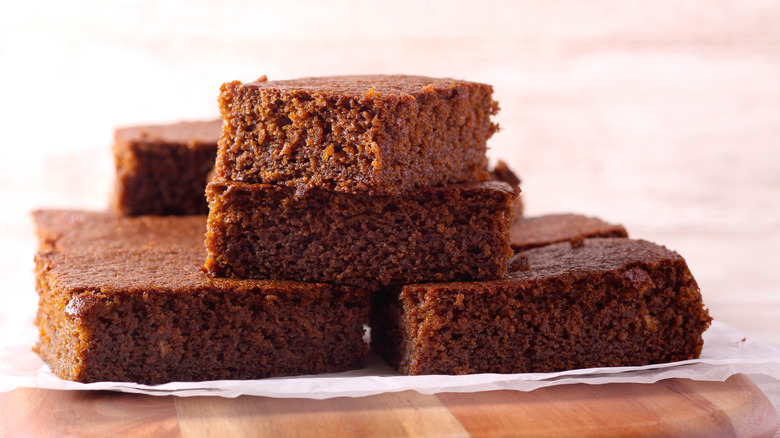
In old-time logging camps, food was more than just fuel — it was a recruitment tool. Word got out quickly about which camps had the best cooks, and lumberjacks considered a camp's culinary reputation carefully before deciding where to sign on. So to retain a full crew, a camp needed food that wasn't just plentiful and filling — it needed to be memorable. Creating flavorful meals with the limited ingredients accessible in the deep woods could be a challenge for cooks, but they quickly identified dishes made from common pantry staples that lumberjacks looked forward to eating. Among these was gingerbread.
Dried, powdered ginger was among the flavorings available to, and used by, camp cooks, making gingerbread an obvious choice for a sweet, calorie-dense treat. The other ingredients in gingerbread such as flour, sugar, and molasses were staples in almost all lumber camp kitchens. Gingerbread wasn't costly or difficult to make, but it still felt like a treat to hungry, tired workers. And offering it was one of the ways good camp cooks, and the camps they worked for, earned their reputations.