

6 Vintage Dishware Brands That Were Made In America
We may receive a commission on purchases made from links.
You can still find goods that are made in America, but there's no denying that this country isn't the manufacturing powerhouse that it used to be. This is also true of dishware; while there are still American-made legacy brands like Fiesta Tableware and HF Coors, there are many more defunct brands that can only be found secondhand today.
Including small potteries nationwide, it's impossible to tell exactly how many made-in-America dishware brands there have ever been. But there are some standouts that were once industry giants. They provided generations of jobs to families in small Appalachian cities and the Rust Belt, from Ohio to western New York, but also as far flung as California and beyond.
These dishware brands were all renowned for exceptional craftsmanship and artistic value. Their plates, bowls, cups and more saw decades of global usage, from common home kitchens to ocean liners, state dinners, and the first commercial air services. American-made dishware was an important part of 20th century history, and these are just a few of the brands worth looking back on.
Shenango China
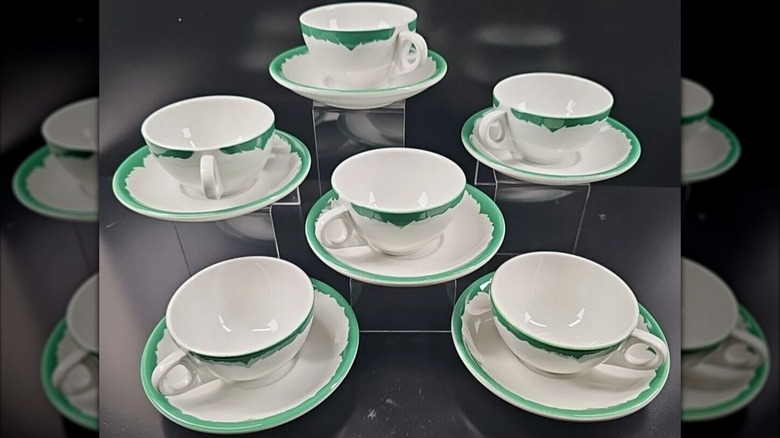
Founded in 1901 in New Castle, PA, Shenango China made both its own commercial-grade products and other brands' designs under contract. Among these was Haviland & Co., luxury French china made in northern Appalachia from 1936 to 1958. But the Shenango name got its flowers too.
From the 1940s to 1960s, Presidents Roosevelt, Truman, Eisenhower, and Johnson all used Shenango china at the White House — First Lady Mary "Mamie" Eisenhower had three sets made. But the company gradually shrank until closing in 1991, after which the abandoned factory and its countless unsold inventory became underground photography attractions.
Metlox Manufacturing Company
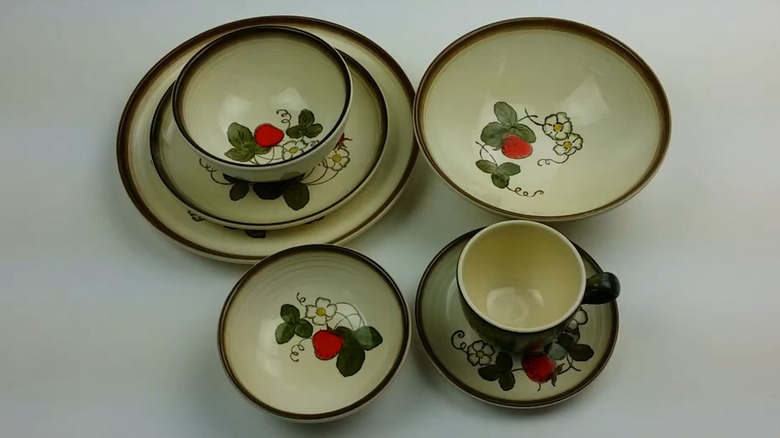
Metlox Manufacturing Company began life in 1927 in Manhattan Beach, CA, making ceramic bases for neon signs. Amid the Great Depression it pivoted to colorful china sets, which rapidly grew the company. But it also made kitschier pieces, like one of the vintage cookie jars to look for at thrift stores, a clownish Humpty Dumpty design that sold for $85 on eBay.
Despite a rich legacy that included visionary, art museum-quality design, stiff competition forced Metlox's closure in 1989. But the company legacy lives on: the shopping mall on the former factory site today still bears the Metlox name.
Buffalo China
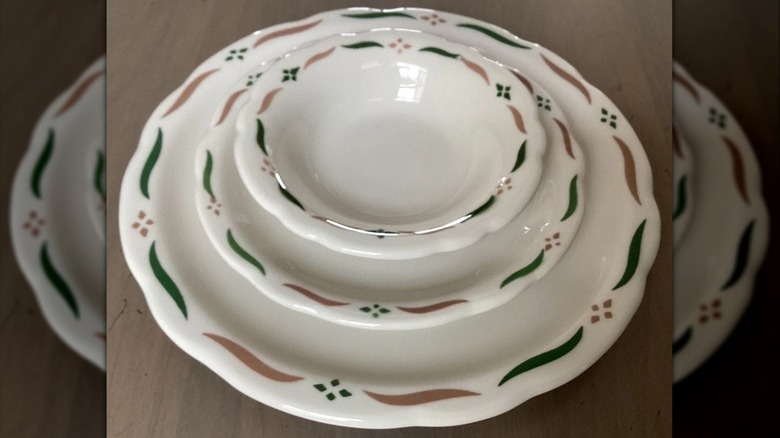
Buffalo China of Buffalo, NY was founded in 1901 by a soap manufacturer, The Larkin Company, to market soaps with free customer gifts. Larkin gradually became a mail order business, and the Buffalo factory pivoted to dishware around 1923.
Buffalo dishware was widely used by the travel and hospitality industries, including hotels of the rich and famous like The Plaza in New York City and The Mayflower in Washington, D.C. But the company was bought by Oneida in the 1980s, and in 2004 it closed the Buffalo factory and outsourced production until 2013, when it finally pulled the plug.
Blue Ridge
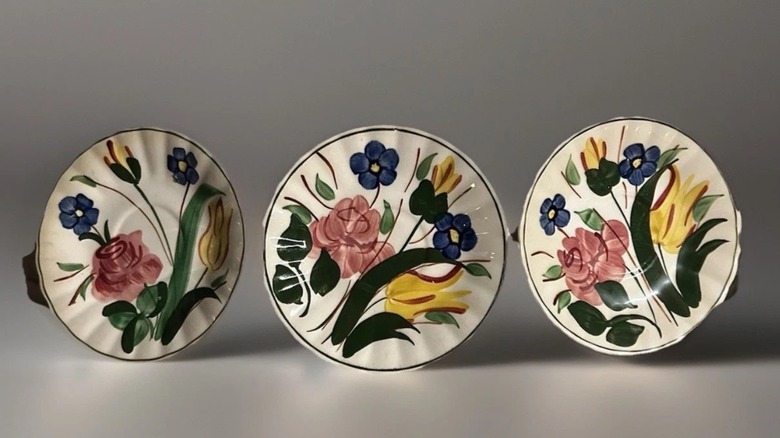
Blue Ridge Pottery is the shortest-lived dishware brand on this list, but perhaps one of the most interesting. From about 1920 to 1957, unionized workers for Southern Potteries created dishware noted for its hand-painted patterns of flowers, animals, and nature scenes.
Artists used stamped stencils as guidelines and filled in colors by hand, with slight details varying from painter to painter. Unfortunately many of the paints probably have lead in them, one of the common downsides to using vintage china. But they do look gorgeous.
Taylor Smith & Taylor
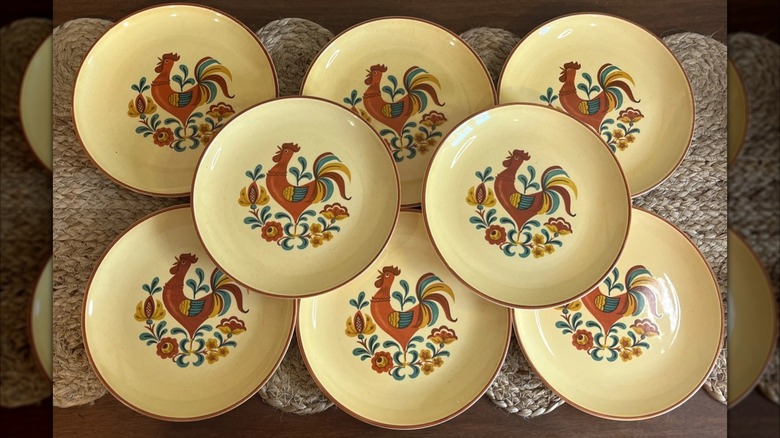
Taylor Smith & Taylor began in 1899 Chester, WV, at first making a variety of ceramic products, including toilets. By the late 1920s, it phased out all other goods to focus on dishware. Several of these patterns became notable in the midcentury, including the famous Lu-Ray Pastels line.
In 1972, Anchor Hocking bought TS&T in what some former employees characterized as neglectful ownership, ending with the brand's closure in 1981. And while vintage Anchor Hocking can be worth hunting down at thrift stores, this brand it arguably ran into the ground is not particularly valuable.
Syracuse China
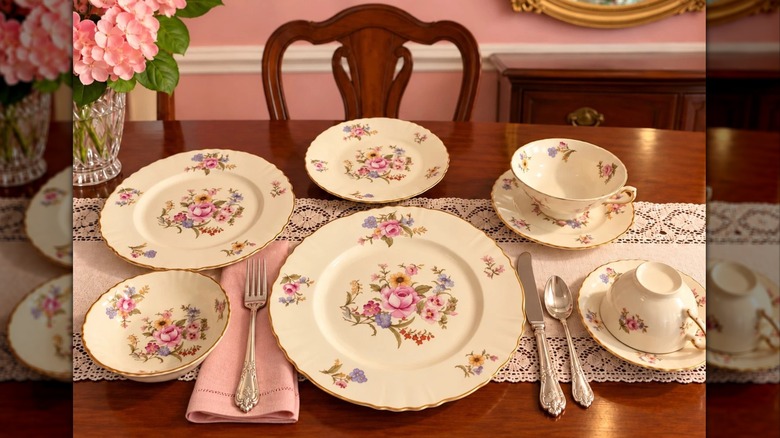
The oldest and largest company on this list, Syracuse China was a giant of the dishware industry. Founded in 1871 as the Onondaga Pottery Company of Syracuse, NY, it invented translucent china in the 1880s, and developed America's first vitreous china in the 1890s.
Onondaga was a go-to for the global hospitality and travel industries, and during World War II, the government went to Onondaga for military-grade ceramics (and land mines). It didn't take the name Syracuse until the 1960s, but it was well known from the trademark anyway. Syracuse was eventually bought by Libbey, which closed the factory in 2009.